Free General Contractor Estimate Template
Create a professional estimate in minutes
Bring the main trades, allowances and likely project cost into one estimate. The complete view shows you can manage the work and helps customers choose your business.
Email, print or download your estimate as a PDF.
14-day free trial. No credit card required.
Price the job. Send the estimate. Get back to work.
General Contractor Estimate Template Examples
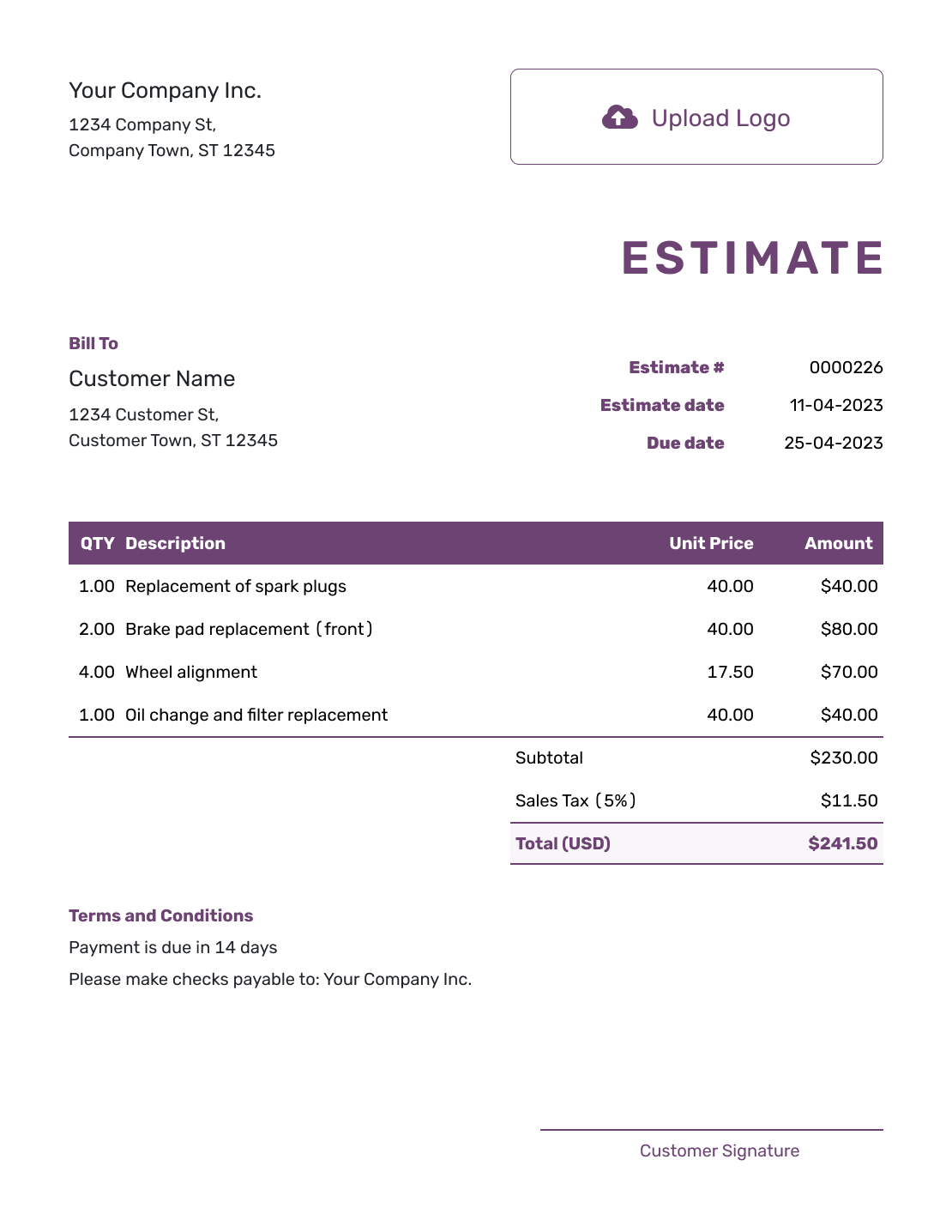
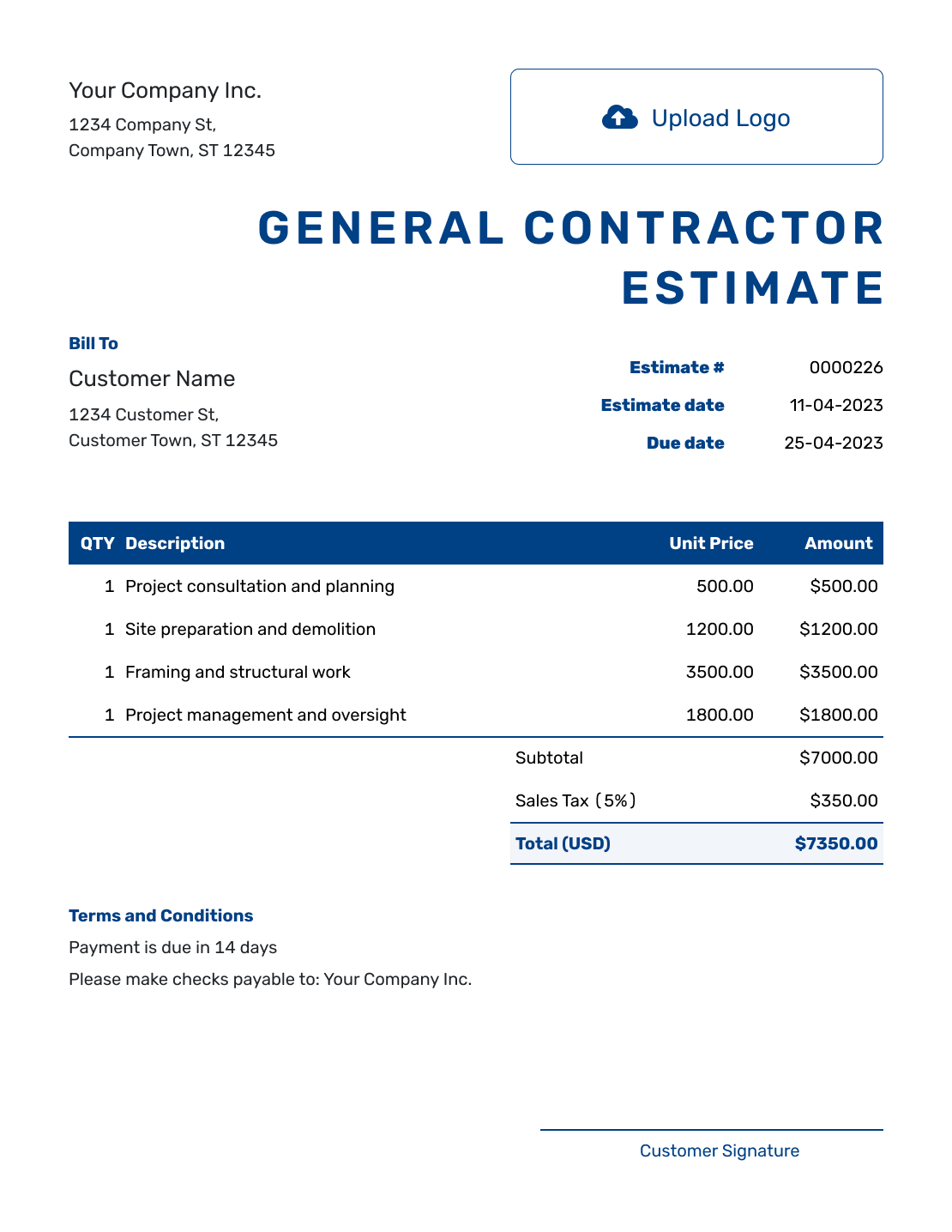
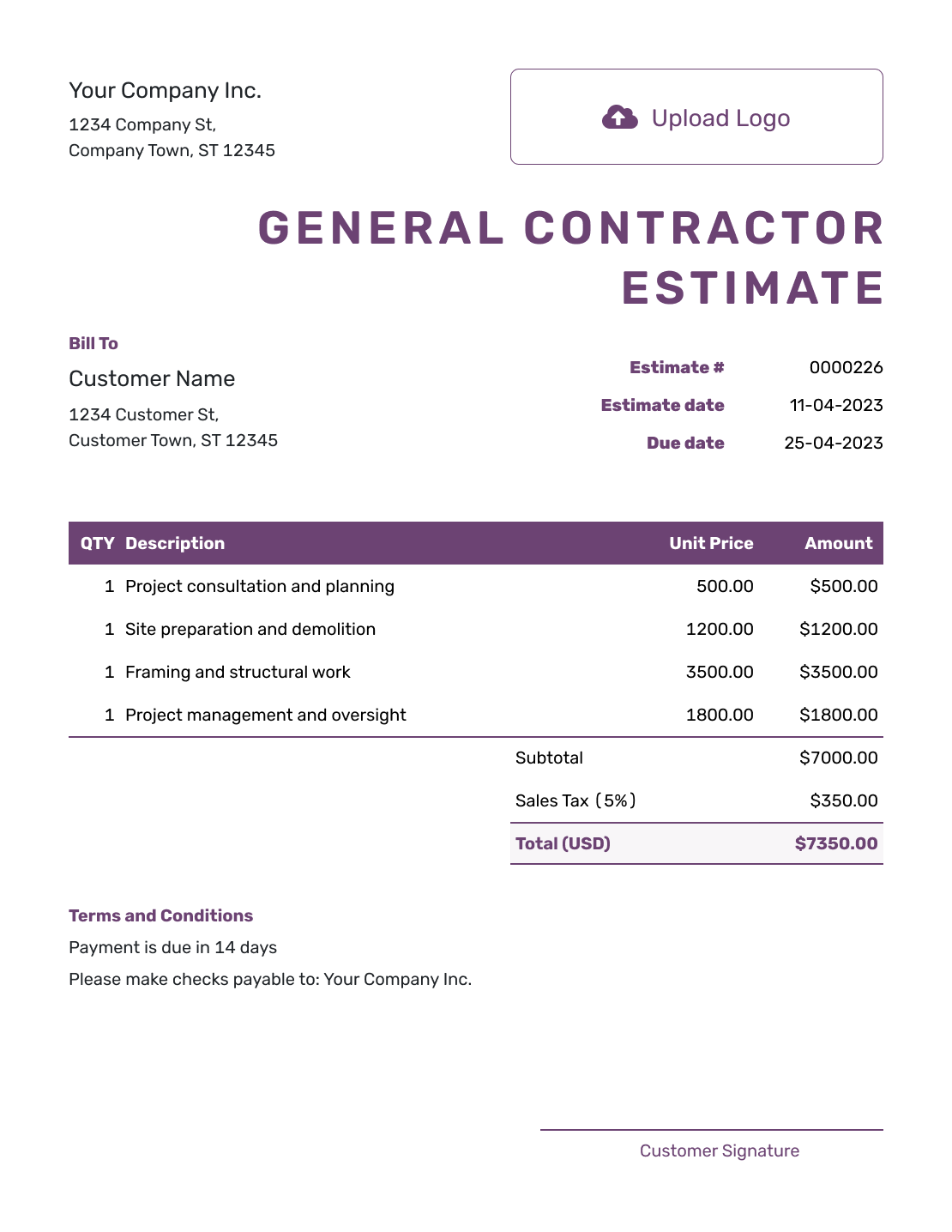
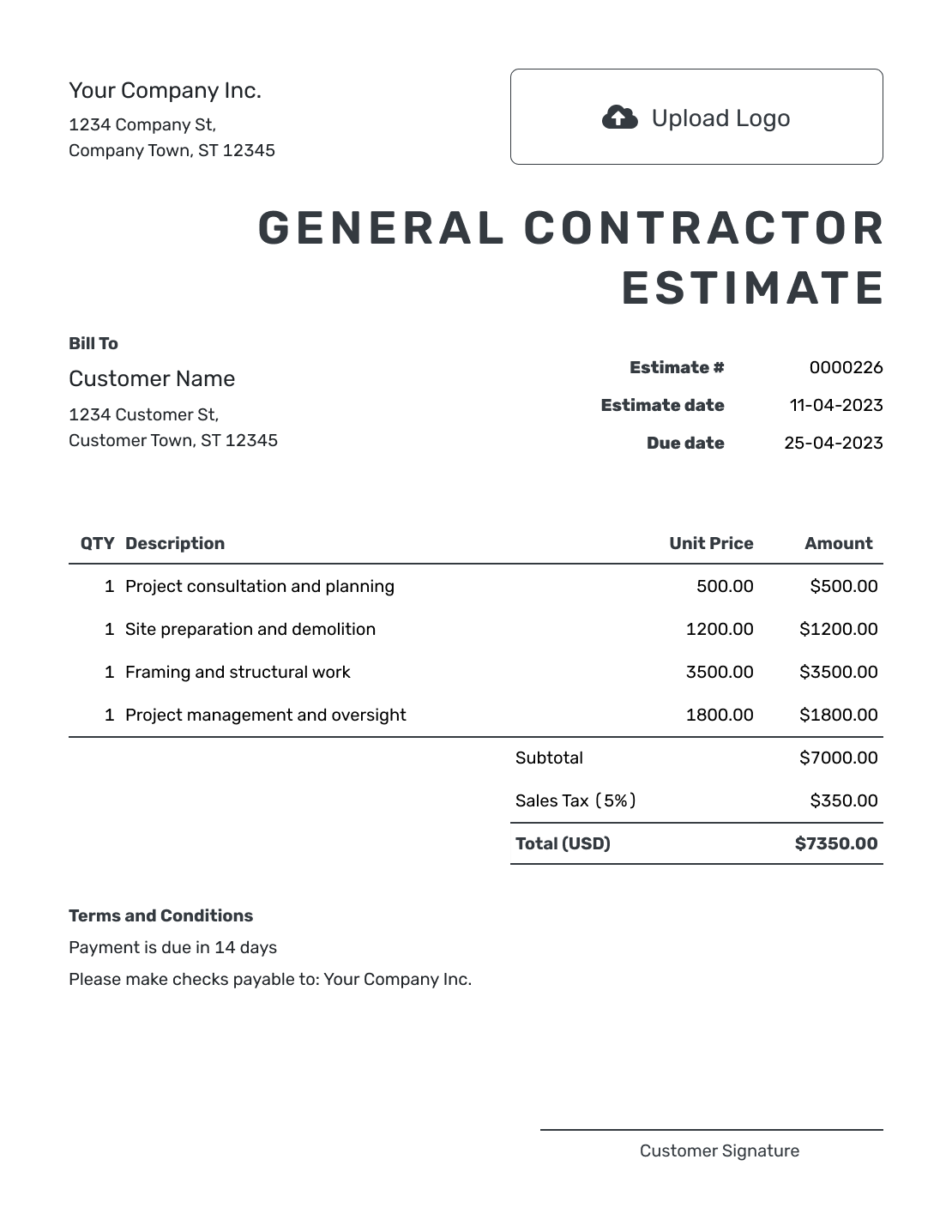
Choose a layout, then organize your estimate by trade or phase. Each preview opens the same estimate editor, where you can add your own project details.
What Is a General Contractor Estimate?
A general contractor estimate brings work across several trades into one document before the final cost is known. It can cover the whole project or a clearly named phase, combining trade work, materials and shared project costs.
The goal is to show how the job is organized and where the likely total comes from. The customer should be able to follow the project without reading every subcontractor note.
How to Create a General Contractor Estimate
Start with the customer and site details, then add the trade prices you have gathered. The steps below follow the estimate fields.
- Your Business: Add your business name and the contact details the customer should use.
- Your Logo: Add your logo to match your other project documents.
- Customer and Site: Enter the customer details. Identify the project and site in Terms and Conditions.
- Number and Dates: Check the estimate number and issue date, then set a valid-until date.
- Trade Work and Costs: List trade packages, materials and project-wide costs with quantities and prices.
- Estimated Total: Check the line amounts, applicable tax and total. Explain any allowance that may change.
- Terms and Sending: Add timing, exclusions and change approval in Terms and Conditions. Review, then email or save a PDF.
How to Fill In General Contractor Estimate Line Items
A trade package can use a quantity of 1 when its description clearly defines the work. For measured materials or hourly labor, use the actual units and rates. Check what each subcontractor price already includes before adding materials, supervision or cleanup again.
This fictional US-dollar example covers mobilization, framing and electrical rough-in for an addition. It is an estimate for that stage, not the finished project. The illustrative 8% tax applies to $35,500 of work; the $2,000 permit allowance is excluded from this example's tax calculation. Use the tax treatment that applies to your job.
| QTY | Description | Unit Price | Amount |
|---|---|---|---|
| 1 | Project mobilization and site protection | $1,500.00 | $1,500.00 |
| 1 | Framing subcontract allowance | $18,000.00 | $18,000.00 |
| 1 | Electrical rough-in allowance | $9,500.00 | $9,500.00 |
| 1 | Permit and inspection allowance | $2,000.00 | $2,000.00 |
| 1 | Project management and general conditions | $6,500.00 | $6,500.00 |
| Subtotal | $37,500.00 | |
| Tax (8% illustrative, excluding permits) | $2,840.00 | |
| Estimated Total | $40,340.00 |
What to Include in General Contractor Estimate Terms
Use Terms and Conditions to explain the scope behind the total: which stage you are pricing, what the allowances cover and what still needs confirmation. Include the timing and payment terms your business actually uses.
Adapt this sample to your project. It keeps later phases outside the $40,340.00 estimate and explains how the customer will review changes.
Example: Terms and Conditions
- Valid for 30 days from the estimate date for the listed mobilization, framing and electrical rough-in work.
- Trade allowances include the labor and materials for the described work. Plumbing, finishes and later phases are excluded.
- Project management covers supervision, trade coordination and shared site costs not included in the other lines.
- Final trade pricing and permit costs may change the estimate. We will explain any change in scope, price or timing and obtain your approval before the affected work begins.
- The start date will be confirmed after approvals, permits and trade availability are checked.
Build One Estimate for the Whole Project
Bring your trade prices into Docelf and let it calculate the total. Add the assumptions the customer needs to review, then send the estimate when it is ready.
Make the Whole Project Easy to Follow
A general contractor estimate should show how the separate parts of the job become one manageable project.
Trade packages
Group framing, electrical, plumbing, finishes and other work in the same order you plan to manage it. Give each package a clear description and likely amount.
Subcontractor amounts
Show the trade or work covered by each subcontractor amount. Put important bid qualifications and excluded work in Terms and Conditions or an attachment.
General conditions
Describe shared costs such as supervision, temporary facilities and cleanup. Add them separately only when they are not already included in the trade prices.
Allowances and contingencies
An allowance covers a specific item or selection that is not final. A contingency is a separate amount for uncertain work. If you use either, explain what it covers and include it in the total only once.
Keep Subcontractor Bids and Assumptions Easy to Trace
Name the trade and scope covered by each subcontractor amount. If a bid excludes equipment, permits, cleanup or finish work, put that information with the estimate instead of relying on memory.
You can attach relevant drawings, photos, specifications or bid documents as PDFs or images in Docelf. Choose files the customer should see; recipients can download them with the estimate. Each attachment can be up to 5 MB in PDF, JPG, GIF, PNG or WebP format.
General Contractor Estimate, Quote, or Invoice?
Use the document that matches how certain the project price is and whether the work is ready to bill.
Estimate
Use an estimate while trade pricing, allowances, selections or quantities can still change.
Quote
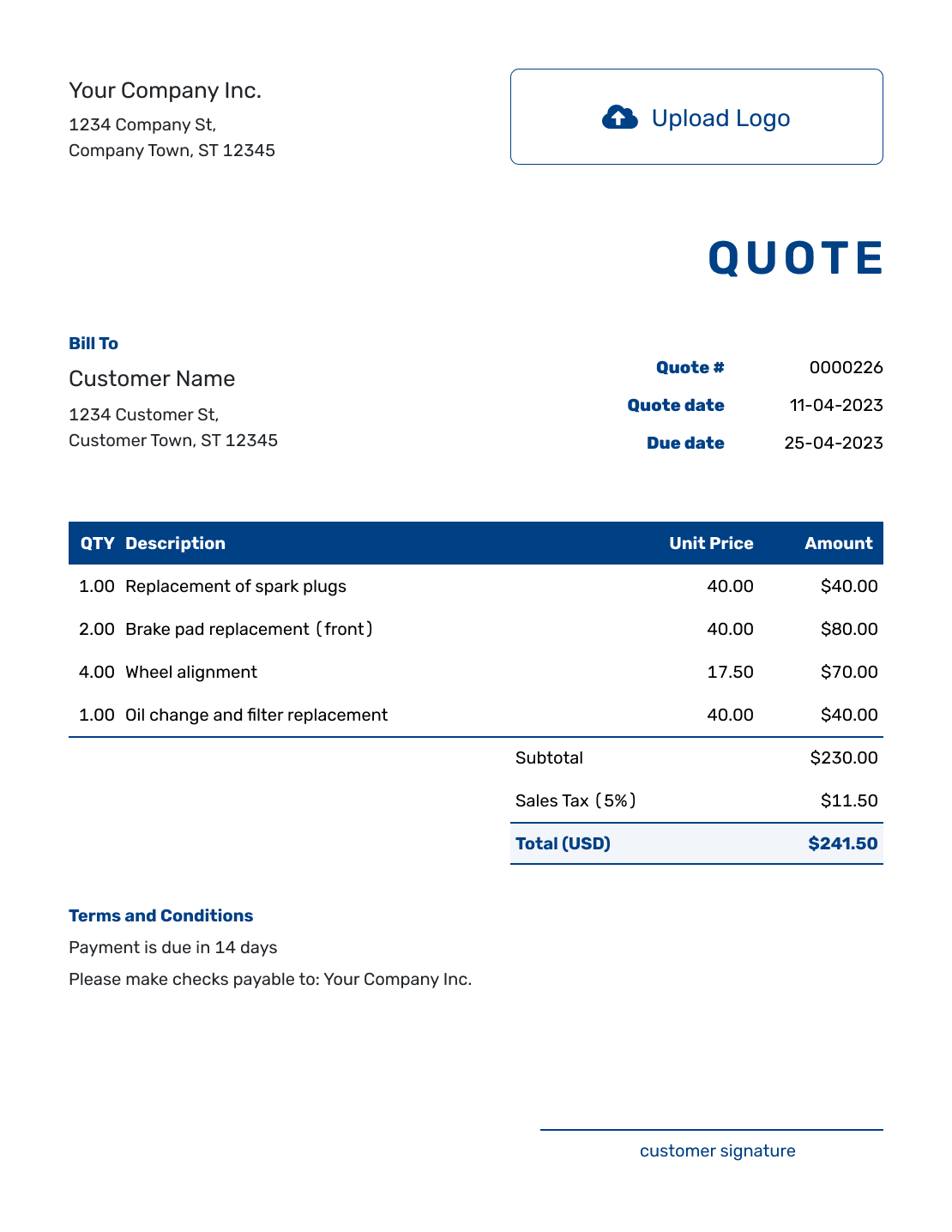
Use a general contractor quote when you are ready to present a specific scope, price and terms for approval.
Invoice
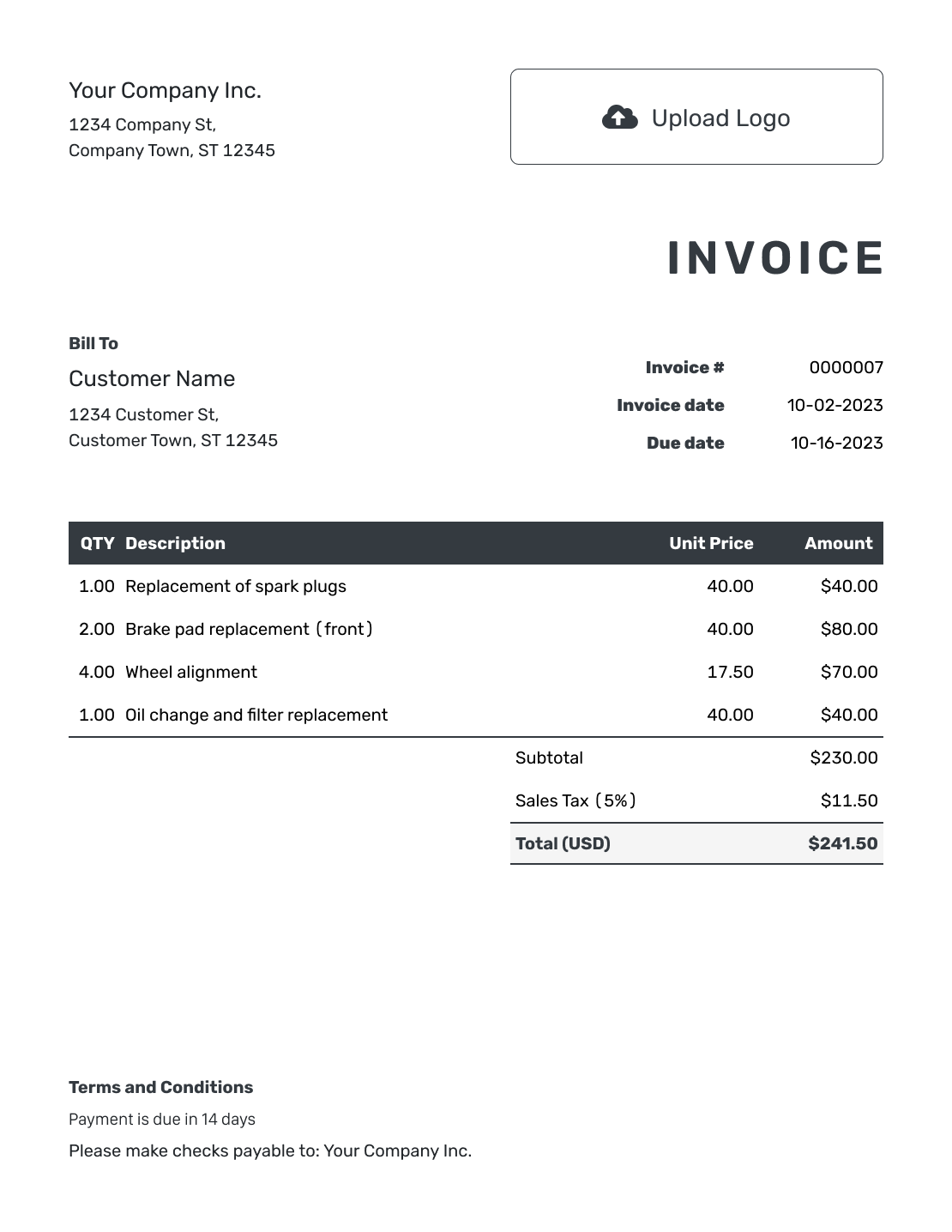
Use a contractor invoice when completed or billable work is ready for payment.
More General Contractor Estimate Previews
These remaining layouts give you more ways to present the same project scope and expected costs.
-
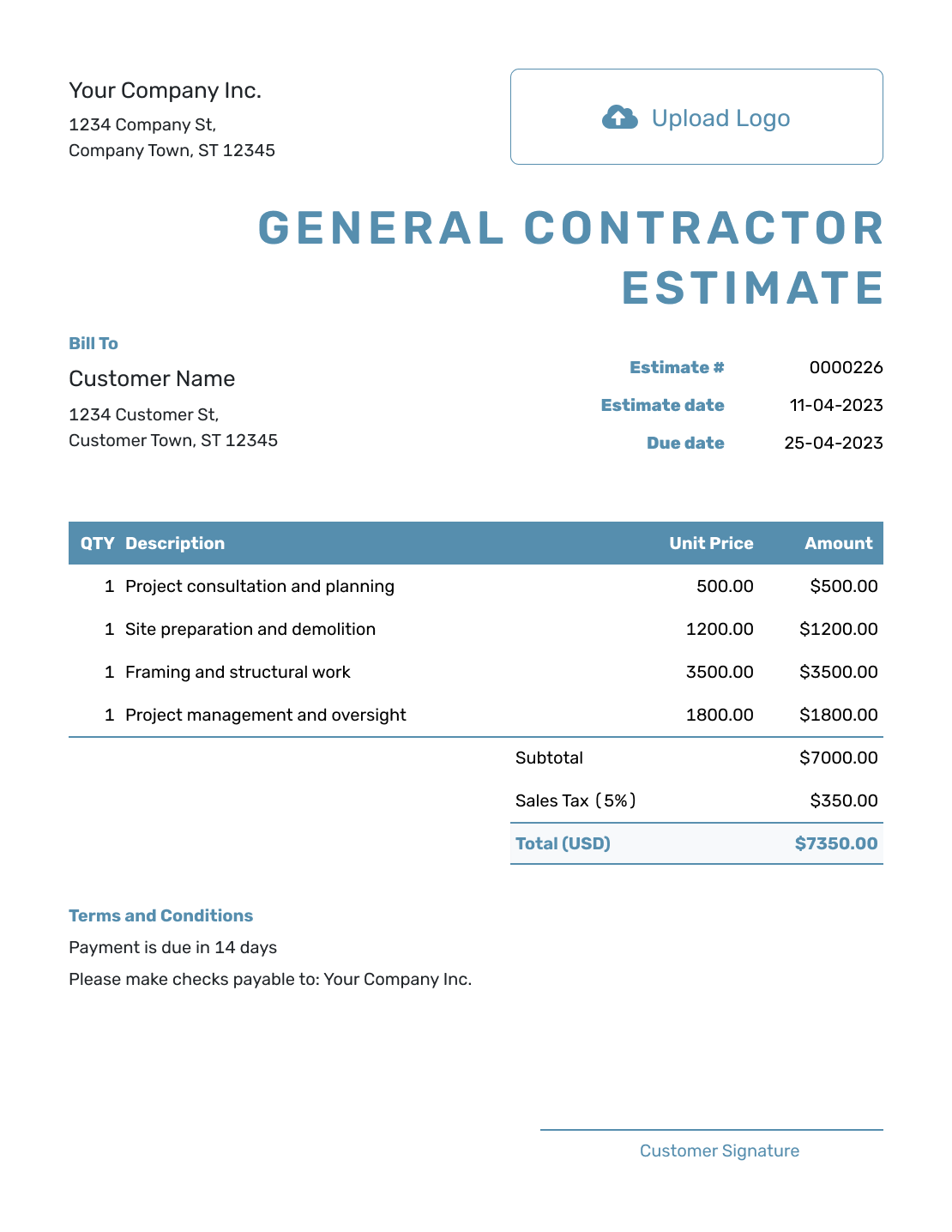
Blank General Contractor Estimate Template
Create Free Estimate -
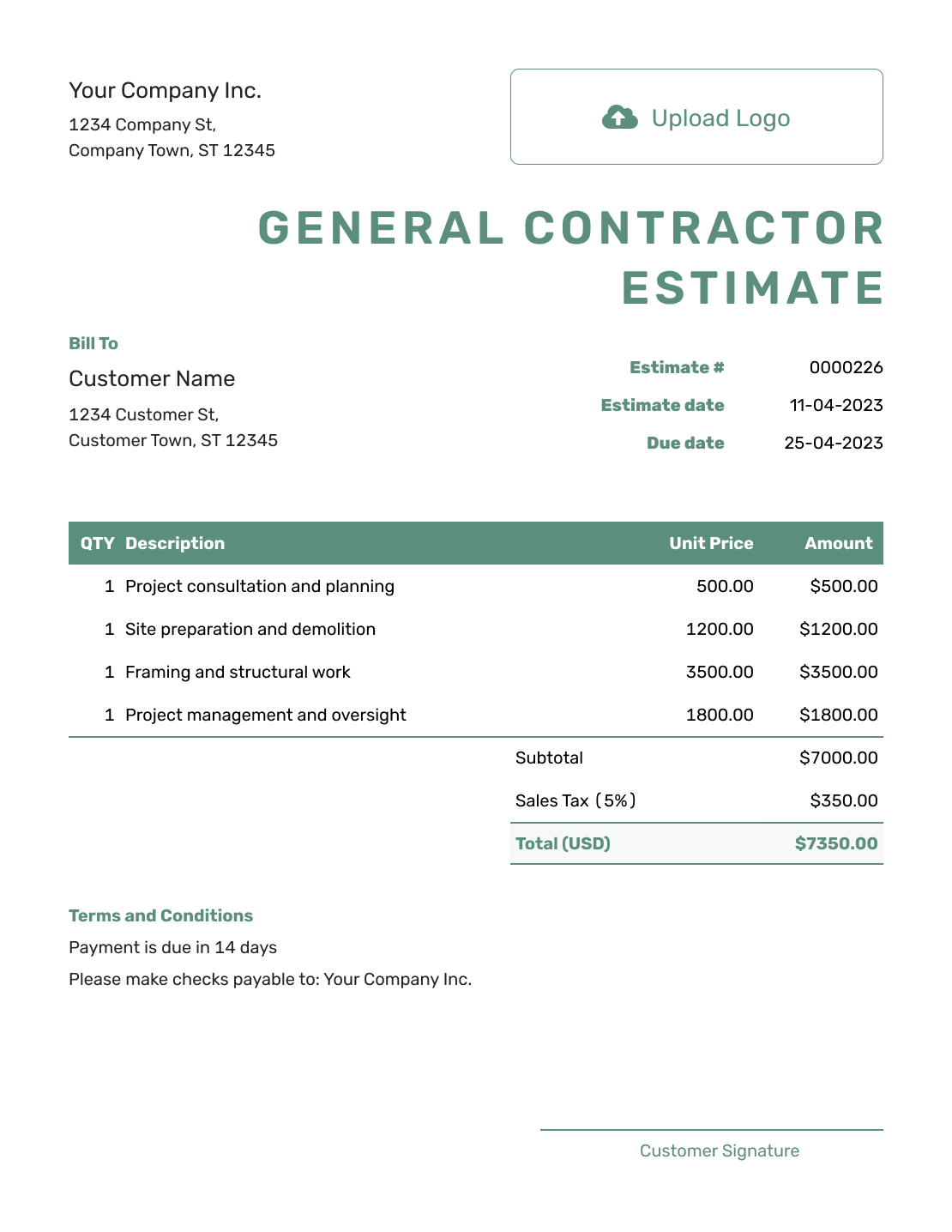
Simple General Contractor Estimate Template
Create Free Estimate -
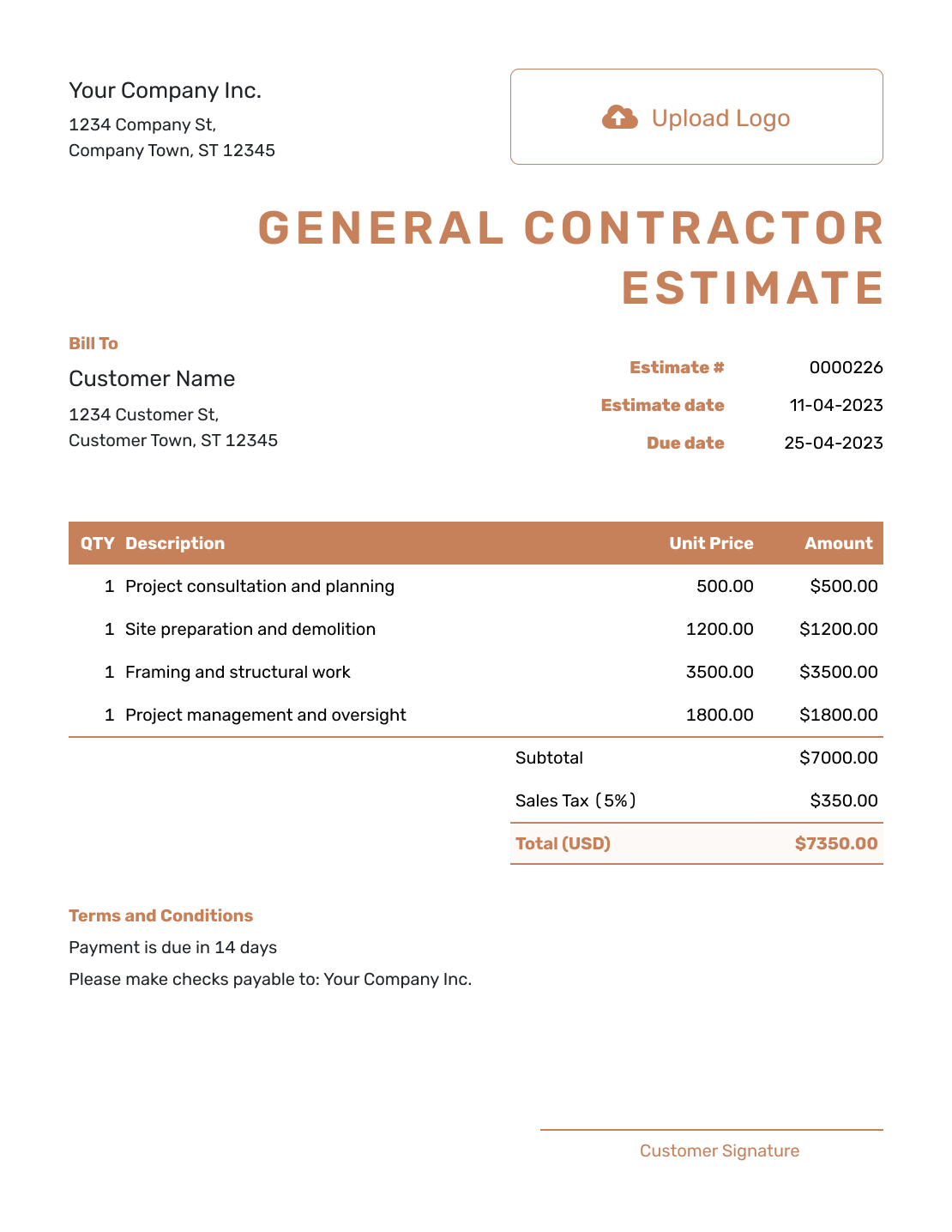
Downloadable General Contractor Estimate Template
Create Free Estimate -
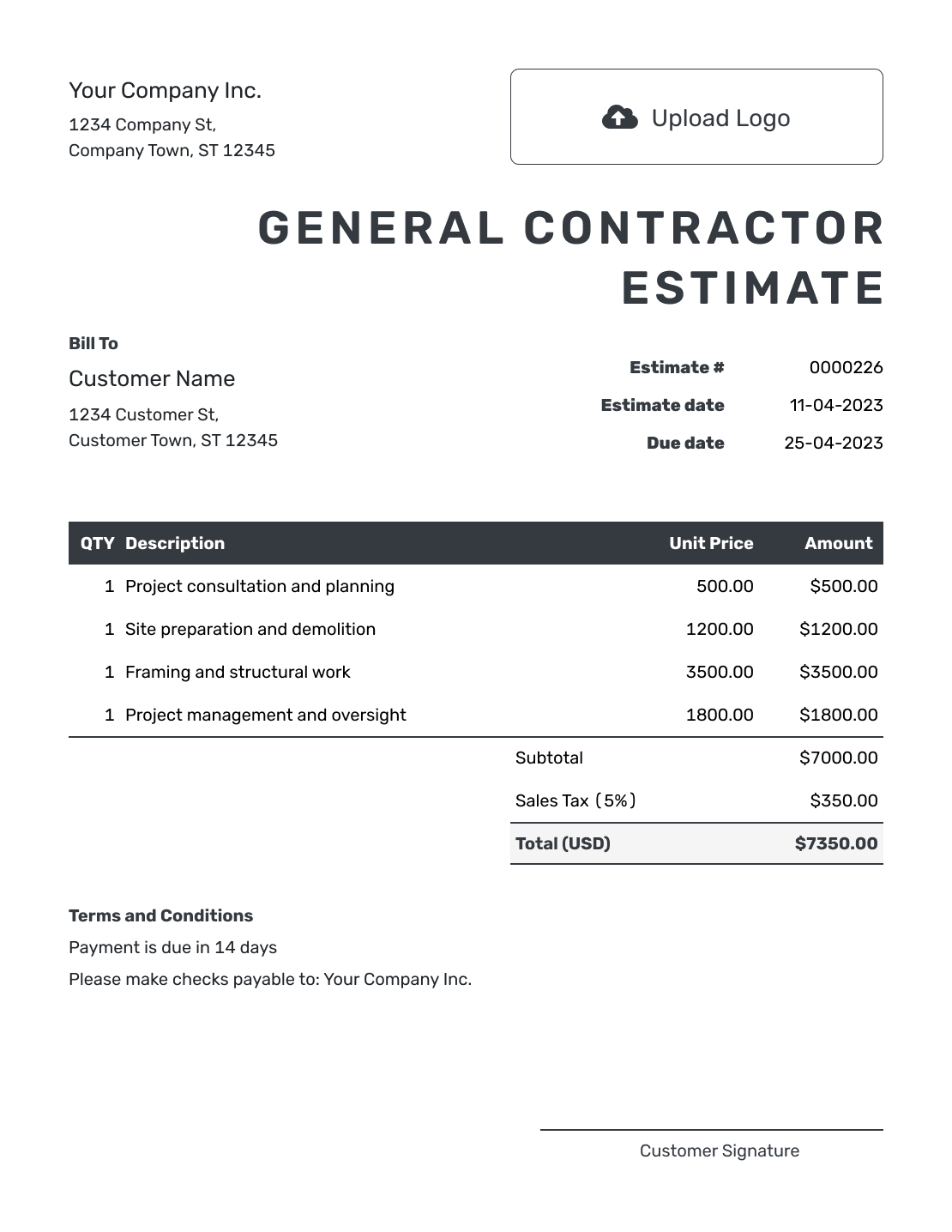
Editable General Contractor Estimate Template
Create Free Estimate -
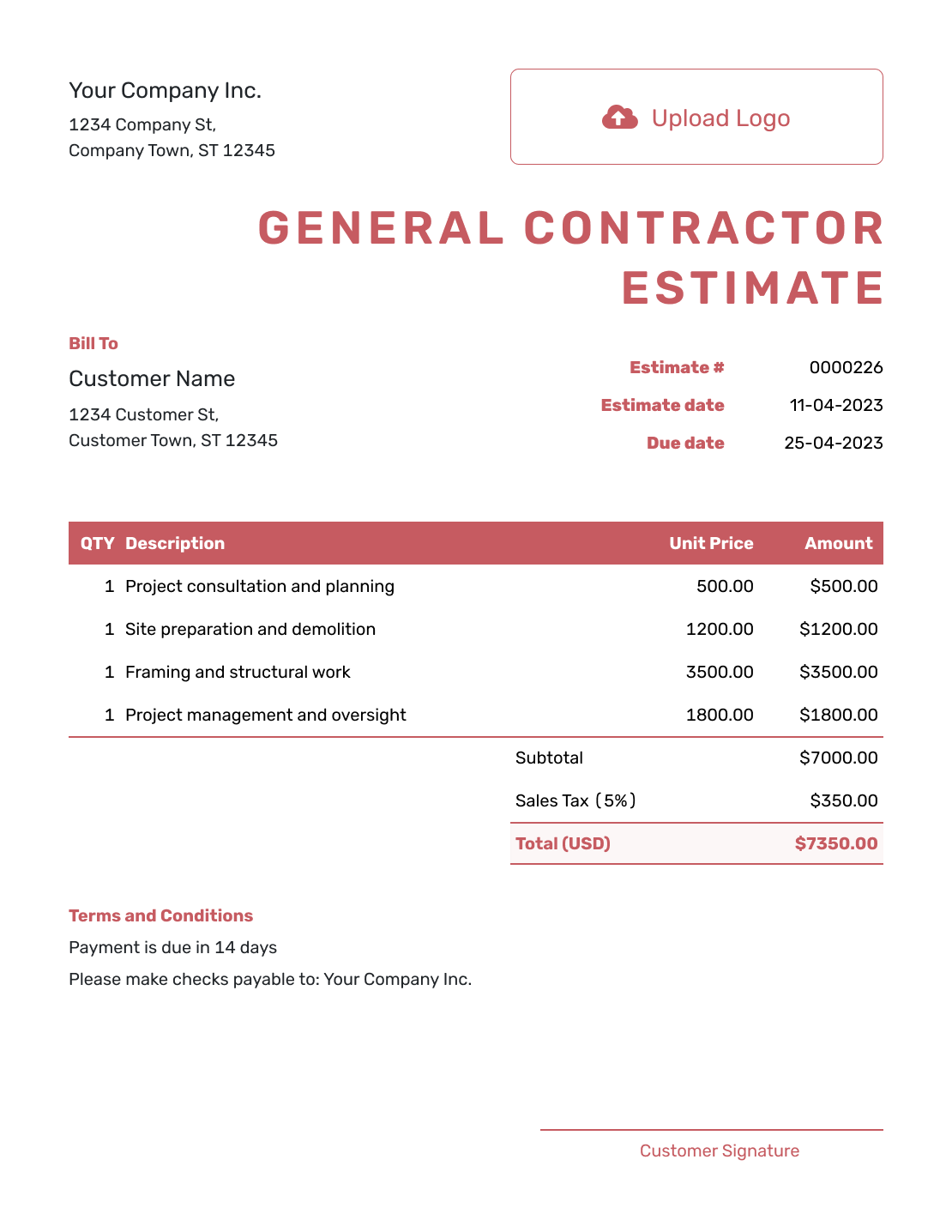
Fillable General Contractor Estimate Template
Create Free Estimate -
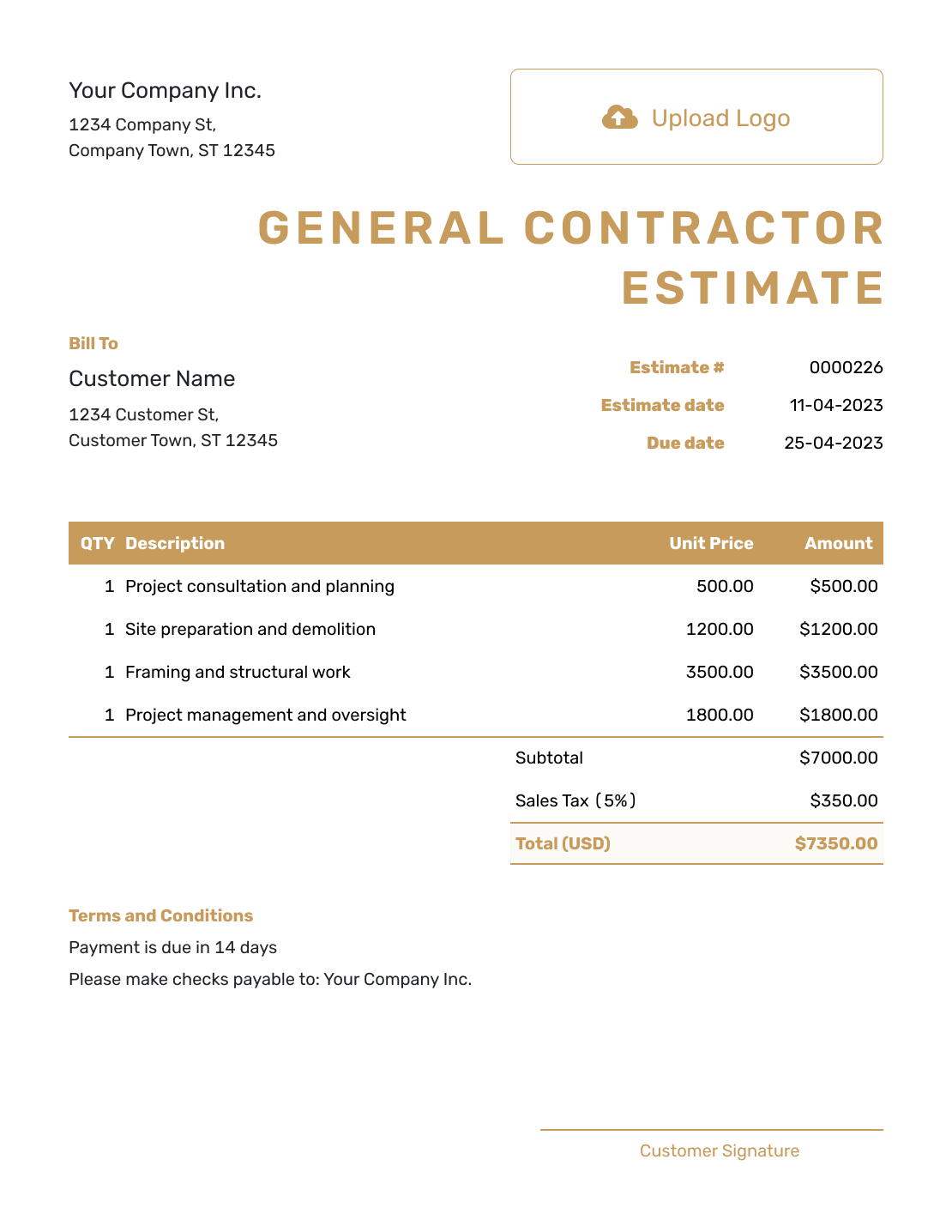
Professional General Contractor Estimate Template
Create Free Estimate
More Construction Estimate Templates
Choose a narrower template when one project type or trade needs more focused scope and pricing.
Other Estimate Template File Formats
Prefer to work in a document or spreadsheet? These pages offer separate Word, Google Docs, Excel and Google Sheets templates. In Docelf, you can download the finished estimate as a PDF.
After You Send the Estimate
Check whether the emailed estimate was delivered and opened. Your customer can accept or decline it online; Docelf updates the status and emails you when they respond.
If the plan changes, revise the affected trade amounts and explain the difference before seeking approval. When work is ready to bill, create an invoice from the estimate and check that it covers only the work being billed.
Creating or editing an estimate does not email it. You choose when to send the revised version.
General Contractor Estimate Template FAQs
Find answers to common questions about building and sending a general contractor estimate.
-
What is a general contractor estimate?
A general contractor estimate shows the expected project scope and likely cost across the trades, materials, subcontractors, allowances and project-wide costs known at the time.
-
What should I include in a general contractor estimate?
Start with the customer, site and scope by trade or phase. Show the expected costs, including any permits or allowances, and the likely total. Explain the schedule, assumptions, exclusions and payment terms so the customer knows what the estimate covers.
-
Should I show subcontractor costs separately?
Separate subcontractor amounts by trade when that helps the customer understand the project. State what each amount covers and note important exclusions or qualifications.
-
How should I include overhead and project management?
You can include overhead in your trade prices or show a separate project-management line. Explain what it covers, such as supervision, coordination or temporary facilities. Check that the same cost is not also included in another line.
-
What is an allowance in a general contractor estimate?
An allowance is a labeled estimated amount for a selection or cost that is not final. State what it covers so the customer understands which part of the likely total may change.
-
What is the difference between a general contractor estimate and a quote?
Use an estimate while trade pricing, selections or quantities can still change. Use a quote when you are ready to offer a specific scope, price and terms for the customer to approve.
-
Can a customer accept a general contractor estimate online?
Yes. Your customer can accept or decline the estimate online. Docelf updates the status and emails you when they respond.
-
Can I turn an accepted general contractor estimate into an invoice?
Yes. Create an invoice from the estimate in Docelf. The relevant customer, item, price and document details copy into the invoice, and you can adjust it for the work being billed.
-
Can I email or download a general contractor estimate?
Yes. You can email the estimate from Docelf, print it or download it as a PDF. You can also see when an emailed estimate is delivered and opened.
Ready to Price the Whole Project?
Give your customer a clear view of the project before work begins.
- Organize work and costs by trade or phase
- Show allowances and project-wide costs clearly
- Email the estimate or download a professional PDF