Free Bid Estimate Template
Create a professional bid estimate in minutes
Present the scope, likely price and terms in a bid that is easy to compare. A clear offer helps you stand out and gives you a better chance of winning the work.
Email, print or download your estimate as a PDF.
14-day free trial. No credit card required.
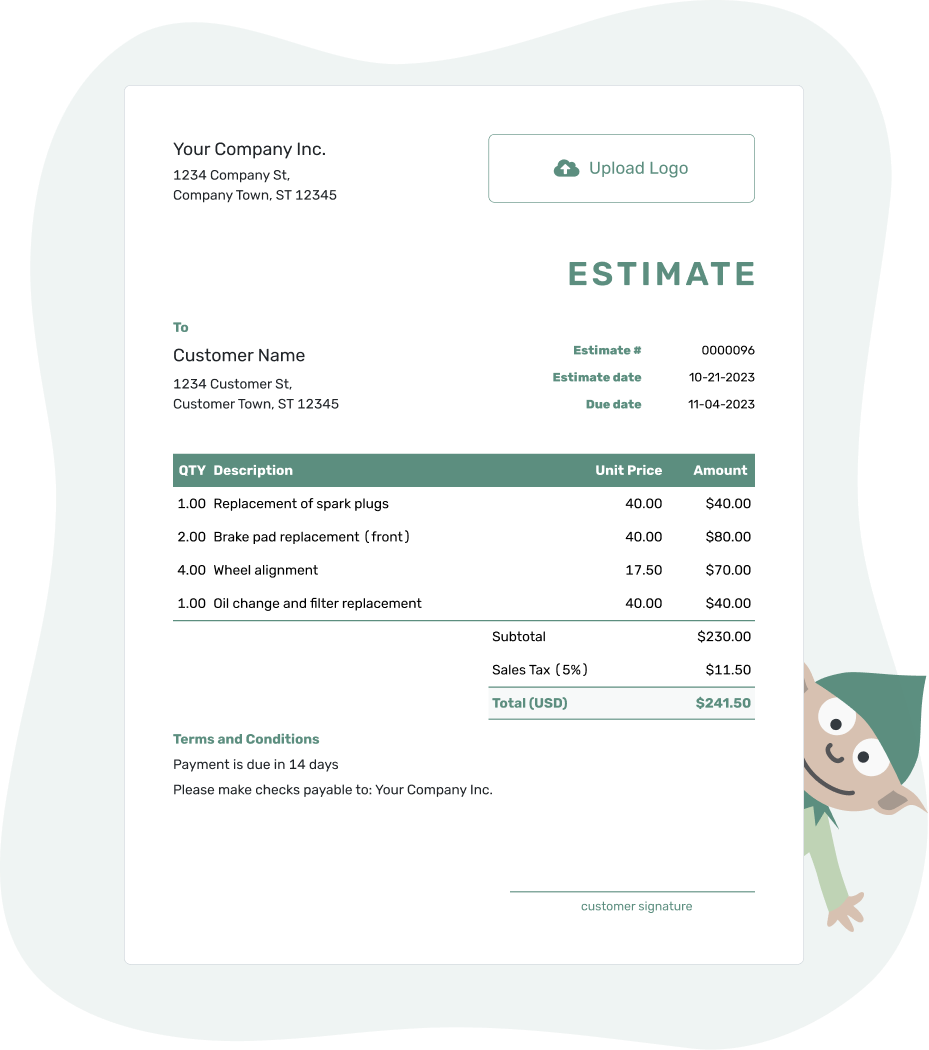
Price the job. Send the estimate. Get back to work.
Bid Estimate Template Examples
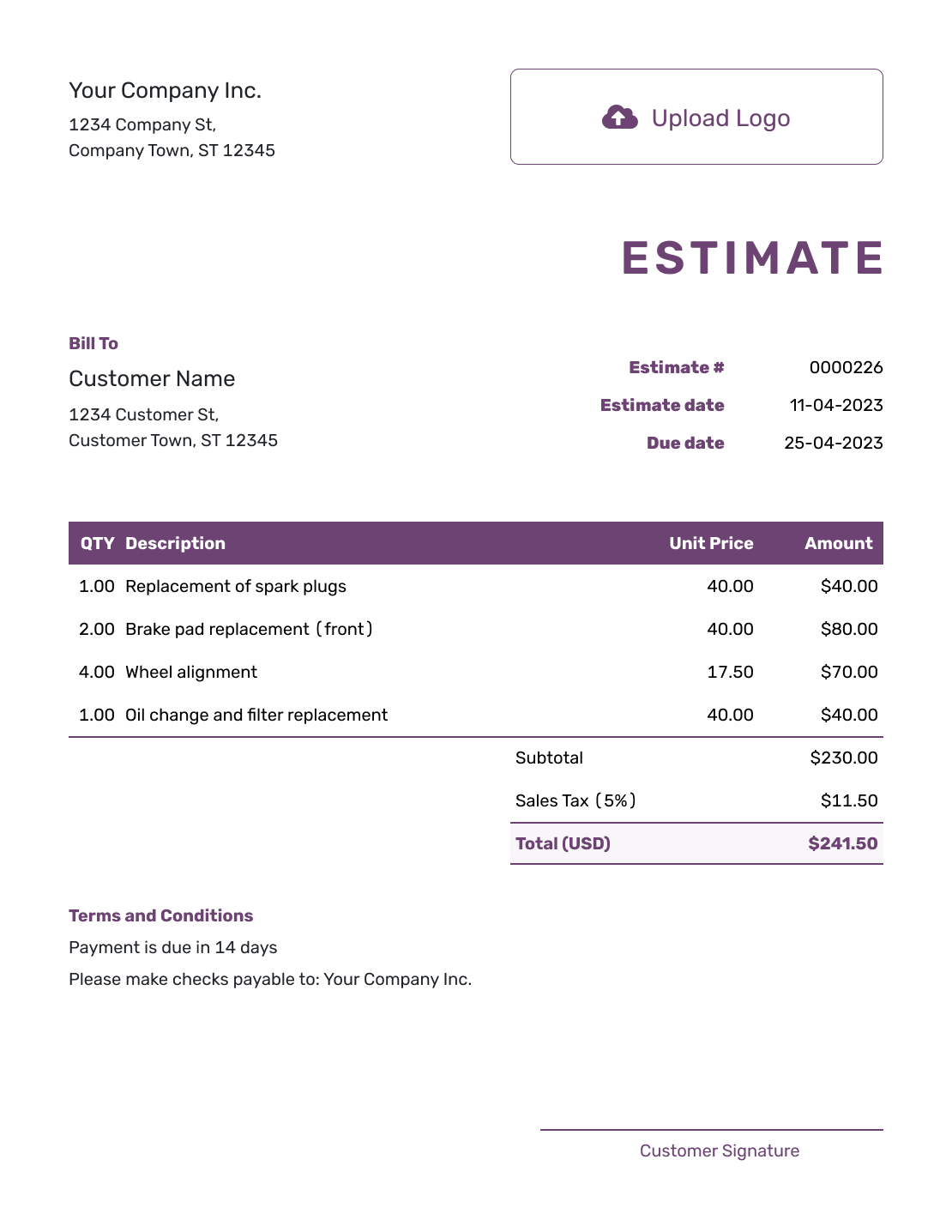
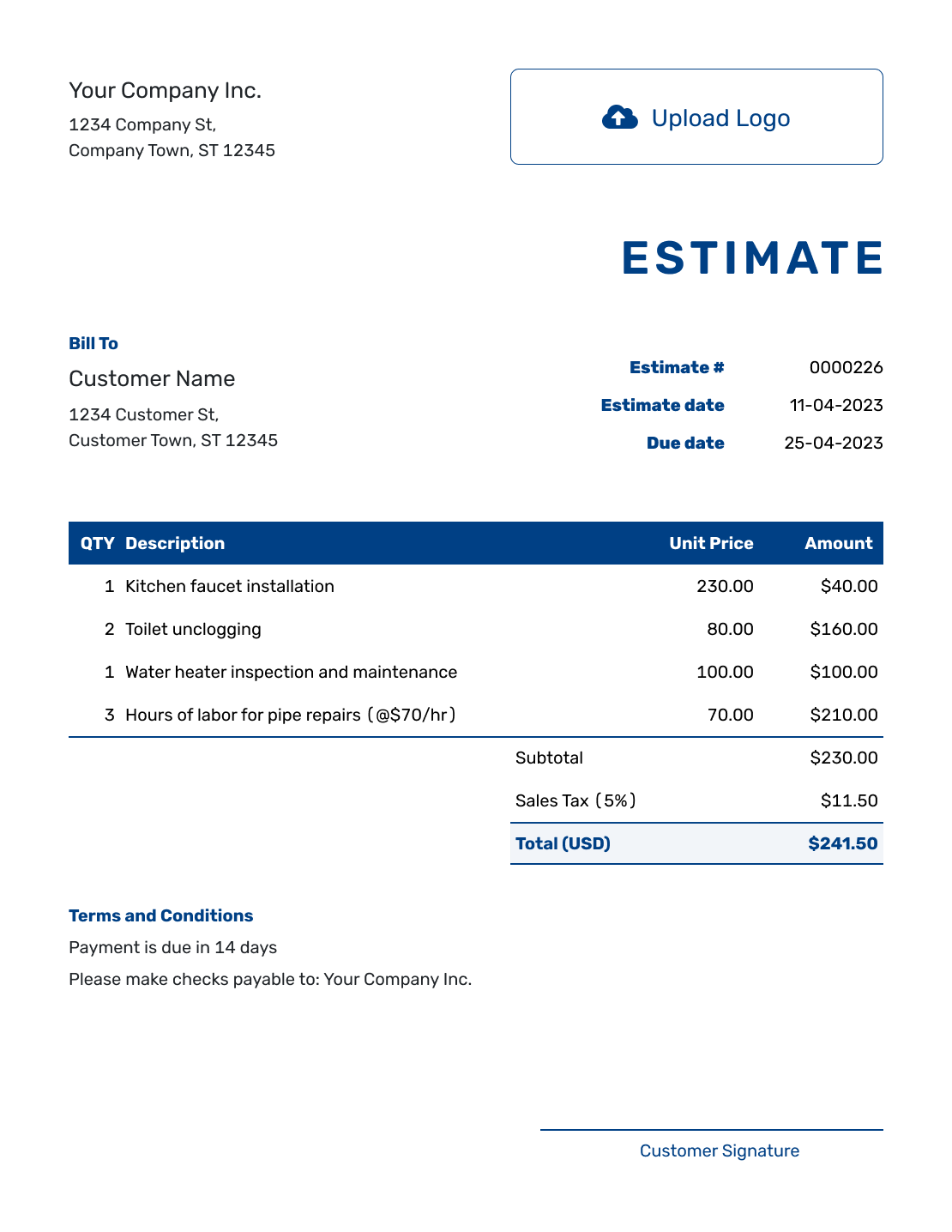
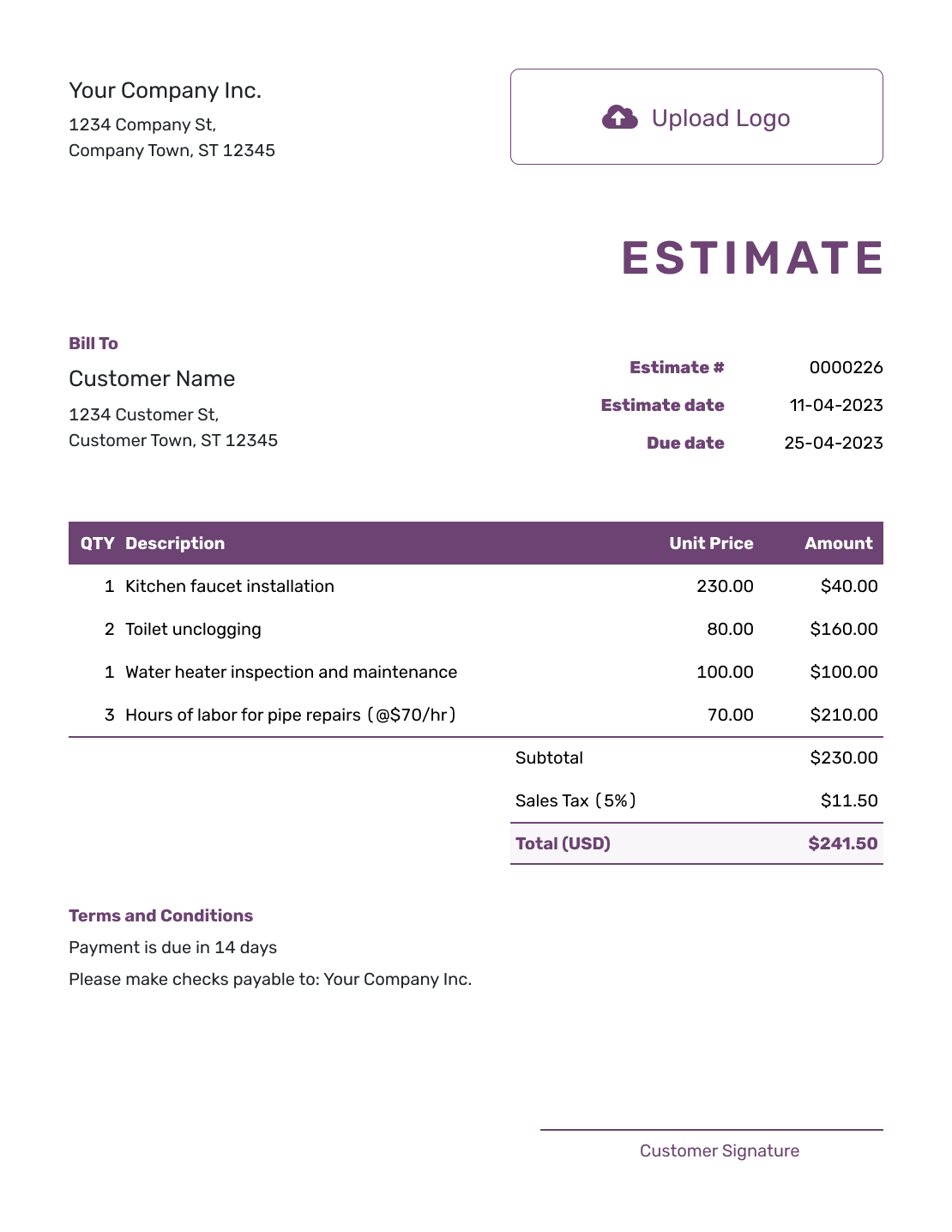
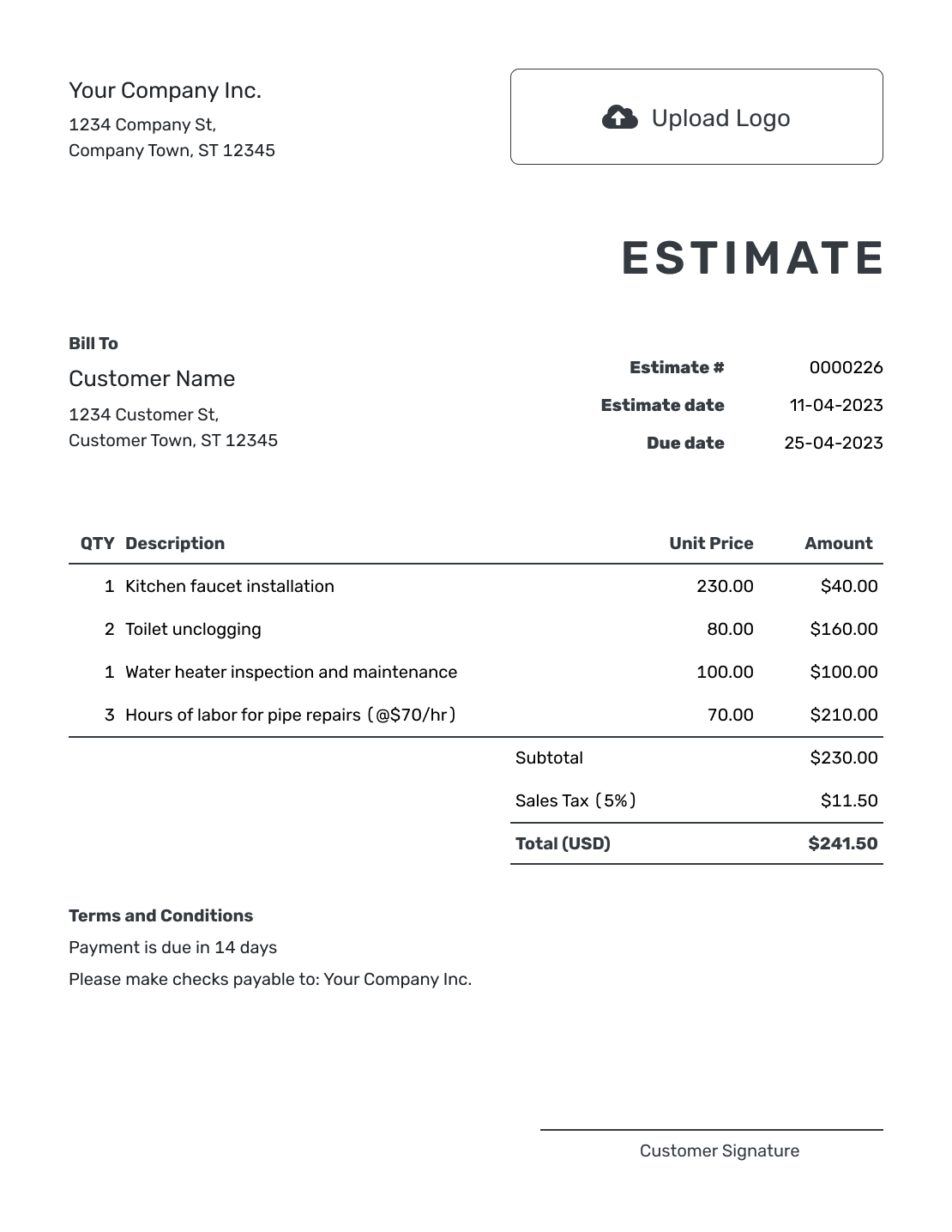
Choose a layout for the bid you are preparing. Each preview opens the same estimate editor; add your own scope and pricing there.
What Is a Bid Estimate?
A bid estimate presents the work you plan to do and what it is likely to cost when a customer is comparing providers or asking businesses to bid. It gives your offer a clear scope, price and set of assumptions.
Use an estimate when quantities, site conditions or customer choices may still affect the final amount. State what the bid includes, what it leaves out and how long the pricing remains valid.
How to Create a Bid Estimate
Start with the customer's requested scope and submission instructions. Then complete the estimate in the order shown, keeping the project reference and any assumptions with the priced work.
- Your Business: Add your business name and the contact details for bid questions.
- Your Logo: Add the logo used on your other business documents.
- Customer: Enter the customer receiving the bid and their contact details.
- Number and Dates: Check the estimate number, issue date and valid-until date.
- Work and Prices: List the requested tasks, quantities, unit prices and any allowances.
- Check the Total: Review the line amounts, applicable tax and estimated total.
- Terms and Submission: Add the project reference and assumptions in Terms and Conditions. Review, then email or download the bid.
How to Fill In Bid Estimate Line Items
Match the line items to the work requested. Name the tasks and materials the customer can compare with other bids. A description such as “office wall preparation and painting” gives more detail than “project work.”
This fictional bid covers repainting the walls of four small offices. It keeps planning, painting, materials, equipment and cleanup separate. Prices are in US dollars, with an illustrative 8% tax on all charges; use the tax treatment that applies to your job.
| QTY | Description | Unit Price | Amount |
|---|---|---|---|
| 1 | Office repaint planning and room protection | $450.00 | $450.00 |
| 32 | Office wall preparation and painting — hours | $85.00 | $2,720.00 |
| 1 | Paint and supplies allowance | $1,200.00 | $1,200.00 |
| 1 | Equipment rental and paint delivery | $380.00 | $380.00 |
| 1 | Final inspection and cleanup | $250.00 | $250.00 |
| Subtotal | $5,000.00 | |
| Sales Tax (8% illustrative) | $400.00 | |
| Estimated Total | $5,400.00 |
What to Include in Bid Estimate Terms
Use Terms and Conditions to explain the limits behind the price: what is included, any allowance, expected access and how long the bid remains valid. Identify the project or invitation reference so the customer can match it to the work requested.
Adapt this sample to the office repaint above. Include only terms your business uses, and agree on the start date and any payment terms with the customer.
Example: Terms and Conditions
- Scope: preparation and repainting of walls in four offices. Ceilings, trim and major wall repairs are excluded.
- The estimate includes a $1,200.00 allowance for paint and supplies. Confirm the selection before ordering.
- Pricing is valid for 30 days from the estimate date. Work assumes access to empty rooms during agreed hours.
- Any change to the scope or allowance will be priced and approved before the affected work begins.
Create a Bid Estimate Built for Comparison
Put your priced scope into Docelf and let it calculate the total. Review the bid, then email it or download the PDF for submission.
What to Include in a Bid Estimate
Give the customer the details needed to compare your bid without making them search for the price or the work included.
Scope and deliverables
Describe the work, quantities, phases and final deliverables. Make exclusions clear so your price is compared against the right scope.
Price breakdown
Show labor, materials, equipment, outside services and other expected costs at the level of detail the bid requires.
Schedule and bid validity
Add expected timing and the date through which the bid pricing is valid. Mention access or availability when it affects the schedule.
Assumptions and terms
State the customer choices, site conditions, payment terms and other assumptions that affect your likely total.
Build a Bid That Is Easy to Compare
Lead with the result the customer is buying, then organize the work into clear phases or line items. A customer should be able to match your price to the scope without guessing what is included.
When you offer an optional upgrade, keep its price outside the base total. For a different method or scope, prepare a separate estimate so the customer can compare each complete option. Make the differences clear rather than hiding a smaller scope inside a lower price.
Price the Work, Not Just the Competition
Make sure the likely price covers the labor, materials, equipment, travel and outside costs you expect. A bid that wins the work but leaves out real costs creates a harder problem later.
When the customer has a target budget, show what can be included at that level and list useful alternatives separately. This keeps the decision clear without quietly changing the scope.
Bid Estimate, Quote, or Invoice?
Use the document that matches how specific the offer is and whether the work is ready to bill.
Estimate
Use a bid estimate to show expected work and a likely price when quantities, conditions or selections may still change.
Quote
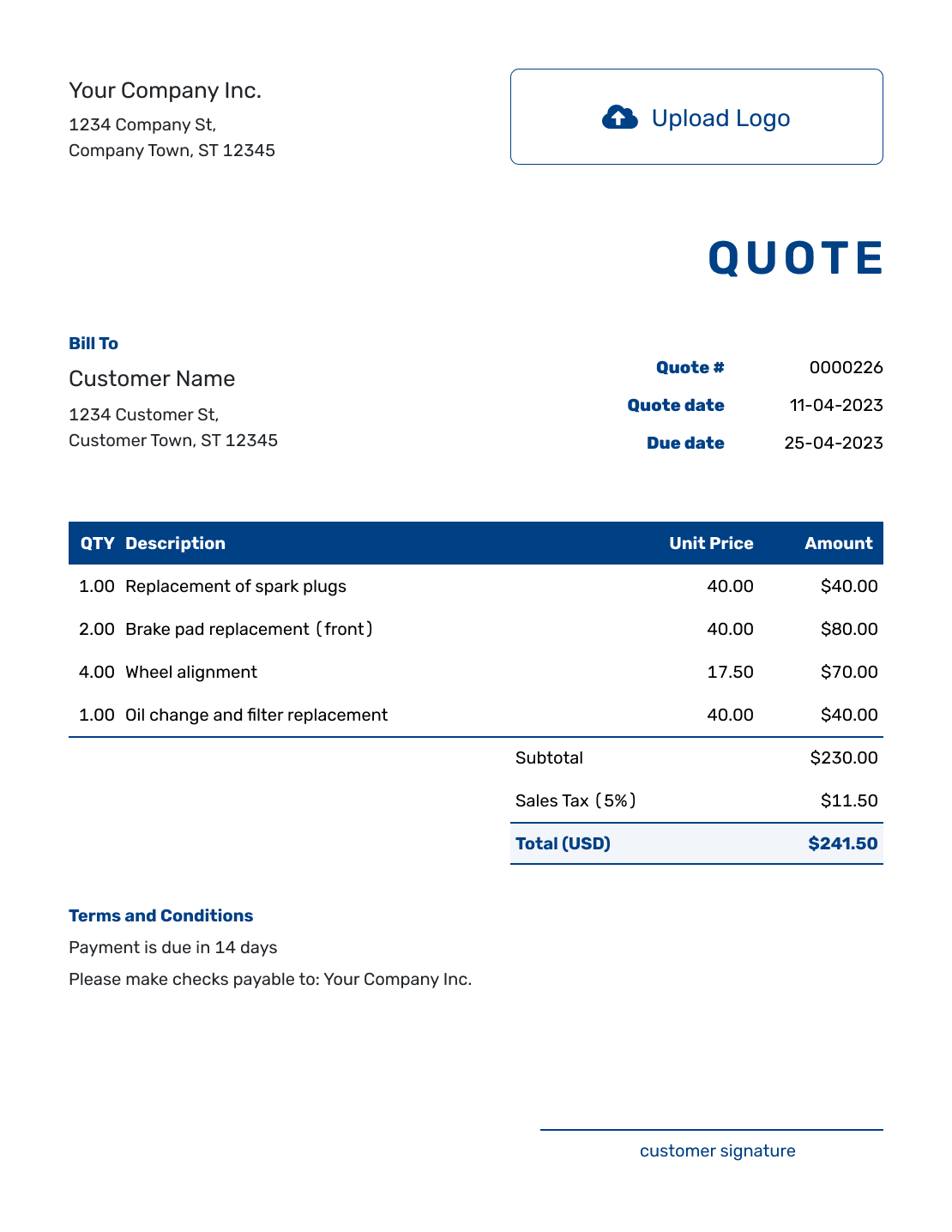
Use a bid quote when you are ready to present a more specific offer, price and terms for the customer to approve.
Invoice
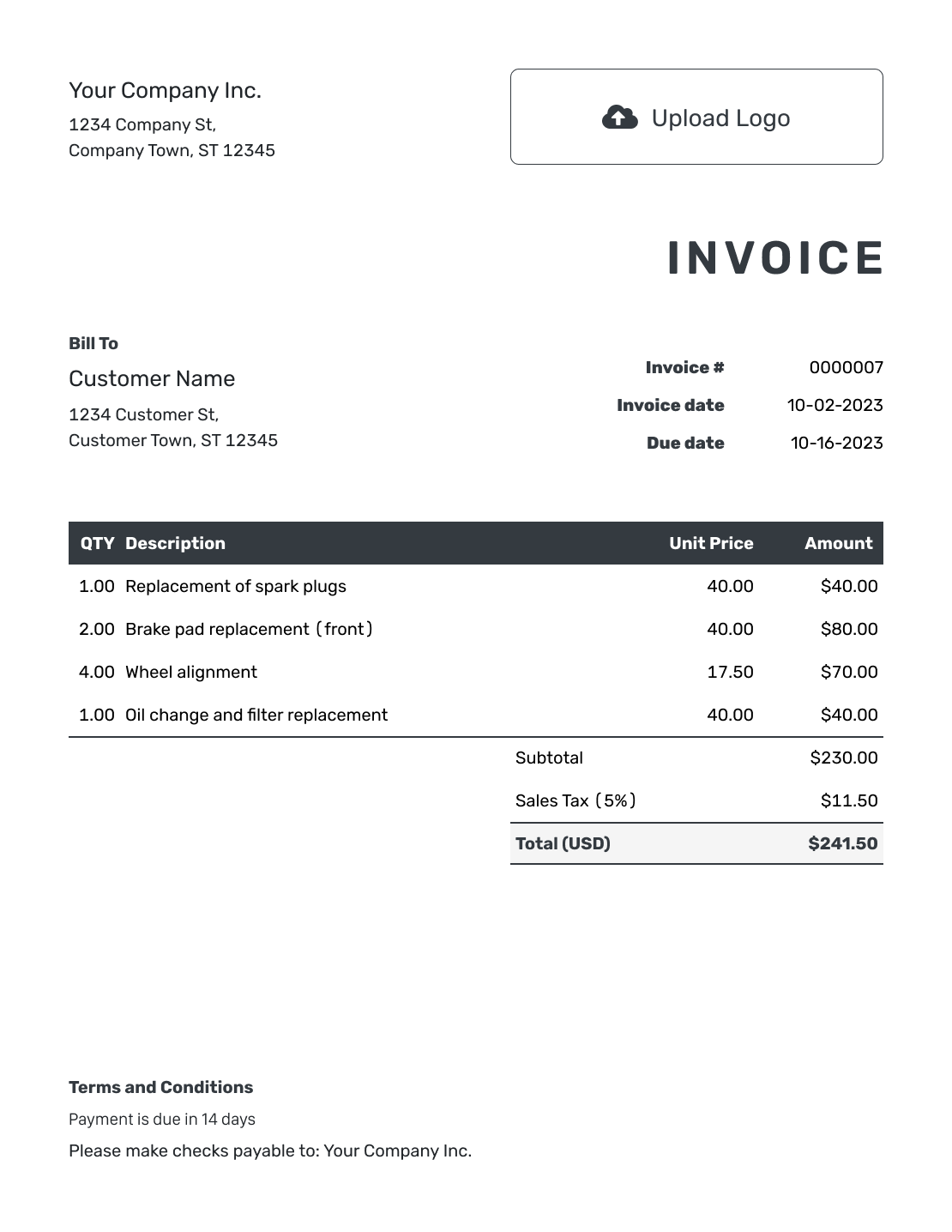
Use an invoice after the work or billing stage begins and the customer needs to see what they owe and when it is due.
Make the Bid Look Like Your Business
Add your logo, colors and fonts so the bid matches your other customer documents. Use Terms and Conditions for project details and attach a relevant scope, specification or drawing when it helps explain the offer.
Keep the design clean. The customer should notice the scope, likely price and terms before any decorative detail.
More Bid Estimate Previews
These six layouts offer more ways to present your bid. Add your own business details and review the finished estimate before sending it.
-
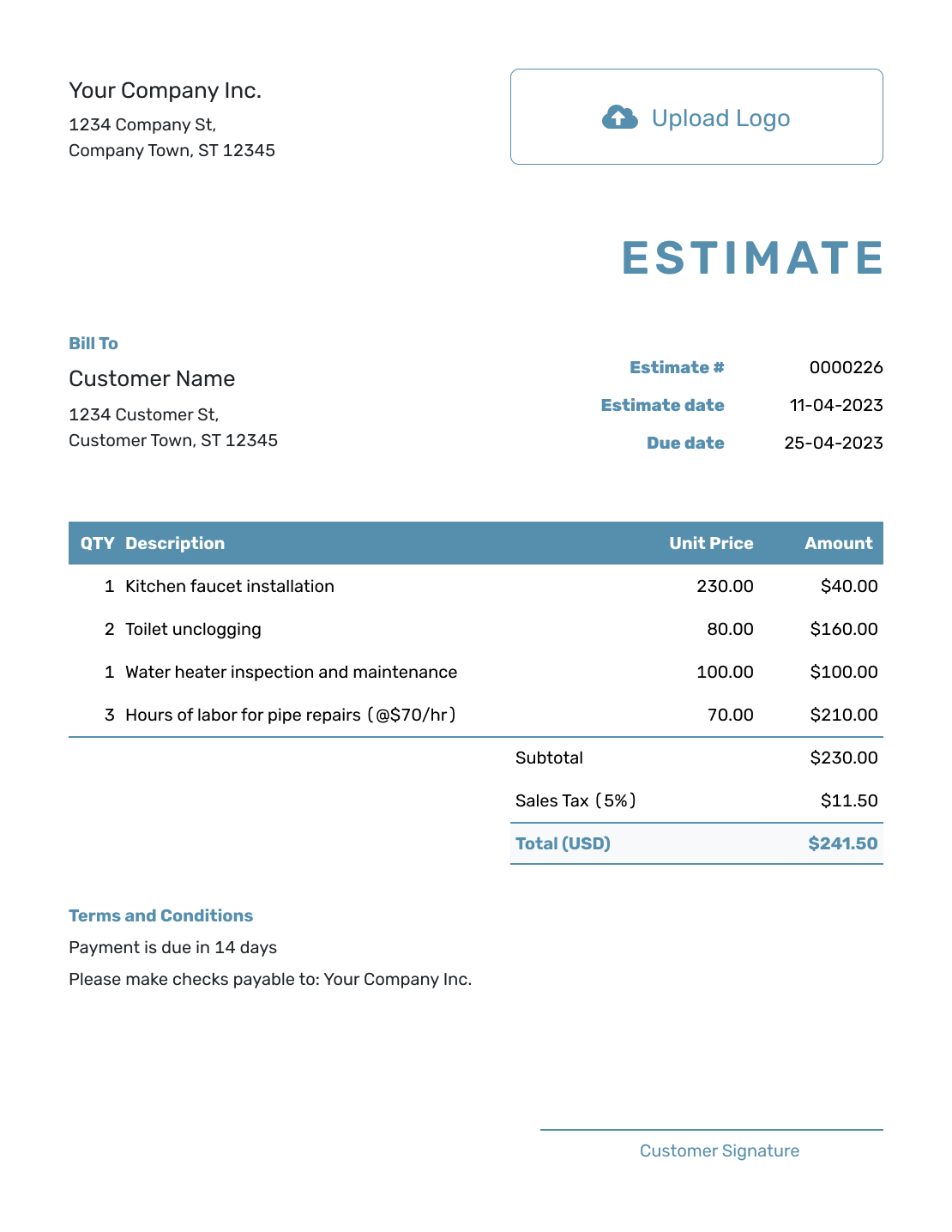
Blank Bid Estimate Template
Create Free Estimate -
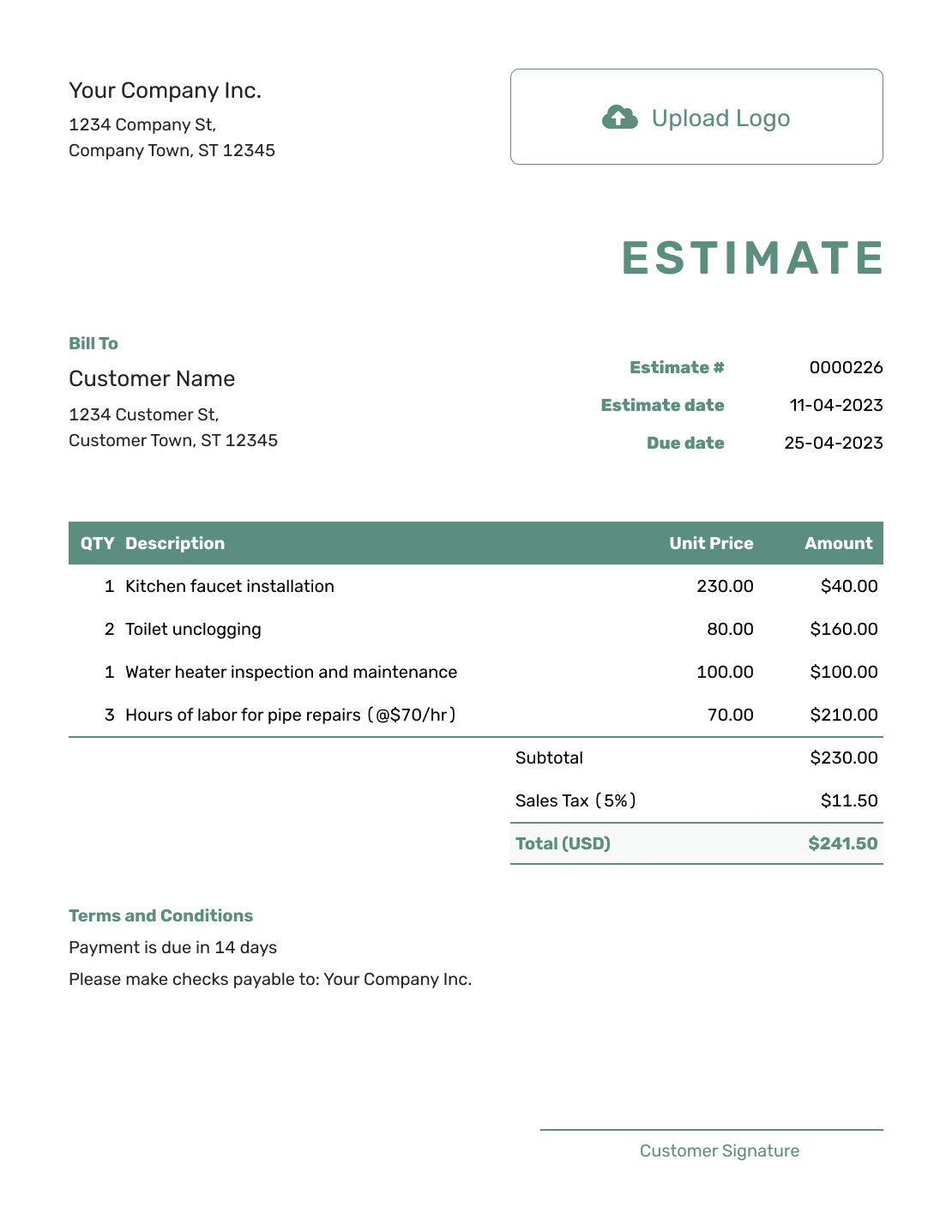
Simple Bid Estimate Template
Create Free Estimate -
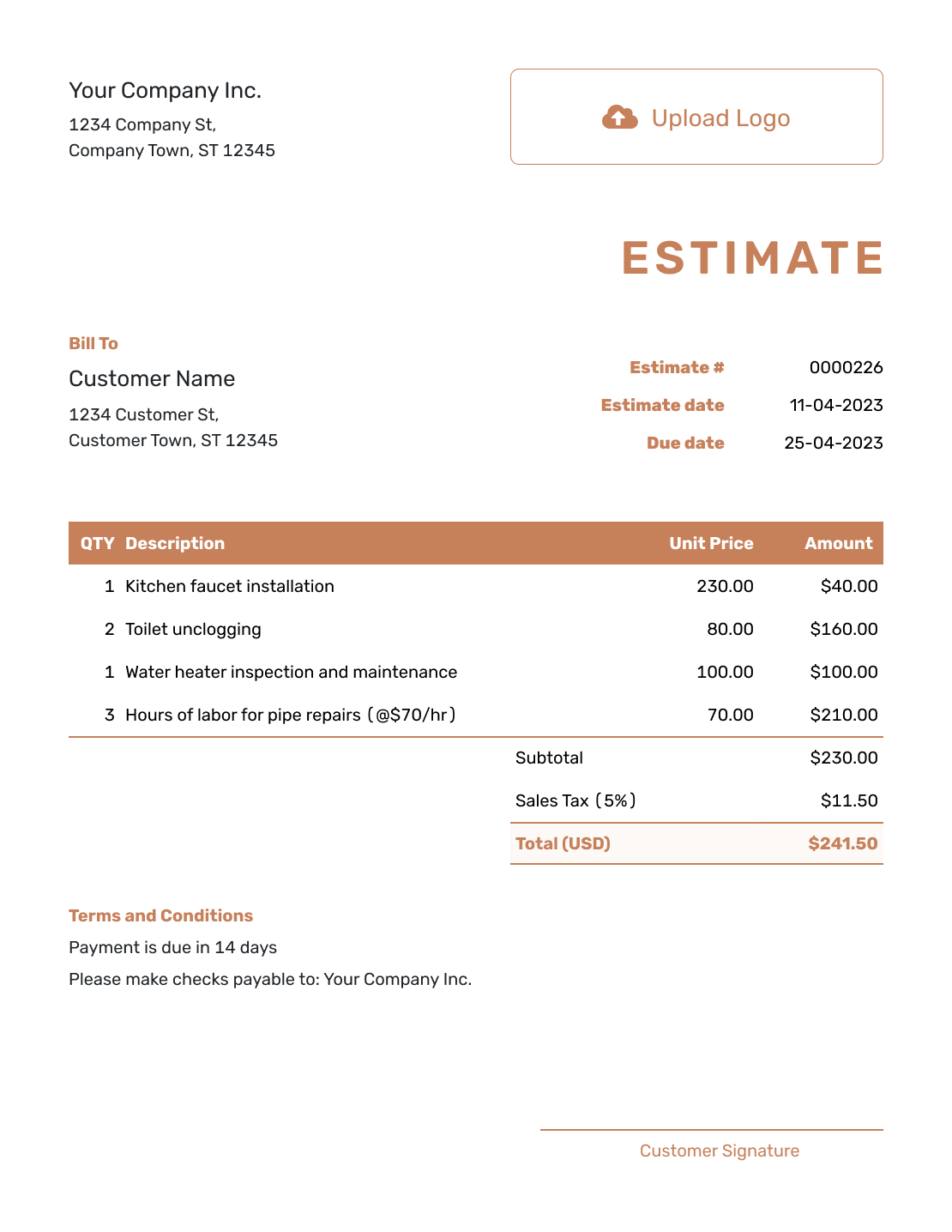
Downloadable Bid Estimate Template
Create Free Estimate -
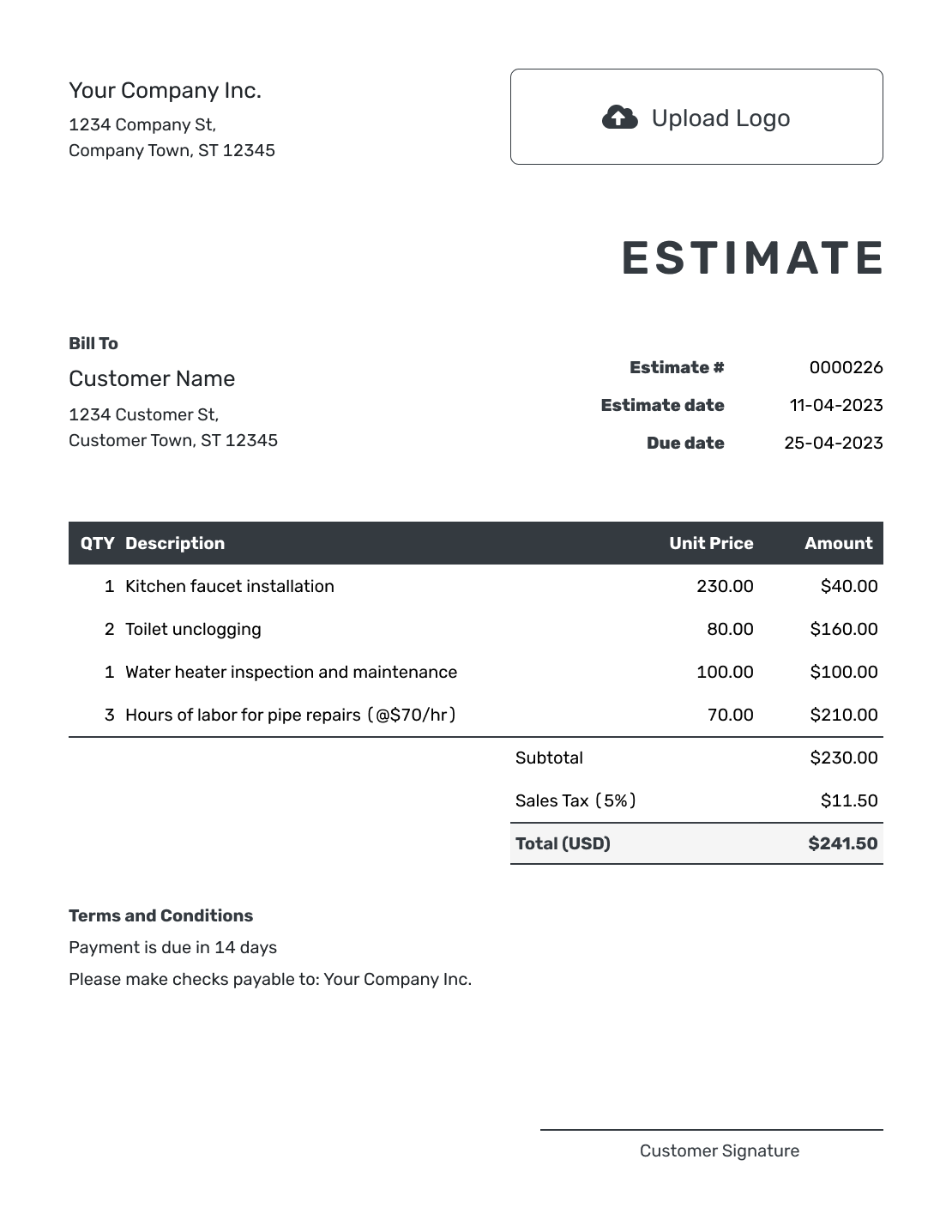
Editable Bid Estimate Template
Create Free Estimate -
Fillable Bid Estimate Template
Create Free Estimate -
Professional Bid Estimate Template
Create Free Estimate
Related Business Estimate Templates
Use a more specific business estimate when the customer needs a general job price, a detailed cost breakdown or a fuller project proposal.
Other Estimate Template File Formats
Prefer to work in a document or spreadsheet first? Choose a format below, or create the estimate online when you want automatic totals and a finished PDF without rebuilding the layout.
After You Send the Estimate
Use the document history to see when the emailed bid is delivered and opened. If the customer asks for a different scope, revise the affected items and explain how the price and timing change before you resend it.
You can create an invoice from the estimate when it is time to bill. Docelf copies the relevant customer, item, price and document details, so you can check the final work and amount without starting again.
Bid Estimate Template FAQs
Find answers to common questions about preparing, submitting and using a bid estimate.
-
What is a bid estimate?
A bid estimate shows the work you propose, what it is likely to cost and the terms or assumptions that affect your offer. It is useful when a customer is comparing businesses before choosing who will do the work.
-
What should I include in a bid estimate?
Identify the customer and project, then describe the work and its expected costs. Add the schedule, exclusions, assumptions and payment terms, along with a valid-until date.
-
How do I make a bid estimate easy to compare?
Use clear headings and line items that connect the price to the scope. Keep optional work separate, state what is excluded and put the likely total where it is easy to find.
-
Is a bid estimate the same as a quote?
Not always. A bid estimate shows expected work and a likely price that may still change. A quote is normally used for a more specific offer, price and terms that the customer is being asked to approve.
-
How long should a bid estimate be valid?
Choose a valid-until date that reflects how long your prices, schedule and material availability are realistic. Docelf lets you keep a response deadline or valid-until date with the estimate.
-
Can a customer accept a bid estimate online?
Yes. Customers can accept or decline estimates online without a Docelf account. Docelf updates the status and emails you when they respond.
-
Can I email or download a bid estimate?
Yes. You can email an estimate from Docelf, print it or download it as a PDF. You can also see when an emailed estimate is delivered and opened.
-
How do I submit a bid when the customer has their own form?
Follow the customer’s requested format and deadline. Complete any required bid form and include the requested supporting files. Your Docelf estimate can provide the priced scope, but it does not replace documents the customer specifically asks for.
Ready to Submit the Bid?
Give the customer a bid they can review alongside the work they requested.
- Match the priced work to the requested scope
- Keep the likely total accurate
- Email or download a professional PDF