Free Contractor Estimate Template
Create a professional estimate in minutes
Show the work, main materials and likely price in a clear order. Customers get a quick view of the job and feel more confident choosing you for the work.
Email, print or download your estimate as a PDF.
14-day free trial. No credit card required.
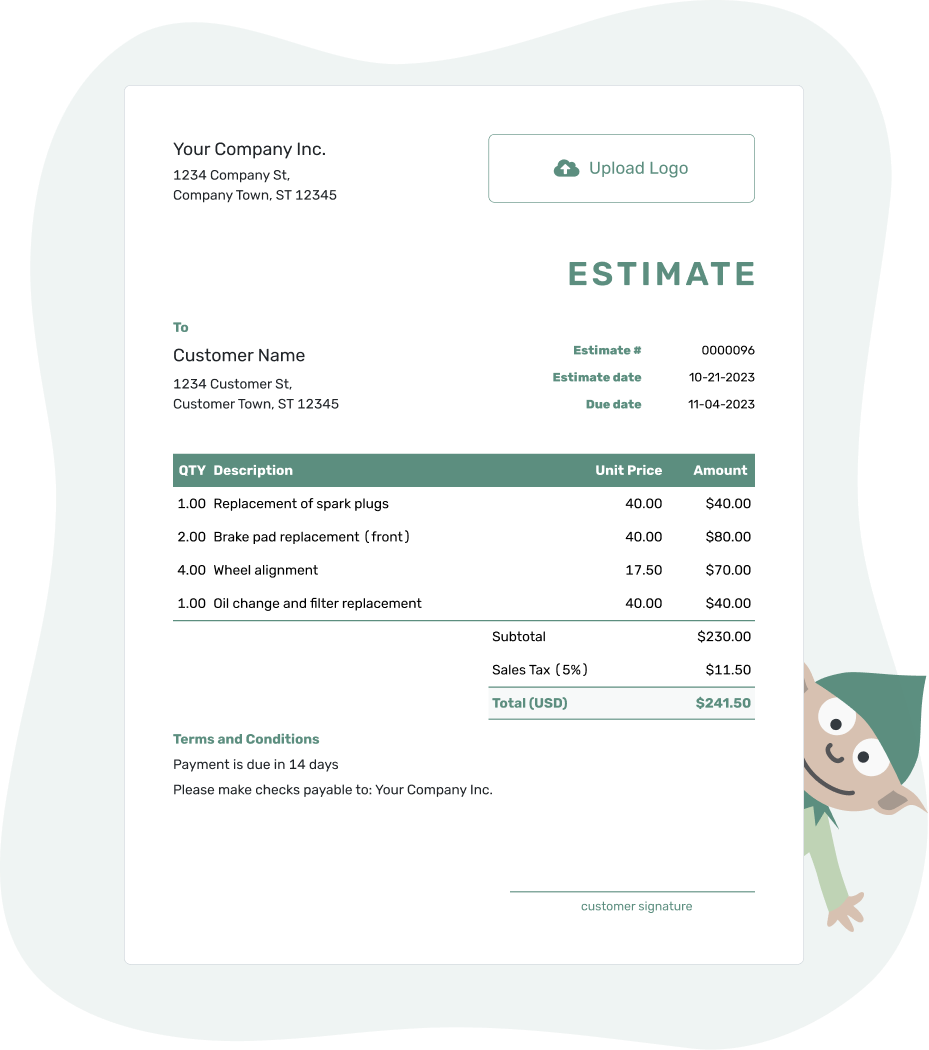
Price the job. Send the estimate. Get back to work.
Contractor Estimate Template Examples
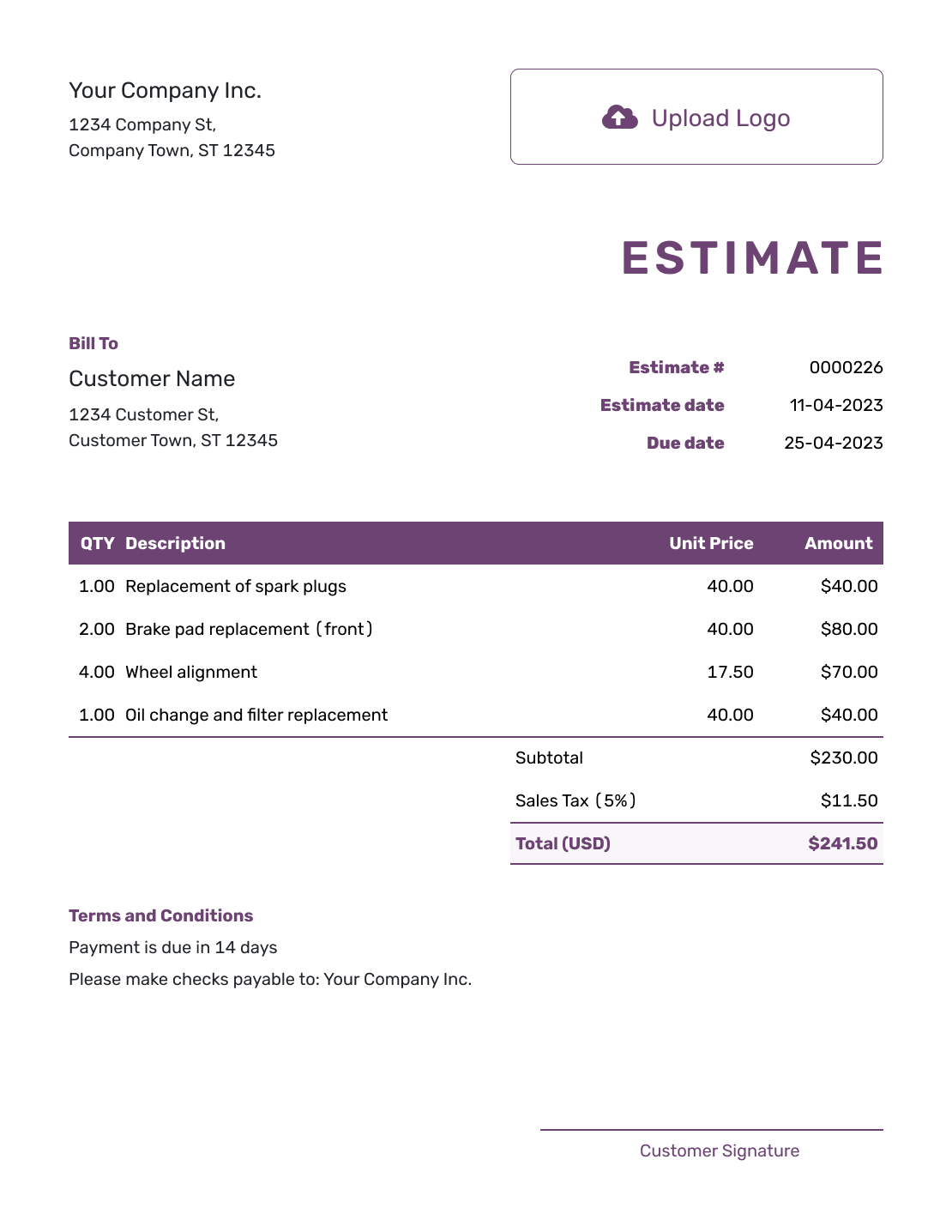
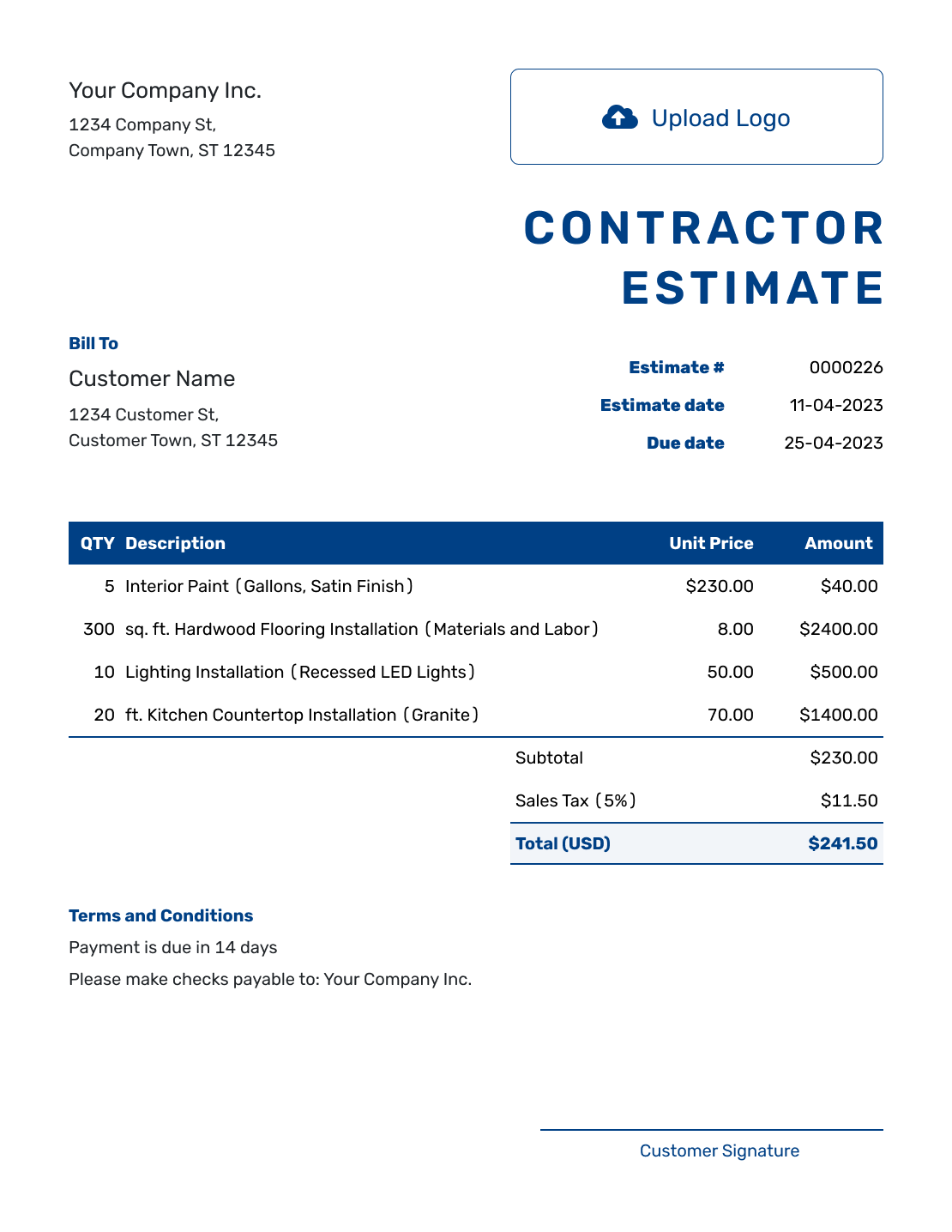
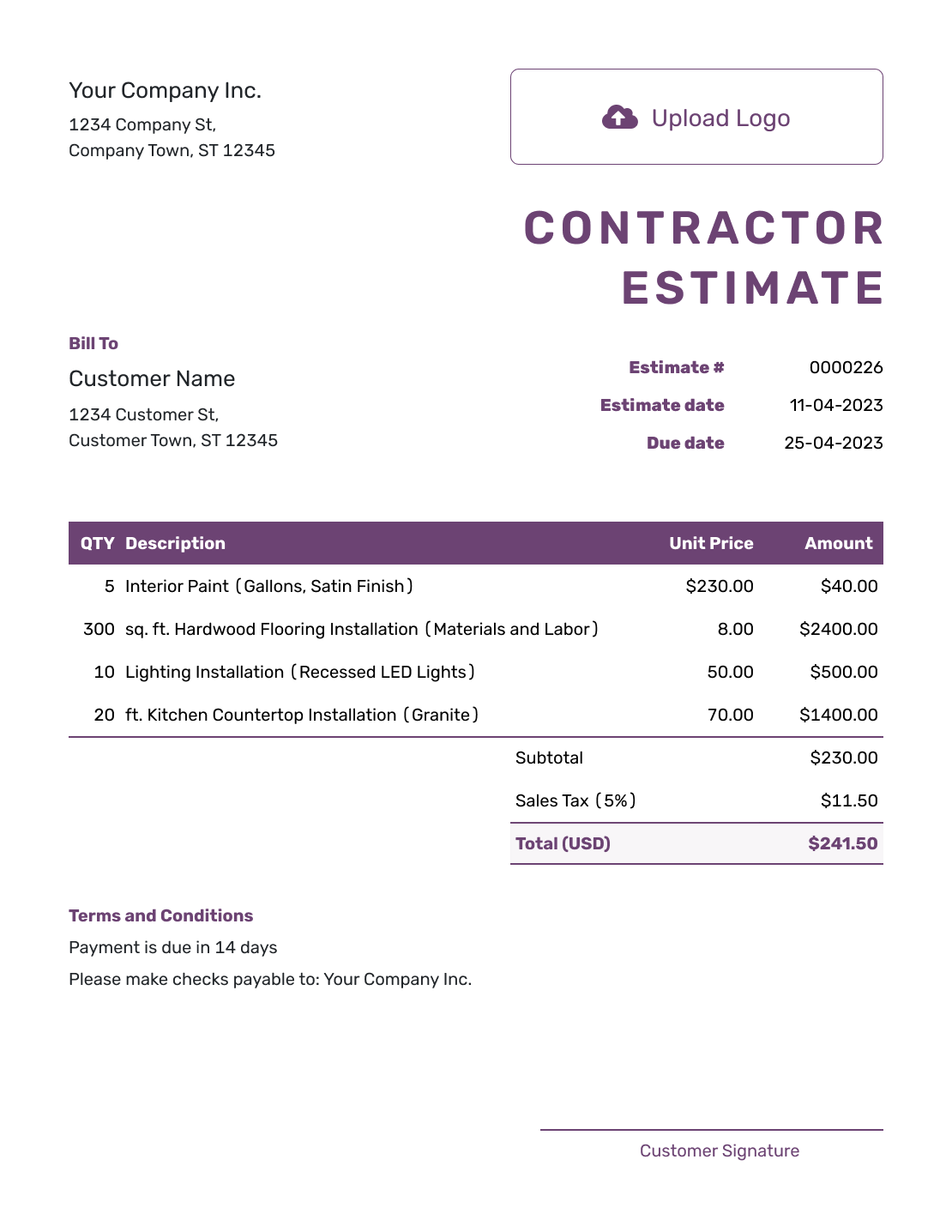
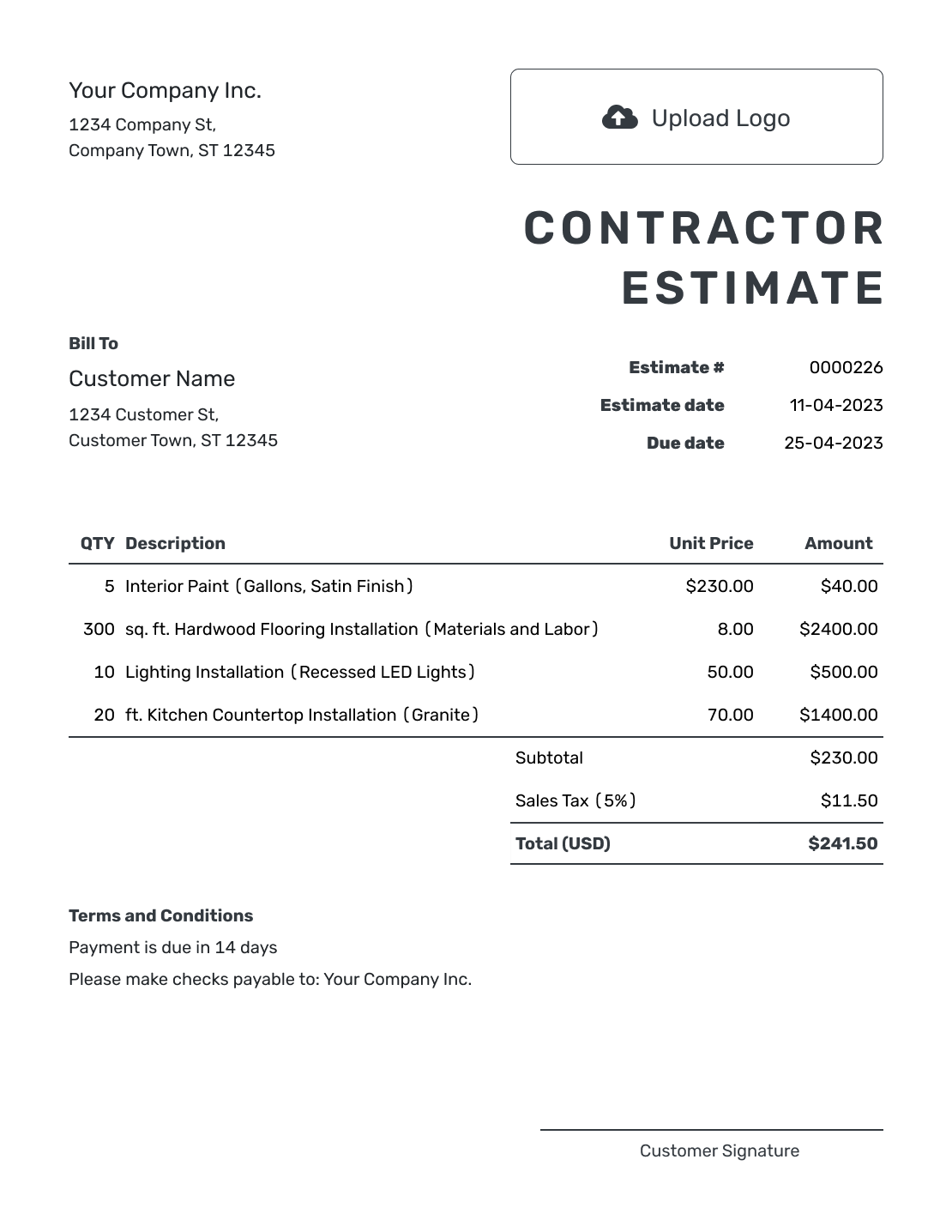
Use these previews for layout ideas, then add your own job details. Each opens the same estimate editor.
What Is a Contractor Estimate?
A contractor estimate shows the expected work and likely price for one job before the final bill is known. It gives the customer a clear view of labor, materials, equipment and terms.
Use it for repairs, installations, small builds or other project work where quantities or site conditions may still affect the final cost.
How to Create a Contractor Estimate
Start with the work discussed during the walkthrough or job discussion. Keep the job address with the scope so the customer can match the estimate to the right property.
- Your Business: Enter your business name and contact details.
- Your Logo: Add your logo to match your other job documents.
- The Customer: Add the customer. Identify the job address when it differs from their address.
- Number and Dates: Check the estimate number, issue date and valid-until date.
- Work and Prices: Describe the work, materials and equipment. Add quantities and unit prices.
- Estimated Total: Review line amounts, applicable tax and any discount. Docelf calculates the total.
- Terms and Sending: Use Terms and Conditions for timing, assumptions and changes. Review the estimate, then choose to send it.
How to Fill In Contractor Estimate Line Items
A useful line says what you will do, where you will do it and how the price is measured. For hourly work, put the expected hours in QTY. For a combined job price, use a quantity of 1 and describe what that price includes.
This fictional hallway repair separates labor, materials and debris removal. The labor covers removing damaged drywall, installing new board, then taping and sanding the repaired area ready for paint. Prices are in US dollars; the illustrative 8% tax applies only to the $160.00 materials line. Use the tax treatment that applies to your work.
| QTY | Description | Unit Price | Amount |
|---|---|---|---|
| 10 | Hallway drywall removal, installation and finishing — labor hours | $75.00 | $750.00 |
| 1 | Drywall board, tape, joint compound and fasteners — materials | $160.00 | $160.00 |
| 1 | Remove repair debris from the property | $125.00 | $125.00 |
| Subtotal | $1,035.00 | |
| Sales Tax (8% on materials, illustrative) | $12.80 | |
| Estimated Total | $1,047.80 |
What to Include in Contractor Estimate Terms
The Terms and Conditions field explains what the price depends on. State the finish you will leave, the access you need and any work you have excluded. Add the expected timing, response deadline and payment arrangement you actually use.
Adapt this example to the job. The exclusions keep painting and hidden framing repairs outside the hallway repair total, while the change policy tells the customer what happens if more work is needed.
Example: Terms and Conditions
- Hallway repair includes drywall replacement in the affected area, taped and sanded ready for paint, plus debris removal.
- Painting, hidden framing repairs and after-hours access are not included. The estimate assumes sound framing and clear weekday access.
- Estimated duration: two working days, with the start date agreed after acceptance. This estimate is valid for 30 days from its issue date.
- If concealed damage or requested changes affect the work, we will send a revised estimate for approval before doing the extra work.
- Payment is due on completion of the agreed work.
Turn the Job Notes Into a Clear Estimate
Add the work and prices from your job notes. Docelf calculates the total as you go. Review the scope and terms, then send the estimate for the customer to consider.
Give the Customer a Clear View of the Job
The estimate should connect the work you discussed with the likely price the customer is deciding on.
Clear scope
Describe the work by task, area or result. Use wording the customer will recognize from the walkthrough or job request.
Labor and materials
Separate labor, materials and equipment when the breakdown helps. Combine related costs when one clear line makes the job easier to follow.
Site conditions
Note access, protection, removal, owner-supplied items and visible conditions that affect the likely price.
Timing and terms
Add the expected start window, job duration, payment terms and response date when they matter to the customer’s decision.
Keep Optional Work Outside the Base Total
When the customer is deciding between a basic repair and an upgrade, price the requested work first. In the hallway example, painting is excluded. If the customer wants a price for painting too, send a separate estimate for that option so its cost does not enter the repair total.
If the customer chooses the option, revise the main estimate to include it and send the updated version for approval. Both sides can then refer to the same scope and total.
Contractor Estimate, Quote, or Invoice?
Choose the document based on how certain the job price is and whether the work is ready to bill.
Estimate
Use a contractor estimate when the scope is clear but quantities, site conditions or material choices can still change.
Quote
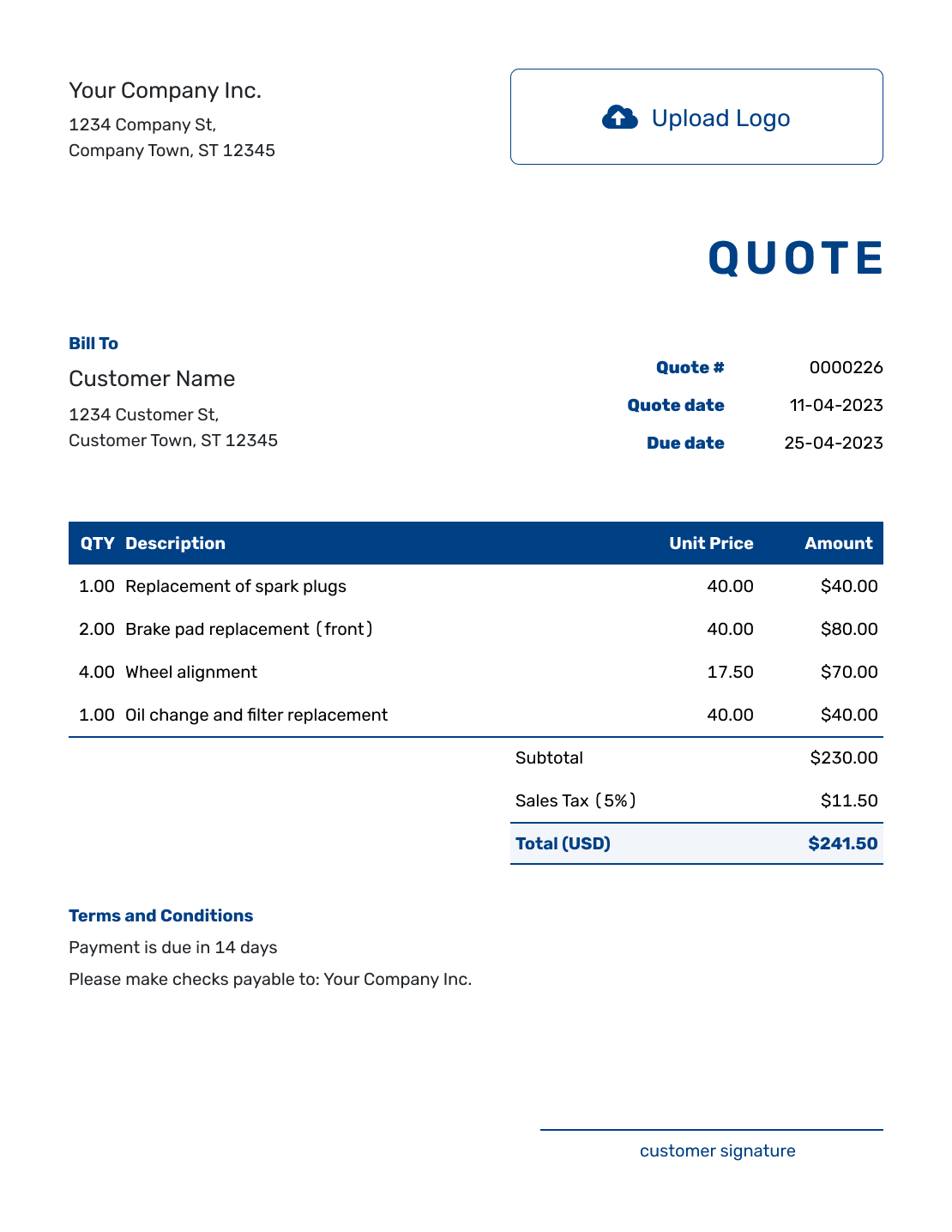
Use a construction job quote when you are ready to offer a specific scope, price and terms for approval.
Invoice
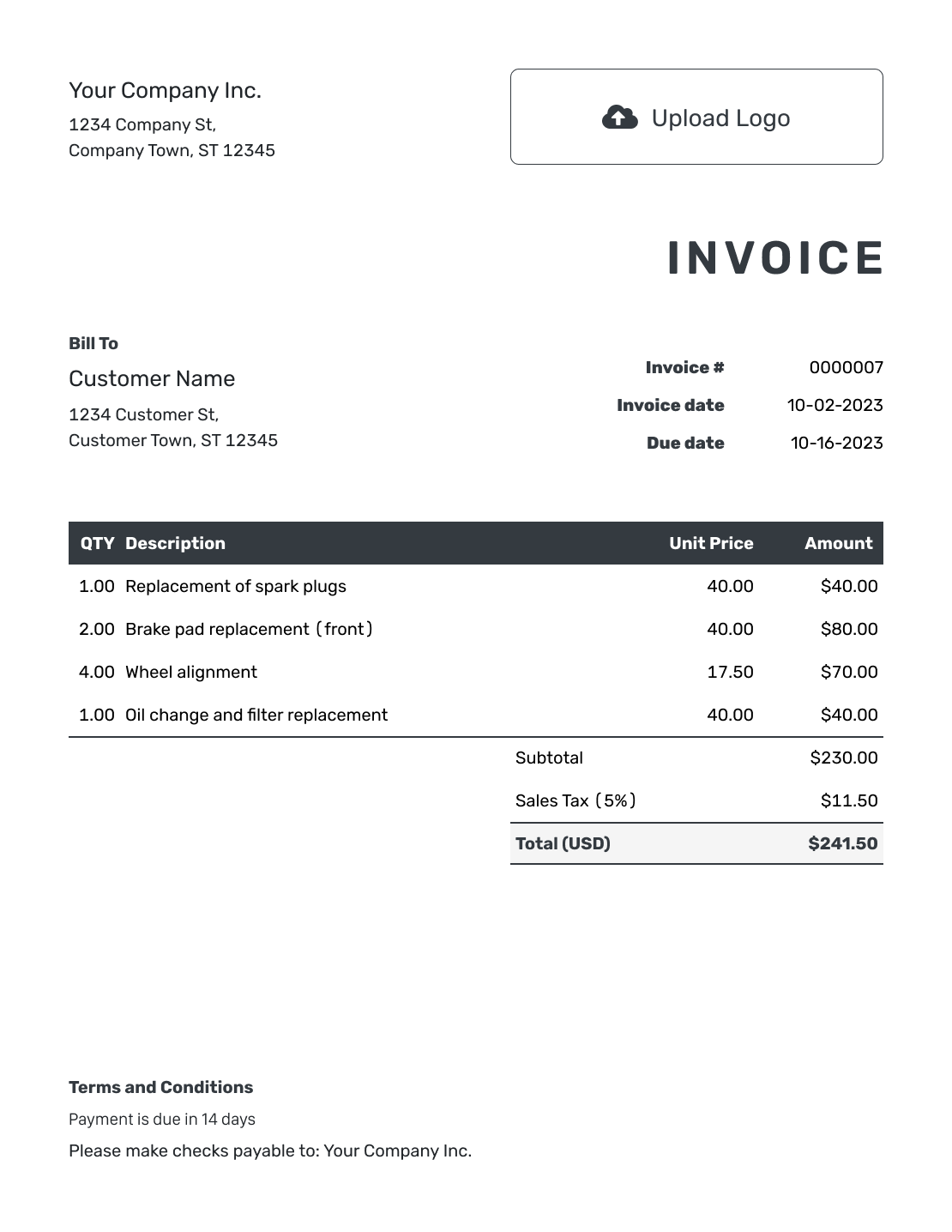
Use a contractor invoice when completed or billable work is ready for payment.
More Contractor Estimate Previews
Compare the remaining layouts before adding your business details, scope and prices.
-
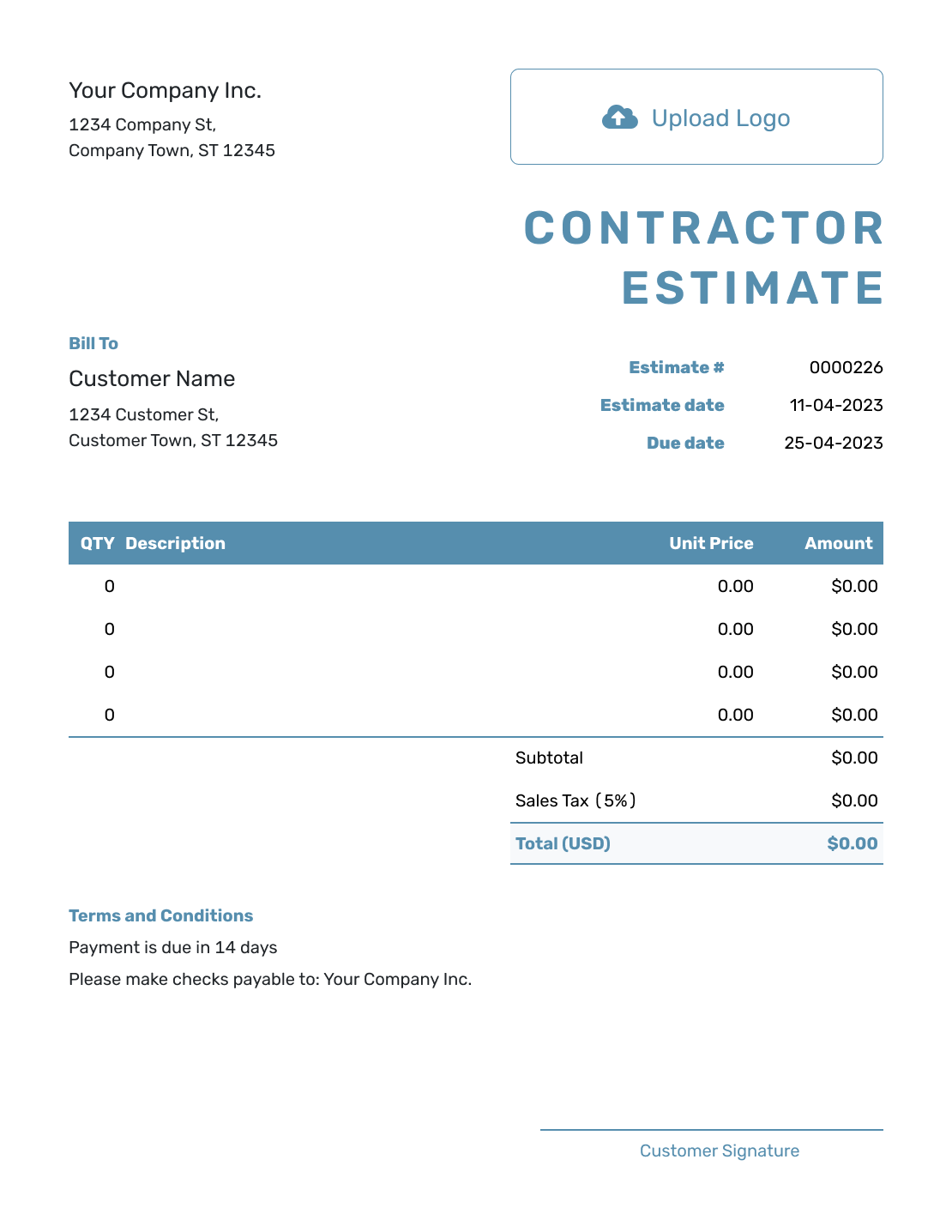
Blank Contractor Estimate Template
Create Free Estimate -
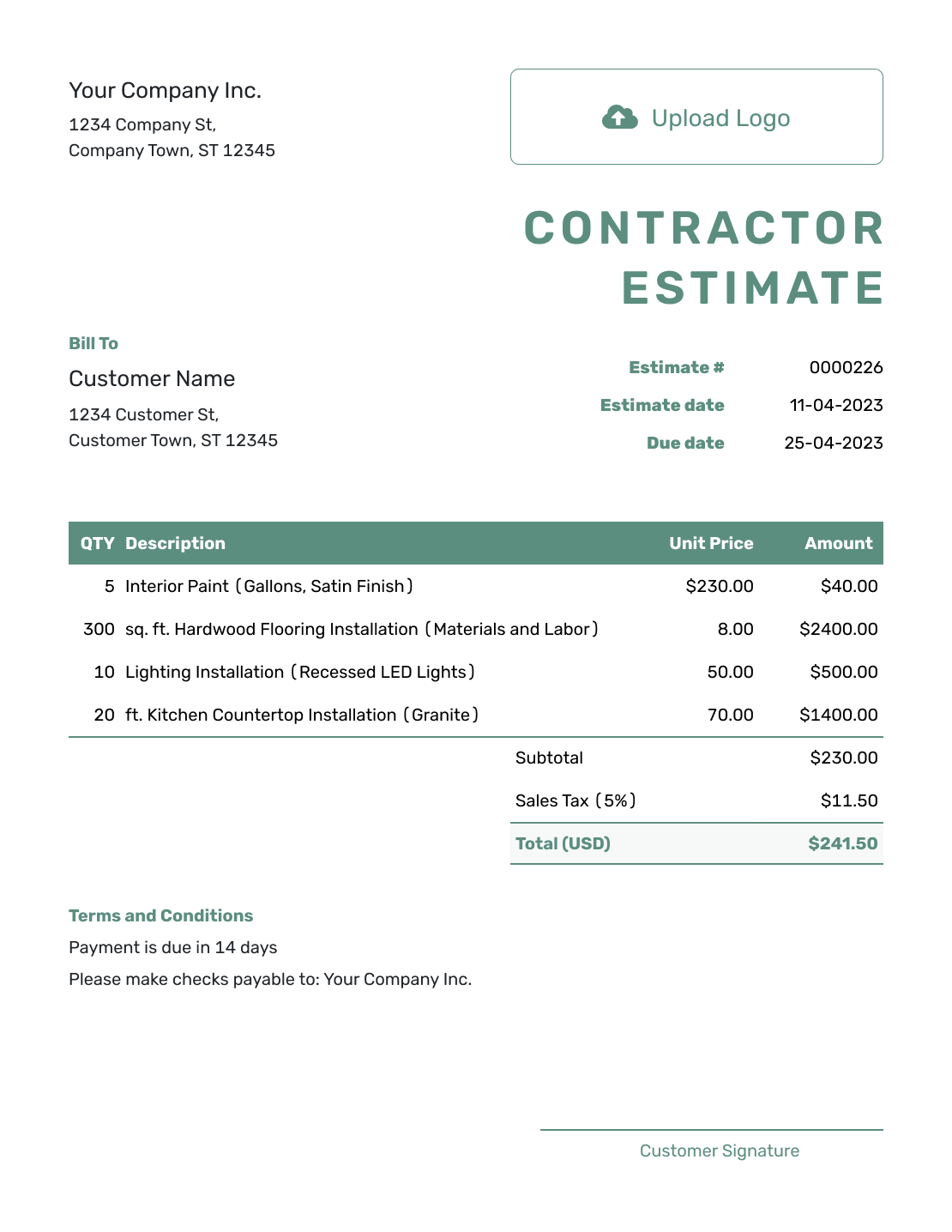
Simple Contractor Estimate Template
Create Free Estimate -
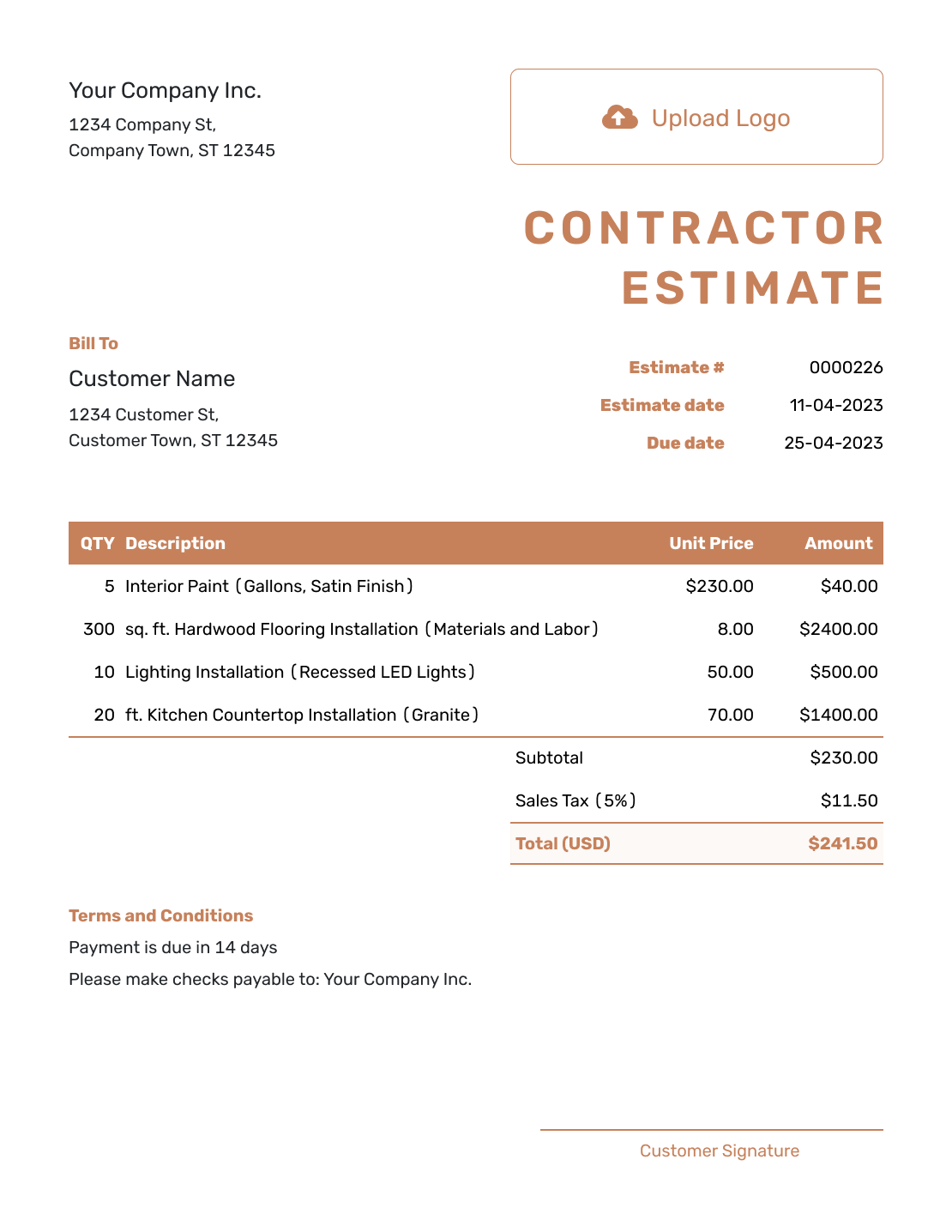
Professional Contractor Estimate Template
Create Free Estimate -
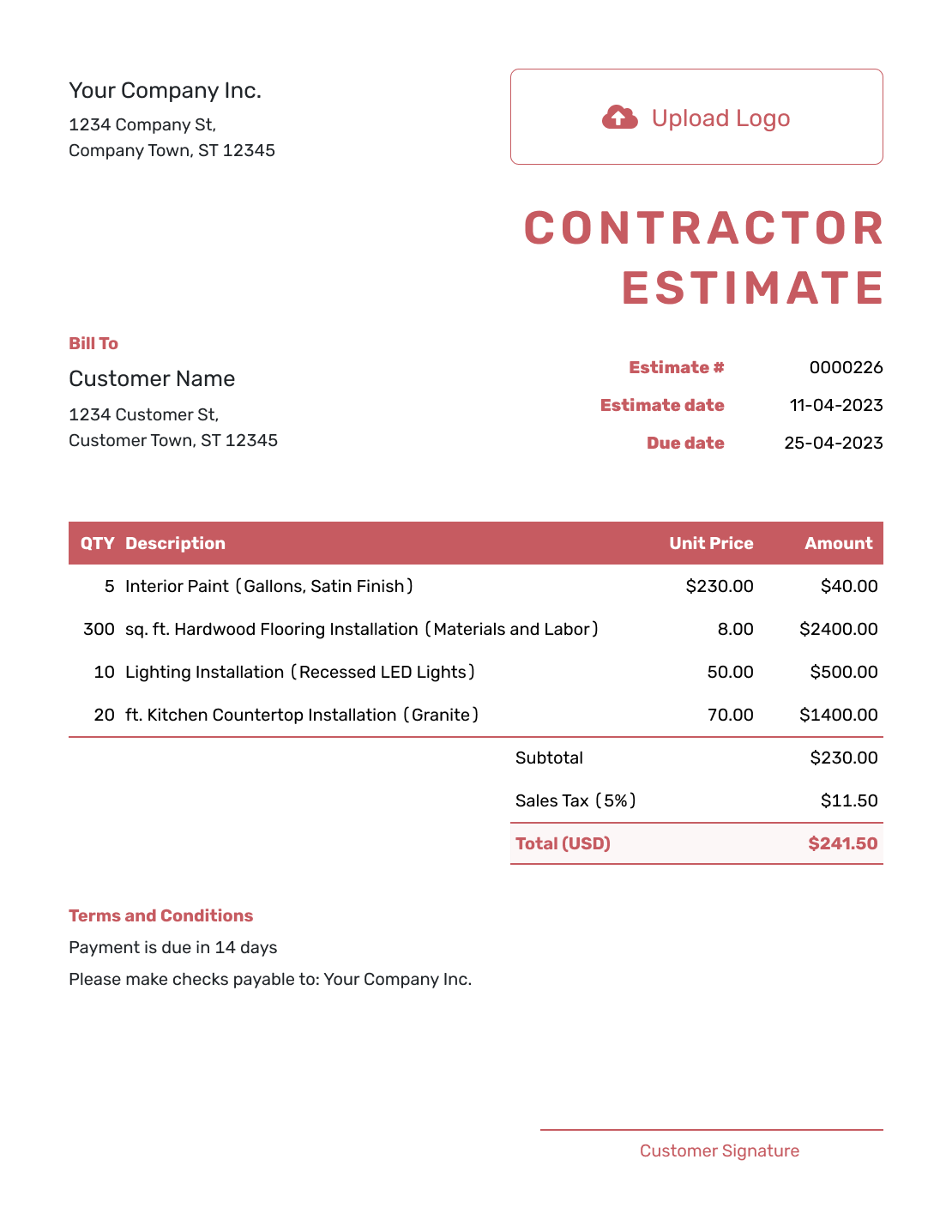
Downloadable Contractor Estimate Template
Create Free Estimate -
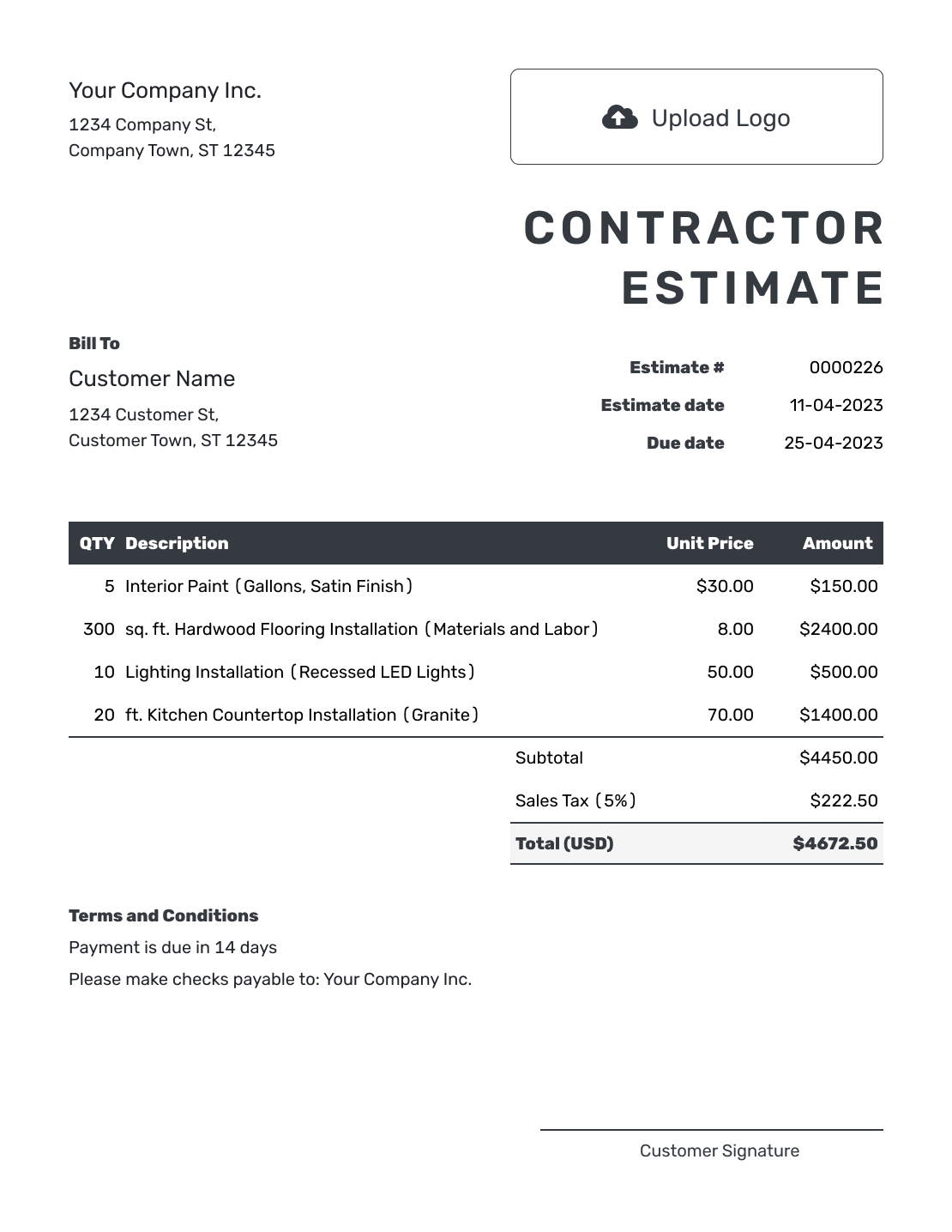
Editable Contractor Estimate Template
Create Free Estimate -
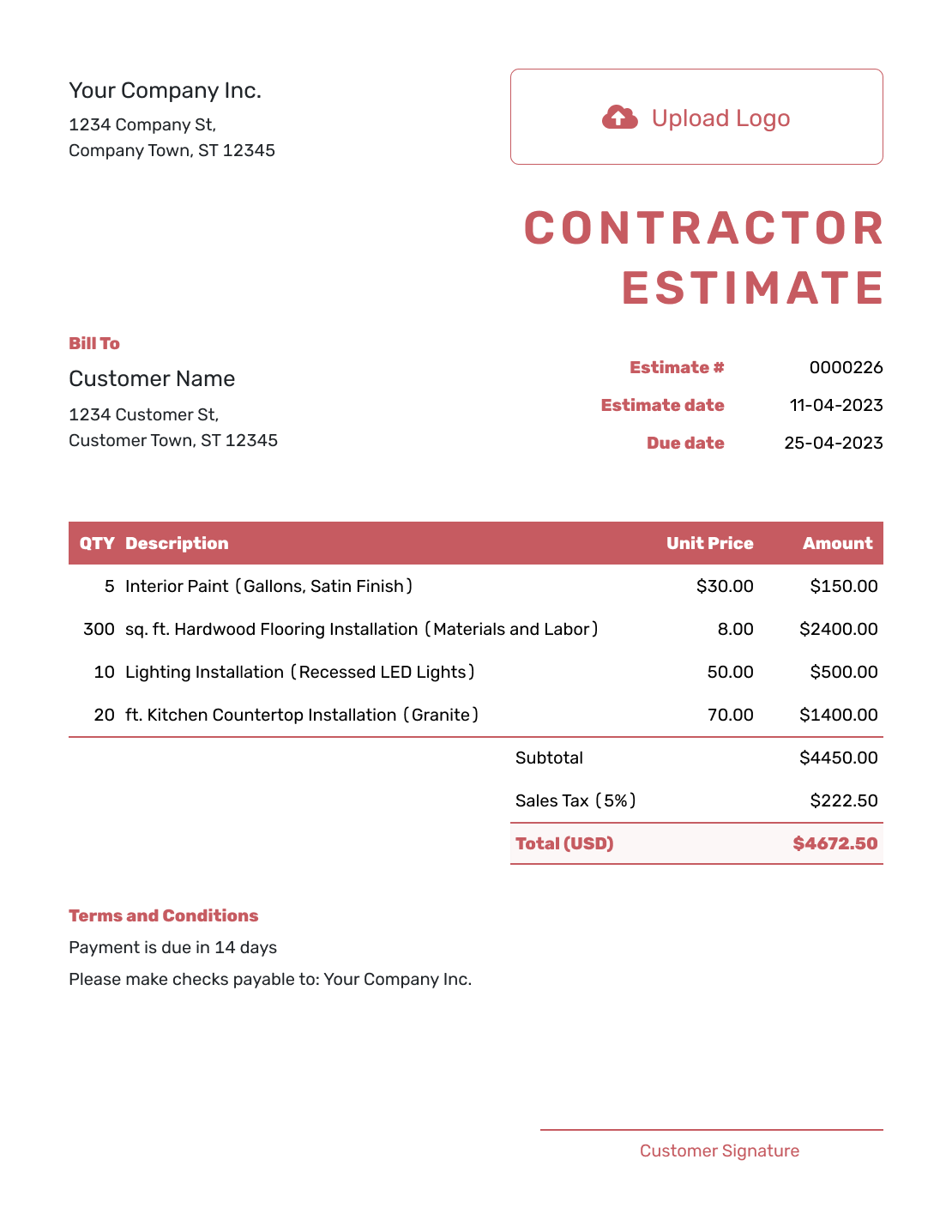
Fillable Contractor Estimate Template
Create Free Estimate
Find the Estimate That Fits the Work
Use a more specific template when the job type changes what you need to measure, describe or price.
Other Estimate Template File Formats
Prefer to work in a document or spreadsheet? Use Word or Google Docs to edit the wording and layout, or Excel or Google Sheets to work with quantities and prices. These pages offer separate file templates; estimates created in Docelf download as PDFs.
After You Send the Estimate
- Check the document history to see when the emailed estimate is delivered and opened
- If the job changes, explain the revised scope and price before sending an updated estimate
- When it is time to bill, create an invoice from the estimate and check the work being charged
Contractor Estimate Template FAQs
Find answers to common questions about writing and sending a contractor estimate.
-
How detailed should a contractor estimate be?
Include enough detail to show the work and the basis for its likely price. A small repair may need only a few clear lines. For a larger job, group related tasks by area or phase so the customer can follow the total.
-
What should I include in a contractor estimate?
Identify your business, the customer and the job address. Add the estimate number and dates, then describe the work with quantities, prices and the estimated total. Use Terms and Conditions for timing, payment, assumptions and exclusions. Include equipment, taxes or discounts only when they apply.
-
Should labor and materials be separate on a contractor estimate?
Separate them when the breakdown helps the customer understand the job. You can also combine related labor and material costs when one clear line explains the work better.
-
How should I handle site conditions in the estimate?
State the visible conditions, access limits, preparation and owner-supplied items that affect the likely price. Name any area you could not inspect. If you find concealed damage, explain the extra work and agree on a revised estimate before proceeding with it.
-
Is a contractor estimate the same as a bid?
The terms can overlap, but an estimate usually shows a likely price that may change. A bid or quote is more suitable when you are presenting a specific price and terms as an offer.
-
How long should a contractor estimate be valid?
Choose a response date that fits the job and current pricing, then state it clearly. Update the estimate if material costs, availability or scope change after that date.
-
Can a customer accept a contractor estimate online?
Yes. The customer can accept or decline the estimate online without a Docelf account. Docelf updates the status and emails you when they respond.
-
Can I turn an accepted contractor estimate into an invoice?
Yes. Create an invoice from the estimate in Docelf. The relevant customer, item, price and document details copy into the invoice, and you can adjust it for the work being billed.
-
Can I email or download a contractor estimate?
Yes. You can email the estimate from Docelf, print it or download it as a PDF. Creating or editing the estimate does not email it; you choose when to send it.
Ready to Price the Contractor Job?
Give your customer a useful price to consider while the job details are still fresh.
- Describe the work in clear job-specific lines
- Let Docelf calculate taxes, discounts and totals
- Email the estimate or download a professional PDF