Free Demolition Estimate Template
Create a professional estimate in minutes
Describe what will be removed, how debris will be handled and the likely cost. The clear plan helps customers compare the full job and choose your crew.
Email, print or download your estimate as a PDF.
14-day free trial. No credit card required.
Price the job. Send the estimate. Get back to work.
Demolition Estimate Template Examples
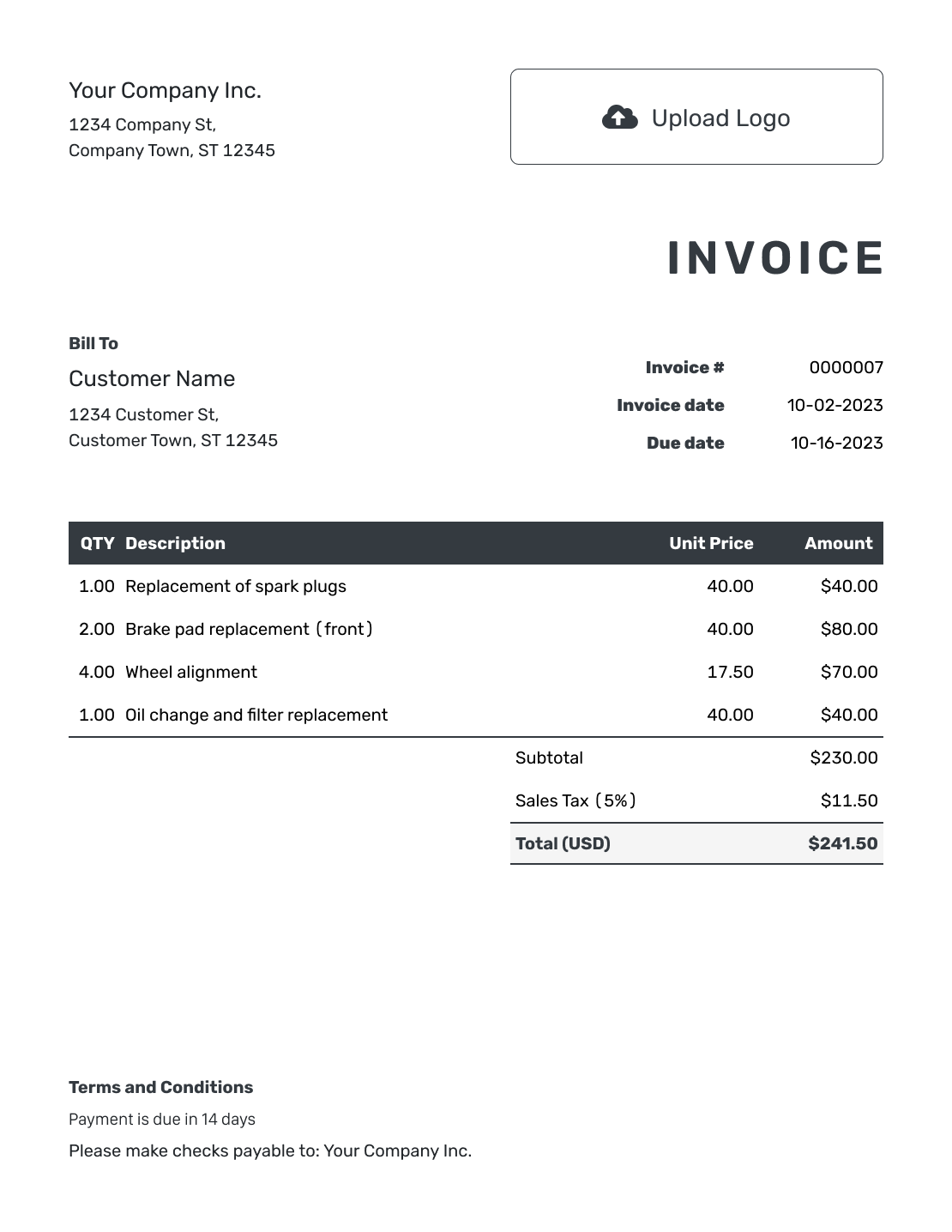
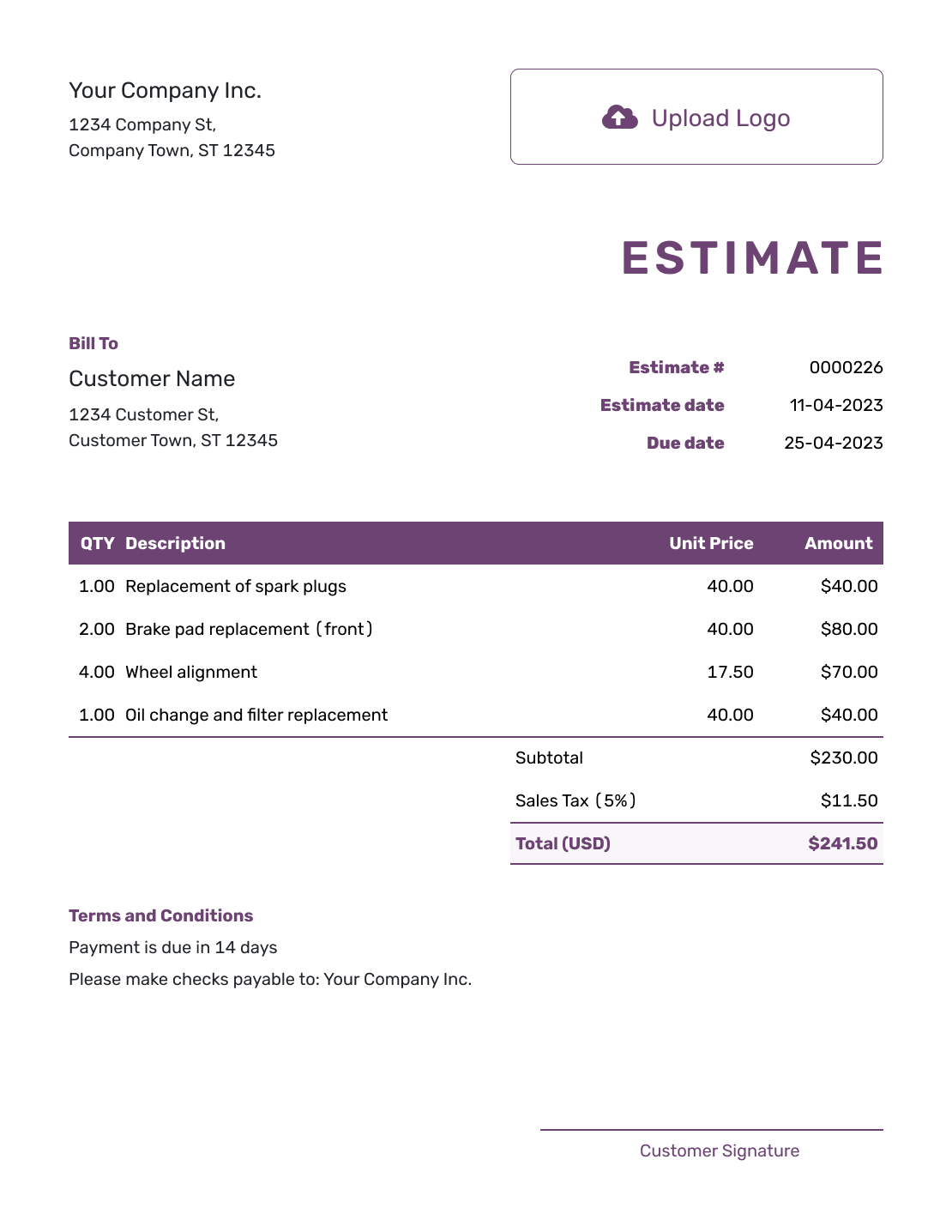
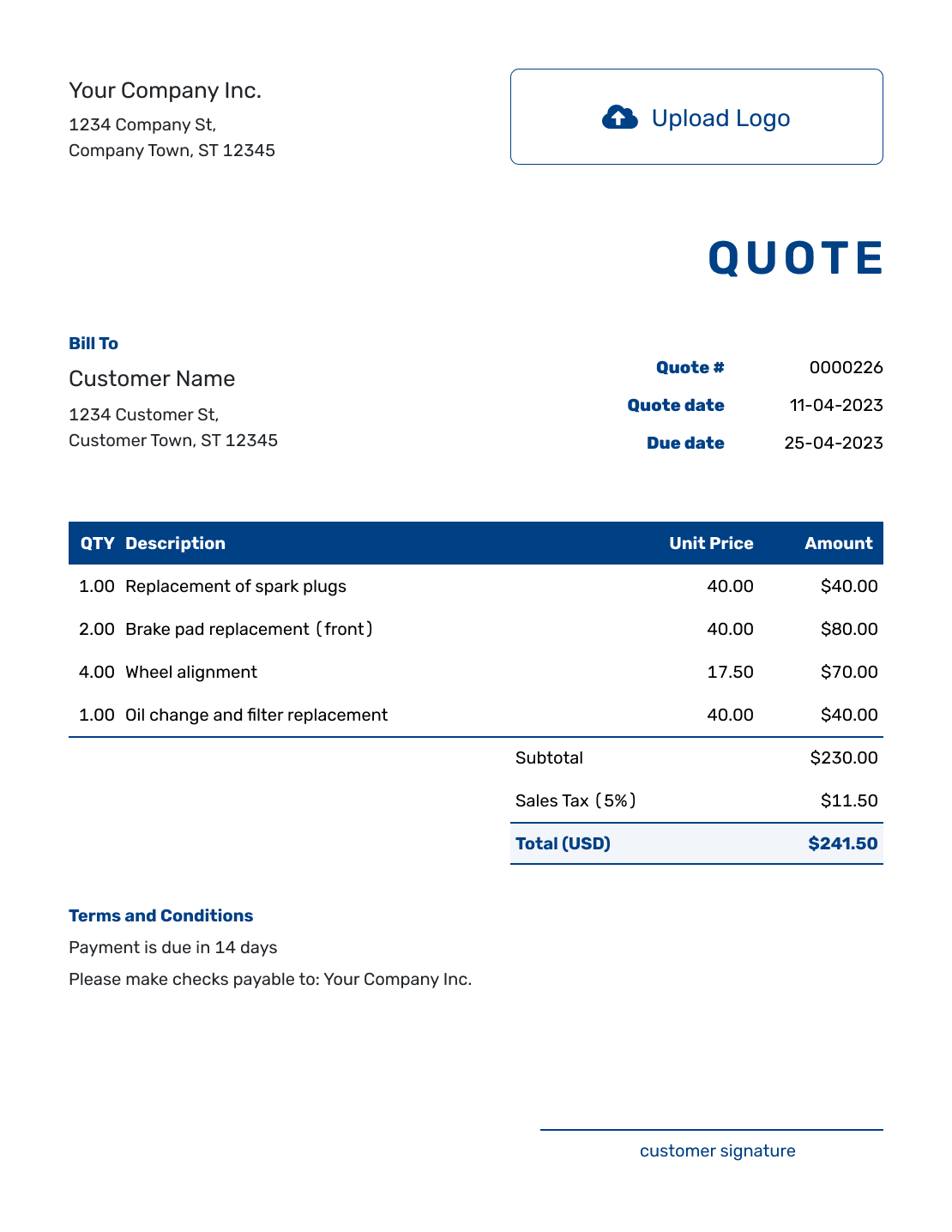
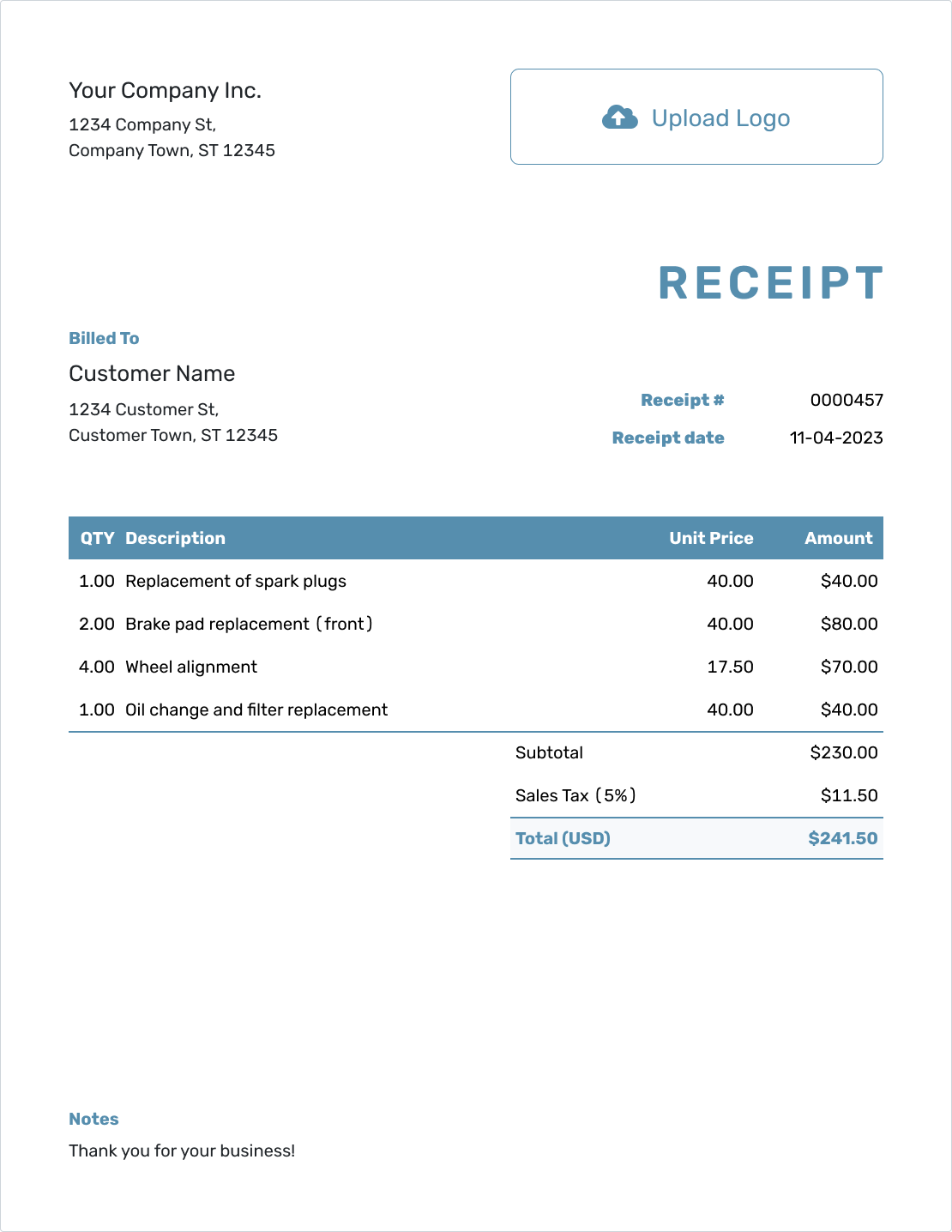
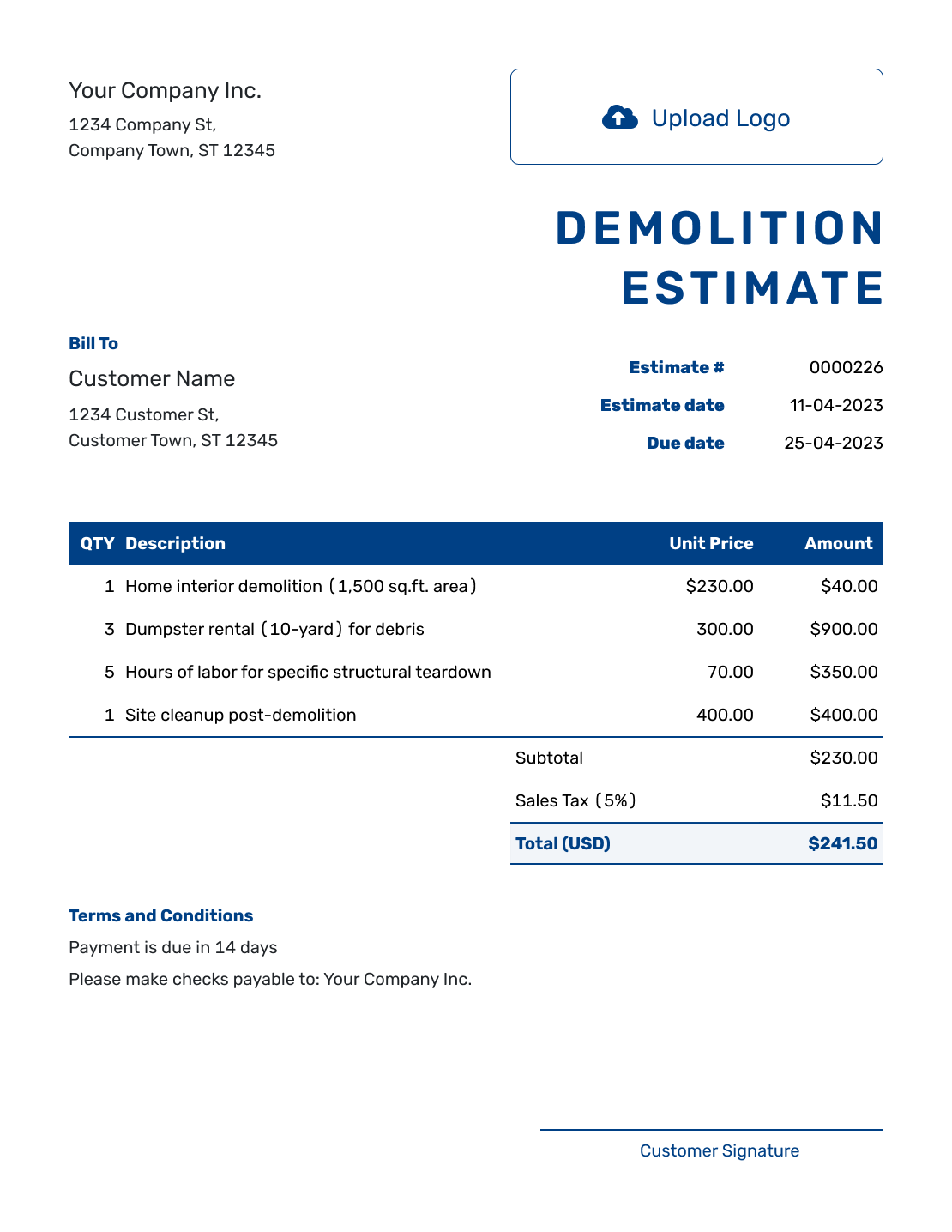
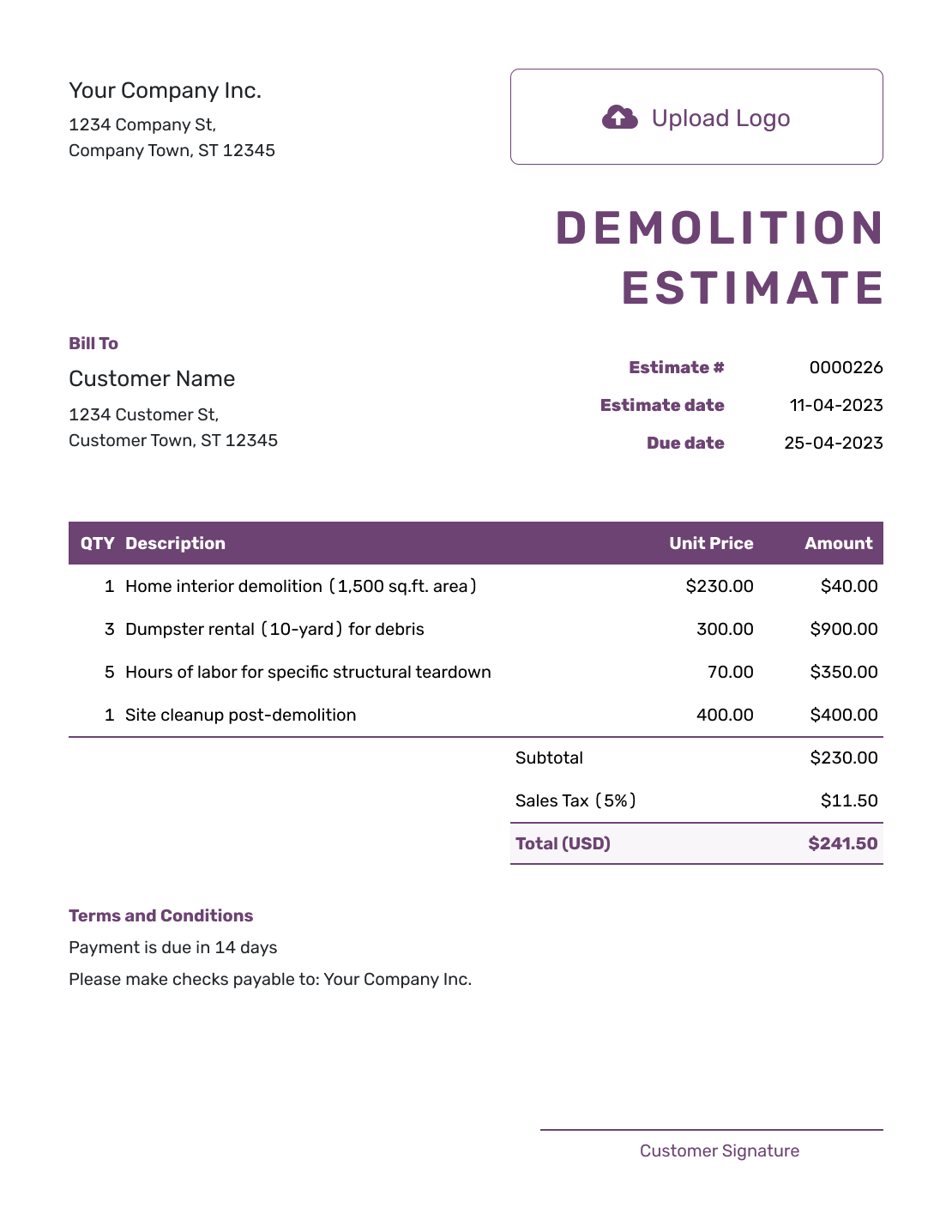
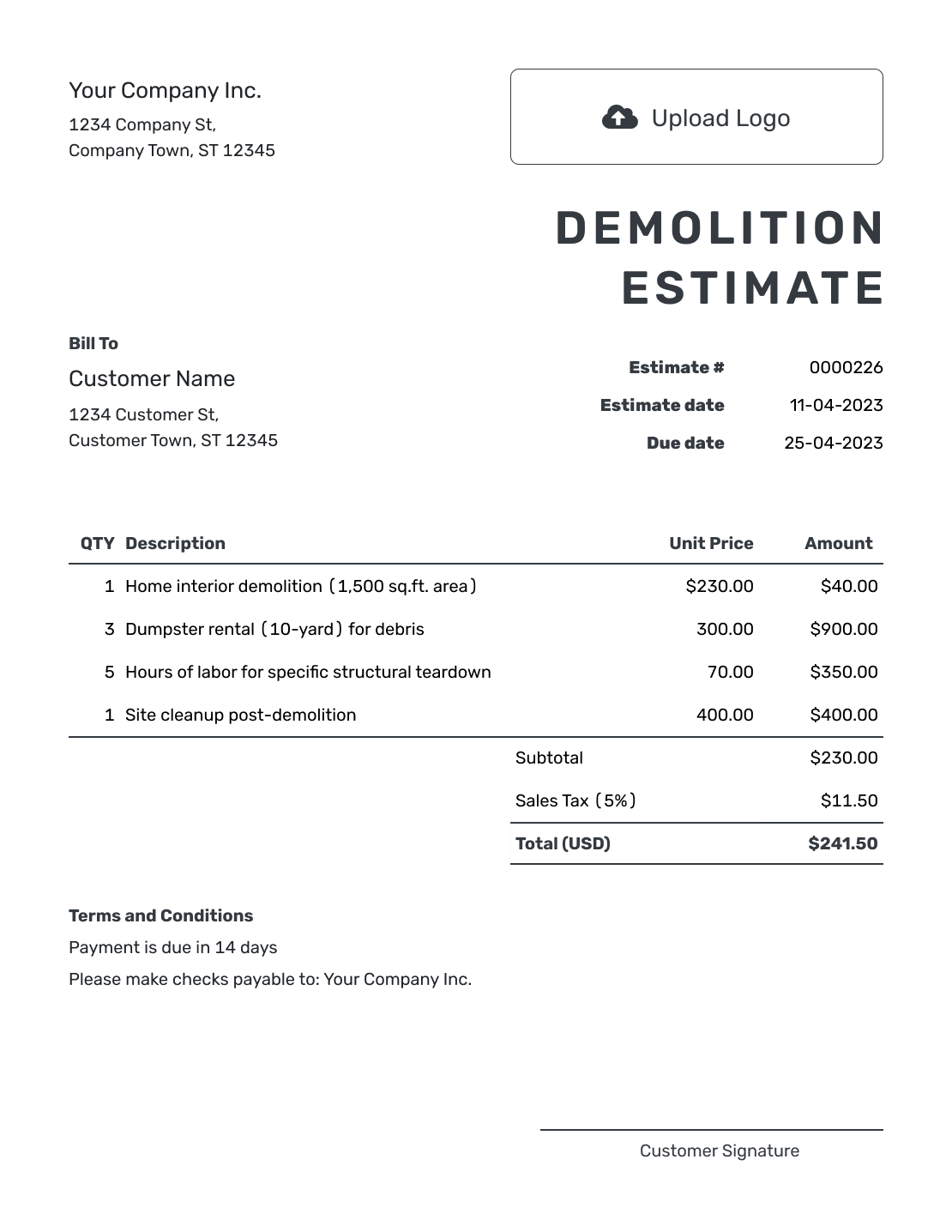
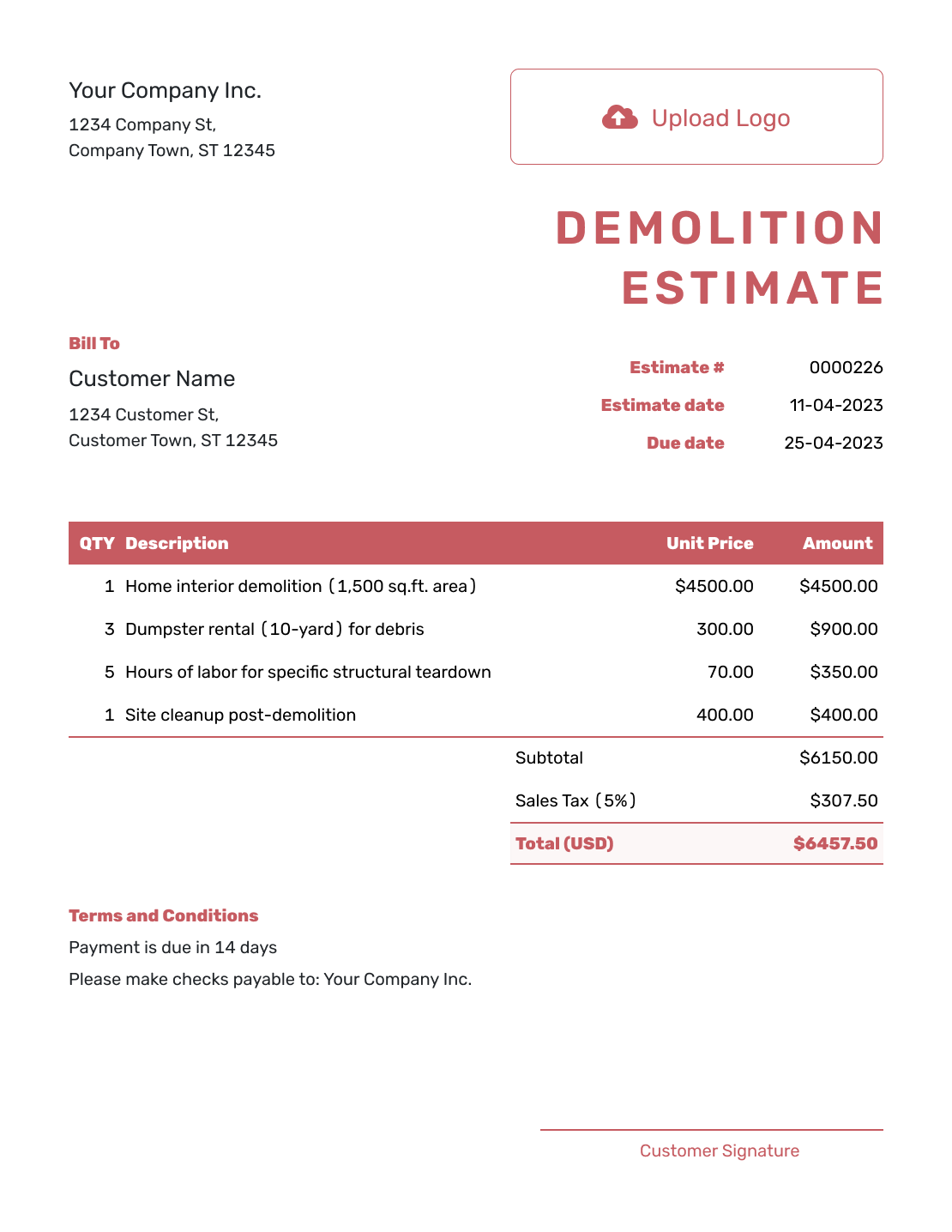
These previews show ways to present a demolition estimate. Choose a layout, then describe the removal work and site conditions. Each preview opens the same estimate editor.
What Is a Demolition Estimate?
A demolition estimate shows what you expect to remove and the likely cost based on the visible structure, access, equipment, debris and site conditions known at the time. It can cover selective removal, interior demolition or removal of a complete structure.
A useful estimate defines what comes out, what stays and how debris will be handled. Keep hazardous-material exclusions, utility responsibilities and hidden conditions clear because they can change the scope and likely total.
How to Create a Demolition Estimate
Start with the site inspection and the work you expect to price. Use the estimate to show the removal boundary, likely costs and assumptions in one place.
- Your Business: Add your demolition business name and contact details.
- Your Logo: Use the logo from your business documents.
- Customer and Site: Enter the customer details and identify the demolition address.
- Number and Dates: Check the estimate number, issue date and valid-until date.
- Removal Costs: Add protection, crew, equipment and debris items with quantities and prices.
- Estimated Total: Review line amounts and any applicable tax. Docelf calculates the total.
- Terms and Sending: Use Terms and Conditions for boundaries and exclusions. Review, then email the estimate or download a PDF.
How to Fill In Demolition Estimate Line Items
Use quantities that explain the price: crew-days for the whole crew, rental days for equipment, and loads for debris. State what each rate covers. If hauling and disposal share a rate, describe them together instead of charging for the same work twice.
This fictional estimate covers removal of a small detached outbuilding in US dollars. It includes three crew-days, two equipment-rental days and five debris loads. Replace these figures with your own scope, duration and disposal rates.
| QTY | Description | Unit Price | Amount |
|---|---|---|---|
| 1 | Site protection and mobilization | $1,250.00 | $1,250.00 |
| 3 | Crew labor — crew-days | $2,200.00 | $6,600.00 |
| 2 | Equipment rental — days | $1,450.00 | $2,900.00 |
| 5 | Debris hauling and disposal — loads | $850.00 | $4,250.00 |
| 1 | Final cleanup and rough grading | $1,200.00 | $1,200.00 |
| Subtotal | $16,200.00 | |
| Sales Tax (8% illustrative) | $1,296.00 | |
| Estimated Total | $17,496.00 |
The 8% tax on the full subtotal is an example only. Use the tax rate and taxable items that apply to your job.
What to Include in Demolition Estimate Terms
Use Terms and Conditions to define what comes out, what stays and the condition you will leave behind. Identify who arranges utility disconnects and permits, and which costs are outside this estimate.
Adapt this sample to the actual site and your agreed responsibilities. Keep hazardous-material testing or abatement explicit, and confirm local requirements before using exclusions or permit terms.
Example: Terms and Conditions
- Covers removal of the detached outbuilding identified during the site visit. The adjacent fence and trees are to remain.
- Includes five debris loads, final cleanup and rough grading. New paving and landscaping are excluded.
- The customer arranges utility disconnects before the agreed start date. Permit responsibilities will be confirmed before work begins.
- Hazardous-material testing, abatement and special disposal are excluded from this estimate.
- Estimate valid for 30 days. Additional debris loads or concealed materials will be priced for customer approval before the affected work proceeds.
Turn the Site Inspection Into a Clear Estimate
Add the removal scope and the quantities you expect. Docelf calculates the total and keeps your supporting photos with the estimate. Review it, then send it to the customer.
Check the Removal Scope Before You Send
Use the site inspection to check the boundary and debris assumptions. A marked-up photo or plan can make it easier for the customer to see what stays and what goes.
Removal boundary
Name the walls, finishes, structures, equipment or other items to be removed. Identify nearby items that must stay and any areas excluded from the current estimate.
Protection and utilities
Describe dust control, temporary protection, access and utility disconnect responsibilities. State what must be completed before demolition starts.
Hauling and disposal
Show assumed debris volume, loads, containers, recycling and disposal fees. Keep extra loads or special disposal rules visible when they can change the likely cost.
Final site condition
State whether the area will be broom-clean, rough graded, patched, protected or ready for the next trade. Do not leave restoration work implied.
Keep Site Photos With the Estimate
Attach site photos, a marked-up plan or a disposal requirement when it helps explain the removal boundary. The customer can view and download these files with the estimate. Keep the written scope and the marked areas consistent. Include access hours and who keeps salvaged materials when they affect the price.
Demolition Estimate, Quote, or Invoice?
Use the document that matches how certain the removal scope is and whether payment is due.
Estimate
Use a demolition estimate when quantities, hidden materials, disposal needs or site conditions can still change.
Quote
Use a demolition quote when the removal boundary, price and terms are defined as a specific offer.
Invoice
Use a construction invoice when a demolition deposit, progress payment or final balance is due.
More Demolition Estimate Layouts
Continue browsing the remaining demolition estimate layouts. They open the same editor as the previews above.
-
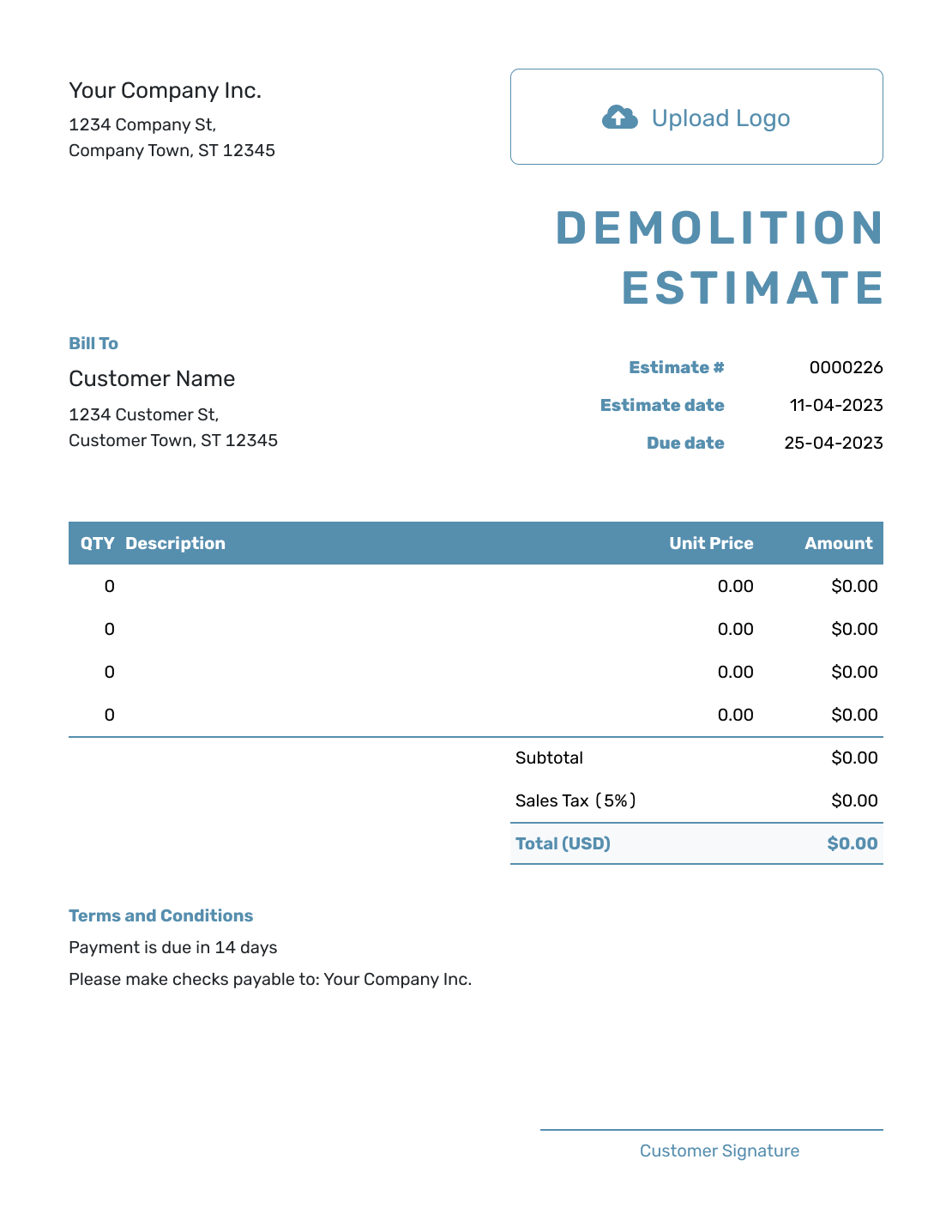
Blank Demolition Estimate Template
Create Free Estimate -
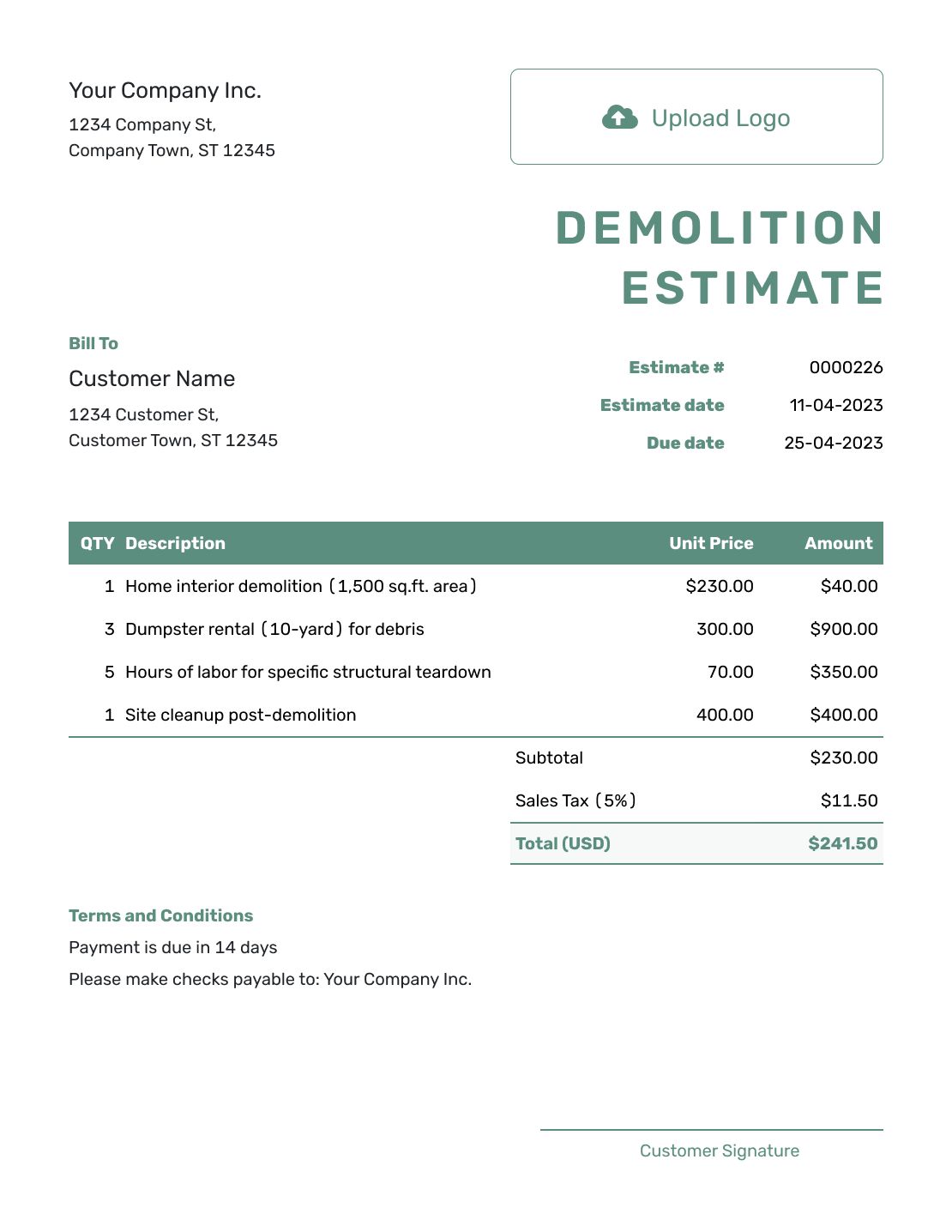
Simple Demolition Estimate Template
Create Free Estimate -

Professional Demolition Estimate Template
Create Free Estimate -
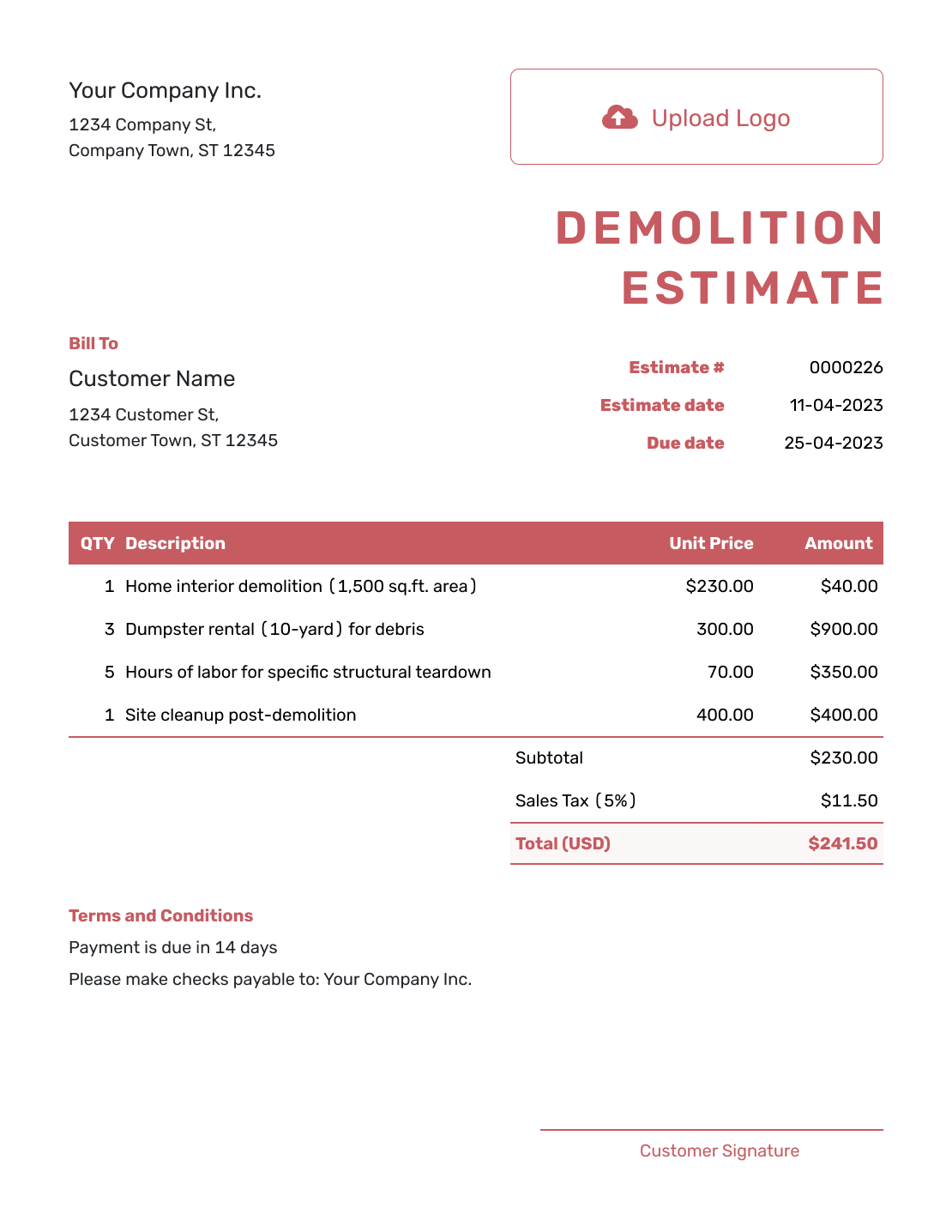
Downloadable Demolition Estimate Template
Create Free Estimate -
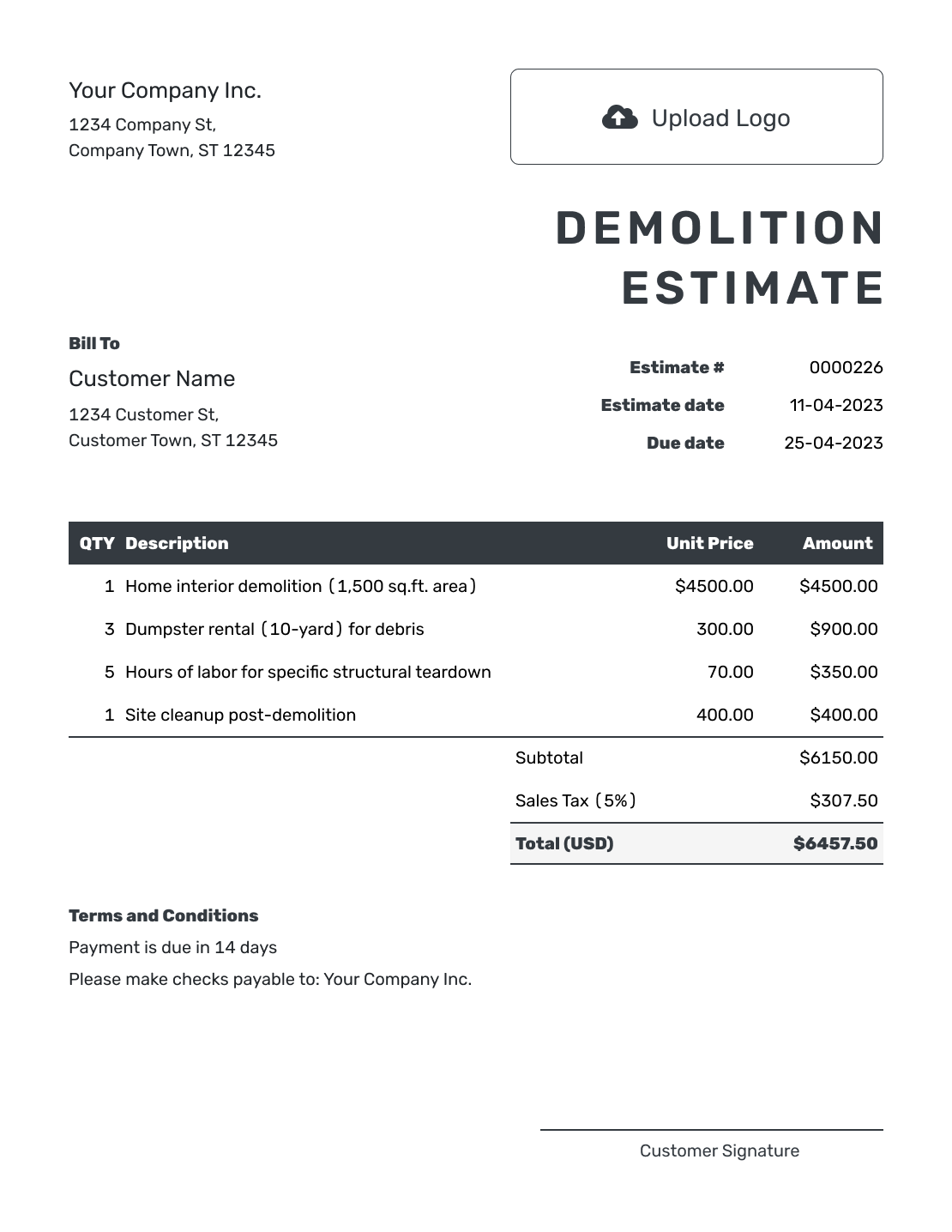
Editable Demolition Estimate Template
Create Free Estimate -
Fillable Demolition Estimate Template
Create Free Estimate
Related Demolition and Construction Estimate Templates
Use a related template when the project includes excavation, concrete, rebuilding or renovation work before or after removal.
Other Estimate Template File Formats
Use Word or Google Docs if you prefer to edit the removal scope in a document. Excel and Google Sheets suit quantity and rate calculations. These pages offer separate file templates; the finished estimate you create in Docelf downloads as a PDF.
After You Send the Estimate
Check the delivery and opening history after you email the estimate. If the customer changes the removal boundary or new information changes the debris allowance, explain the difference and send a revised estimate for approval.
When it is time to bill, create an invoice from the estimate in Docelf. The customer and item details carry over; check them against the work you are billing before sending the invoice.
Demolition Estimate Template FAQs
Find answers to common questions about preparing, sending and using this estimate.
-
What is a demolition estimate?
A demolition estimate shows the expected removal work and likely cost based on the visible structure, access, equipment, debris and assumptions known at the time.
-
What should I include in a demolition estimate?
Identify the customer, site and exact removal boundary. Price the crew, equipment, protection and debris handling. State what remains, the final site condition, utility and permit responsibilities, exclusions, terms and estimated total.
-
Should hauling and disposal be separate line items?
Separate them when they use different rates or quantities. A combined hauling-and-disposal price per load is also clear when you state what the rate covers. Identify the assumed number or size of loads so extra debris can be priced consistently.
-
How should I show hazardous-material exclusions?
State whether testing, abatement and special disposal are included or excluded. Keep unknown hazardous-material work outside the estimated price unless you have defined and priced that scope.
-
How do I record utility disconnect responsibilities?
Name the party responsible for arranging each disconnect, the agreed timing and any confirmation needed before work begins. Identify services that must remain active. Keep these responsibilities with the scope rather than relying on a verbal understanding.
-
What if hidden materials change the demolition work?
Explain how hidden conditions will be handled. Update the estimate if concealed layers, buried material or debris quantities change the scope, and give the customer the revised likely total before the changed work begins.
-
Can a customer accept a demolition estimate online?
Yes. Customers can accept or decline estimates online. Docelf updates the status and emails you when the customer responds.
-
Can I turn an accepted demolition estimate into an invoice?
Yes. Create an invoice from the estimate in Docelf. The relevant customer, removal items, prices and document details copy into the invoice, and you can adjust it for the amount being billed.
-
Can I attach site photos to the estimate?
Yes. You can attach PDF, JPG, GIF, PNG or WebP files up to 5 MB each. The files appear with the estimate and the customer can download them.
Ready to Price the Demolition Job?
Make the agreed removal boundary and likely price easy to review before the crew is scheduled.
- State what comes out and what must remain
- Show protection, hauling and disposal assumptions
- Email the estimate or download a professional PDF