Free Blank Invoice Template
Create a professional blank invoice in minutes
Start with a blank invoice template and add only the billing details this customer needs. The finished invoice keeps the charges and due date clear, making payment easier.
Email, print or download your invoice as a PDF.
14-day free trial. No credit card required.
Create the invoice. Send it. Get back to work.
Choose a Layout for Your Blank Invoice
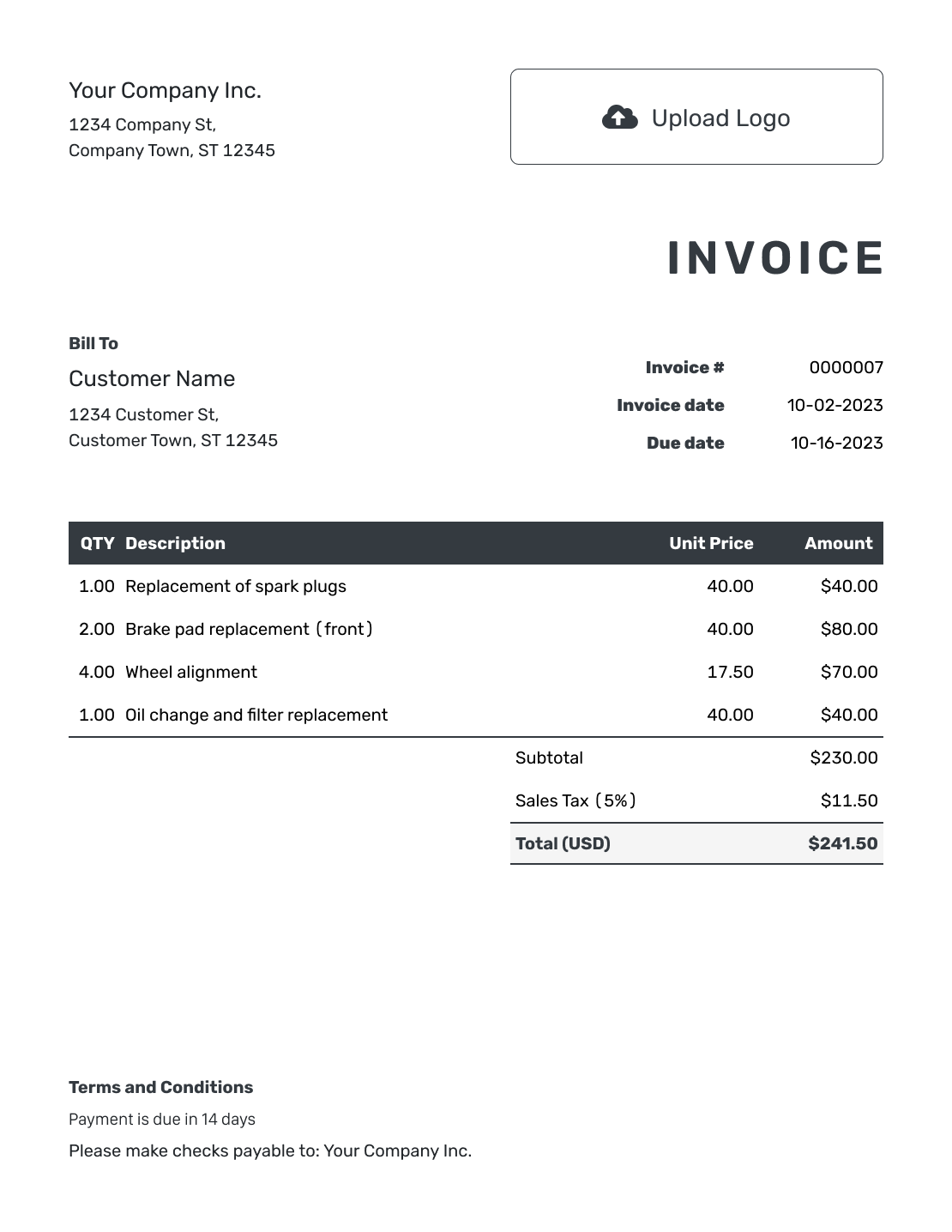
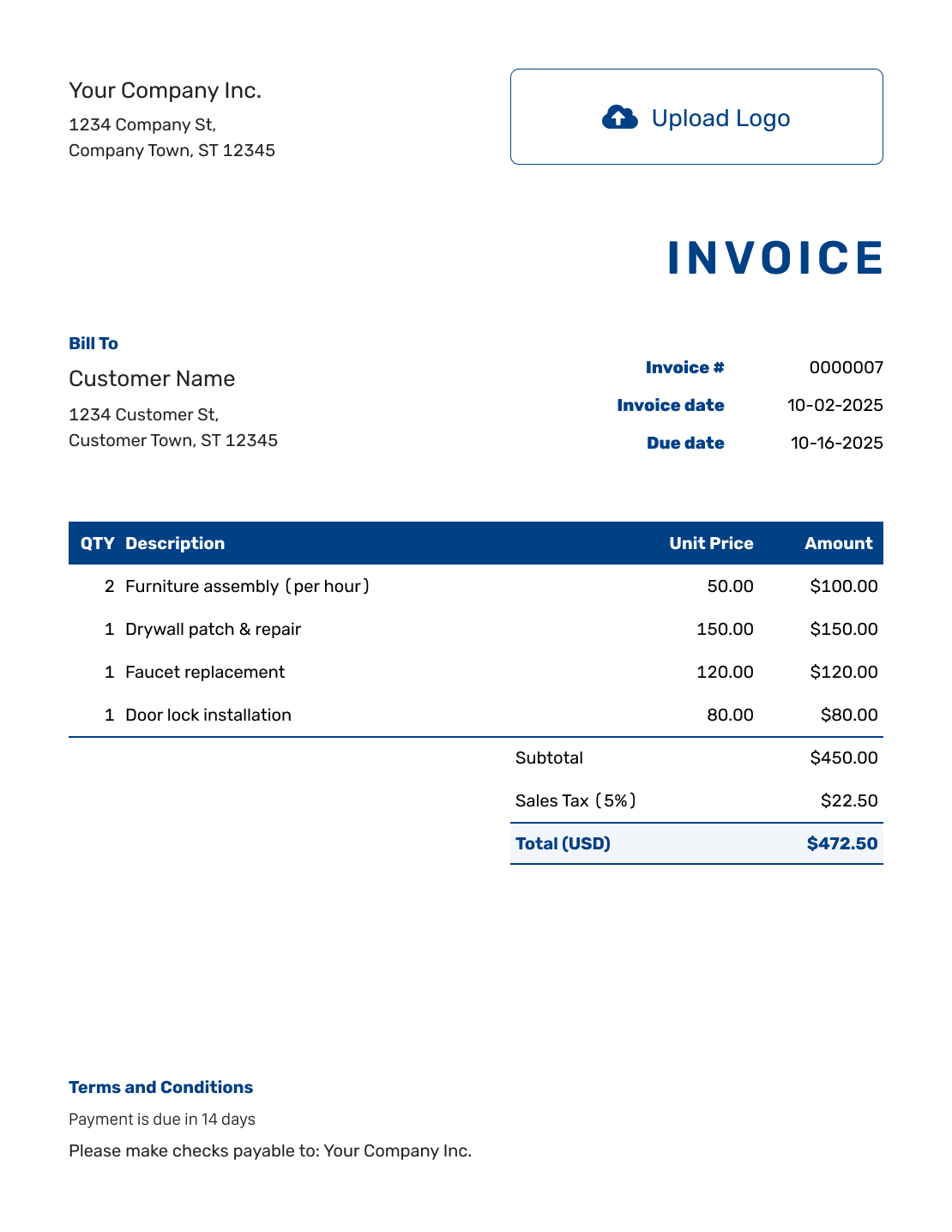
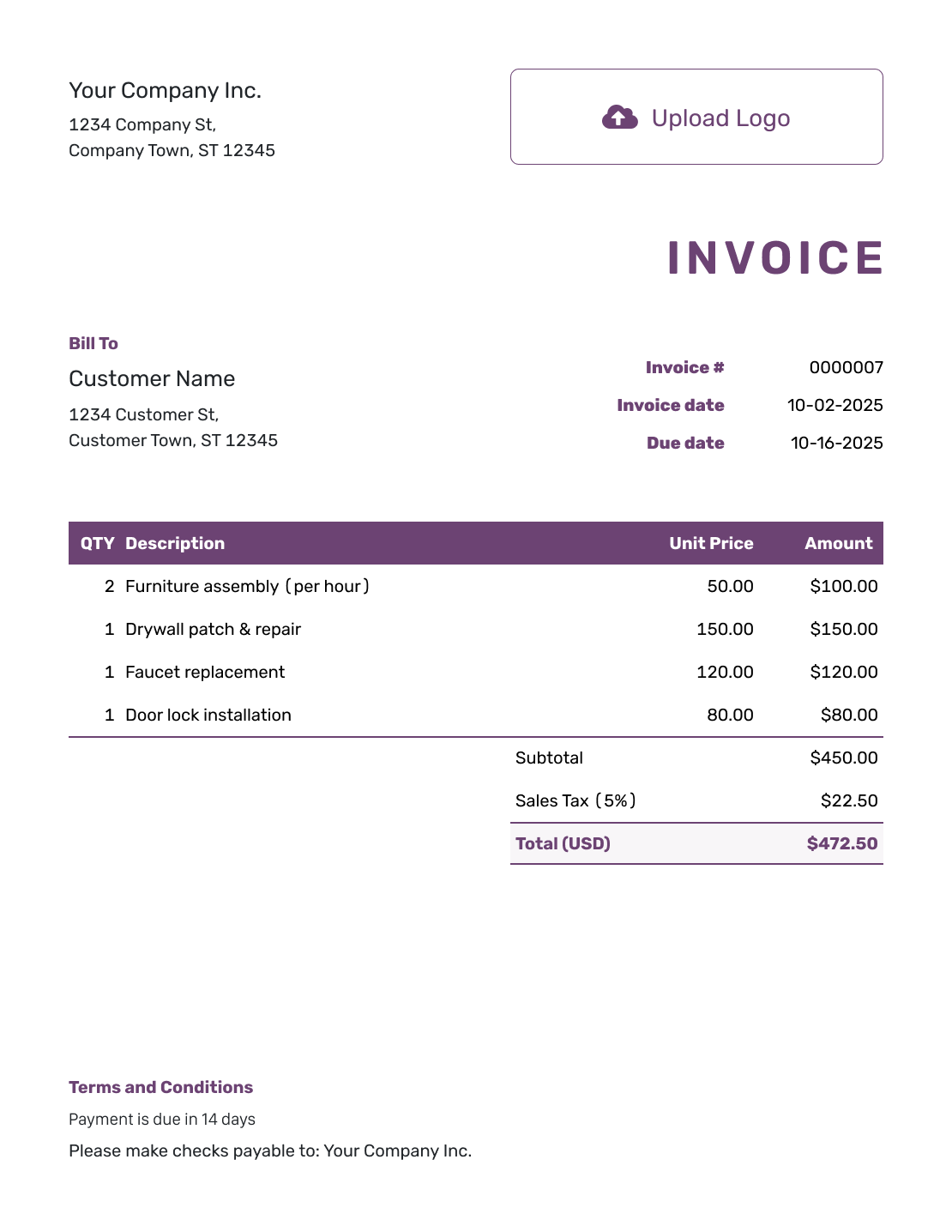
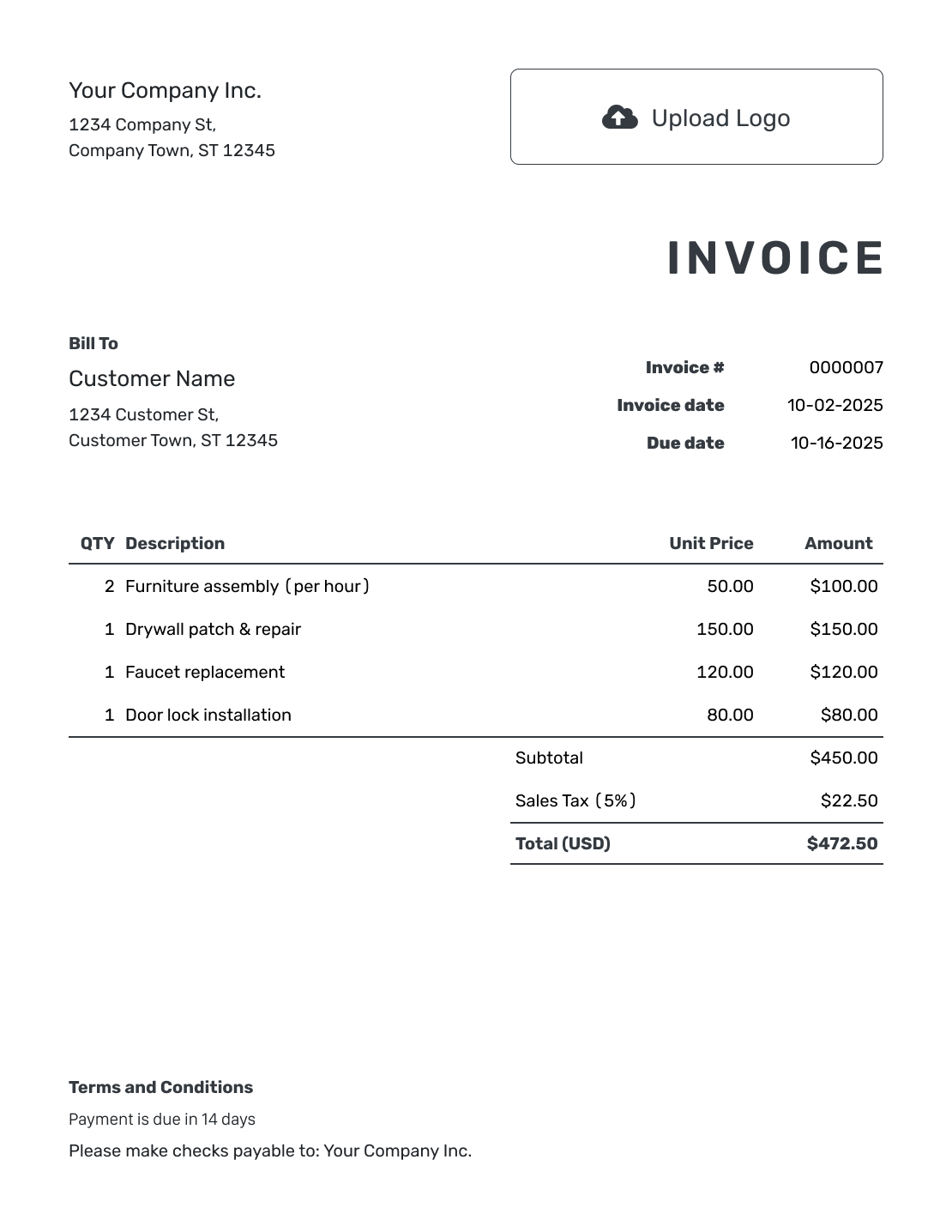
These previews show how a completed invoice can look. Each opens the same invoice editor for your own details. For a separate blank file, choose a document or spreadsheet template.
How to Create a Blank Invoice
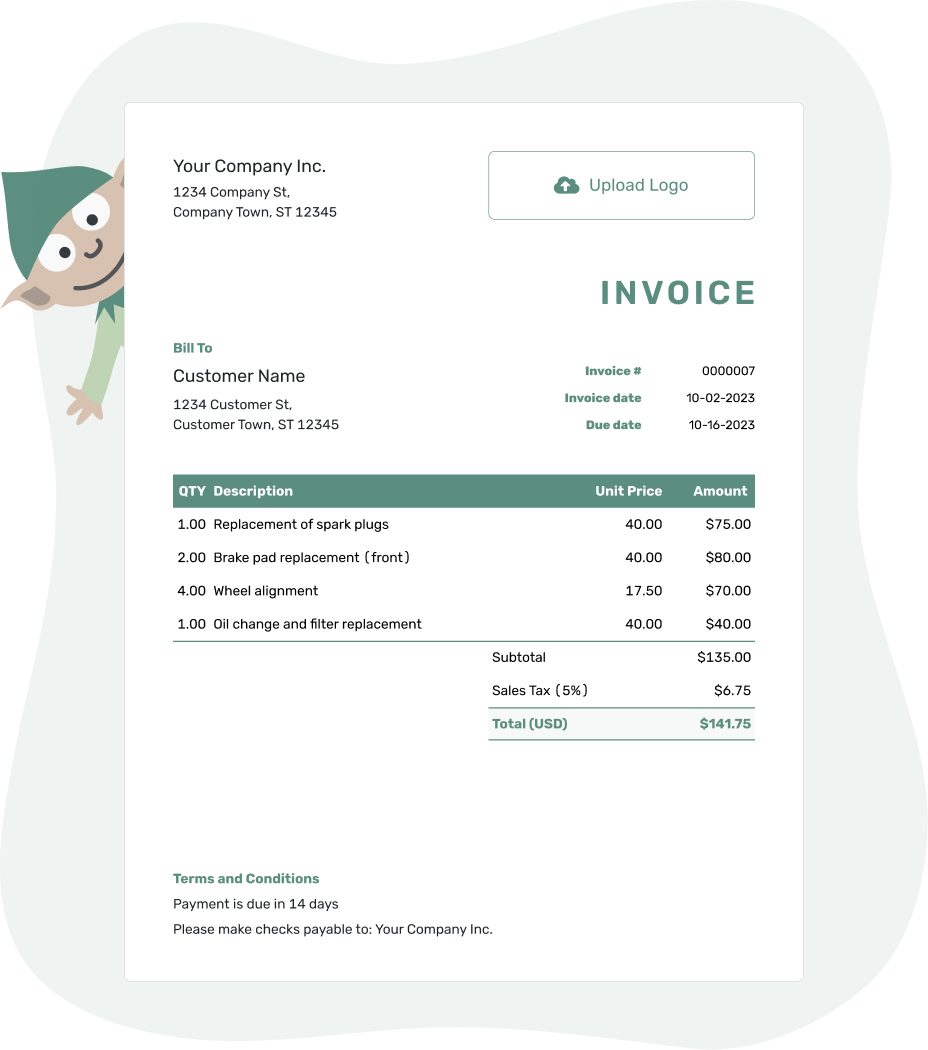
Start with the customer and the work you need to bill. The numbered fields show where the details belong.
- Identify Your Business: Enter your business name and contact details.
- Add a Logo: Use your business logo, or keep the invoice text-only.
- Add the Customer: Replace sample details with your customer’s name and billing address.
- Check the Number and Dates: Check the invoice number. Set the invoice date and agreed payment due date.
- Fill In Each Charge: List each product or service with its quantity and price.
- Review the Amount Due: Add any applicable tax or discount. Docelf calculates the total.
- Complete the Payment Details: Enter payment details in Terms and Conditions. Review the invoice, then email it or download a PDF.
How to Fill In the Line Items on a Blank Invoice
Name the product or service on each line. Use quantity for the number of items or hours. Unit price is the price for one item or hour.
This fictional example bills for furniture assembly and packaging removal in US dollars. It assumes all three charges are taxable at an illustrative 8%.
| QTY | Description | Unit Price | Amount |
|---|---|---|---|
| 2 | Dining chair assembly | $35.00 | $70.00 |
| 1 | Desk assembly | $65.00 | $65.00 |
| 1 | Packaging removal | $15.00 | $15.00 |
| Subtotal | $150.00 | |
| Sales Tax (8% example) | $12.00 | |
| Total | $162.00 |
What to Include in Blank Invoice Terms
Use Terms and Conditions to tell the customer how to pay. Give the payment method and details they need. Check that the written payment deadline matches the invoice due date.
Use this example as a starting point. Replace the bracketed details and keep only instructions that apply to your business.
Example: Terms and Conditions
- Payment is due on the date shown on this invoice.
- Pay by [Accepted Payment Method] using [Payment Details].
- Include the invoice number with your payment.
- Send billing questions to [Business Email or Phone].
Turn the Empty Fields Into a Finished Bill
Enter the details for this job. Docelf calculates the total as you add the charges. Review the invoice before emailing it.
Check for Sample Details Before Sending
A blank template can still contain sample wording. Read the finished invoice as your customer will see it, with their order and payment details in mind.
- Use the current customer’s billing details, not the name in the example.
- Replace every sample charge with something you actually provided.
- Leave out unused line items and optional wording that does not apply.
- Check that the due date and payment instructions agree.
Keep a Clean Starting Point for the Next Invoice
A blank template is useful when each job needs different details. When working in a separate file, save the completed invoice as a new copy so the blank original stays ready for the next bill. For repeat work in Docelf, duplicate an invoice to create a new draft with a new invoice number.
Change the customer, dates and charges before sending the copy. An invoice example can help you check what a completed bill should contain.
Add Only the Business Details You Need
Add your logo and choose colors and fonts that match your business. Use the footer for your website or billing contact.
You can add an industry name before “Invoice” when it helps identify your work.
Docelf supports USD, EUR, GBP, CAD and AUD. Choose the currency for the bill before entering prices. Attach a supporting file when the customer needs a job record or a fuller explanation.
More Invoice Layouts to Compare
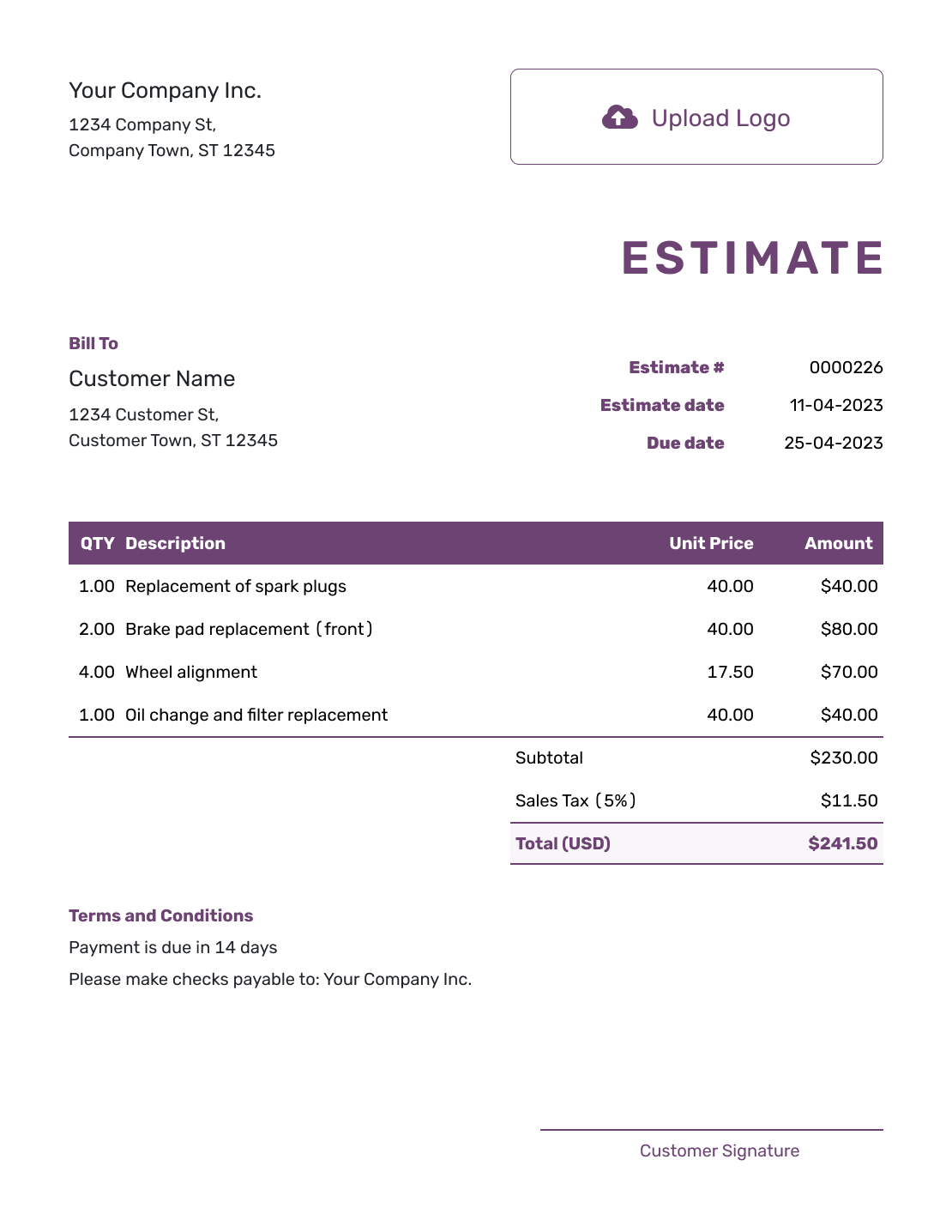
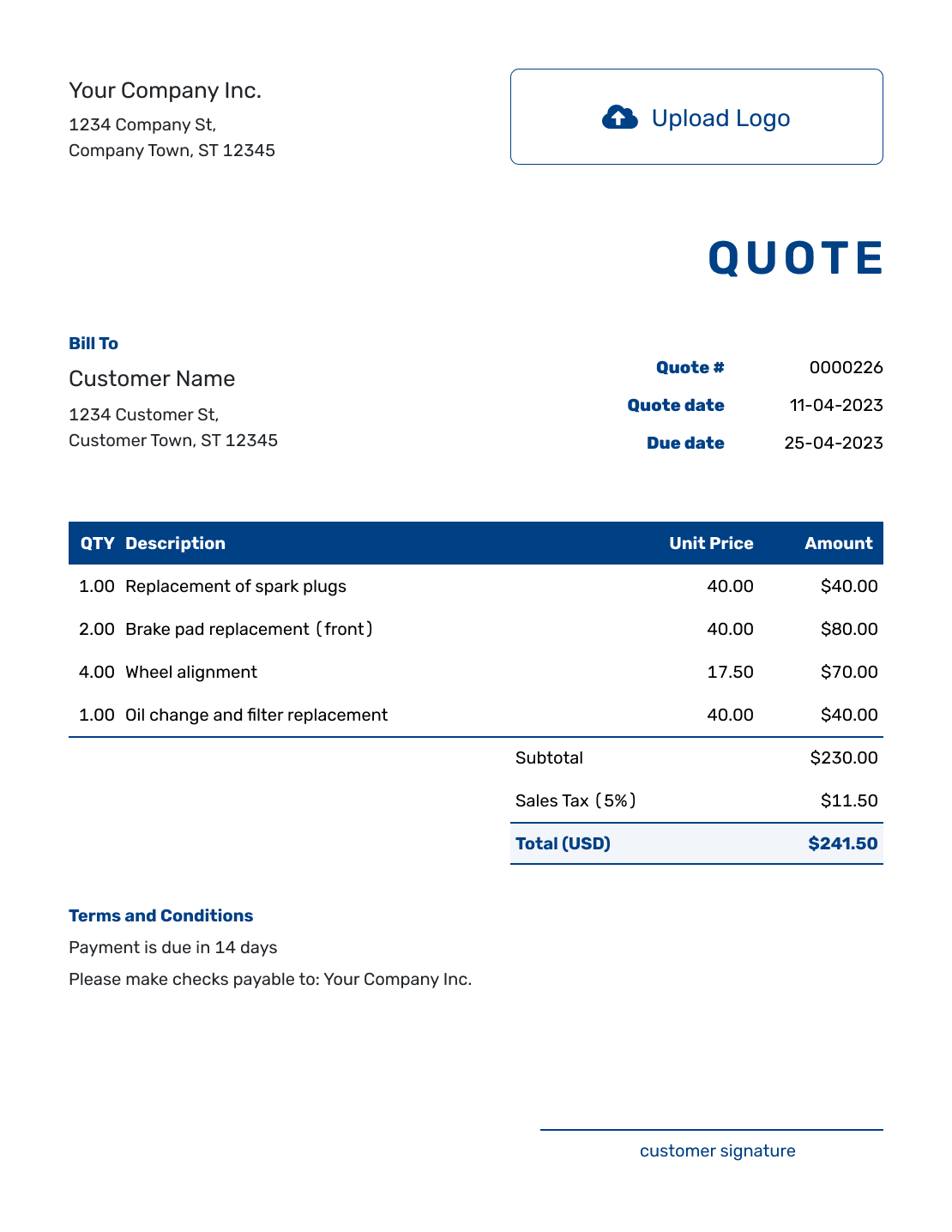
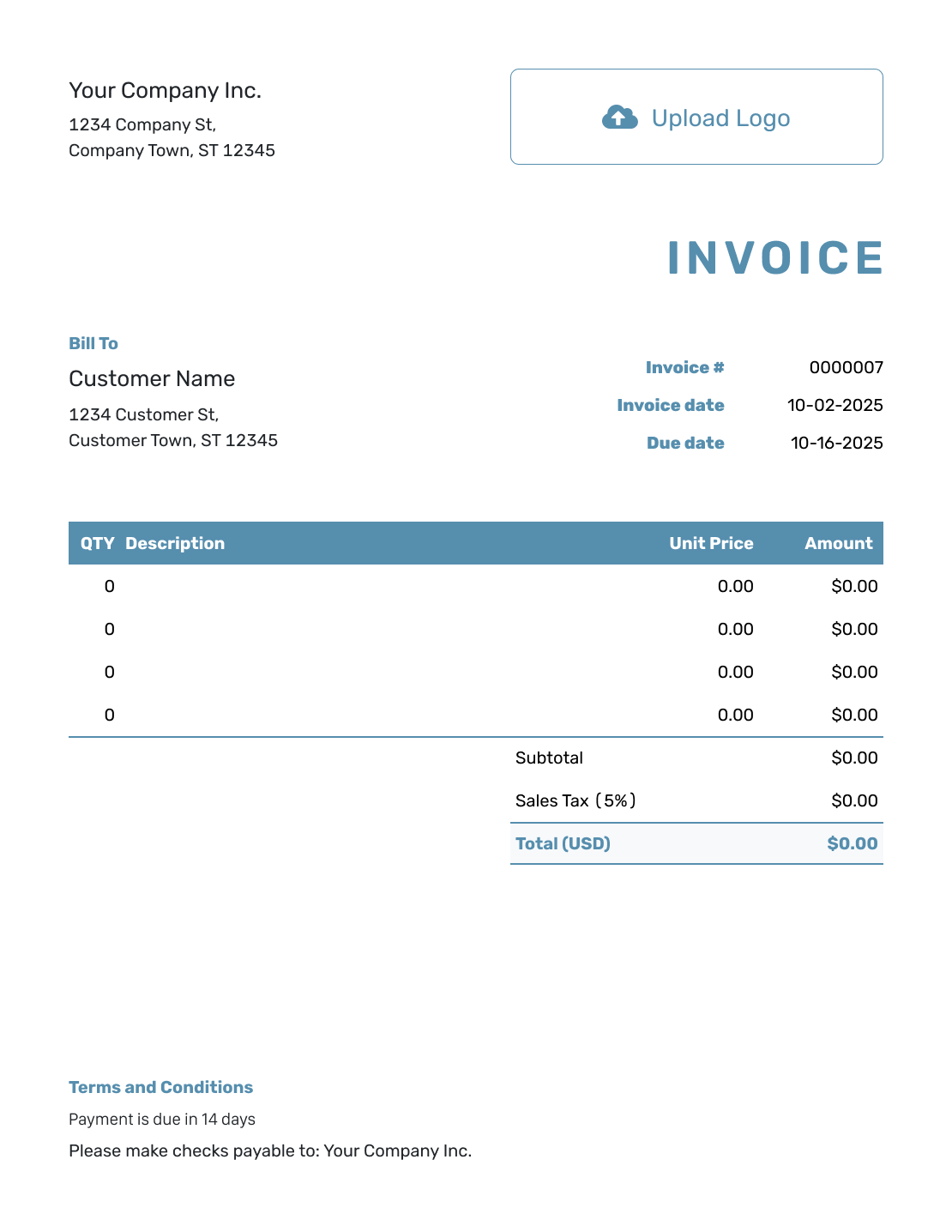
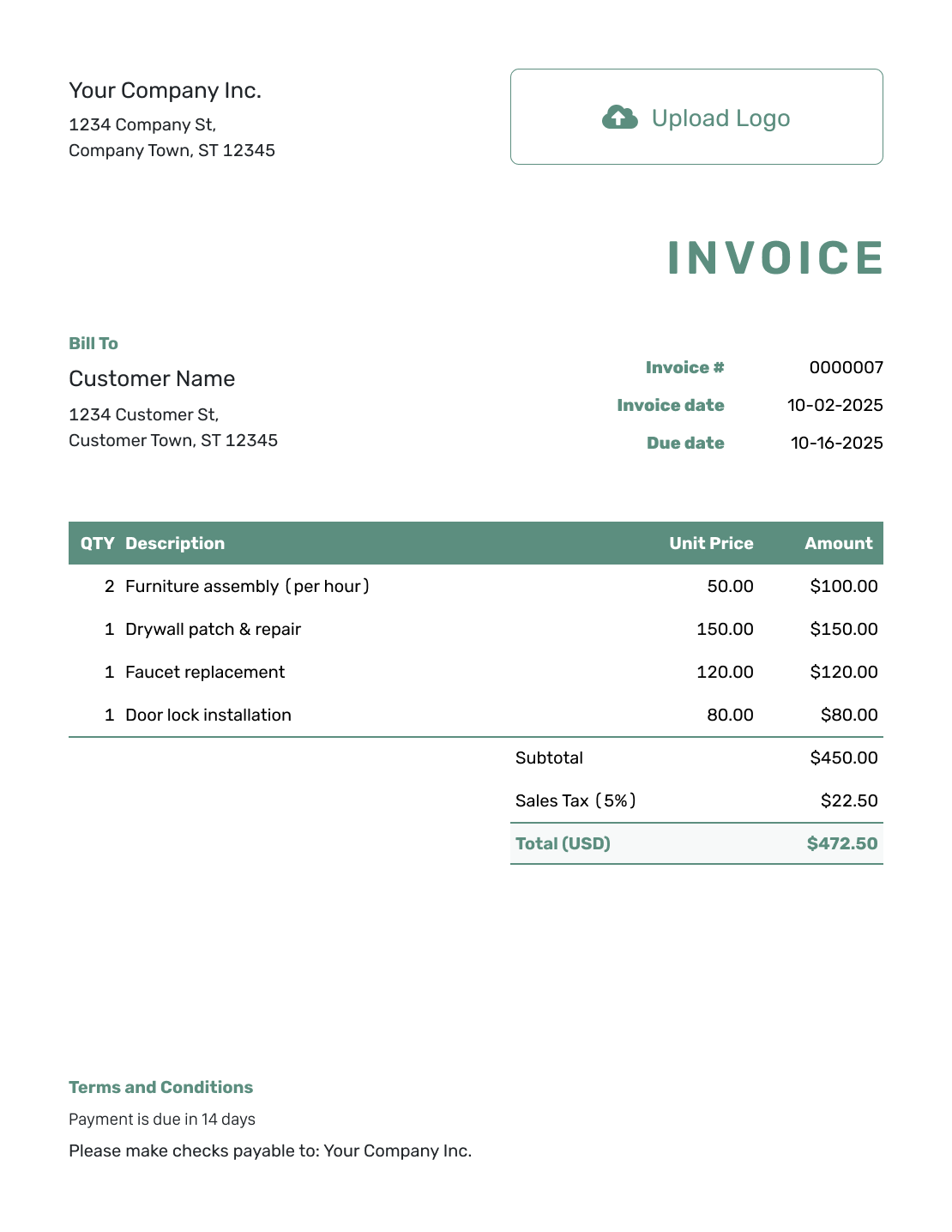
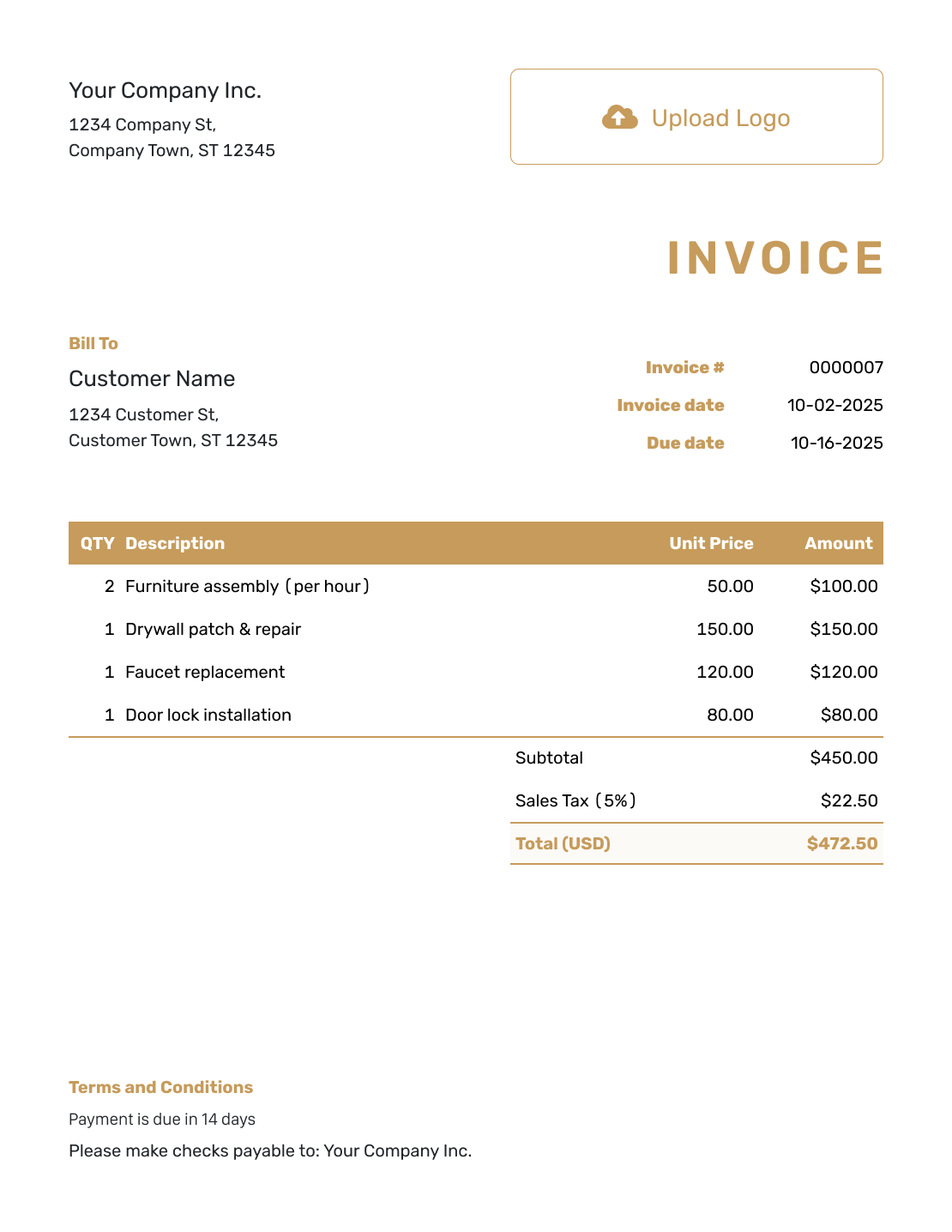
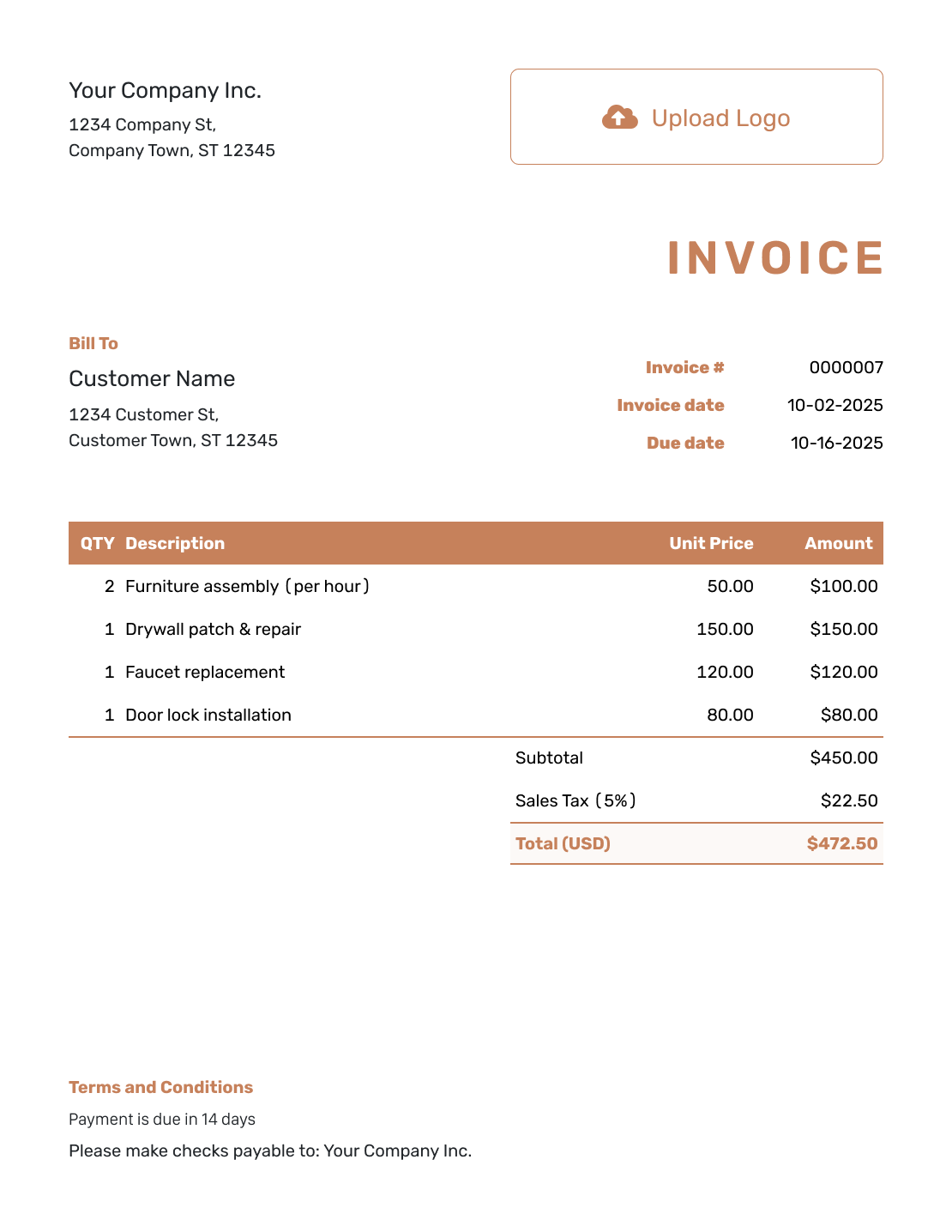
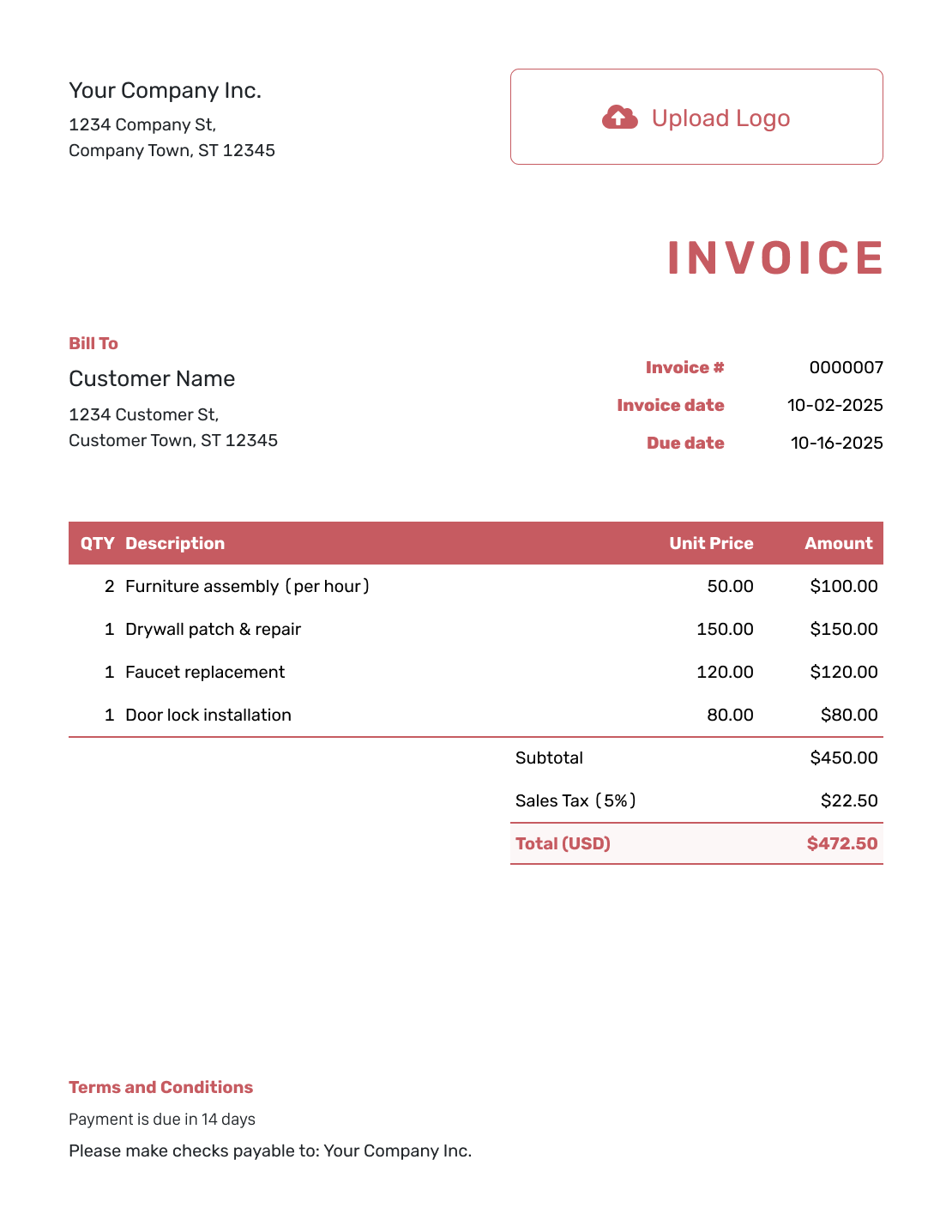
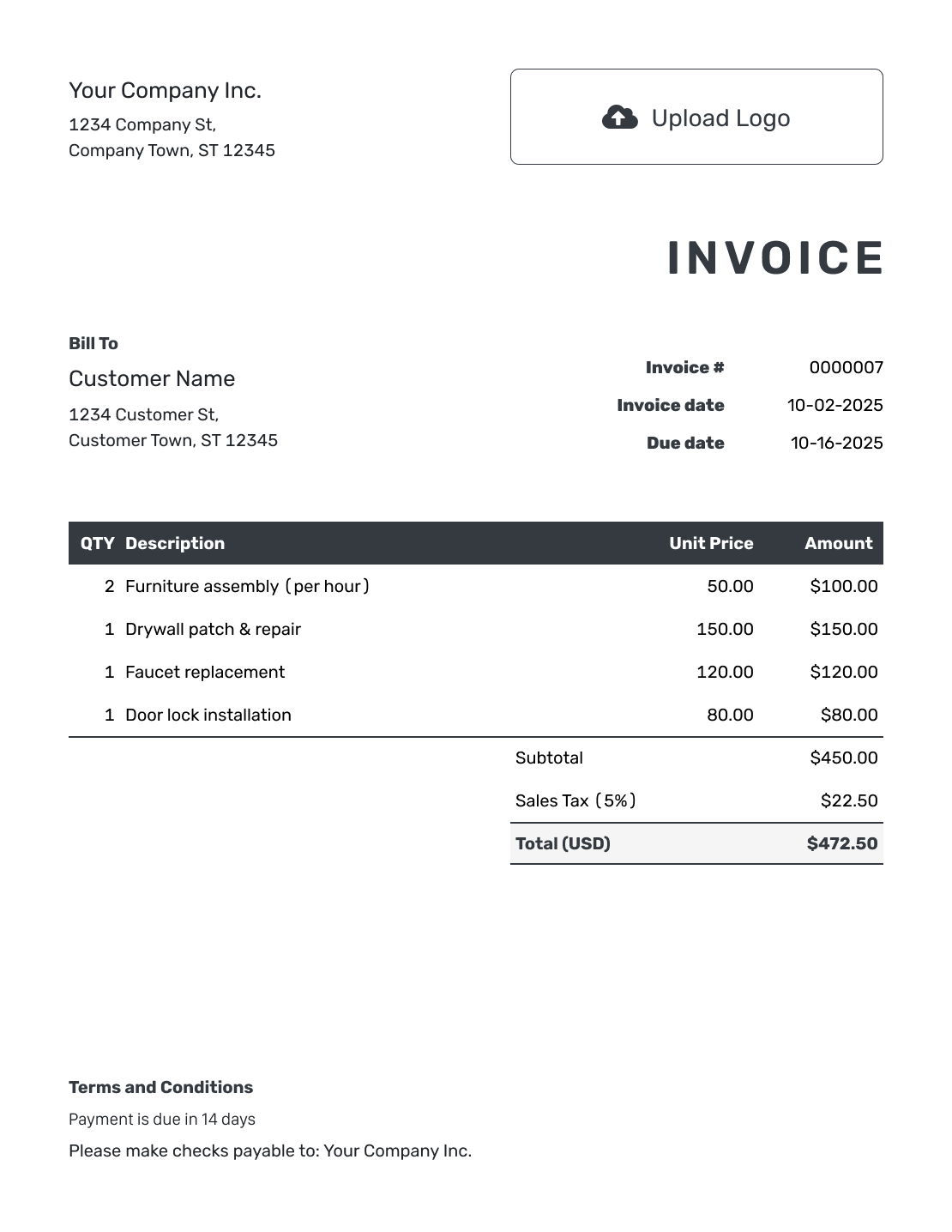
These six previews offer other ways to present the same billing details. Each opens the invoice editor.
Keep the Completed Invoice With Its Payment
After emailing the invoice from Docelf, check its history to see whether it was delivered and opened.
- Keep the due date with the invoice so you know when to follow up.
- Record the amount and date when a payment arrives.
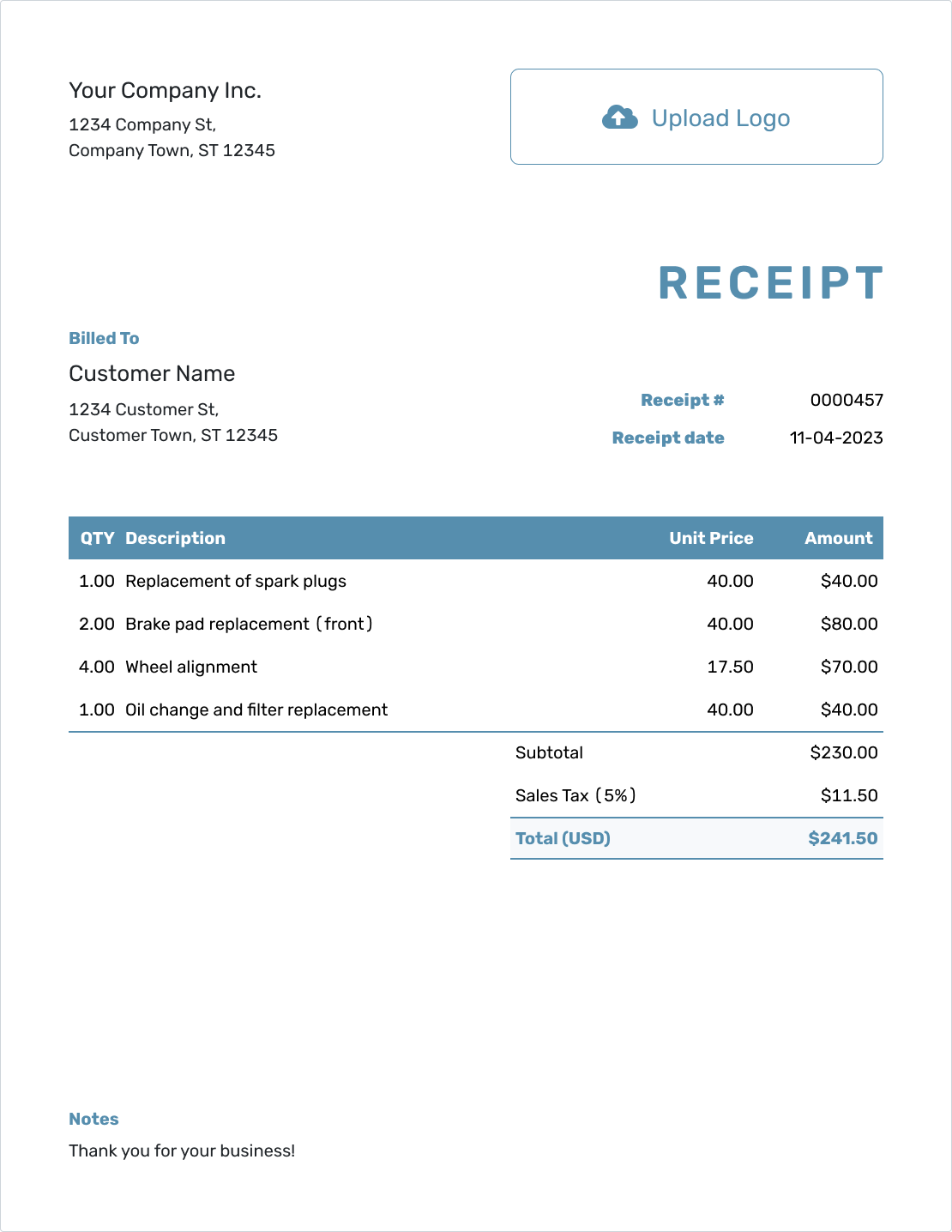
- Create a receipt from the invoice after recording the payment.
Need a Blank Invoice File Instead?
Use Word or Google Docs to edit the wording in a document. Choose Excel or Google Sheets for a spreadsheet-based starting point. These links take you to the format templates.
Blank Invoice Template FAQs
-
What should I fill in first on a blank invoice?
Start with your business and the customer’s billing details. Check the invoice number and dates next. Add the charges and review the total before completing the payment instructions.
-
Can I print a blank invoice and fill it in by hand?
Yes. Choose a printable file from one of the linked format pages. Keep an unused copy for the next bill.
Write clearly and check each calculation. Keep a copy of the finished invoice. The previews here open the Docelf invoice editor, not a file download.
-
Should I leave unused fields on the finished invoice?
Leave out optional wording and unused line items that do not apply. Do not leave sample customer details, prices or payment instructions in the finished bill. Keep the information needed to identify the charge and request payment.
-
Is a blank invoice the same as a generic invoice?
They describe different starting points. Blank means you still need to enter the billing details. Generic means the invoice is not written for one particular industry. A generic invoice can also start as a blank template.
-
Can I use the same blank invoice for labor and materials?
Yes. Give labor and materials their own descriptions and quantities. State the unit for each charge, such as hours for labor or pieces for materials. Docelf calculates the line amounts and total.
Fill In the Details and Finish the Invoice
Finish today’s bill without building the layout from scratch.
- Enter your customer’s billing details
- Add the charges and check the calculated total
- Send the completed invoice or download a PDF