Free Commercial Invoice Template
Create a professional invoice in minutes
Create a commercial invoice for goods sold overseas, with clear descriptions and agreed prices. Show what the buyer owes so they can check the bill and pay you.
Email, print or download your invoice as a PDF.
14-day free trial. No credit card required.
Create the invoice. Send it. Get back to work.
Commercial Invoice Template Previews
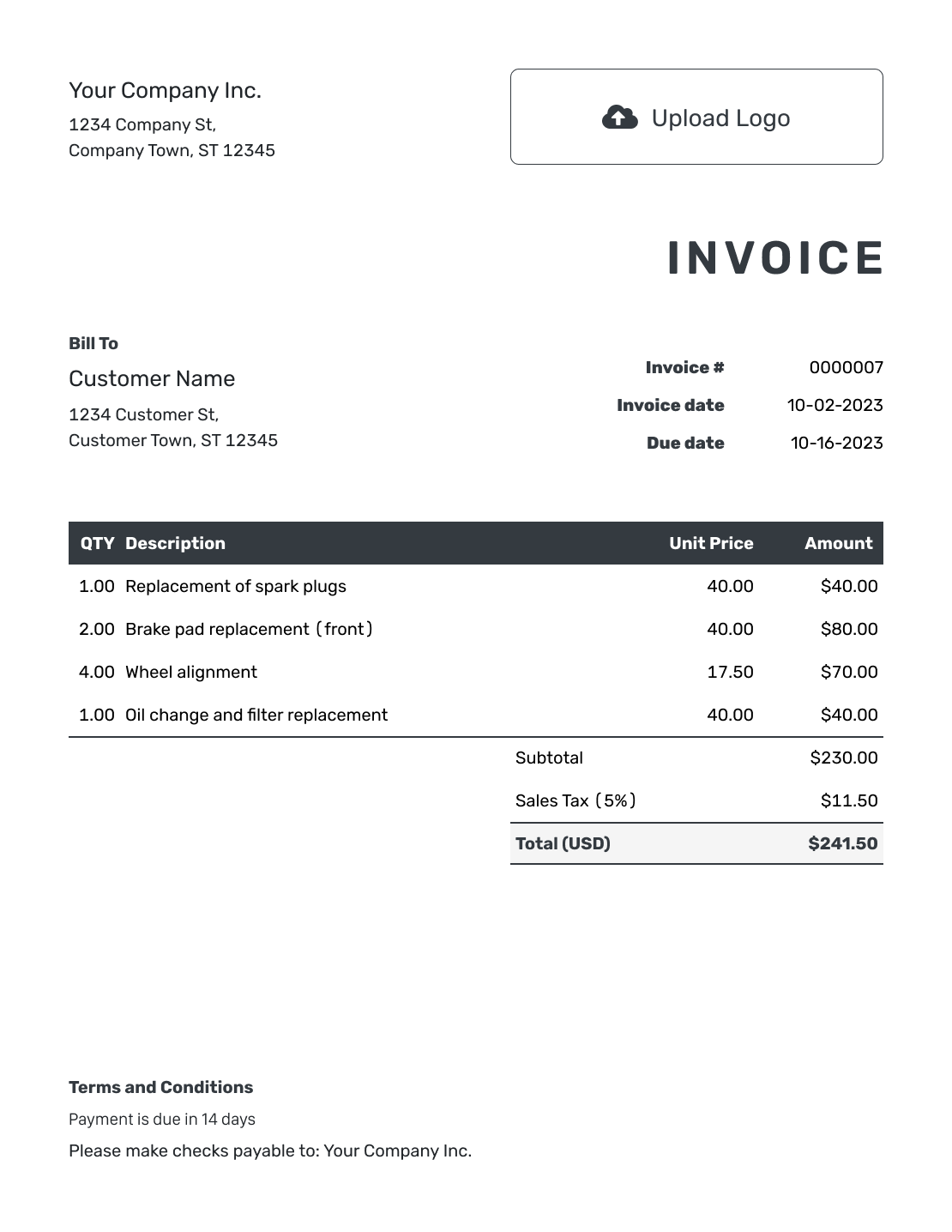
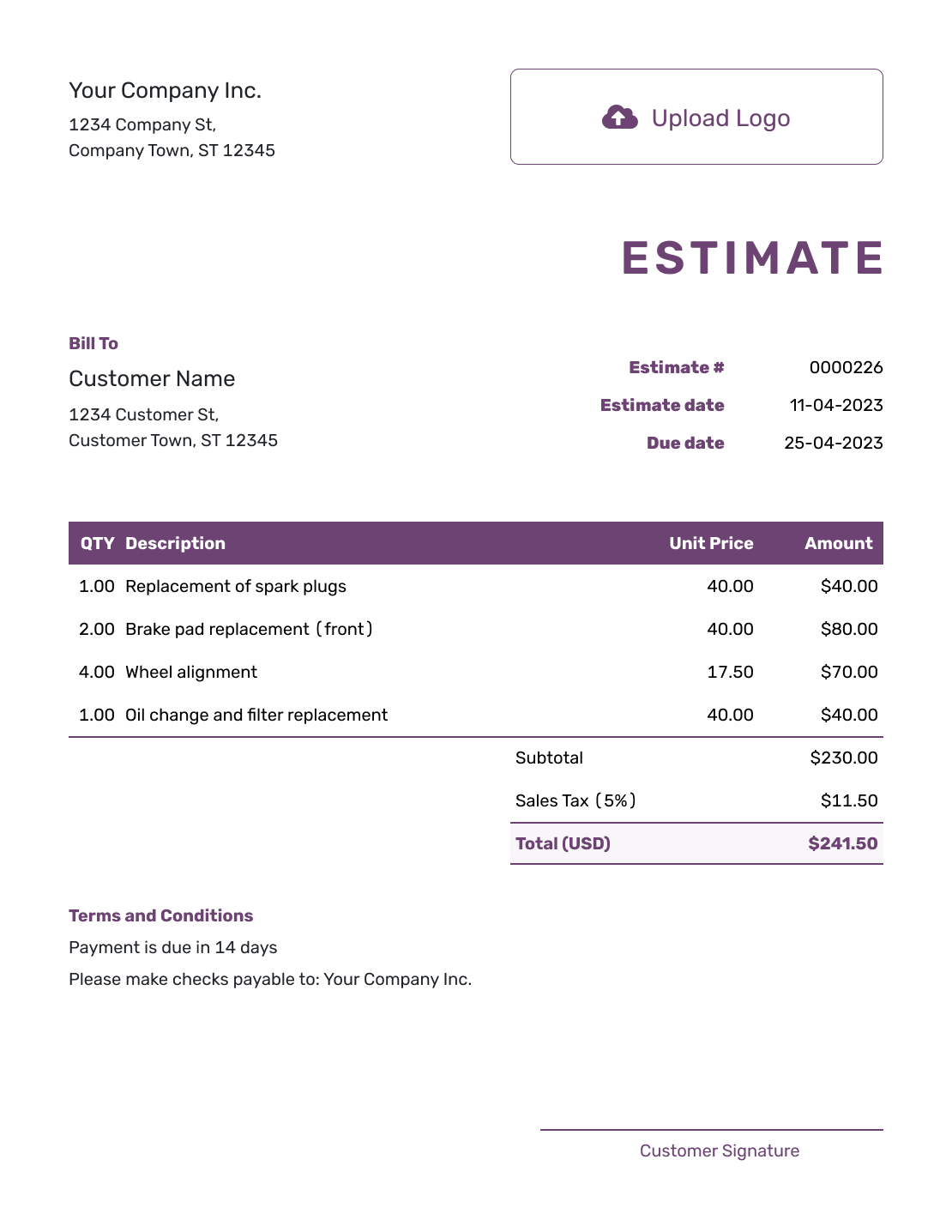
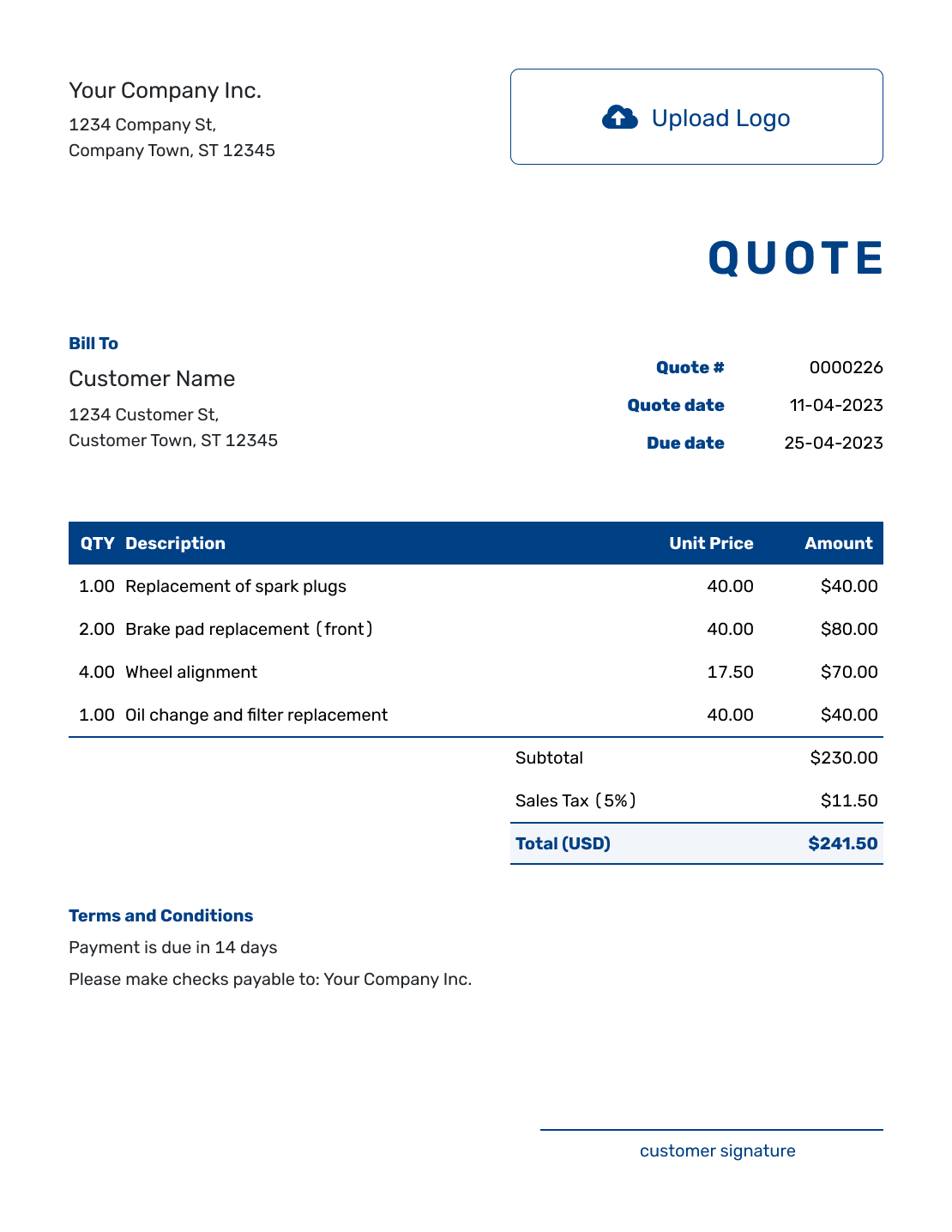
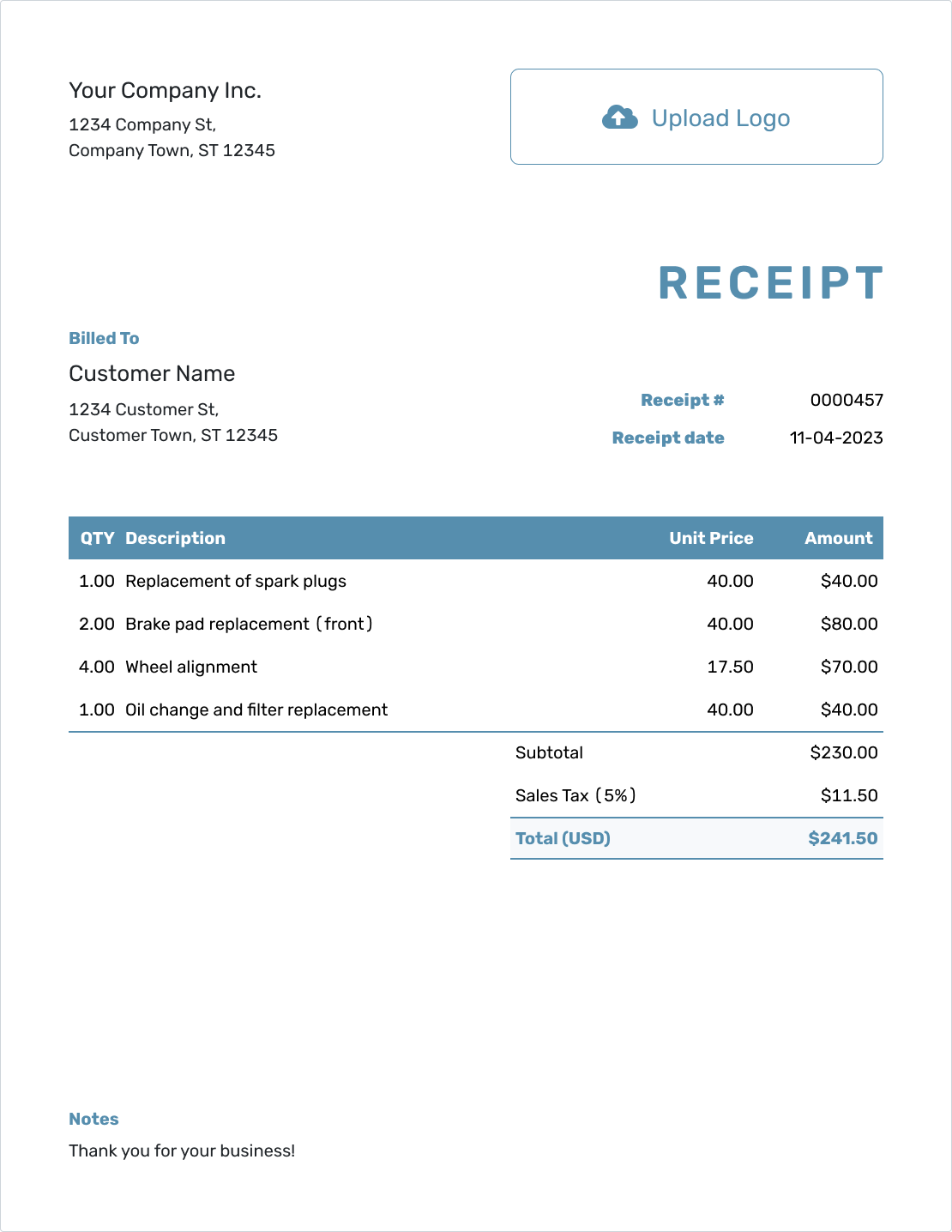
These general invoice layouts give you a starting point for billing the buyer. Each preview opens the same editor; the guide below explains the sale and shipment details to prepare.
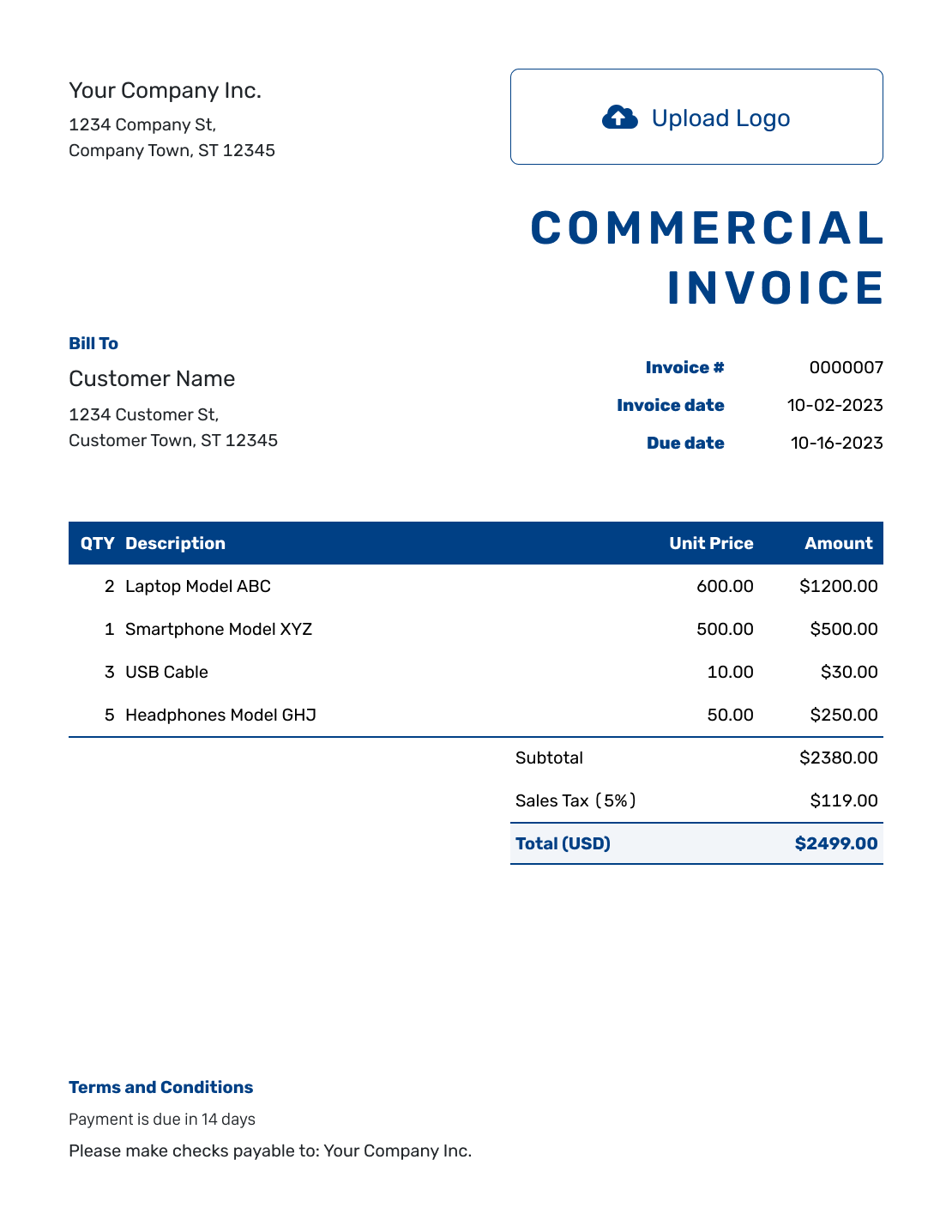
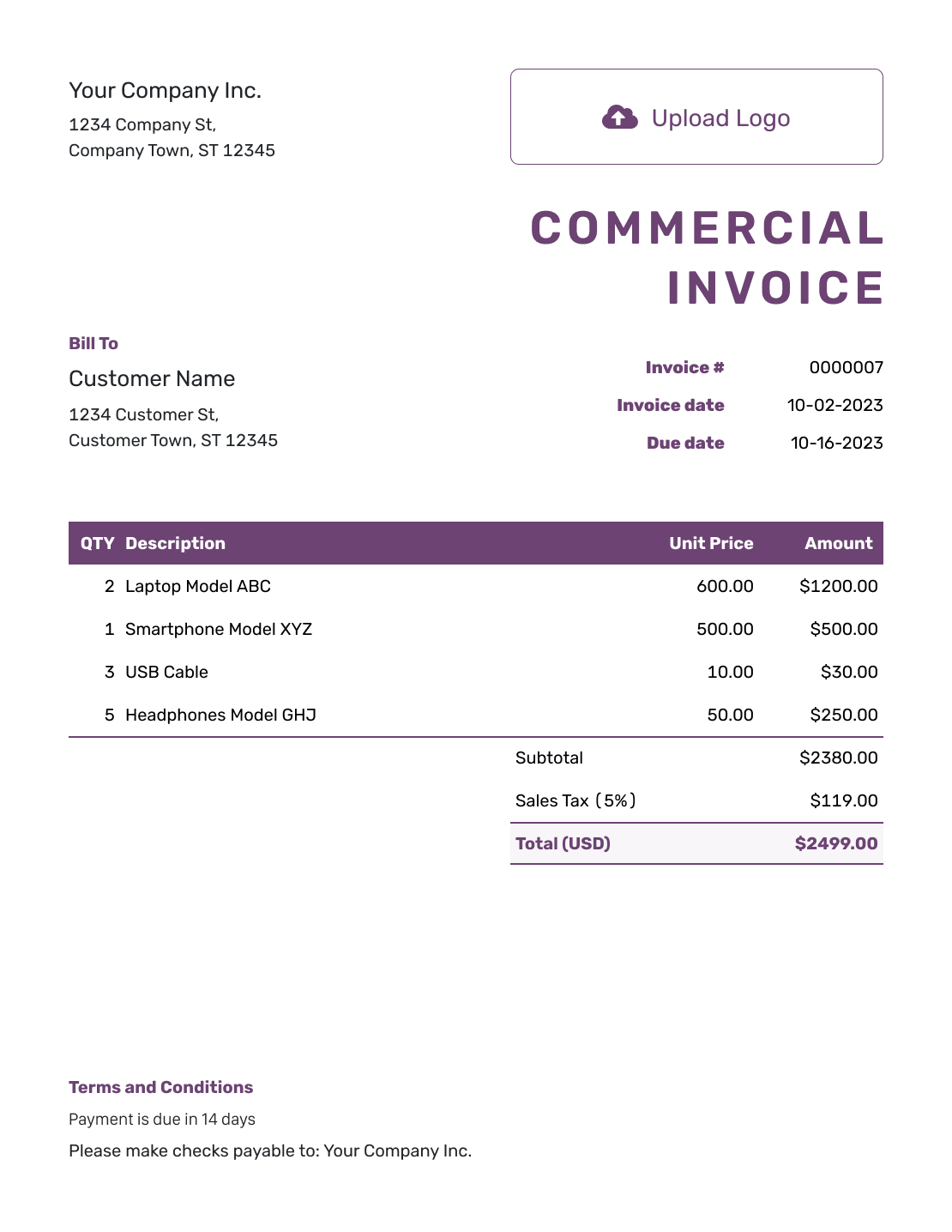
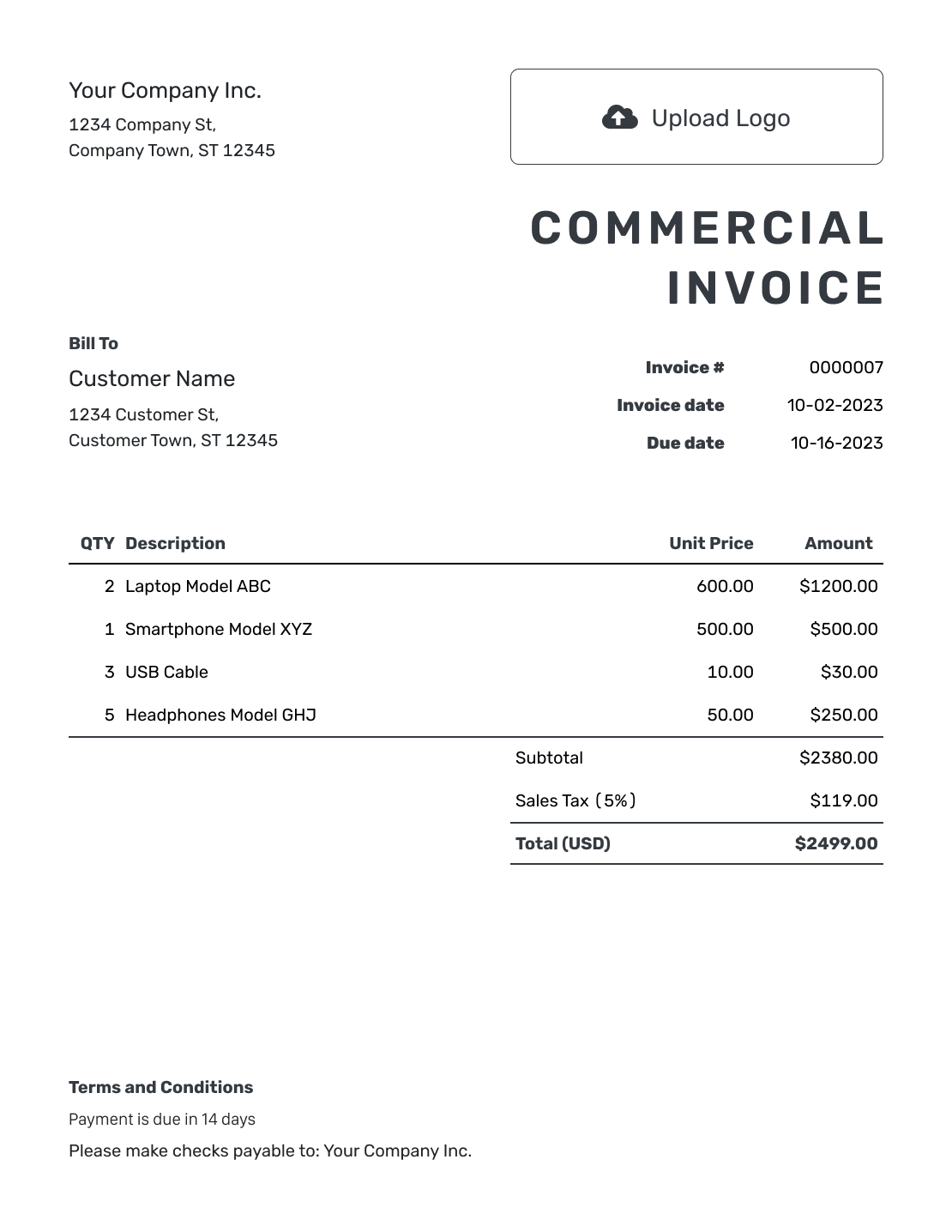
Use the Commercial Invoice to Describe the Goods Sold
For international trade, a commercial invoice identifies the seller, buyer and goods sold, with the prices and currency. Customs authorities use it to help assess duties and taxes. The International Trade Administration’s commercial-invoice guidance explains its role and the need to check destination requirements.
For a domestic business sale or service, an ordinary invoice may be all the customer needs. The shipment guidance below focuses on goods rather than treating every business bill as a customs document.
Docelf helps you prepare the invoice details. A general invoice layout is not a guarantee of customs acceptance or a replacement for a required country-specific form.
How to Create a Commercial Invoice
Keep the buyer’s order beside you as you enter the invoice. Use the agreed descriptions and prices so the buyer can match each charge to the sale.
- Identify the Seller: Enter the selling business and contact details used for the shipment.
- Add Your Business Logo: Keep the design clear and the invoice details easy to read.
- Identify the Buyer: Check the buyer’s legal name, billing address and contact.
- Set the Number and Dates: Use an invoice number and date. Add the agreed payment due date.
- Describe Each Product: List the goods, quantities, units and agreed prices. Give billed freight and insurance their own item rows.
- Check the Invoice Value: Review the currency and applicable tax. Docelf adds the item amounts to calculate the subtotal and total.
- Add Payment and Trade Terms: Use Terms and Conditions for the order reference, payment instructions and agreed shipping terms. Review the invoice before sending.
How to Fill In Commercial Invoice Line Items
Use a description that identifies each product, not just “Goods” or “Samples.” Add the material, size or product reference when it helps explain what is being sold.
This fictional sale contains three kitchenware products in USD. The seller also bills the agreed freight and insurance as item rows, so both charges contribute to the subtotal.
| QTY | Description | Unit Price | Amount |
|---|---|---|---|
| 24 | Stainless steel table spoons, 20 cm — each | $8.00 | $192.00 |
| 12 | Stainless steel serving tongs, 30 cm — each | $14.00 | $168.00 |
| 12 | Stainless steel serving spoons, 30 cm — each | $20.00 | $240.00 |
| 1 | Freight — agreed shipment charge | $60.00 | $60.00 |
| 1 | Insurance — agreed shipment charge | $6.00 | $6.00 |
| Subtotal | $666.00 | |
| Total | $666.00 |
The goods total $600.00, and freight and insurance bring the invoice to $666.00. This example does not apply a tax or duty rate because no destination or tax treatment is specified. It is not a tax-free shipment claim or a calculation of the value to declare to customs.
What to Include in Commercial Invoice Terms
Use Terms and Conditions to help the buyer match the invoice to the order and pay it. State the payment currency and instructions, then add the shipping terms you actually agreed, including the named place when relevant.
Adapt this sample to the kitchenware sale above and replace the bracketed details. Keep required customs declarations with the shipment paperwork, using wording confirmed by your carrier or broker.
Example: Terms and Conditions
- This invoice relates to order [Order Reference] and shipment [Shipment Reference].
- Invoice total: USD 666.00. Payment is due on [Due Date] by [Accepted Payment Method].
- Shipping terms: [Agreed Trade Term and Named Place].
- Responsibility for freight, insurance and import charges follows agreement [Agreement Reference].
Put the Order Details Into a Clear Invoice
Enter the goods and agreed shipment charges in Docelf. It calculates the invoice total. Review the buyer’s copy, then email it or download a PDF.
Check the Details Needed for This Shipment
The buyer may pay the bill while a different person receives the shipment. Keep each party’s role clear, and gather the product details needed for the destination.
Seller, Buyer and Recipient
Check the seller’s, buyer’s and recipient’s names and addresses. If the delivery recipient differs from the buyer, include that recipient’s details in the required shipment paperwork.
Product Details and Origin
Use accurate descriptions and quantities. Confirm the country of manufacture or origin information required for each product rather than copying the dispatch country.
Product Codes and References
Check any required Harmonized System (HS) or destination tariff code with a reliable source or broker. Keep order and shipment references consistent across documents.
Currency, Charges and Terms
Identify the invoice currency and the agreed trade terms. Show freight and insurance charged to the buyer on their own item rows, and confirm which party pays import charges.
For a carrier example, review FedEx’s customs-document guidance. Check the current requirements for your own shipment rather than copying a generic example.
Keep the Invoice and Shipment Paperwork Consistent
The goods and quantities on the invoice should match the shipment paperwork. Check the buyer’s order, packing list and carrier records before sending. The export-document guide explains why a packing list is not a substitute for a commercial invoice.
Add useful product information to the item descriptions and trade terms to Terms and Conditions. Attach a supporting PDF or image when appropriate. Do not assume an attachment replaces a field, declaration or signature required on the commercial invoice itself.
If a required field or declaration does not fit the invoice, use the form your carrier or broker requests. They can also confirm how to submit the customs paperwork; emailing an invoice from Docelf does not submit it to customs.
Choose the Currency and Keep the Design Readable
Docelf supports USD, EUR, GBP, CAD and AUD. Choose the currency agreed with the buyer and use it consistently. Do not mix amounts in different currencies in one invoice total.
Add your logo, colors and fonts, and use the footer for your contact details. An optional industry name can appear before “Invoice.” Keep product descriptions, prices and payment details easy to read.
Save customer and product details for later orders. Review prices, quantities and shipment references each time you reuse them. See how to add and reuse items.
After You Send the Commercial Invoice
Keep a copy of the final invoice with the order and shipment records. Invoice payment and customs clearance are different tasks.
Check Payment and Create the Receipt
- Check whether the invoice emailed from Docelf was delivered and opened.
- Record the buyer’s payment and check any remaining balance.
- Create a receipt after recording payment. Ask the carrier or broker for customs updates.
More Commercial Invoice Previews
These six layouts offer more ways to present your invoice. Each preview opens the invoice editor.
-
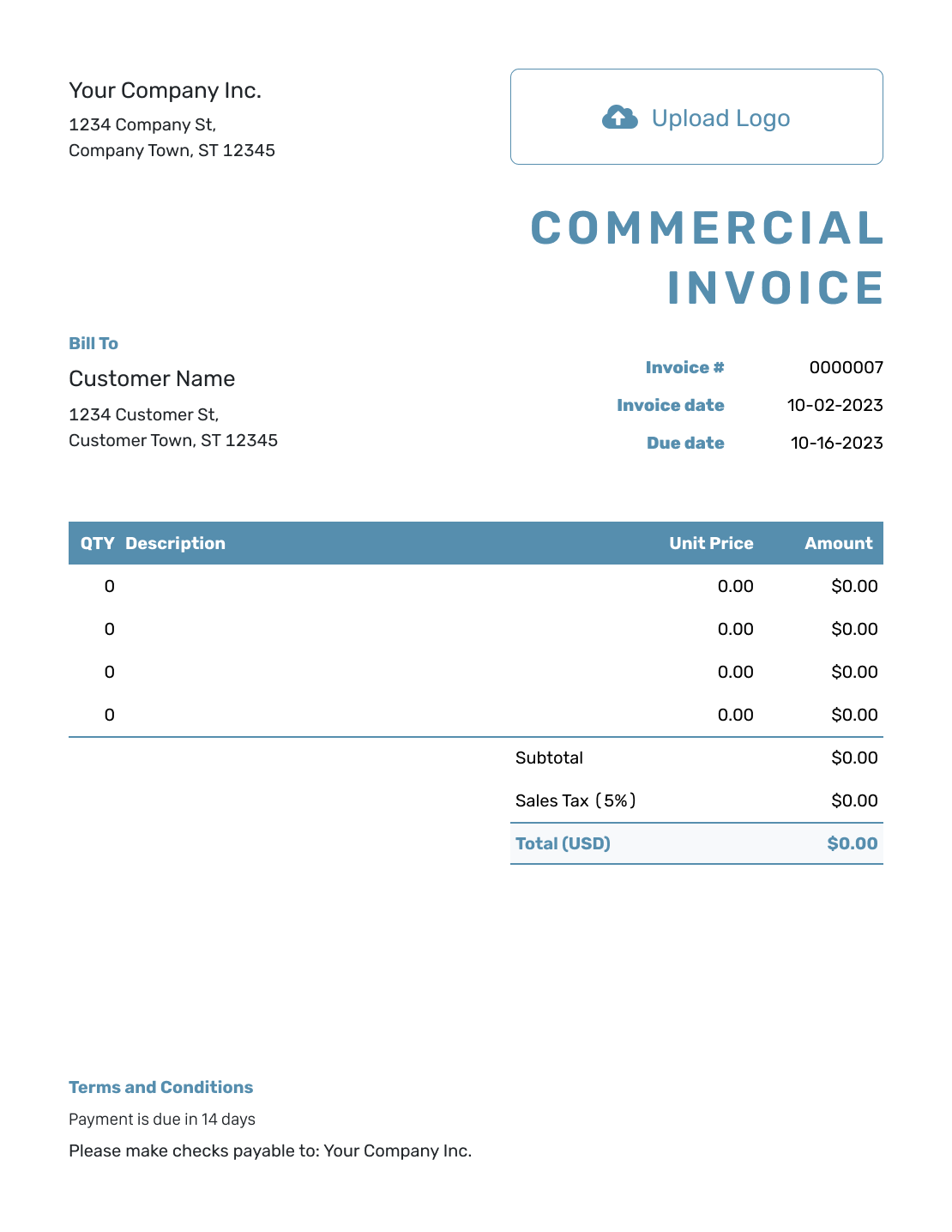
Blank Commercial Invoice Template
Create Free Invoice -
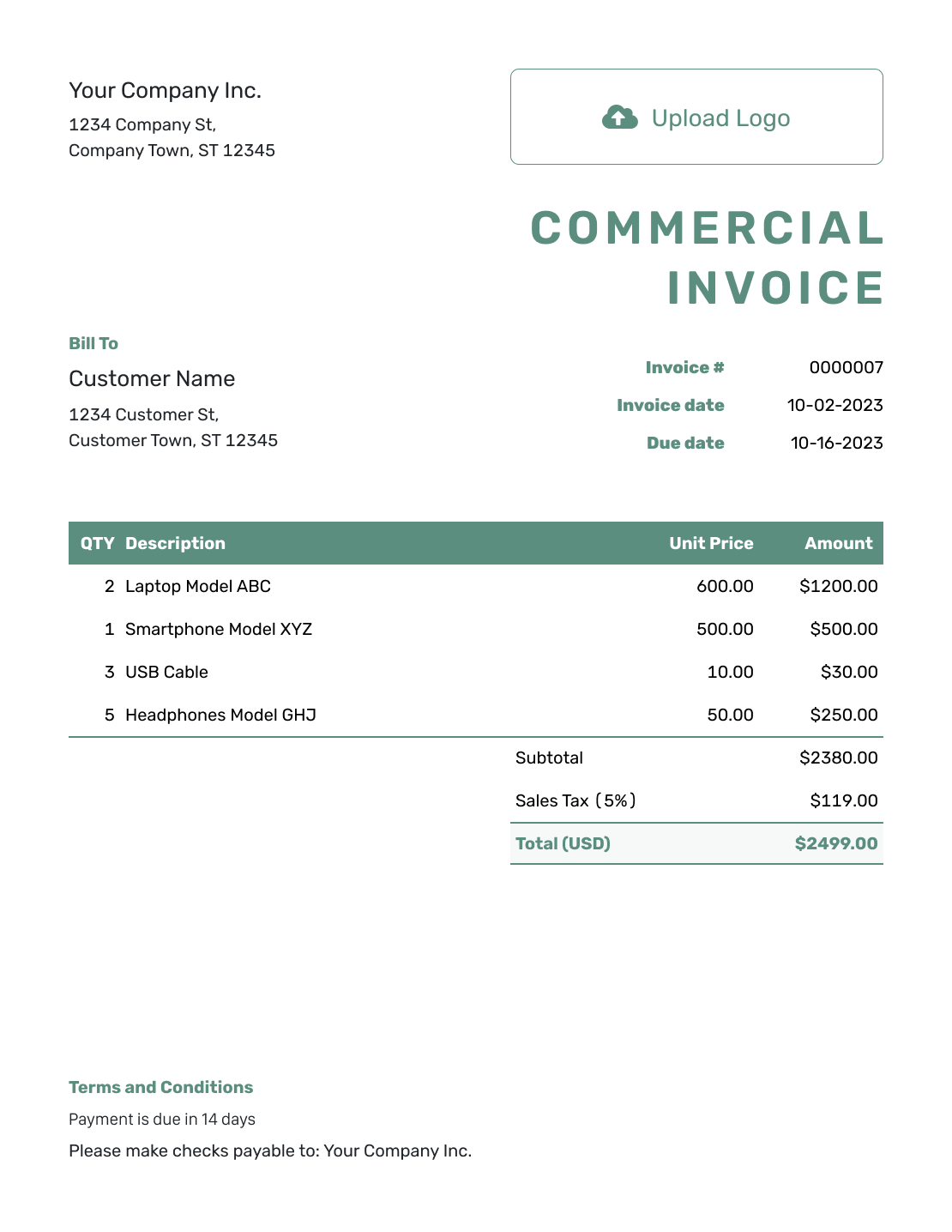
Simple Commercial Invoice Template
Create Free Invoice -
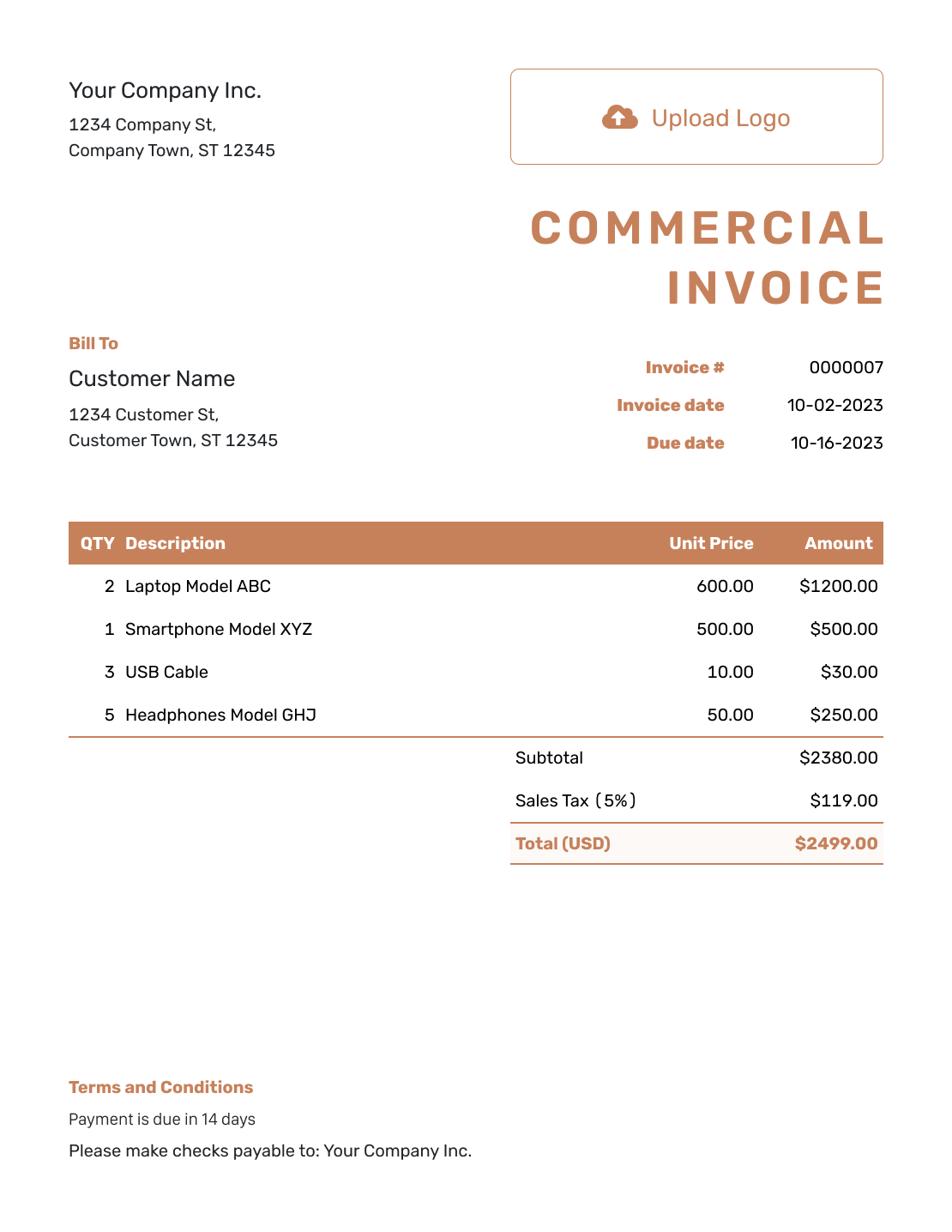
Standard Commercial Invoice Template
Create Free Invoice -
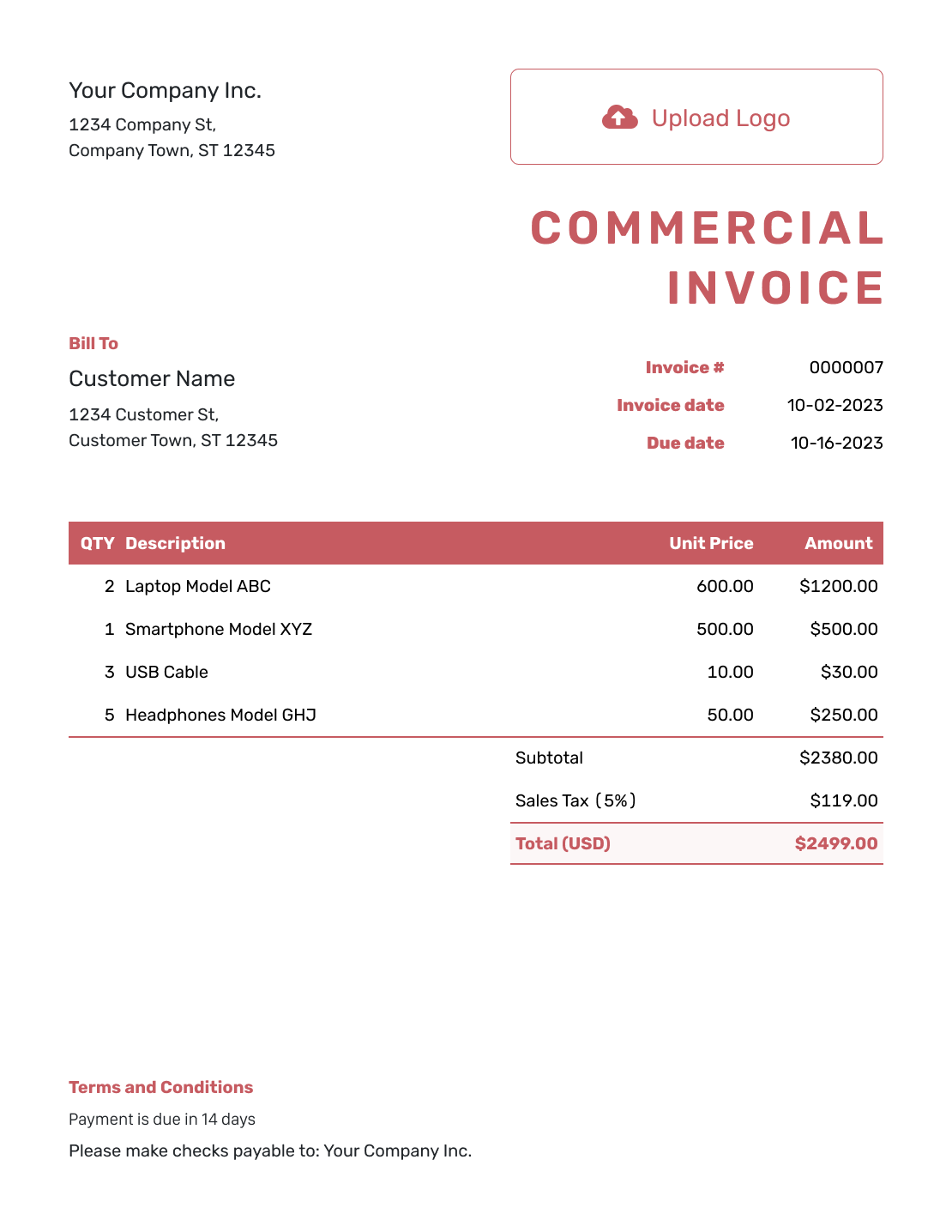
Itemized Commercial Invoice Template
Create Free Invoice -
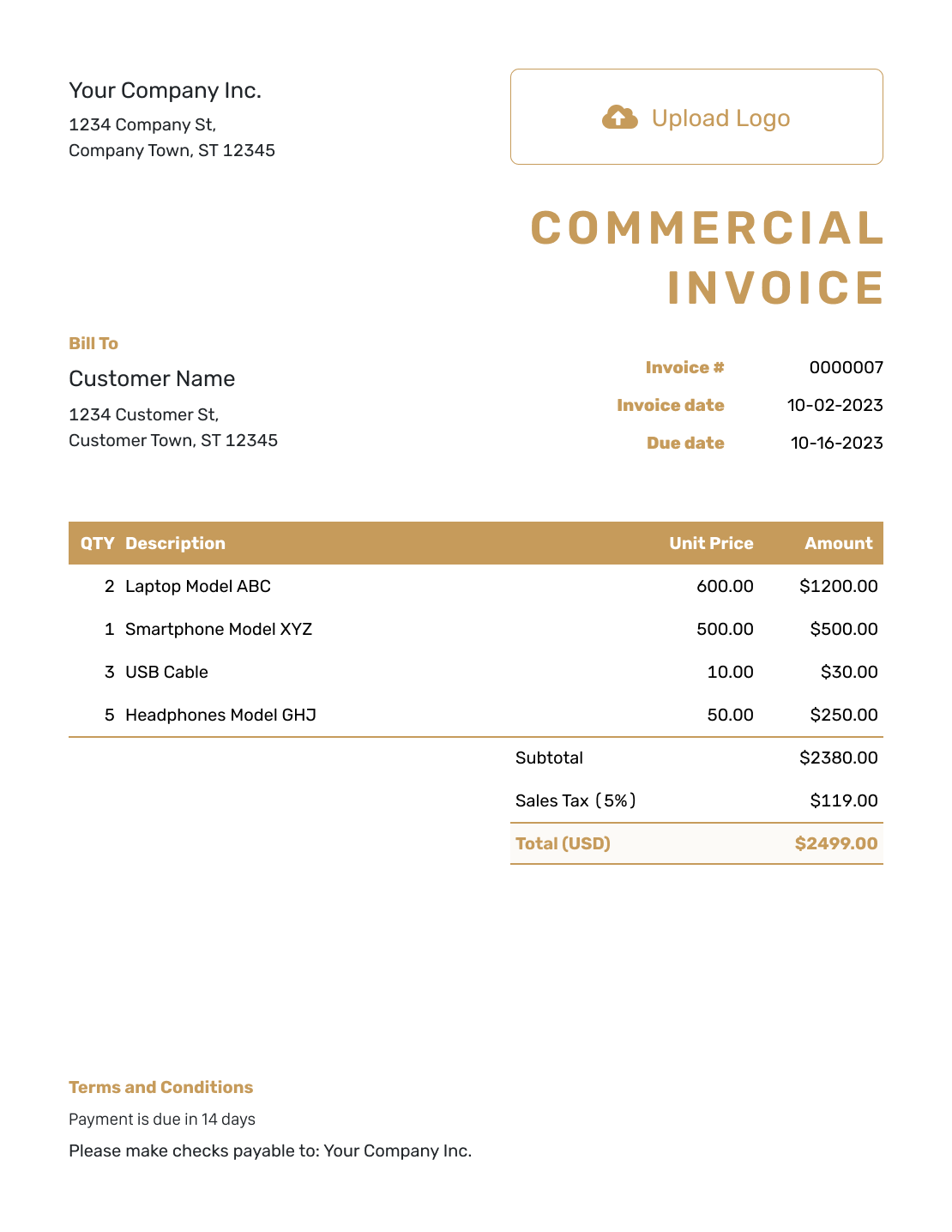
Basic Commercial Invoice Template
Create Free Invoice -
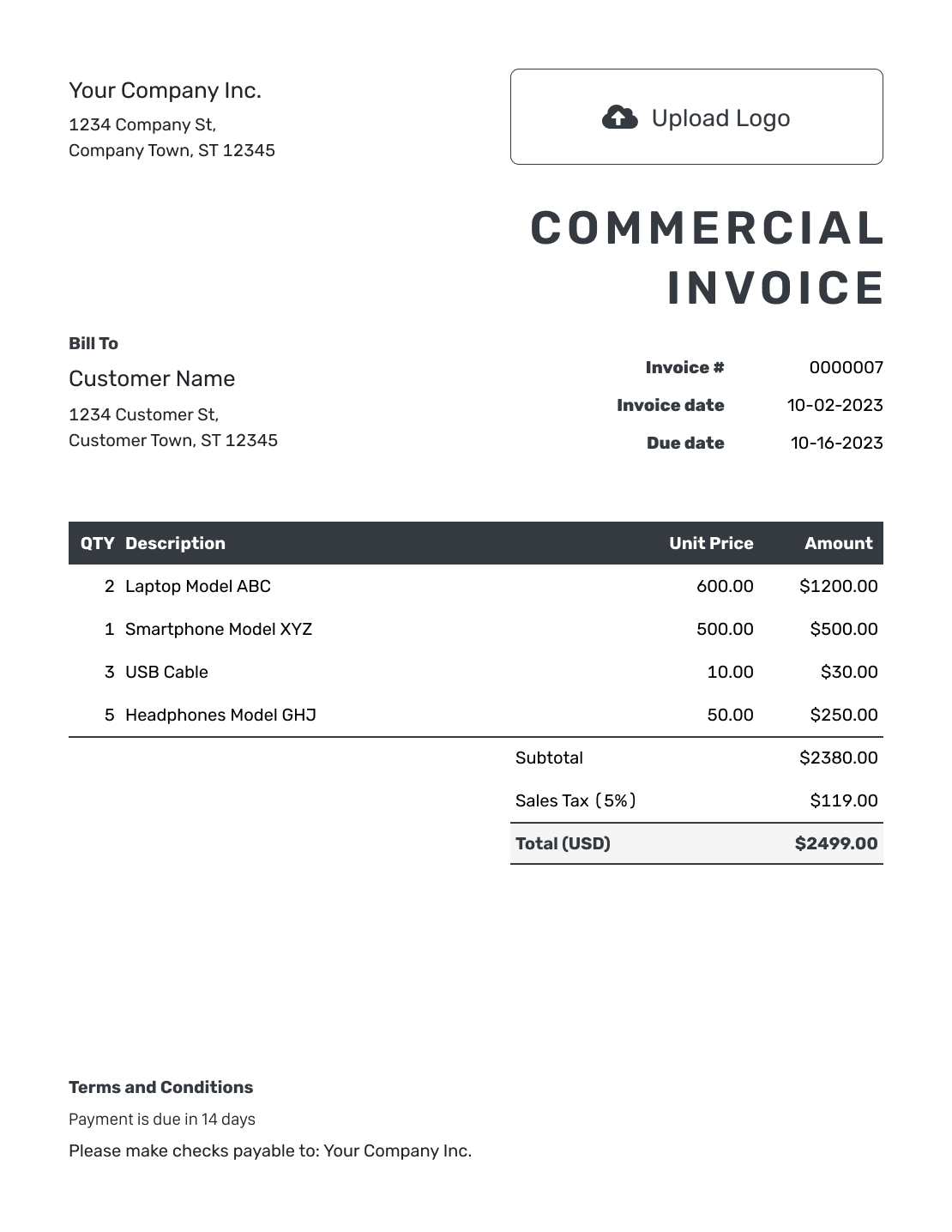
Hourly Commercial Invoice Template
Create Free Invoice
Commercial Invoice Files to Adapt
Prefer a document or spreadsheet? These pages offer general invoice files you can edit in the named format. Docelf’s online editor downloads the finished invoice as a PDF.
Commercial Invoice FAQs
-
What is a commercial invoice used for?
In international trade, a commercial invoice identifies the seller and buyer. It lists the goods sold, prices and currency. Customs authorities use it to help assess duties and taxes. Confirm the details and format required for the destination.
-
Is every business invoice a commercial invoice for customs?
No. A bill for domestic services or a local sale is not automatically suitable for customs. For an international goods shipment, check the destination’s commercial-invoice requirements and the carrier’s instructions.
-
Can I use these layouts for an international shipment?
Use them as a starting point for invoice details. Confirm that the finished document contains all required shipment information. Use a carrier or country-specific form when the general layout is not enough. Check the finished document, not just the preview.
-
Do I need HS codes and country-of-origin details?
Check the requirements for the goods and destination with your carrier or customs broker. Use verified product codes and origin information where required. Do not guess them or copy values from an unrelated example.
-
Why does the line-item example omit a tax rate?
The example shows goods, freight and insurance. Taxes and duties depend on the shipment, so it does not assume a rate. Leaving them out of this example does not mean your shipment is tax-free.
-
Does a packing list replace the commercial invoice?
No. A packing list describes how the goods are packed, while the commercial invoice records the sale and values. Keep the descriptions and quantities consistent and confirm which documents your shipment requires.
-
Can Docelf clear customs or calculate the correct import duty?
No. Docelf calculates invoice amounts from the prices, taxes and discounts you enter. Ask your carrier, broker or customs authority about required documents, product codes and import duties.
Ready to Prepare the Commercial Invoice?
Give the buyer a clear bill they can match to the order.
- List the goods and agreed prices
- Keep the currency and trade terms clear
- Download the checked invoice as a PDF