Free Statement Invoice Template
Create a statement-style invoice manually
Enter the charges, payments and remaining balance yourself to create a statement-style invoice. The summary shows the customer what is still due and helps you collect the remaining balance.
Email, print or download the statement-style invoice as a PDF.
14-day free trial. No credit card required.
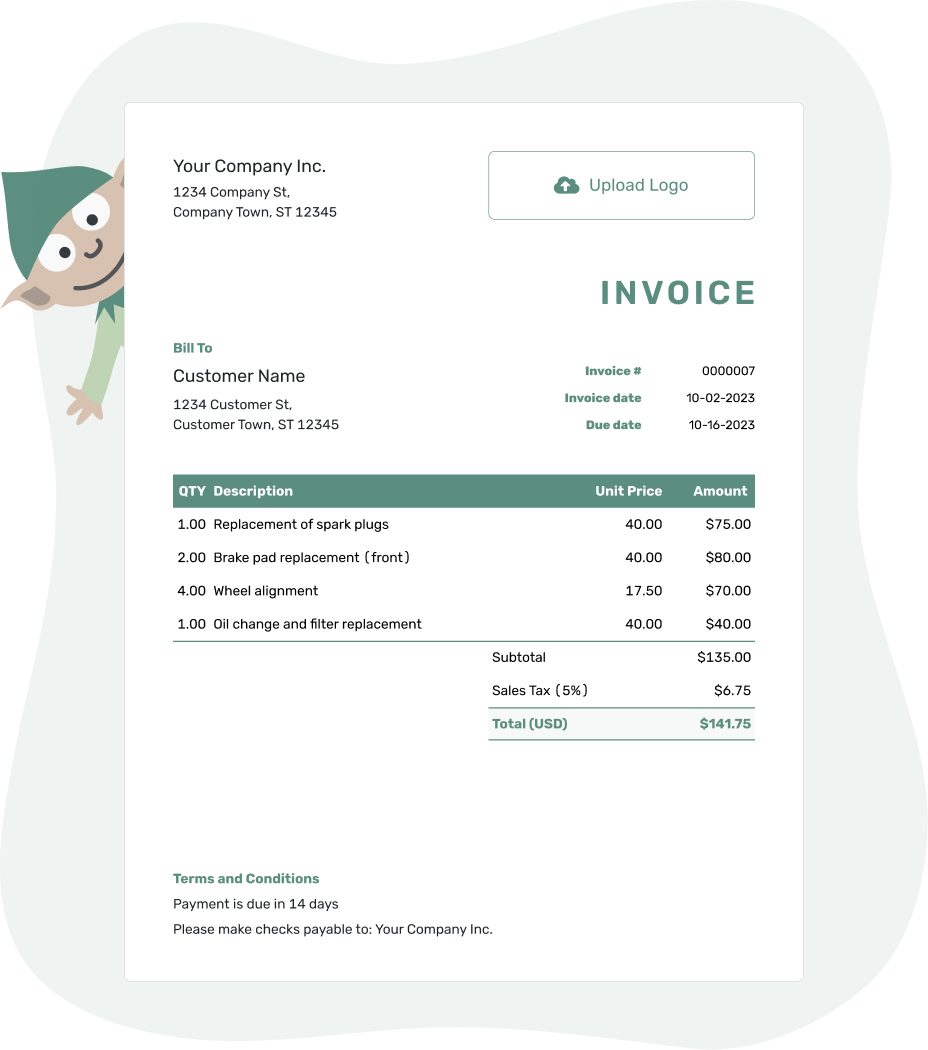
Create the invoice. Send it. Get back to work.
Invoice Layouts for a Manual Statement-Style Summary
These previews open the invoice editor. Use the manual summary example to enter the original invoice references and payments. For a summary kept outside Docelf, adapt an editable file.
-
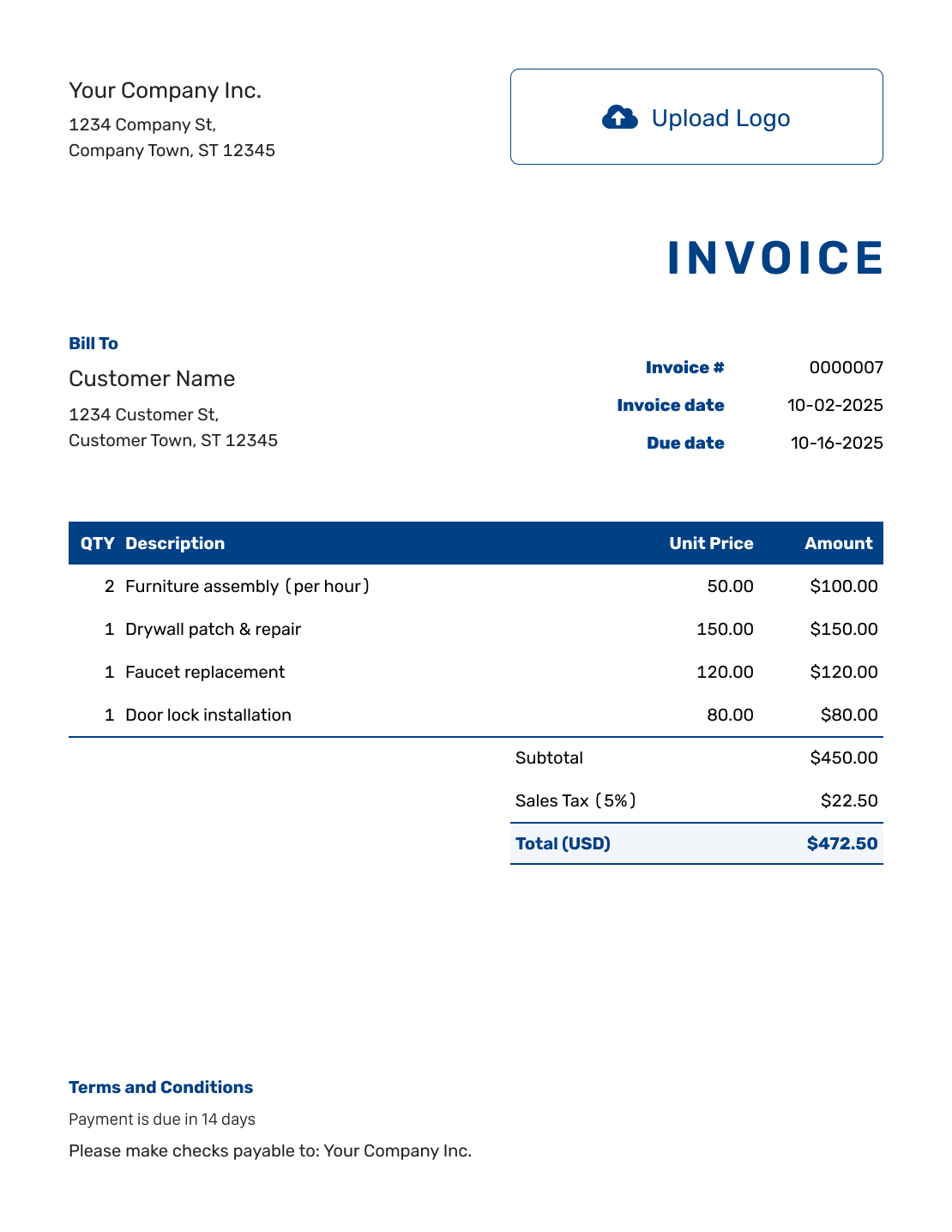
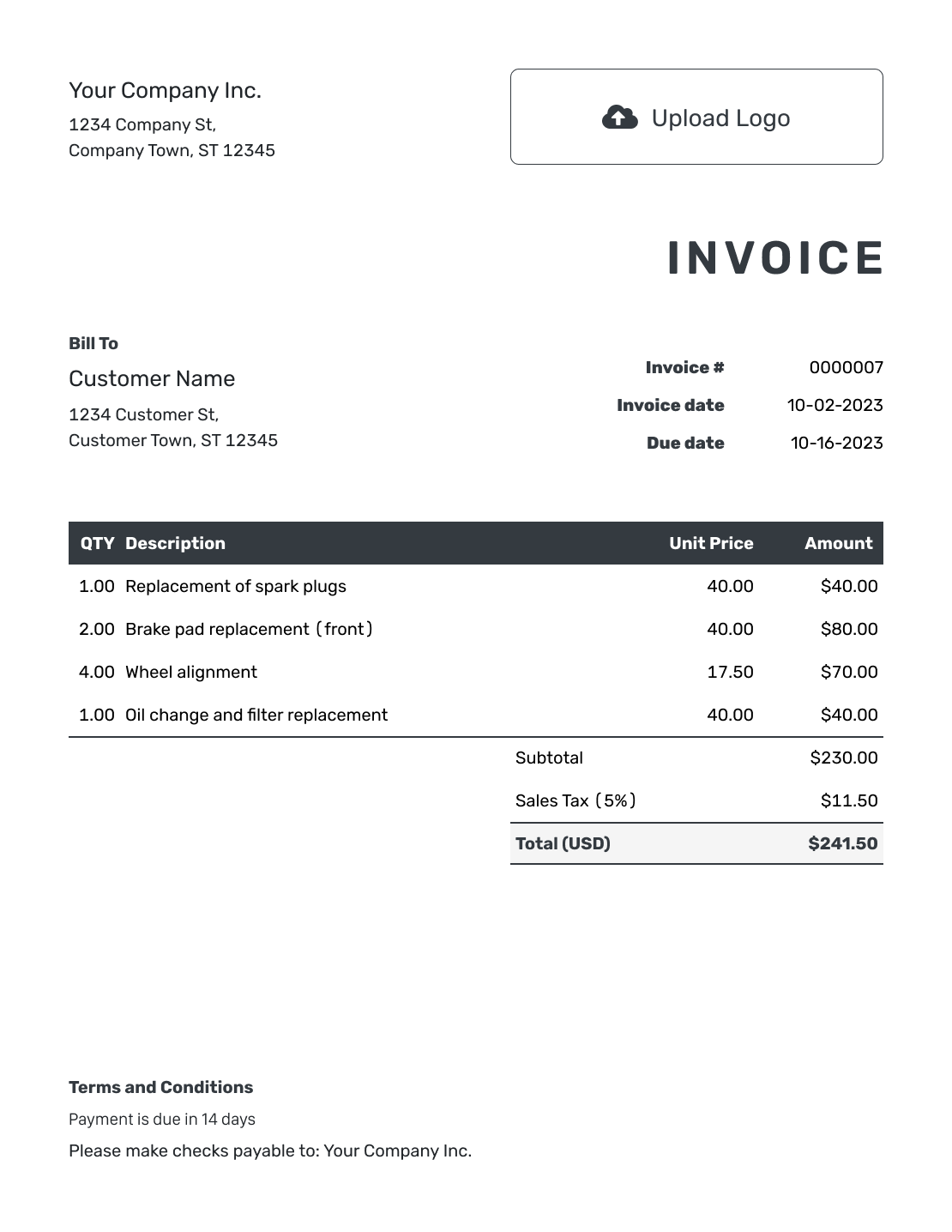
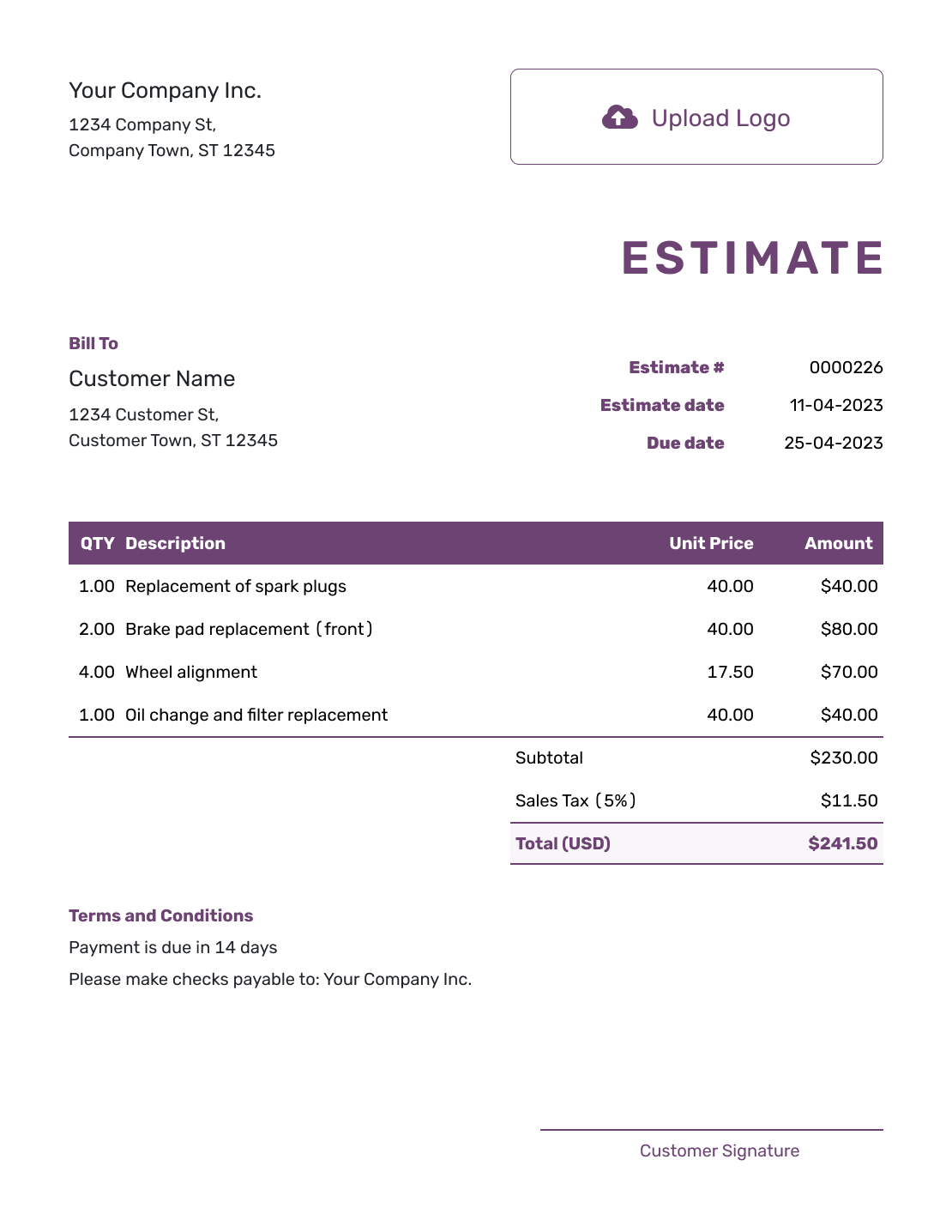
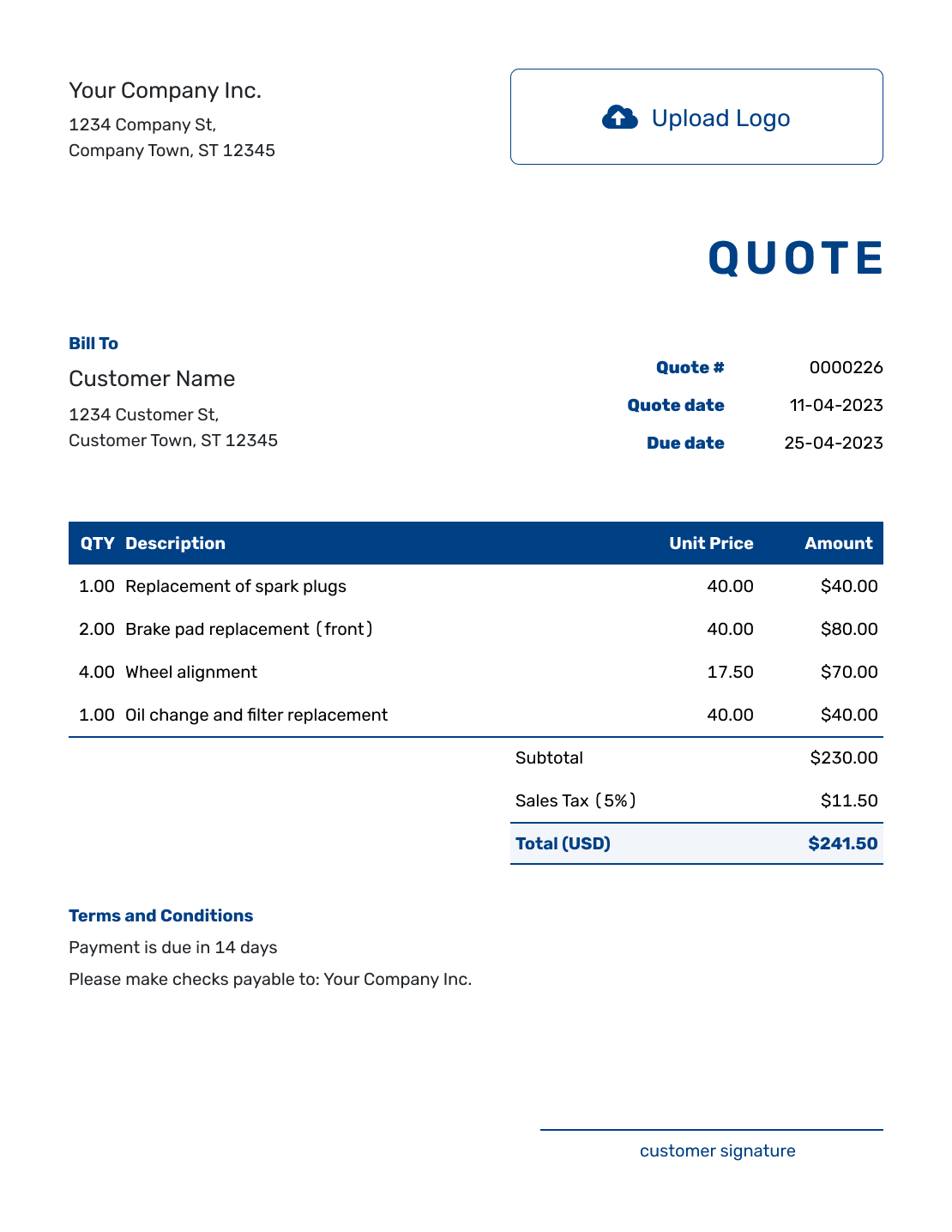
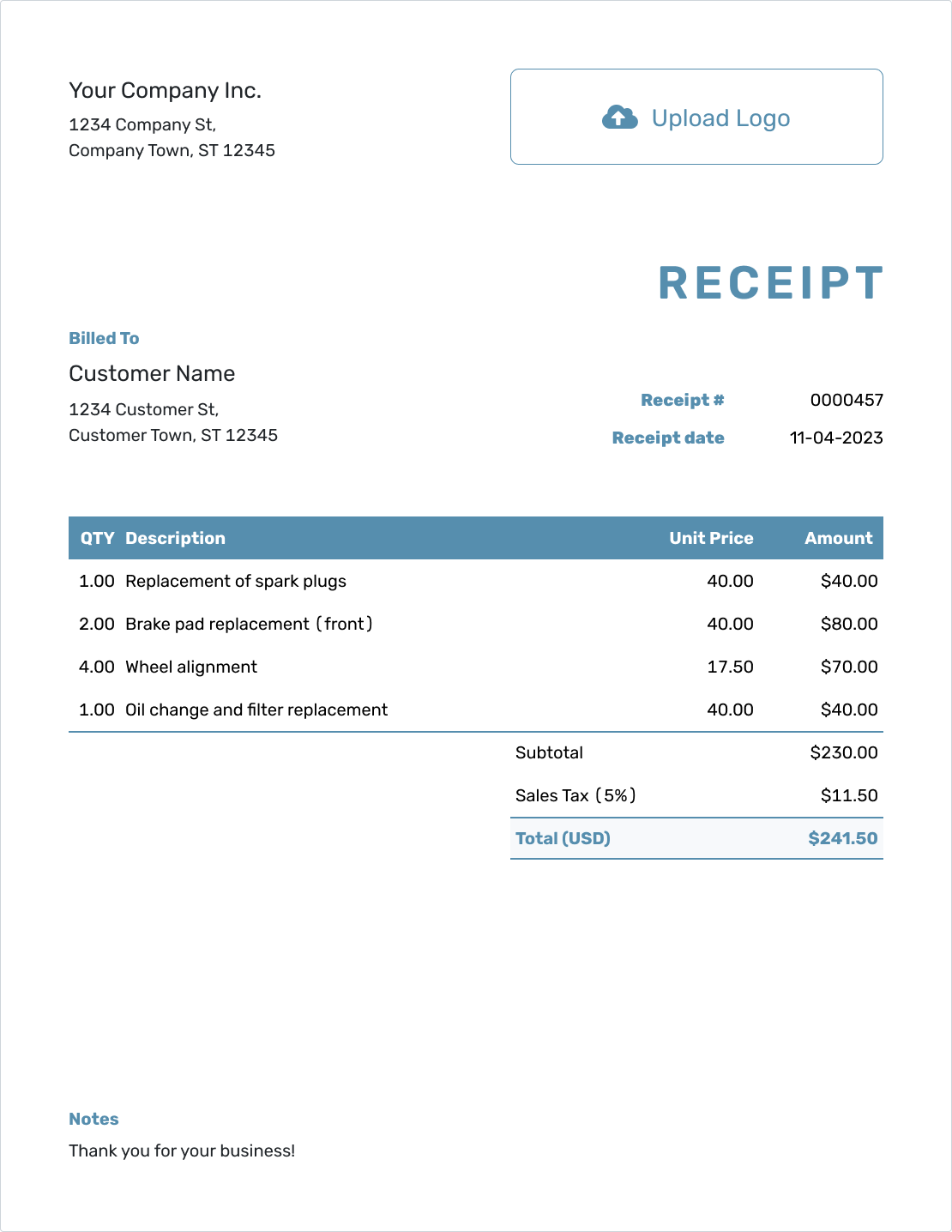
Sample Invoice Layout
Create Free Invoice -
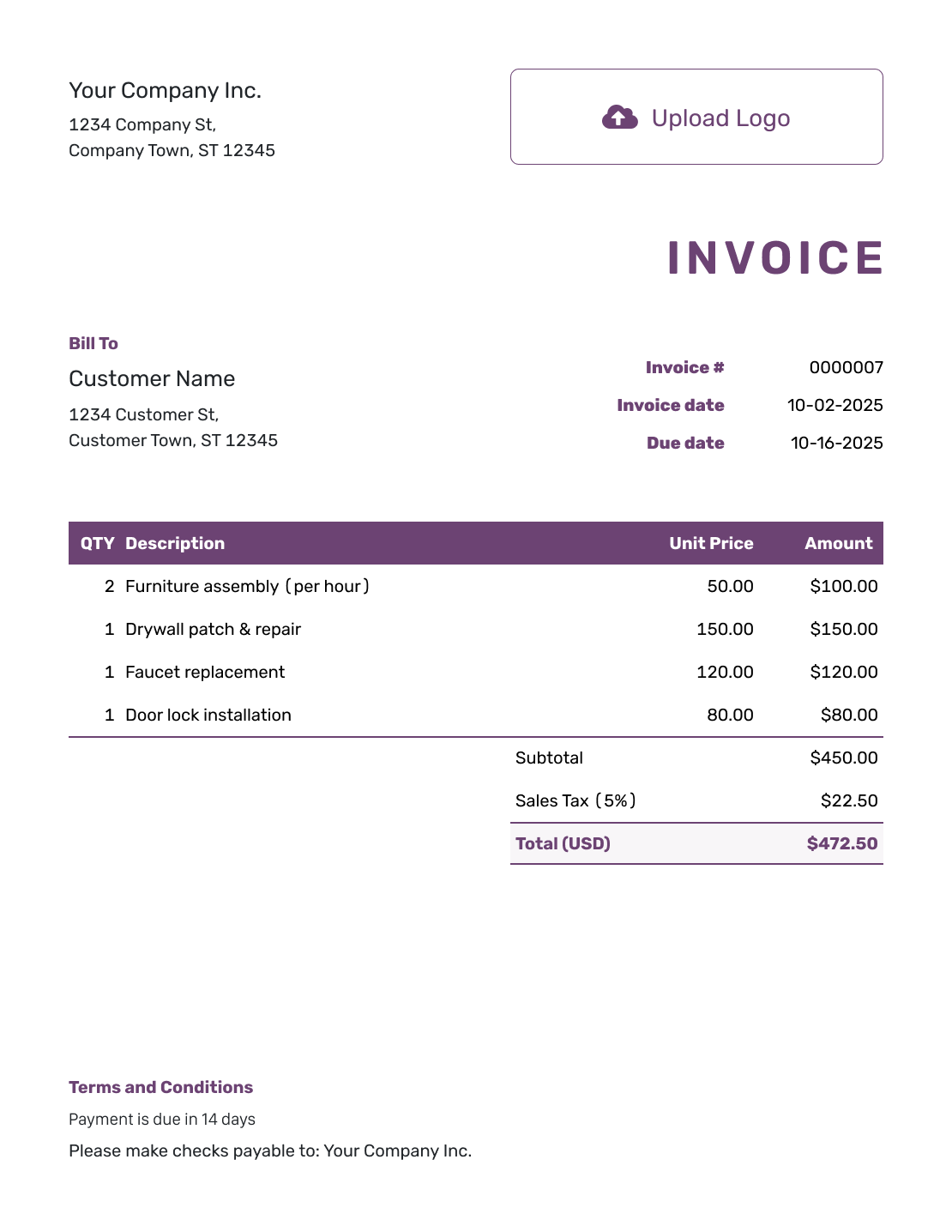
Free Invoice Layout
Create Free Invoice -
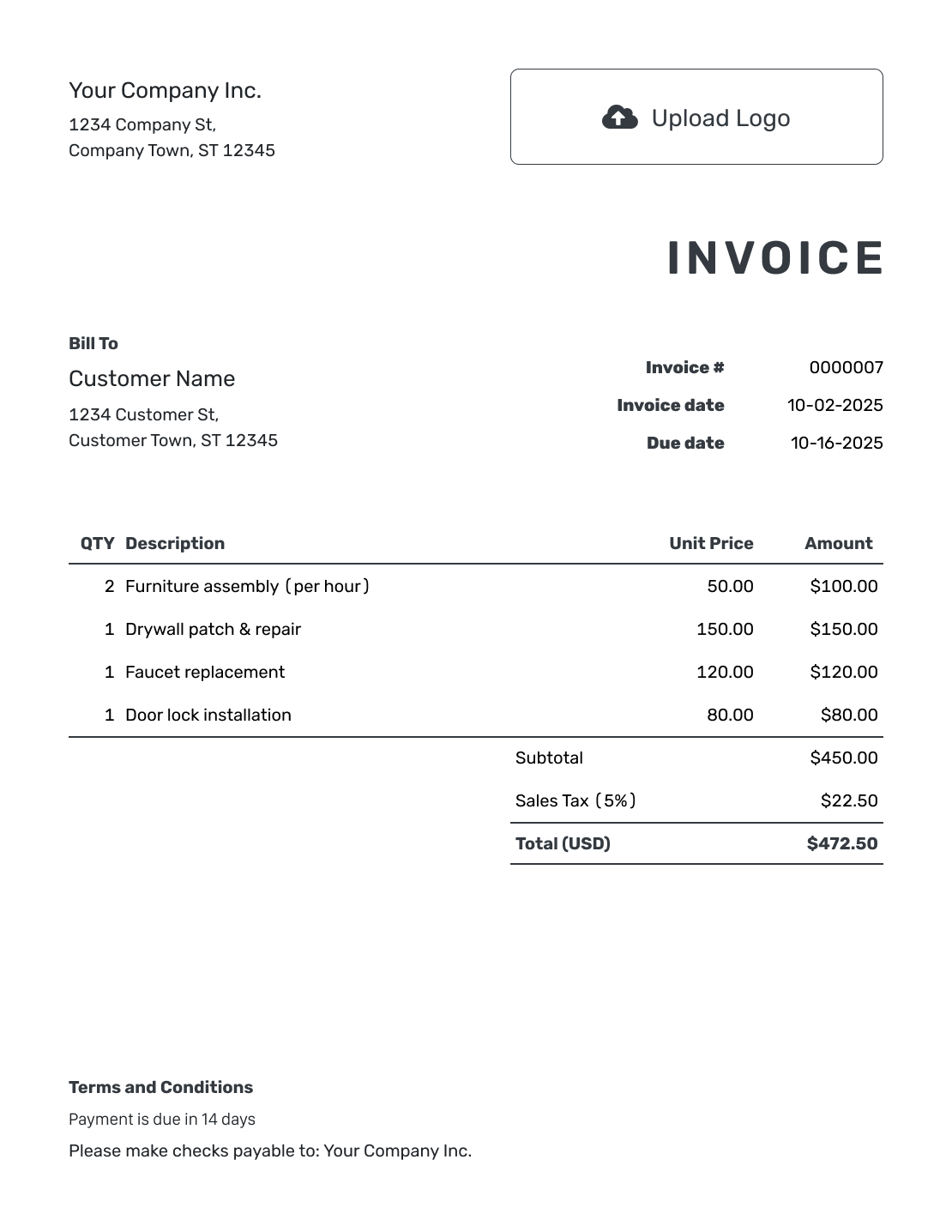
Printable Invoice Layout
Create Free Invoice
See six more invoice layouts below.
Summarize Existing Bills Without Creating New Charges
A statement brings together a customer’s invoices and payments as of a chosen date. It shows what remains unpaid. An invoice asks for payment for a sale, service or billing period.
You can prepare the statement in your own document or spreadsheet. To create a statement-style invoice in Docelf, enter the charges and payments manually. Keep the original invoices as the billing records, and explain that the summary adds no new charges.
Choose one customer and one currency. The statement date tells the customer which payments are included; each invoice’s original due date tells them when its unpaid amount is due.
How to Prepare a Manual Statement-Style Summary
Gather the original invoices and payment records. The numbered fields show how to prepare a statement-style invoice manually or adapt a separate file. Make clear that the summary refers to earlier bills.
- Identify Your Business: Use the business name and contact details from the original invoices.
- Keep the Same Branding: Use your usual logo so the customer recognizes the summary.
- Choose One Customer: Include only that customer’s invoices in the same currency.
- Set a Statement Reference: Add a statement reference and summary date. Keep each original invoice’s number and due date with its entry.
- List the Invoice References: Identify each original invoice, describe the charge, and include its original due date.
- Check the Balance: Subtract recorded payments from the invoice totals. Do not add tax a second time.
- Explain the Summary: State that this is not an additional charge. Keep the original payment terms clear.
How to List Invoices and Payments in a Statement
Use one line per original invoice with a quantity of 1. Unit Price and Amount then both show that invoice’s total. The reference and due date help the customer match each entry to the original bill.
This fictional USD summary is dated September 10, 2026. Each invoice amount already includes its original tax. A $200.00 payment received September 4 was applied to INV-301.
| QTY | Description | Unit Price | Amount |
|---|---|---|---|
| 1 | INV-301 — August office cleaning; due September 5, 2026 | $432.00 | $432.00 |
| 1 | INV-305 — Carpet spot treatment; due September 12, 2026 | $162.00 | $162.00 |
| 1 | INV-308 — Exterior window cleaning; due September 20, 2026 | $216.00 | $216.00 |
| Original Invoice Totals | $810.00 | |
| Payment applied to INV-301 | −$200.00 | |
| Outstanding Balance | $610.00 |
INV-301 has $232.00 left after the payment. Add $162.00 for INV-305 and $216.00 for INV-308 to get $610.00 outstanding. No new tax is added because these amounts already include the original tax.
Outstanding does not mean overdue. On the September 10 summary date, INV-301’s remaining $232.00 is overdue. The other $378.00 is still unpaid but falls due later. Keep those due dates visible instead of asking for the whole balance as an overdue payment.
What to Include Alongside the Statement
Use Terms and Conditions on a statement-style invoice to explain the summary date and how to identify a payment. State that it adds no new charge and keeps the original invoices’ due dates and payment instructions.
Adapt this sample to your records. Include only the details and terms that apply to your customer.
Example: Terms and Conditions
- Summary as of September 10, 2026, covering invoices INV-301, INV-305 and INV-308.
- This summary is not an additional charge. Original invoice dates and payment terms still apply.
- Payment of $200.00 received September 4, 2026, has been applied to INV-301.
- Outstanding balance at the summary date: $610.00, including $232.00 overdue on INV-301. Please identify the original invoice when paying.
Need to Bill New Work Instead?
Create an invoice for charges you have not billed yet. Docelf calculates that invoice’s total. Keep it separate from the summary of earlier invoices.
Check the Records Behind the Balance
Check the summary against the original records before you send it.
- Include one customer’s records and use a single currency.
- Date the summary so the customer knows which payments it includes.
- List each invoice reference once and check its original amount.
- Match each payment to the invoice it pays, and count that payment only once.
- Keep the original due dates instead of giving every old invoice a new due date.
Keep the Summary Separate From the Billing Records
A duplicated Docelf invoice becomes a new draft with a new number, not a linked account summary. When you prepare a statement, gather the original records and check each entry yourself.
When payment arrives, record it on the original invoice. Use that updated balance in the next summary so the customer can see what changed.
Need to explain an overdue amount? Use the past due invoice email guide and identify the original invoice.
Make the Summary Easy to Check
Use the same logo, colors and fonts as your invoices. Include your billing contact in the footer so the customer knows where to ask about a payment.
Keep the original invoices available as PDFs. Send the relevant copies with a separate statement, or attach them to a statement-style invoice in Docelf when they help explain a charge.
For documents emailed from Docelf, the history shows delivery and opening information. That helps with follow-up, but you still need to check the recorded payments before updating a statement.
Docelf invoices can use USD, EUR, GBP, CAD or AUD. Keep each statement in the currency of the invoices it summarizes.
More Invoice Layouts
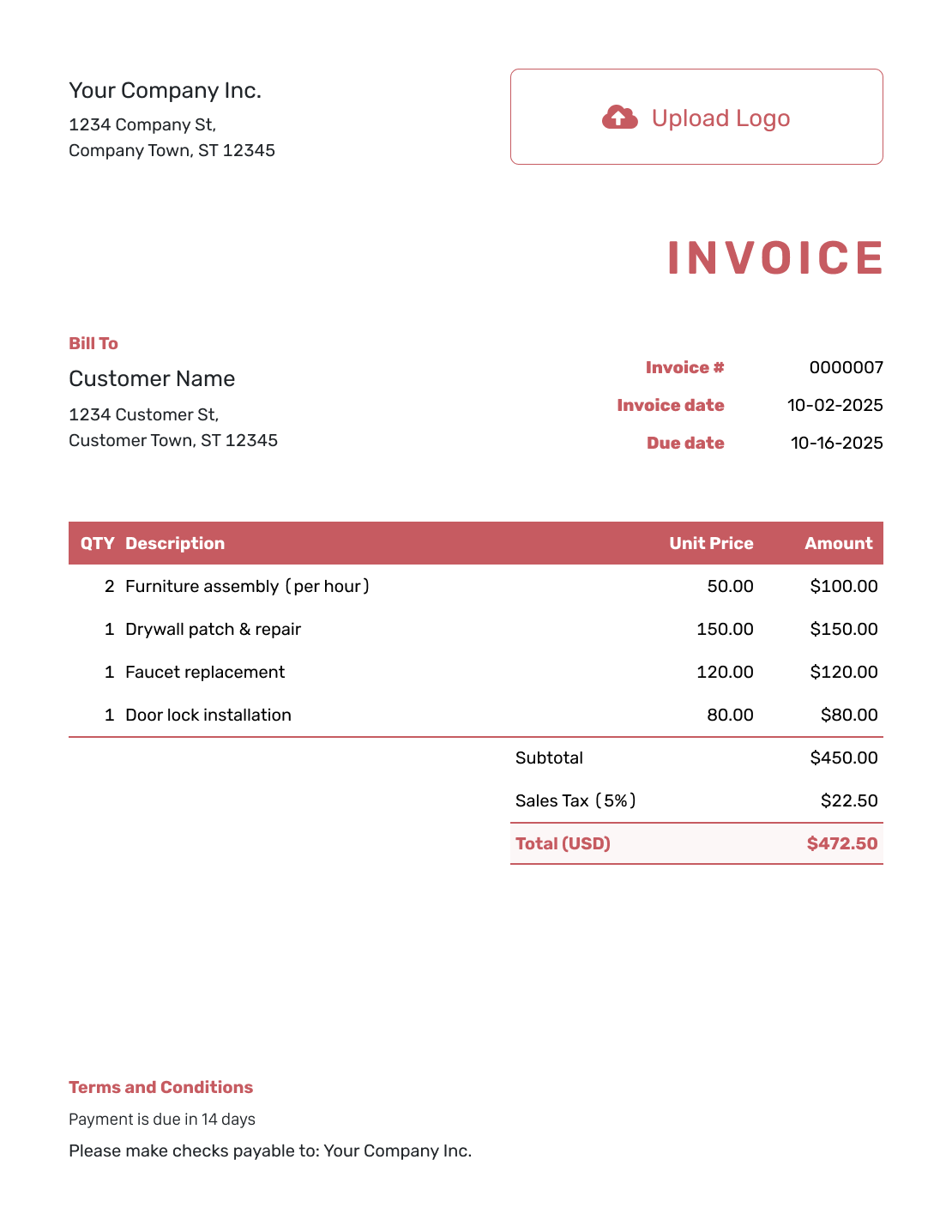
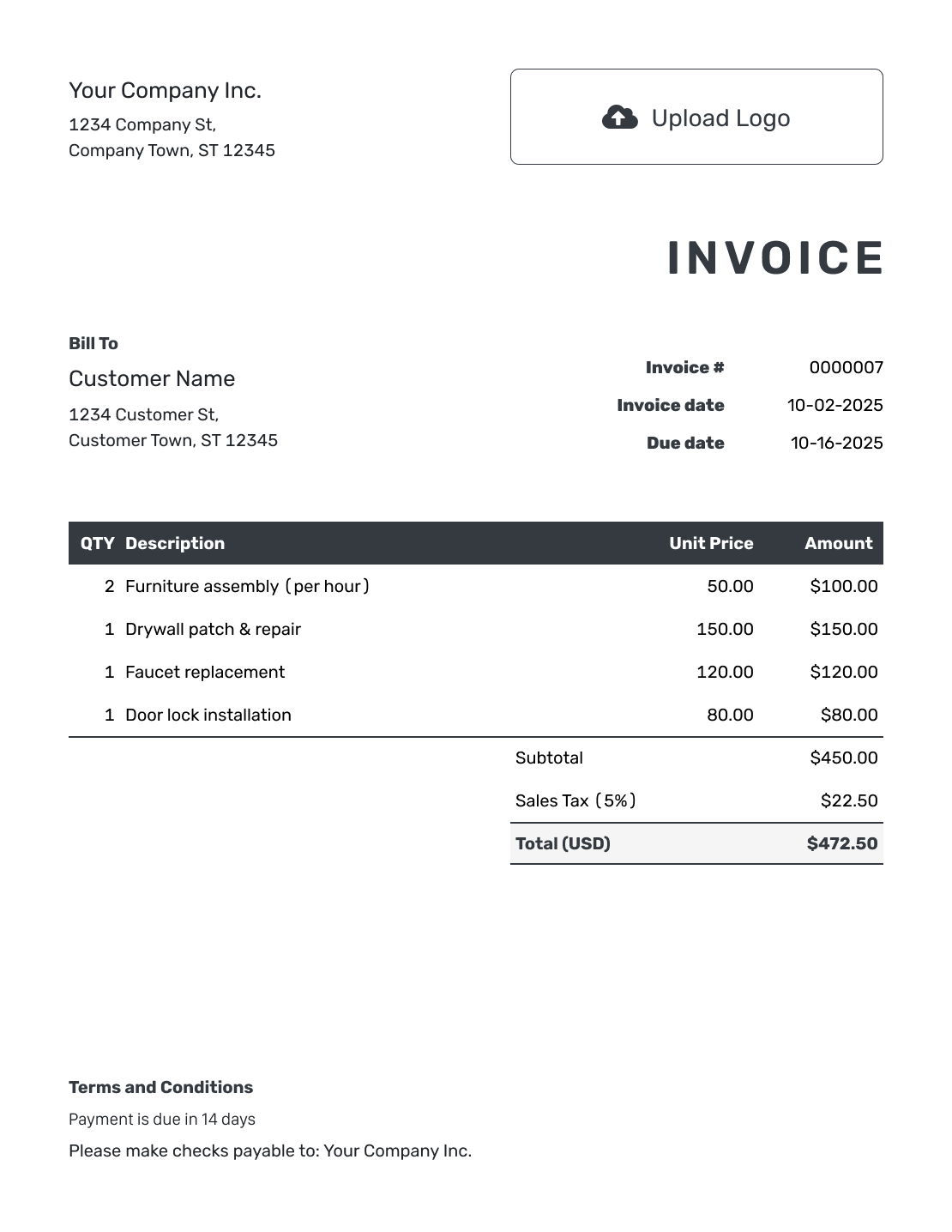
These six layouts open the same invoice editor. Enter the statement details manually, keeping the original invoice references and payment records clear.
Use an Editable File for a Separate Statement
These links provide invoice files to adapt, not ready-made statements. Label your copy as a statement, add the original invoice references and due dates, and show the payments you have recorded. Check any spreadsheet formulas after changing the layout.
Statement Invoice FAQs
-
Is a statement another invoice for the same charges?
No. A statement summarizes existing invoices and payments. It should not create another charge for the same work. Keep the original invoice references and due dates visible.
-
Does Docelf automatically combine invoices into a statement?
No. Gather the invoices and payment records, enter the charges and payments, and check the summary yourself. You can prepare a statement-style invoice manually in Docelf or use a separate file.
-
Should I add sales tax to the statement total?
Do not add tax again when the original invoice amounts already include it. Copy the amounts from those invoices and subtract recorded payments. The three invoice totals in this example already include tax.
-
How do I show a partial payment?
Identify the invoice the payment belongs to, then show the payment once. In the example, $200.00 paid against INV-301 reduces its $432.00 balance to $232.00. The other two invoices remain unpaid.
-
Can one statement include different currencies?
Keep different currencies in separate summaries. Do not add dollar, euro or pound amounts into one balance. Use the currency recorded on each original invoice.
-
Where do I record money received after sending the statement?
Record it on the original invoice it pays. Use the updated invoice record when preparing the next summary. Do not count the same payment again on a duplicate bill.
-
Can I use a statement as proof of payment?
Use a receipt to confirm money received. A statement can show payments alongside unpaid charges, so it is not necessarily confirmation that the balance is fully paid. Create a receipt from the invoice after recording the payment.
-
Is the whole statement balance overdue?
Not necessarily. Check each invoice’s original due date. In this example, the September 10 statement has $610.00 outstanding, but only INV-301’s remaining $232.00 is overdue. The other $378.00 falls due later.
Have New Charges to Invoice?
Keep new work separate from the account summary. Create an invoice only for charges you have not billed.
- Describe the new sale or service
- Set the amount and payment due date
- Record payments on the invoice they cover