Free Work Receipt Template
Create a professional work receipt in minutes
Show whether the payment covers the whole job or one project phase. You keep the job record up to date, and your customer can see what they paid for.
Email, print or download your receipt as a PDF.
14-day free trial. No credit card required.
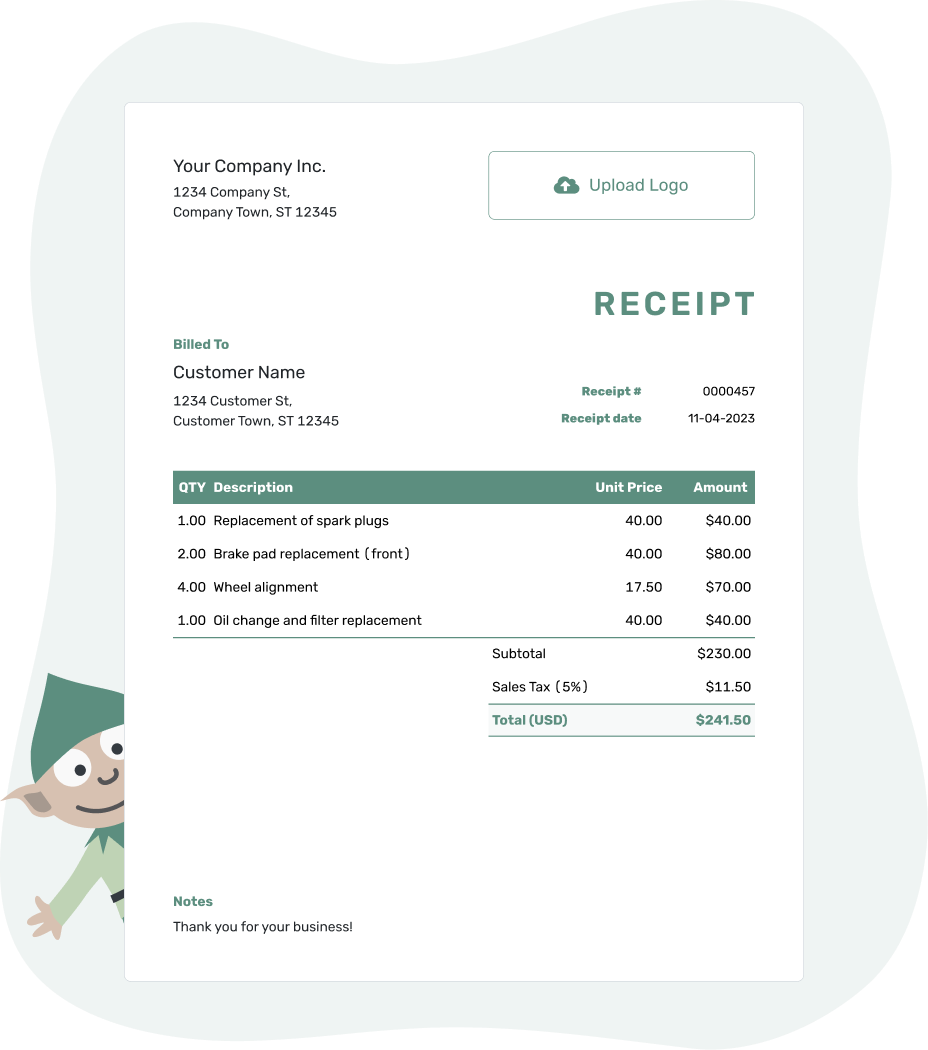
Record the payment. Send the receipt. Get back to work.
Work Receipt Templates
Show which job or phase the customer paid for. These previews open the same receipt editor, where you can add the work reference and the payment received.
-
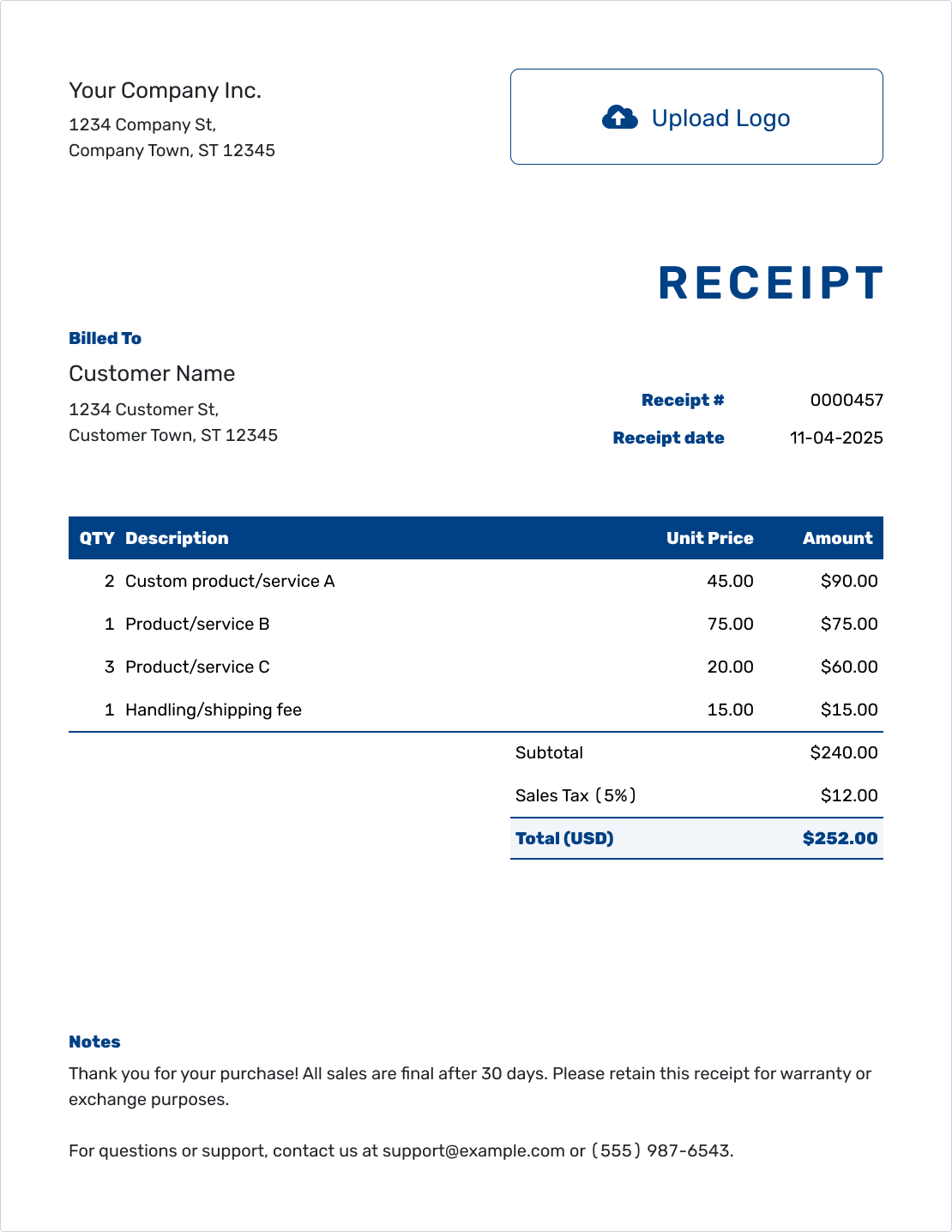
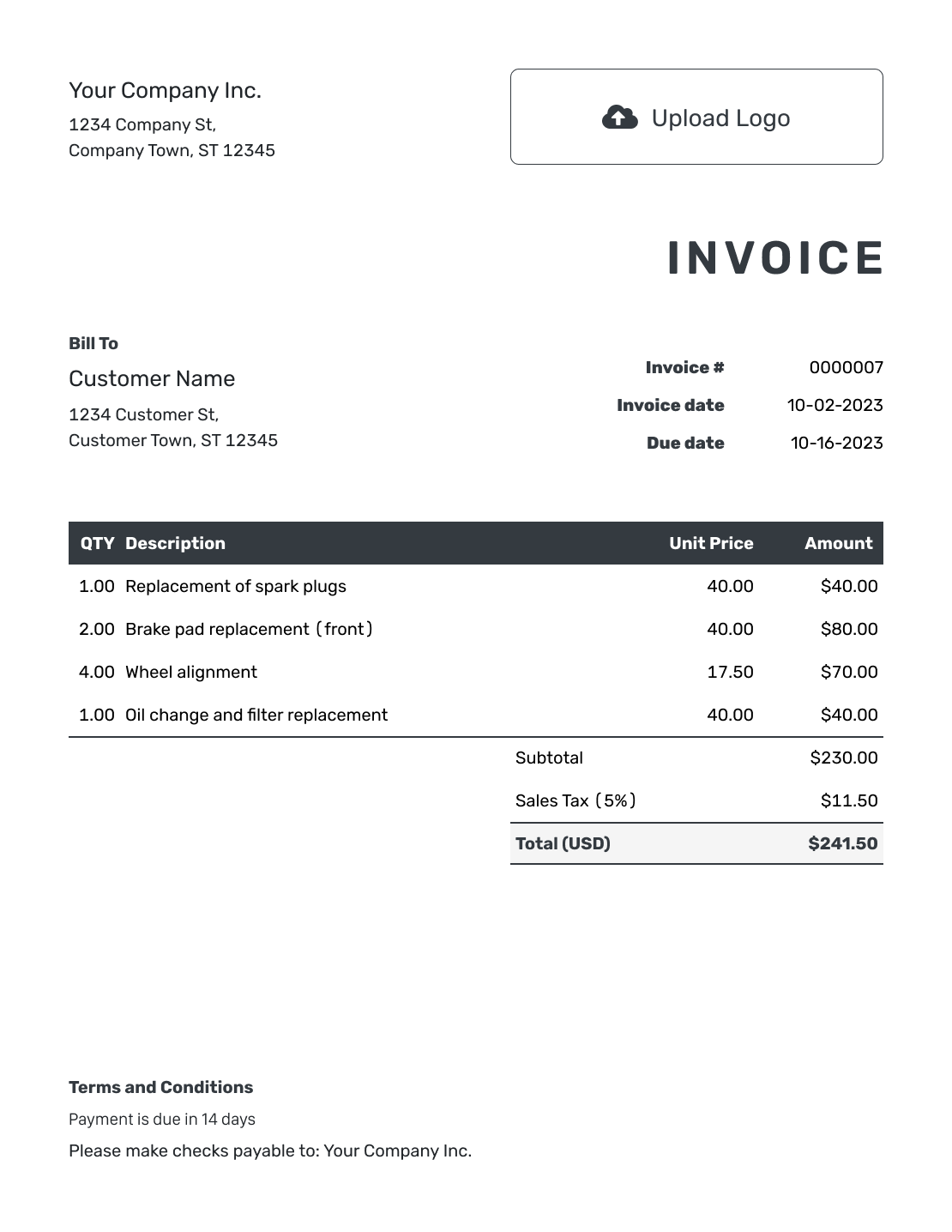
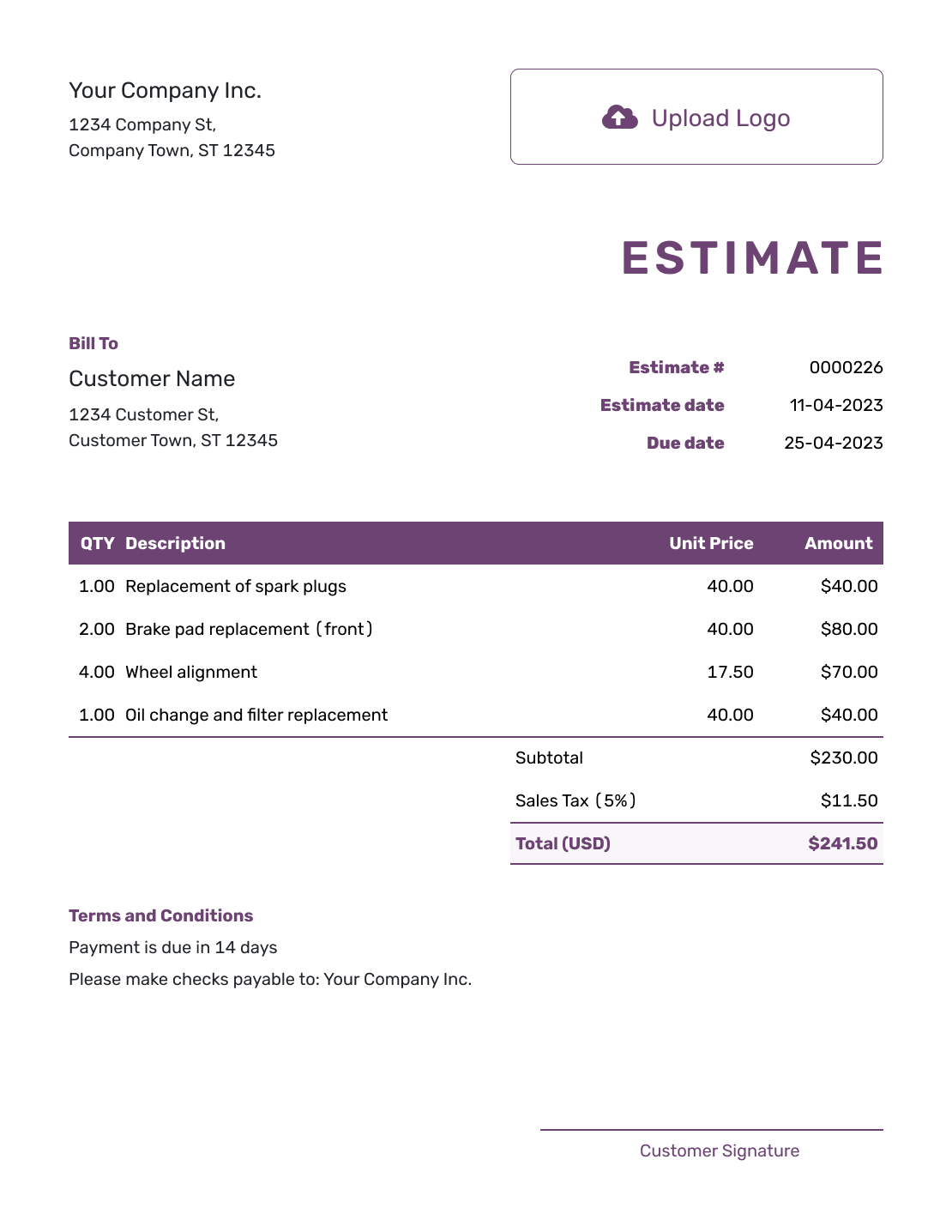
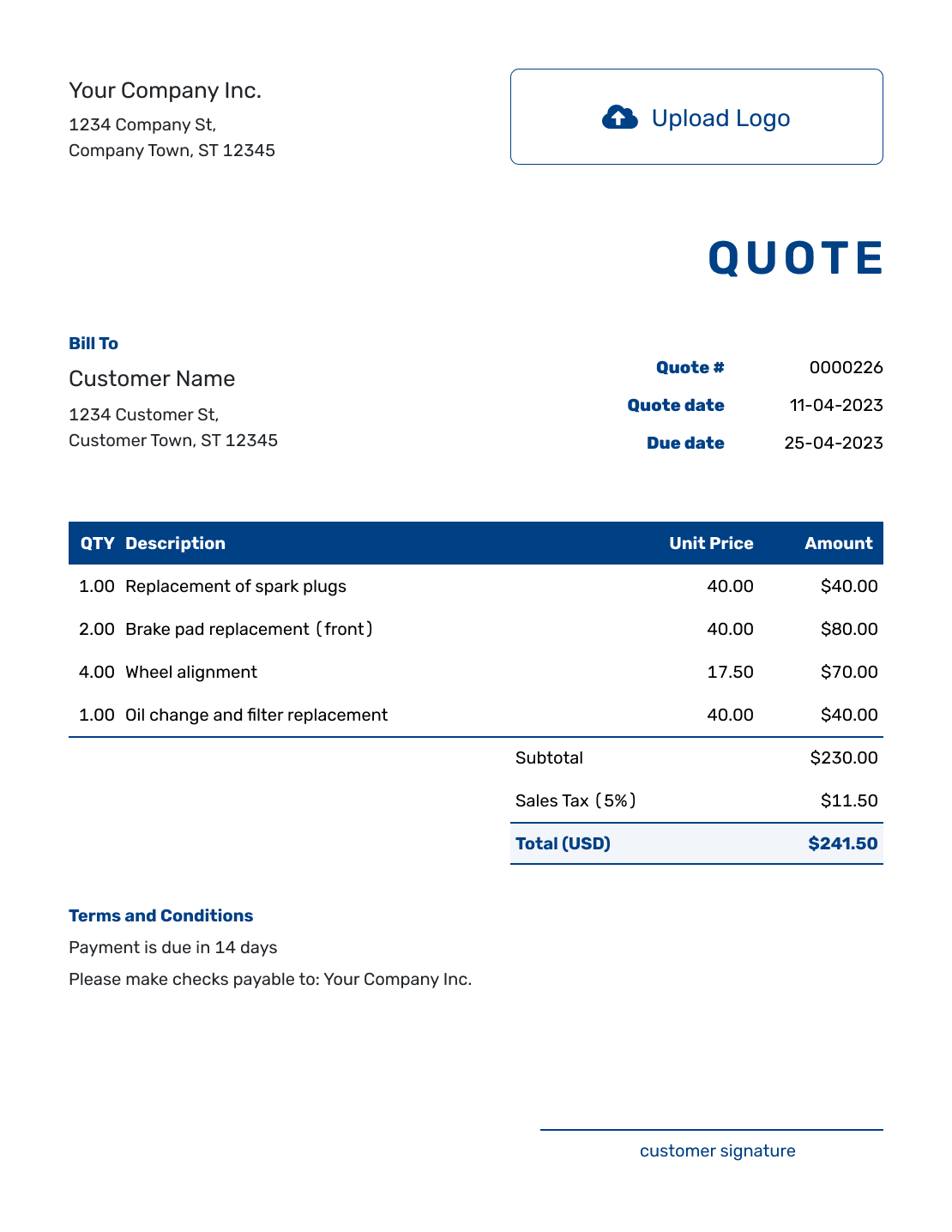
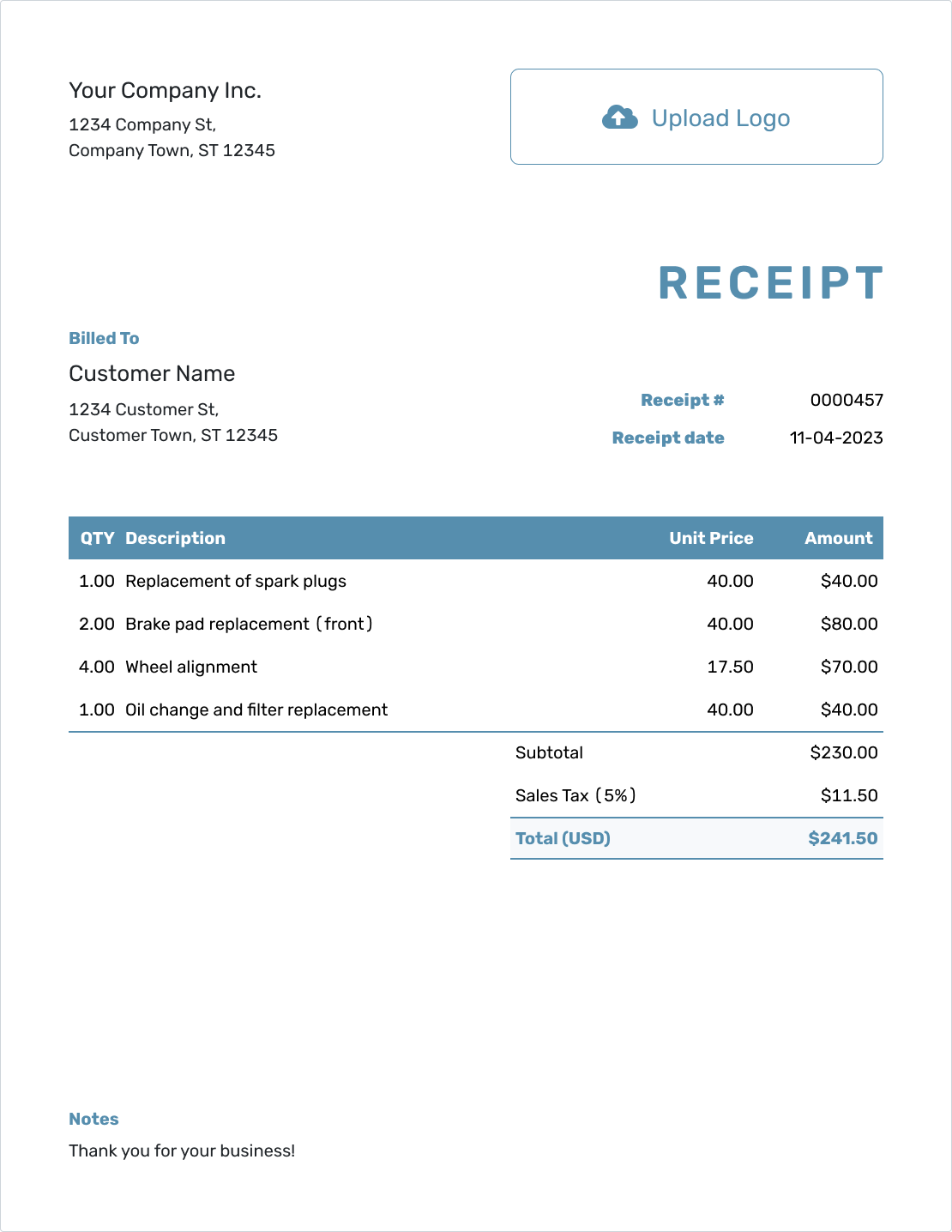
Sample Work Receipt Template
Create Free Receipt -
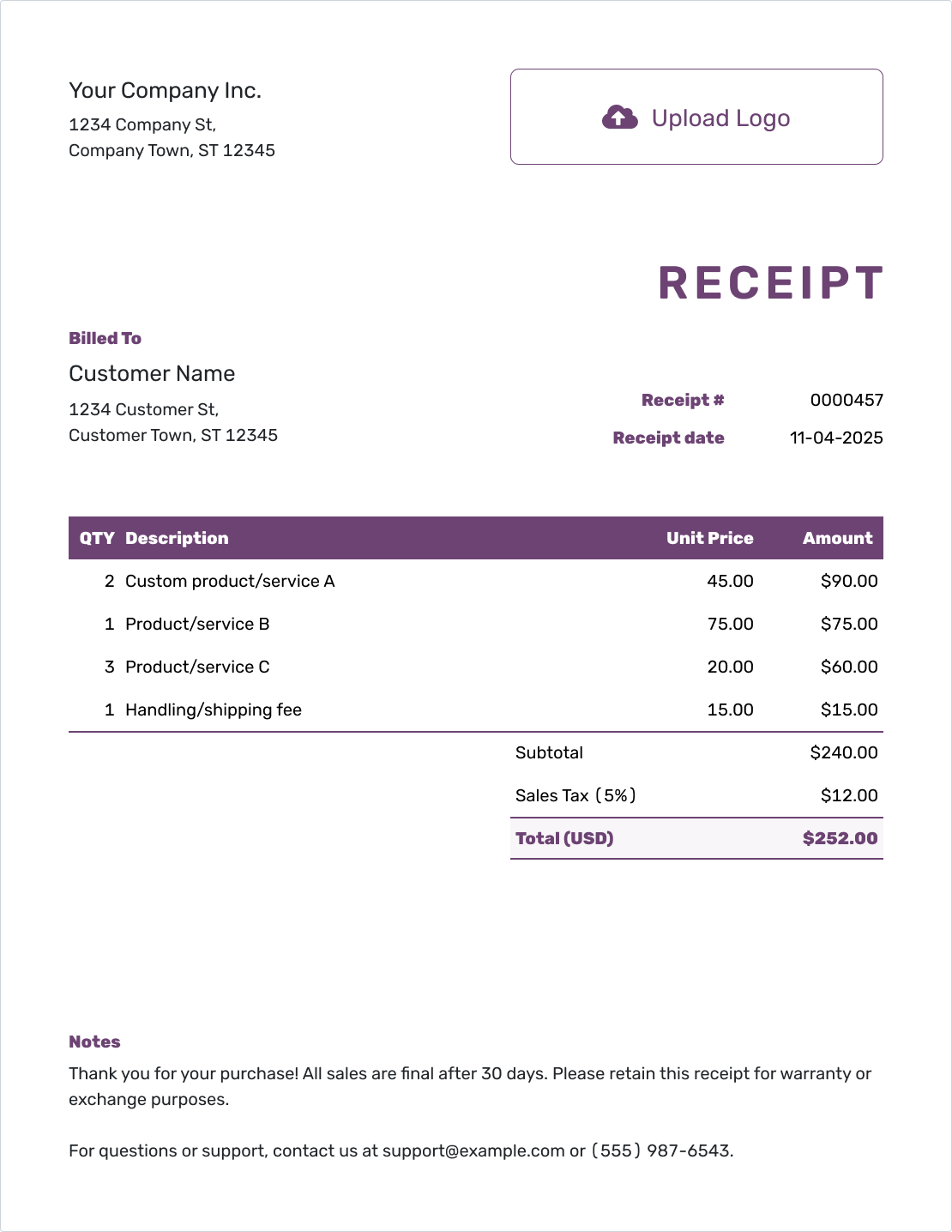
Free Work Receipt Template
Create Free Receipt -
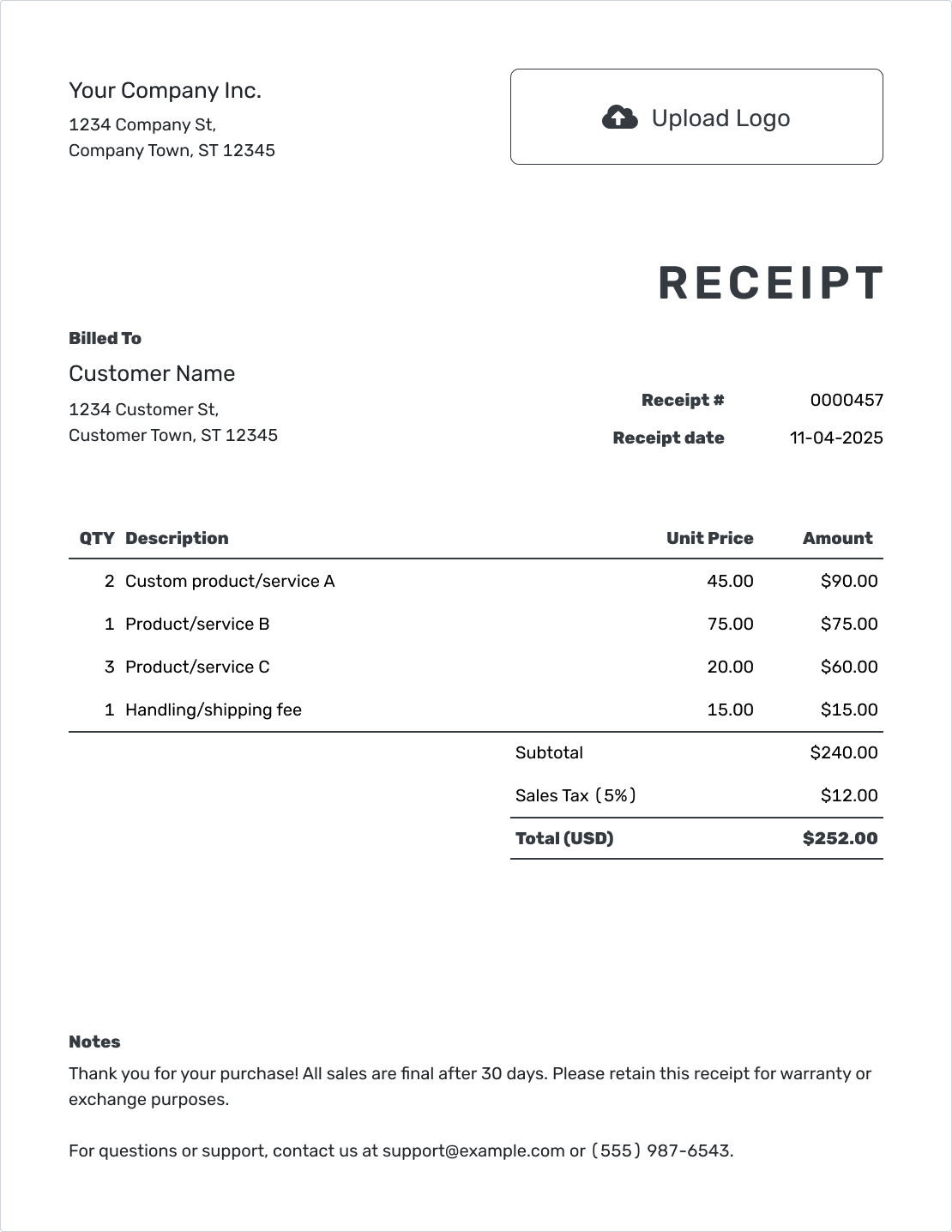
Printable Work Receipt Template
Create Free Receipt
See six more work receipt previews below.
Identify the Job Behind the Payment
A work receipt is most useful when the customer can tell exactly which work it covers. A job reference, site, or named project phase connects the payment to something more specific than “work completed.”
For a job already invoiced in Docelf, record the payment on that invoice and create the receipt from it. You can start a standalone receipt for a payment without a Docelf invoice. The invoice route saves you retyping the customer and item details.
How to Create a Work Receipt
Start with the job record and the payment received. Keep the completion date in the work description or Notes; the receipt date is the payment date.
- Your Business: Use the name and contact details shown on the job paperwork.
- Your Logo: Add your logo if you use one.
- The Customer: Choose the customer who paid for this job.
- Number and Date: Check the receipt number. Use the date you received payment.
- The Work: Describe the job or phase with the agreed quantities and prices.
- The Payment: Record the amount and payment method. Check tax and any remaining balance.
- Notes and Review: Add the job reference in Notes. Review and send the receipt.
Show the Work Covered by the Payment
Use the labor and materials from the bill; Docelf calculates their amounts and the total. Identify the phase so the customer can see which work the payment covers.
This fictional utility-room shelf installation phase was completed on September 18, 2026. The customer paid the full $432.00 by bank transfer on September 20. Prices are in USD, with an illustrative 8% tax on all three charges.
| QTY | Description | Unit Price | Amount |
|---|---|---|---|
| 4 | Utility-room shelf installation — hours | $60.00 | $240.00 |
| 3 | Laminated shelf board — each | $45.00 | $135.00 |
| 1 | Brackets and fasteners — set | $25.00 | $25.00 |
| Subtotal | $400.00 | |
| Sales Tax (8% illustrative) | $32.00 | |
| Total Paid | $432.00 |
The $432.00 payment settles the shelf installation phase in full. Other project work is outside this payment. Use the actual job prices and tax treatment.
Use Work Receipt Notes to Identify the Job
Notes can identify the work location and the phase covered by the payment. Be precise about the scope of a zero balance: a paid phase does not necessarily mean the whole project is paid.
Here is a short confirmation for the shelf installation example. Replace the job reference and site with your own details.
Example: Notes
- Payment of $432.00 received by bank transfer on September 20, 2026, for job W-418.
- Covers the utility-room shelf installation phase at [Job Site], completed September 18, 2026.
- Paid in full for the shelf installation phase. Other project work is not included.
Send the Receipt With the Job Reference
Give the customer a receipt that names the work they paid for. Reuse saved customer and item details in Docelf, then check the job and payment. Email the receipt or download a PDF when it is ready.
A Whole Job or One Part of a Project?
For a single completed job, name the task and the site when it helps identify the work. For a payment toward a larger project, name the phase or invoice the money covers.
For work at several sites, the phase name and location help the customer tell similar jobs apart. An invoice reference can connect the receipt to the fuller breakdown.
Keep Completion and Payment Separate
You may finish the work on Friday and receive the payment on Sunday. The receipt should use Sunday’s payment date, even when you write it on Monday. The completion date belongs with the description of the job.
A receipt records the payment; it is not a substitute for a work-completion report or the customer’s approval of the job. You can attach a relevant work summary or photo when the customer needs more context.
Reuse the Details, Not the Old Payment
For another job at the same property, reuse saved customer and item details. You can also duplicate a receipt into a new draft with a new number. Before sending the new draft, update the job reference and check the payment amount, date, and method.
Keep your logo, colors, and fonts consistent with your other work documents. An industry name before “Receipt” can make the document more specific. Use the footer for your email, phone number, or website.
Keep the Receipt With the Job Record
Use the currency received for the work: USD, EUR, GBP, CAD, or AUD. Review the job reference and payment before emailing, printing, or downloading the receipt as a PDF.
Docelf shows delivery and opening information for receipts you email from it. Keep any PDF or image attachments focused on this job so the customer has one clear record to refer to later.
More Work Receipt Previews
The remaining previews also lead to the same receipt editor. Use the job or phase name to make the finished record specific to your work.
-
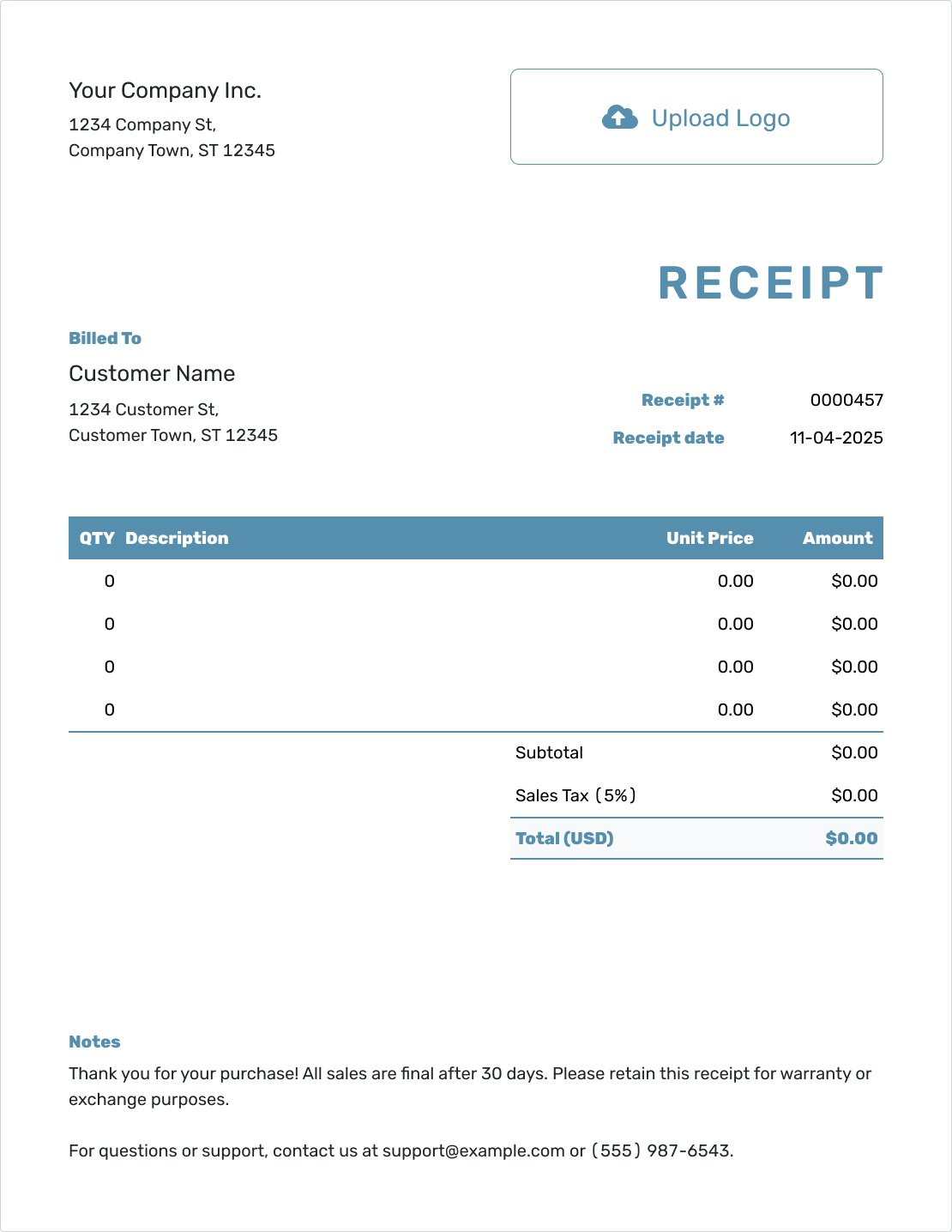
Blank Work Receipt Template
Create Free Receipt -
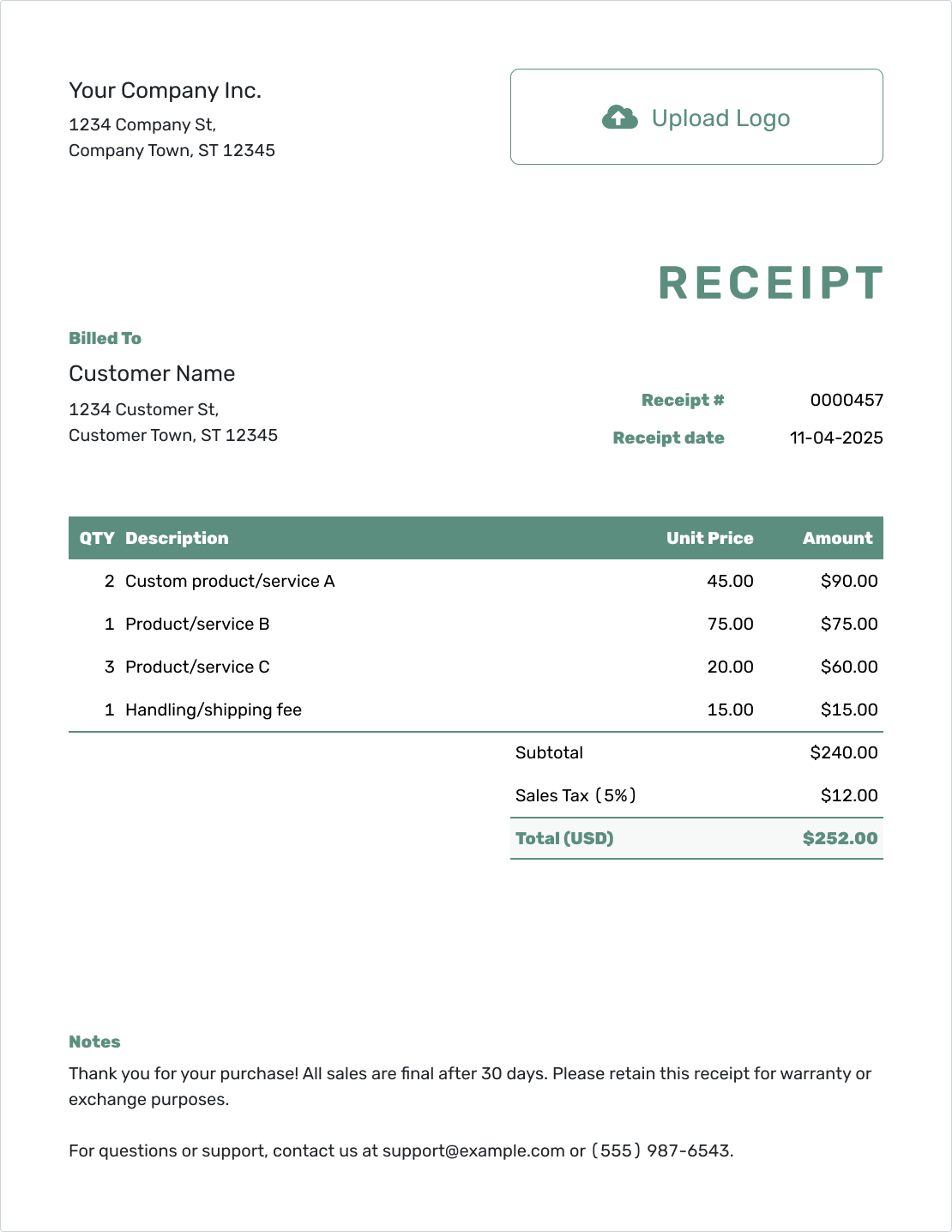
Simple Work Receipt Template
Create Free Receipt -
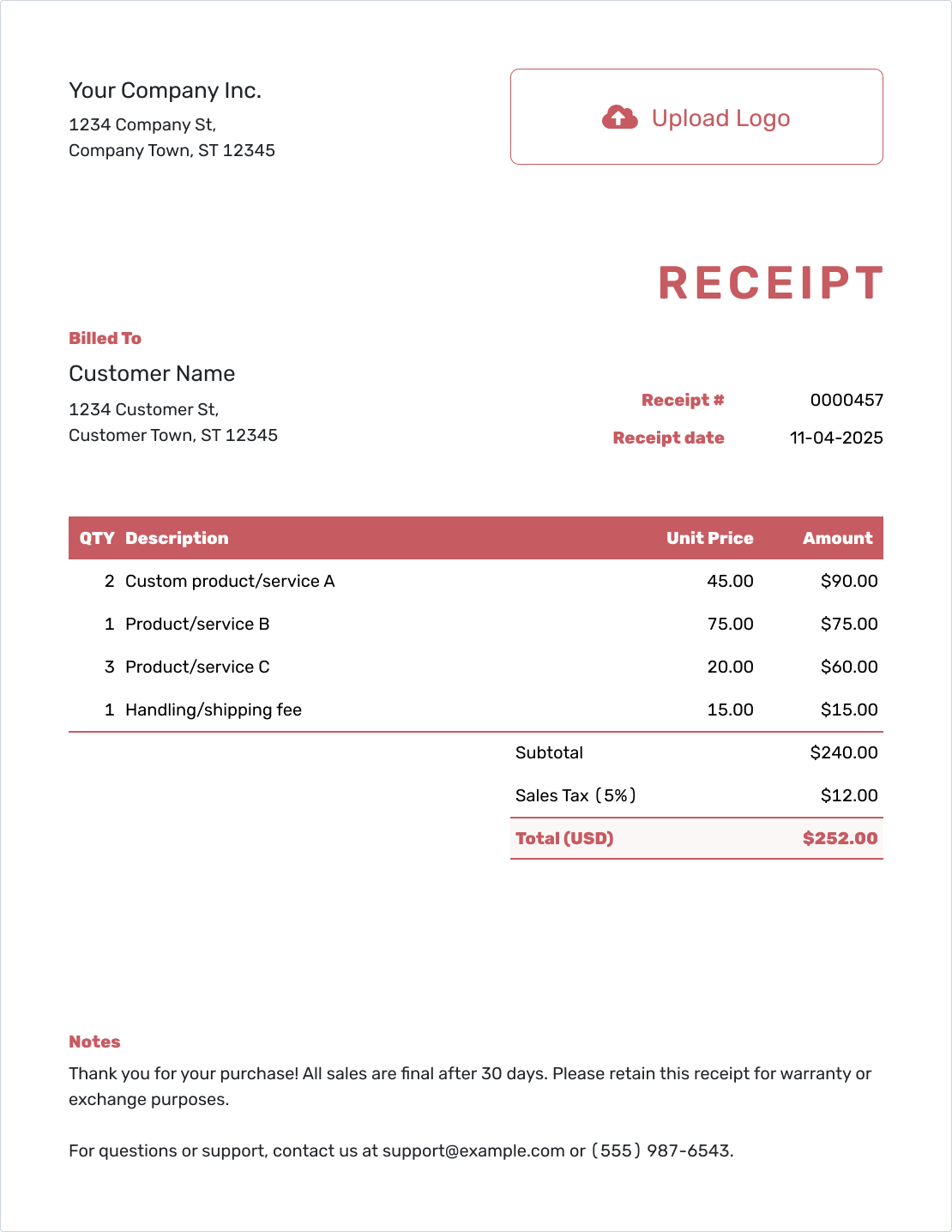
Fillable Work Receipt Template
Create Free Receipt -
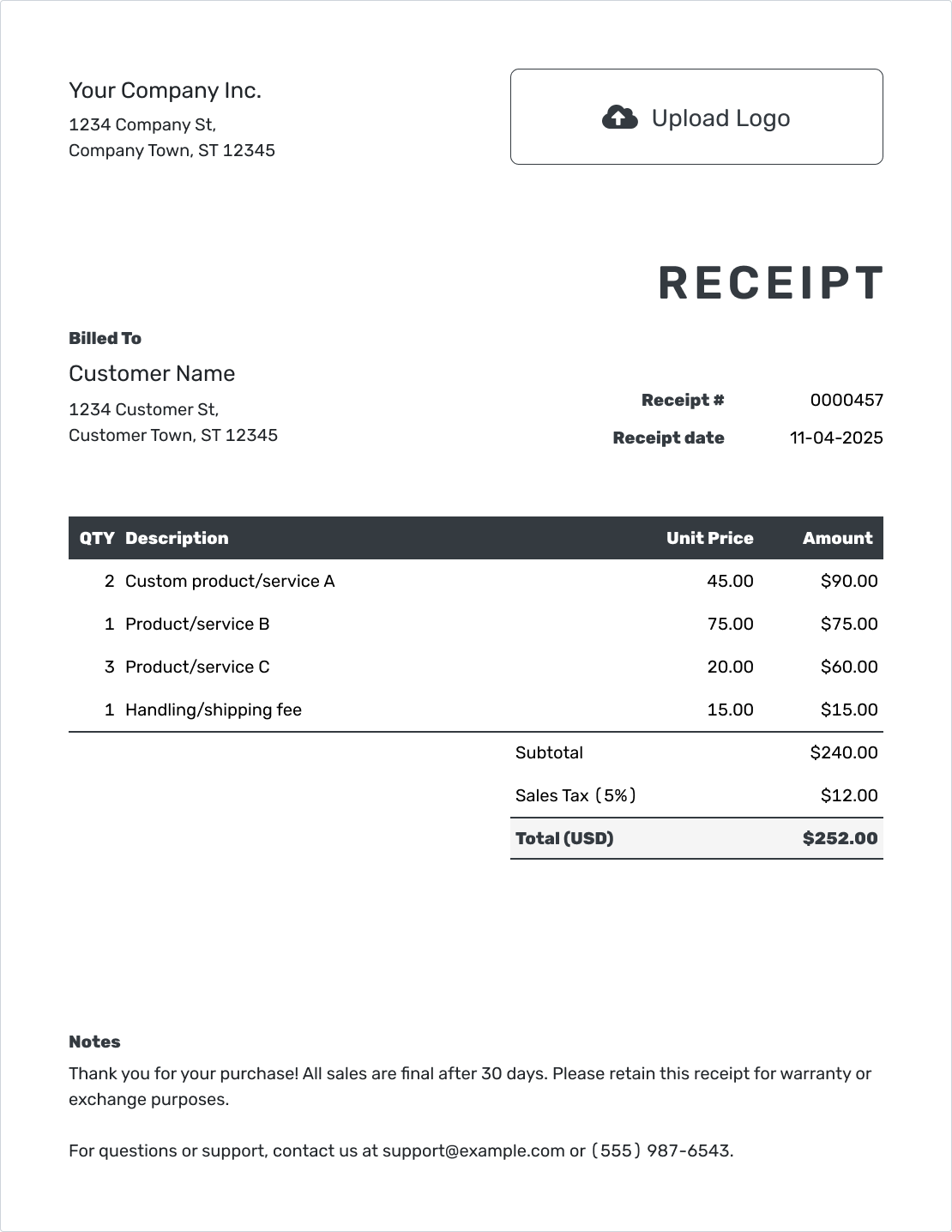
Professional Work Receipt Template
Create Free Receipt -
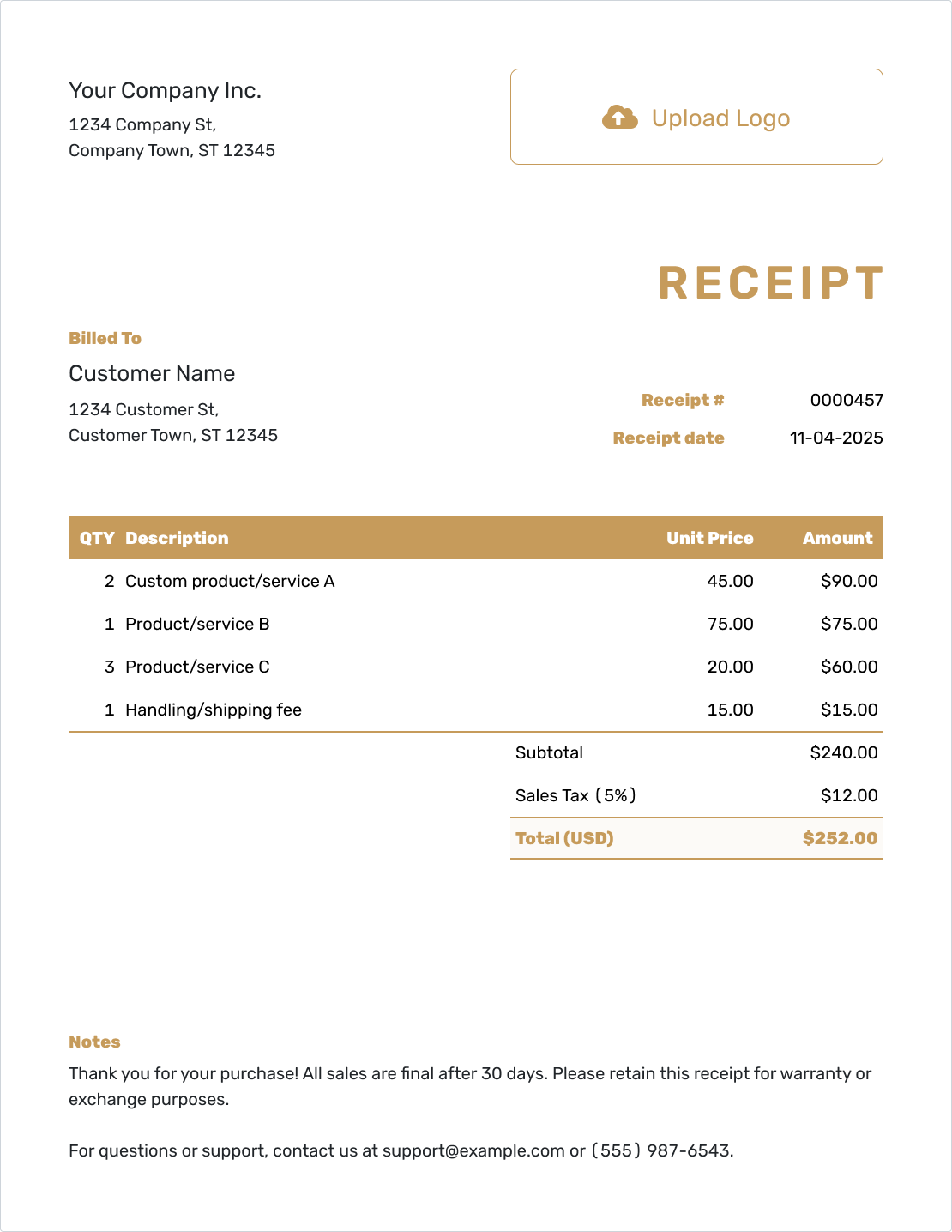
Downloadable Work Receipt Template
Create Free Receipt -
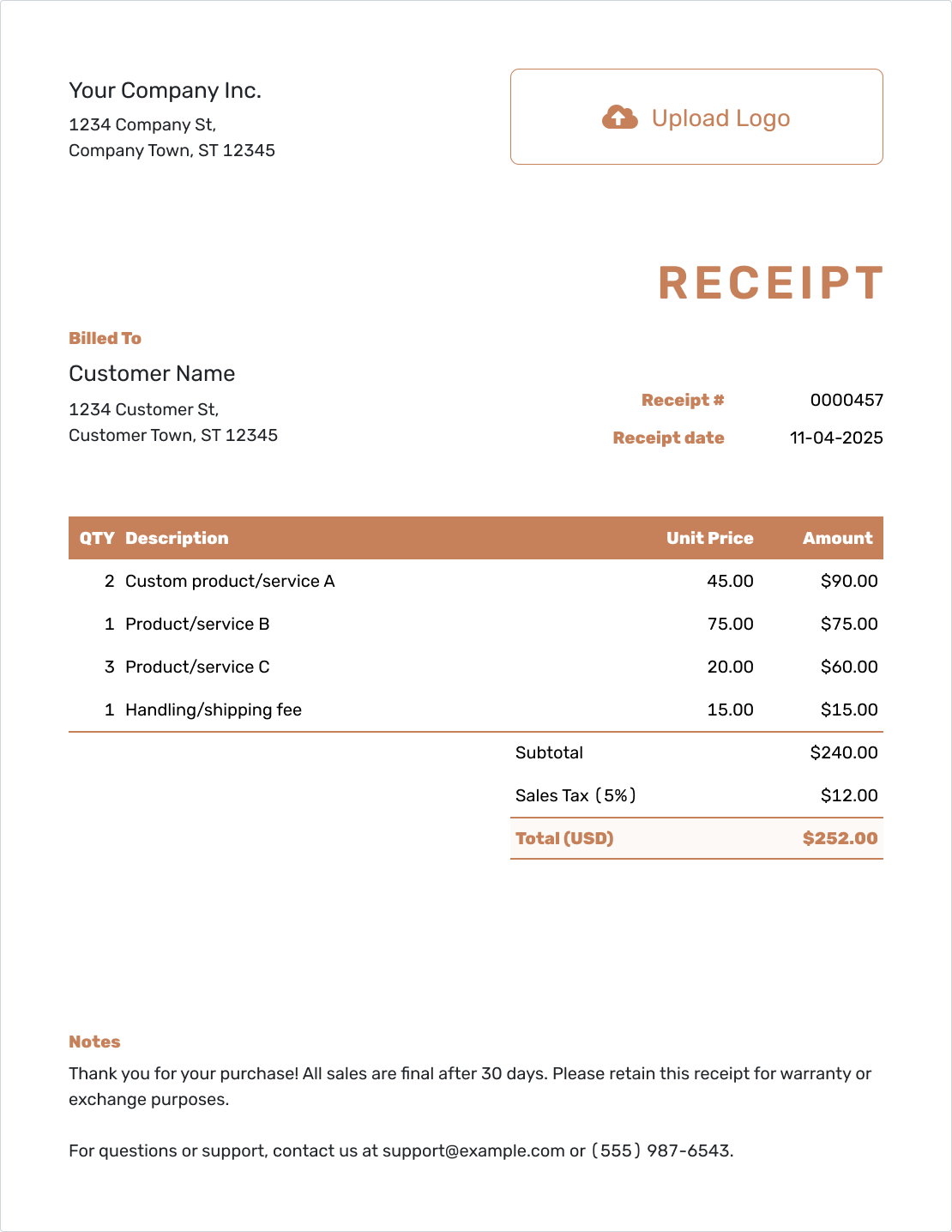
Editable Work Receipt Template
Create Free Receipt
Prefer a Work Receipt File?
These separate receipt templates let you work in a document or spreadsheet. Keep the job total and payment received clearly labeled, especially after a deposit. Docelf’s finished receipt download is a PDF.
Go to the Guide Closest to the Job
The contractor and handyman guides cover more specific work descriptions. The billing receipt guide helps when several payments belong to the same bill.
Work Receipt Template FAQs
-
Can a work receipt cover just one project phase?
Yes. Name the phase or related invoice and state what this payment covers. Keep its balance separate from work outside that scope. A zero balance for one phase does not automatically mean the whole project is paid.
-
What should a final-payment receipt show after a deposit?
Show the new payment, with the earlier deposit kept separate. Name the job or phase those payments cover and show its remaining balance. A paid phase does not mean other project work has been paid.
-
Does a work receipt prove the job is complete?
It records payment. Describe the work accurately and label a completion date only when the work is complete. A work report or customer approval is a separate record.
-
Where should I put a job site that differs from the customer’s address?
Keep the paying customer in the customer details. Add the job site in the work description or Notes so the receipt connects the payment to the correct location.
-
Do I need to list every material used?
List materials that were charged separately and help explain the bill. For a fixed-price job that already includes materials, do not add them again as extra charges.
-
Should I create a work receipt before the customer pays?
Use an invoice to request payment. Create the receipt after money arrives, including a deposit or partial payment. The receipt should confirm what you actually received.
Finish the Payment Record for This Job
Give the customer a clear payment record to keep with the job paperwork.
- Identify the job or project phase
- Check the amount received and payment method
- Review the receipt and send the customer a copy