Car Sales Tax Calculator
Find out how much to set aside when you buy a used car from a private seller.
Estimate your car tax
Choose the state where you’ll register the car and enter the price you agreed to pay. Your estimate updates as you fill in the fields.
Use this for an in-state purchase of a used passenger car from an unrelated private seller. Dealer sales, gifts, trade-ins, assumed loans and special exemptions need a separate calculation.
Your tax estimate
State rules checked . This estimate uses those rules. Check the official rates for your sale date. Title and registration fees and annual property taxes are separate.
Alabama rules and official sources
Documented purchase price of the car in an ordinary cash sale.
County and city automotive rates may apply in addition to 2%. Use the applicable vehicle rates from the licensing office, not the general retail rate.
Alaska rules and official sources
There is no state taxable base. A local ordinance decides taxability and the amount subject to its tax.
Cities and boroughs can impose separate taxes. Both may apply. Use tax can apply when goods are brought into a taxing municipality.
Arizona rules and official sources
No taxable purchase amount for the isolated sale of a personal car by a seller outside the business of selling cars.
Arizona MVD lists qualifying casual sales under the state and city vehicle use tax exemptions.
Arkansas rules and official sources
For the documented ordinary no-trade sale: below $4,000 no tax; $4,000 to under $10,000, 3.5% on the whole taxable amount; $10,000 and above, 6.5% on the whole taxable amount. Inadequate documentation or disagreement can trigger a comparison with published average loan value. Refer a below-guide, disputed or unsupported value for DFA determination.
For a taxable sale, city and county tax use the purchaser’s residence. Apply the local combination only to the first $2,500 of the vehicle price.
California rules and official sources
Total consideration: cash, assumed debt and the value of property or services given. Ordinarily paid through DMV at registration.
The statewide minimum is 7.25%: 6.00% state plus mandatory 1.25% local. District taxes may add more. Use the combined rate for the registration address without adding the mandatory 1.25% a second time.
Colorado rules and official sources
Full taxable purchase price. When a private seller does not collect, the buyer generally pays the county clerk at registration.
State-administered city, county and district sales/use taxes depend on delivery/possession, residence and where the car must be registered. Home-rule cities may administer their own taxes.
Connecticut rules and official sources
DMV uses the higher of the bill-of-sale value and NADA average trade-in value. The standard rate is 6.35%; DRS states 7.75% applies to most cars with a sales price above $50,000. The higher rate applies to the full taxable amount. At exactly $50,000 the sales-price threshold is not crossed.
No local sales tax. Town property tax is a separate recurring charge.
Delaware rules and official sources
DMV compares the sale price with current NADA average trade-in value and uses the higher amount; a licensed Delaware dealer appraisal can also be considered. Statutory fee: under $400, $8; $400 through $500 inclusive, $13.75. Above $500, § 3002(c)(3) prescribes $5.25 increments for each additional $100 or fraction and dollar rounding. DMV describes this as 5.25%. Use DMV’s assessment for the exact fee.
Delaware imposes no state or local general sales tax. The statewide title-transfer document fee is separate from annual registration.
Florida rules and official sources
6% of the full price in a straight sale. If the reported price is below 80% of the official average loan price for that model/year, use the full average loan price unless a signed affidavit from both parties or other substantial proof establishes the actual price.
Apply any surtax for the purchaser’s residence county on the title/registration only to the first $5,000 of taxable consideration. Use the county rate in force for the transaction.
Georgia rules and official sources
Use the used vehicle’s fair market value from Georgia’s motor vehicle assessment manual, generally the average of wholesale and retail values. If absent, use the Revenue Commissioner’s designated market guide. The private bill-of-sale price alone does not determine TAVT.
Do not add general city/county sales tax to a TAVT-covered sale. The county tag office collects the statewide title tax.
Hawaii rules and official sources
An isolated sale of a personal car outside the seller’s usual business has no taxable gross proceeds under the casual-sales rule. The buyer’s qualifying casual purchase is also excluded from use tax.
The county surcharge applies to activities taxed at the 4% GET/use rate, so it does not add tax to this excluded sale.
Idaho rules and official sources
Use the documented sales price including seller-performed pre-sale services. Separately stated delivery to the buyer is excluded. The county assessor/DMV collects when titling; absent proof of price, the DMV guide directs use of NADA average trade-in value. An unusually low price may require supporting evidence.
Some resort cities set local sales taxes under their own ordinances; scope varies. Confirm whether the locality taxes this type of sale before including an extra percentage.
- Idaho State Tax Commission — Sales Price, Motor Vehicles, Private and Nondealer
- Idaho State Tax Commission — Sales and Use Tax Guide for Vehicle Transactions
- Idaho State Tax Commission — Sales and Use Taxes: Basics Guide
- Idaho State Tax Commission — City Sales Taxes
- Idaho State Tax Commission — 6% Bracket Schedule
Illinois rules and official sources
2026 RUT-5 Table A: under $15,000, use model year. 2025 or newer $465; 2024 $365; 2023 $290; 2022 $240; 2021 $190; 2020 $165; 2019 $155; 2018 $140; 2017 $125; 2016 $115; 2015 or older $100. Table B: from $15,000 use the price band, regardless of age. $15,000 to under $20,000: $850; $20,000 to under $25,000: $1,100; $25,000 to under $30,000: $1,350; $30,000 to under $50,000: $1,600; $50,000 to under $100,000: $2,600; $100,000 to under $1 million: $5,100; $1 million or more: $10,100. Use all consideration; absent a stated price use fair market value.
RUT-6 uses the title/registration address. Ordinary age-based amounts: Chicago, age ≤3 $80; 4–8 $65; 9–14 $50; ≥15 $0. Cook County, age ≤3 $225; 4–8 $175; ≥9 $90. Both amounts apply when the address is in both locations. Verify RUT-6 for date of sale.
Indiana rules and official sources
Use the documented actual selling price when the titling agency accepts it. Indiana law otherwise presumes the average selling price in the agency’s used-vehicle guide.
Show the statewide purchase tax. Vehicle registration and vehicle excise charges are separate.
Iowa rules and official sources
For an ordinary used-car purchase, the fee is $10 plus 5% of the purchase price. The fixed $10 is part of the one-time charge.
Local option sales tax does not apply to vehicles subject to registration.
Kansas rules and official sources
Use the declared selling price documented on the title or bill of sale. Fair market value can replace an unknown or unreasonably low price.
The county treasurer collects the higher combined rate at the in-state sale location or the registration address. For negotiations in multiple places, the sale site is where the vehicle was kept when negotiations first occurred.
Kentucky rules and official sources
With a qualifying notarized affidavit, use the agreed price subject to a floor of 50% of the prescribed guide’s trade-in value when no vehicle is traded. Without an affidavit, the clerk uses the prescribed guide’s retail value.
The county clerk collects the state usage tax. Kentucky has no local sales and use tax.
Louisiana rules and official sources
Use the vehicle’s selling price and taxable items on the bill of sale. The current used-title instructions allow qualifying trade/rebate deductions; neither applies in the stated ordinary no-trade, no-rebate sale.
Parish and municipal rates depend on the domicile of the vehicle, ordinarily the individual buyer’s domicile. Look up the local vehicle rate through OMV.
Maine rules and official sources
For a private purchase, pay 5.5% of the vehicle purchase price. Provide a signed bill of sale.
Quote the state purchase tax. Municipal motor vehicle excise is a separate annual tax due before registration.
Maryland rules and official sources
Model year seven years old or older: use the greater of the purchase price and $640. For newer cars, compare the price with the mileage-adjusted MVA guide value. A price at least $500 below guide value needs MVA review or the guide value; use an accepted lower amount only after verification.
Maryland law bars political subdivisions from adding a sales, use or excise tax to issuing a vehicle title.
Massachusetts rules and official sources
Tax the higher of the actual selling price or the vehicle’s clean trade-in book value with the applicable mileage adjustment. The RMV does not reduce book value for general mechanical or structural condition.
Use the state motor vehicle tax calculation. The annual municipal motor vehicle excise is separate.
Michigan rules and official sources
The combined result for a private sale is 6% of the greater of purchase price and the Treasury-accepted retail dollar value. Equalization tax covers the difference if the retail value is higher.
Michigan has no city, county or local sales tax.
Minnesota rules and official sources
Ordinary sales use the taxable selling price. A noncollector passenger vehicle in its tenth or later vehicle year with both a price and a recognized average resale value under $3,000 receives a flat $10 tax. A nominal price can instead require the average value of comparable vehicles.
No local percentage sales tax applies. Certain cities/counties have a separate $20 vehicle excise collected by motor vehicle retailers; exclude that business-sale charge from a genuine private-person sale.
Mississippi rules and official sources
For a private transfer of an ordinary passenger car under ten years old, use 5% of the true value from DOR’s official motor vehicle assessment schedule. The ordinary dealer net price is not the base.
The buyer pays the county tax collector at registration. Separate local annual ad valorem taxes use millage and must be excluded from this purchase tax.
Missouri rules and official sources
For the ordinary no-trade private sale, tax the purchase price. Subtract a qualifying trade-in or rebate only in transactions where it applies.
Add the applicable local rate at the buyer’s residence, including applicable districts. DOR’s estimator looks up the address.
Montana rules and official sources
No general Montana sales tax is charged on this private in-state passenger-car purchase.
A county option tax on a light vehicle can apply at registration. Keep it separate from the $0 general purchase tax.
Nebraska rules and official sources
For a cash purchase with no trade or rebate, use total taxable sale price reported on Form 6.
Add the applicable local sales/use tax for the address where the vehicle is registered, using the schedule applicable on the purchase date.
Nevada rules and official sources
A qualifying occasional sale by an individual produces no vehicle purchase sales tax.
No sales tax on this qualifying sale. Governmental Services Tax and county Supplemental Governmental Services Tax are separate registration charges.
New Hampshire rules and official sources
No general sales tax on goods purchased in New Hampshire, including an ordinary private purchase of a used car.
Municipal registration permits may be charged according to original list price and model year; exclude these from sales tax.
New Jersey rules and official sources
Use documented actual purchase price for an arm’s-length cash sale. A low price may be reviewed. Without sufficient proof the Division may assess book value.
Use the state motor vehicle rate. Vehicles do not qualify for the Salem County reduced sales tax.
New Mexico rules and official sources
For an ordinary arm’s-length used-car purchase at or above 80% of MVD’s average trade-in/wholesale guide value, use the stated price. Below 80%, MVD’s field manual uses the greater of price or 80% of guide, while the Taxation and Revenue public guidance says it uses NADA value. Obtain MVD’s accepted taxable value for this branch.
State excise tax on the vehicle transaction. Distribution of part of it to a local road fund is not a second buyer tax.
New York rules and official sources
Use the full purchase consideration documented on DTF-802. For a below-fair-market sale to an unrelated buyer, the seller must certify the transaction. DMV uses current fair market value if the required seller section is missing.
Use the buyer’s residence for motor vehicles. Look up the combined state, local and, where applicable, 0.375% Metropolitan Commuter Transportation District rate by address. Do not add the district tax a second time.
North Carolina rules and official sources
For a private/nonretailer sale, use the car’s market value as presumed by the DMV’s schedule. Do not substitute the written purchase price for that value.
State highway-use tax replaces sales tax on ordinary vehicle title transfers. County vehicle property tax and registration fees are separate.
North Dakota rules and official sources
Use the taxable purchase price for a bona fide cash sale. Include taxable charges/accessories and exclude title, registration, license and document fees. If the vehicle is not acquired through a purchase, fair market value can apply.
North Dakota explicitly states no local tax applies to the purchase or transfer of a qualifying motor vehicle.
Ohio rules and official sources
Use the actual taxable purchase price for a cash transfer. If an outstanding loan is assumed, include it as consideration.
The clerk calculates tax using the purchaser’s county of residence. Get the correct rate for the buyer’s registration address and date; county and transit taxes may apply.
Oklahoma rules and official sources
For ordinary used automobiles purchased on/after July 1, 2026, excise uses actual sales price. Excise is $20 on the first $1,500 or less plus 3.25% of the amount above $1,500. Add separate 1.25% state vehicle sales/use tax on taxable purchase price. For example, $10,000 produces $296.25 excise and $125 sales tax.
No city or county sales/use tax on these motor vehicle sales.
Oregon rules and official sources
No general sales tax. An occasional private in-state seller does not satisfy the dealer condition for Oregon’s special vehicle privilege and use taxes.
No local component is included for this ordinary in-state private purchase. DMV and county registration charges, if applicable, are not a percentage of this transaction.
Pennsylvania rules and official sources
Use the supported purchase price. Revenue can assess fair market value on an understated or inadequately supported price. Preserve proof of price and condition for a legitimate low-price sale.
6% statewide; residents of Allegheny County pay 7% total, City of Philadelphia residents 8% total. Use purchaser residence.
Rhode Island rules and official sources
Up to 7 years old: use the higher of purchase price and NADA clean retail. From 8 through 29 years: ordinary non-CPI vehicles use sale price. For cars of particular interest (CPI) or vehicles 30 years or older, compare price with the applicable retail/book or CPI valuation as DMV directs.
Use the statewide 7% vehicle rate in DMV instructions. Exclude registration and title fees.
South Carolina rules and official sources
For a qualifying car purchased from an individual and first registered by the buyer in SC, charge 5% of the accepted fair market value, capped at $500. Section 56-3-627 permits total price or the value from a DMV-adopted guide; documentary requirements apply.
County vehicle property tax is billed separately for registration. Keep it outside the IMF.
South Dakota rules and official sources
Use the vehicle purchase price for the ordinary taxable sale. A vehicle at least 11 model years old sold for $2,500 or less before trade-in is exempt.
State motor vehicle excise tax. Keep local wheel and registration fees separate.
Tennessee rules and official sources
Apply 7% to the whole taxable price. The additional state charge is 2.75% on the portion above $1,600 through $3,200 (maximum $44).
Apply the vehicle’s local rate to no more than the single-article tax base for the applicable jurisdiction. Most use $1,600. The Revenue guide lists Hamblen County at $300 (Morristown uses $1,600) and Hancock County at $375; check the current chart for the exact location. The state $1,600–$3,200 band is unchanged. County wheel tax is separate.
Texas rules and official sources
For a used vehicle subject to standard presumptive value (SPV), tax the greater of actual price or 80% of the official SPV. An accepted timely certified appraisal can replace the SPV branch, never taking the basis below actual consideration.
The state motor vehicle tax is collected by the county tax assessor-collector. Do not substitute a general combined retail rate.
Utah rules and official sources
A qualifying signed bill of sale establishes the net purchase price. Without one, DMV uses its fair market valuation. The agency describes an appraisal or acceptable bill of sale to dispute that value.
Use the vehicle-eligible combined rate for the buyer's registration address. Motor vehicles are exempt from the resort communities tax component.
Vermont rules and official sources
For a private purchase use the DMV's purchase price/J.D. Power clean trade-in comparison and accepted taxable cost. DMV instructions use the higher value; a qualifying appraisal can challenge the guide value. Treat a missing book value separately.
Local option tax does not apply to vehicles subject to motor vehicle purchase and use tax.
Virginia rules and official sources
For an ordinary taxable passenger car, use the greater of $75 tax or 4.15% of gross sales price. The documented price excludes qualifying rebates; trade-ins and unpaid liens do not reduce it.
State DMV titling tax. Keep recurring local personal property taxes and registration fees separate.
Washington rules and official sources
Ordinary state portion is 6.5% plus the 0.5% motor vehicle charge. DOL generally uses fair market value for a private purchase; it may accept price when market value is below $7,500 or the price is no more than 20% below average retail value. For direct private-party use tax, the luxury charge is a separate 8% on statutory vehicle value above the applicable deduction. In this no-trade case use fair market value for that test. The deduction is $102,000 for July 2026 through June 2027.
Use the applicable buyer-address vehicle rate for the transaction date. Confirm whether the lookup already includes the motor vehicle charge before adding it.
West Virginia rules and official sources
6% of accepted taxable value, subject to a $30 minimum. For a private sale of a vehicle two years old or newer, DMV uses current NADA Clean Loan Book value. For older cars below 50% of book, DMV requires a notarized bill of sale to use the low price; otherwise it uses full book.
Collected by DMV when titling. Title, registration and personal property charges are separate.
Wisconsin rules and official sources
Use actual purchase price, with the buyer paying any applicable tax at registration when the private seller does not collect it.
Add applicable county and city taxes for where the vehicle is customarily kept. The city of Milwaukee rate is separate from Milwaukee County.
Wyoming rules and official sources
Use the cash sale price including taxable additions to the vehicle price. For this no-trade case, no trade adjustment enters the calculation.
Use the buyer's county of residence as shown on the title. Apply the correct county rate on the transaction date; a single county's combined rate is not statewide.
What Does Your Estimate Cover?
The breakdown shows how much of your estimate comes from a percentage of the car’s value, a fixed charge or a local tax. For a first look at your budget, add the purchase price and the estimated tax, then allow for the separate costs of titling and registering the car.
A state may collect a one-time fee when you first register a purchase. The Iowa example shows how that fee works.
About Your Estimate
Your state agency confirms the amount due. Check which receipts, valuation records and tax forms to bring when you apply for the title. See our Terms and Conditions.
Buying a $10,000 Used Car in Iowa
Suppose you buy a used car from a neighbor in Iowa for $10,000. You keep the car for personal use, pay in full and have no trade-in or exemption. Iowa charges a one-time fee for new registration when you register the purchase.
| Part of the fee | Amount |
|---|---|
| 5% of the $10,000 price | $500 |
| Fixed part of the fee | $10 |
| Estimated one-time fee | $510 |
Allow $10,510 for the car and this fee together, then add any separate title, plate or annual registration charges. To check the example, select Iowa in the calculator and enter $10,000.
What Figures Do You Need?
- Start with the agreed price. Use the amount you will pay for the car. If you have paid a deposit, include it in that price only once.
- Check the vehicle value if prompted. Some states use a guide value based on the car’s model year, VIN or mileage. Use the guide your state names.
- Check the local amount if prompted. Look up the vehicle tax at the address or addresses shown. If the field asks for a rate, enter a percentage. If it asks for tax due, enter dollars.
Why Can Two Cars at the Same Price Have Different Tax?
The Vehicle’s Value
In Texas, many private sales use the higher of the price paid and 80% of the car’s standard presumptive value. Two cars bought for the same price can have different guide values.
Where You Register It
In California, the registration address determines the combined rate. Two buyers paying the same price can owe different amounts if they register their cars in different tax districts.
What if It’s a Gift, Trade or Out-of-State Purchase?
A gift, a sale between relatives, a lease or a purchase across state lines needs a separate check. Tell the agency if you are assuming a loan, exchanging property or claiming credit for tax paid elsewhere. Those details can change both the taxable amount and the proof you need.
For example, New York’s trade-in guidance treats a private swap differently from a qualifying dealer trade-in. Confirm how your state handles the exchange before putting a figure in your budget.
What Goes on the Bill of Sale?
Record the price you and the seller agreed, the amount actually received and any balance still due. Keep your tax estimate with your budget. If you pay tax to the title agency later, keep its receipt with the signed bill of sale.
Where Do You Pay the Tax?
Check with the agency that titles or registers the car. In New York, for example, DMV uses the sale information and tax paperwork when you register a privately purchased vehicle. Keep your title transfer paperwork with the sale record so you have the price, VIN and purchase date ready.
Official Forms and Instructions
Choose a state in the calculator to see the official sources for that estimate. These instructions support the examples on this page.
- Iowa Code § 321.105A and the Iowa DOT fee schedule explain the one-time registration charge.
- Texas Comptroller’s private-party purchase guidance explains when the standard presumptive value or an appraisal applies.
- California’s vehicle use tax guide explains how to find the rate for the registration address.
- New York DMV’s sales tax instructions list the proof and tax forms to bring to registration.
Car Sales Tax Questions
-
Select the state where you live and will register the car, then enter the purchase price. If your state needs a local rate or a vehicle value, the calculator asks for it. Use the official source for that state if an amount still needs to be confirmed.
-
A state may compare the sale price with what similar cars are worth. In Texas, for example, standard presumptive value can affect the tax on a private purchase. Use the value from the guide your state accepts.
-
No. You pay the private seller for the car. If you owe purchase tax, pay it separately according to your state’s instructions and keep the receipt.
-
Iowa’s one-time fee for new registration includes $10 plus 5% of the taxable price for this purchase. On a $10,000 car, those two parts add up to $510. Other states use their own rules.
Record the Sale Price and Payment
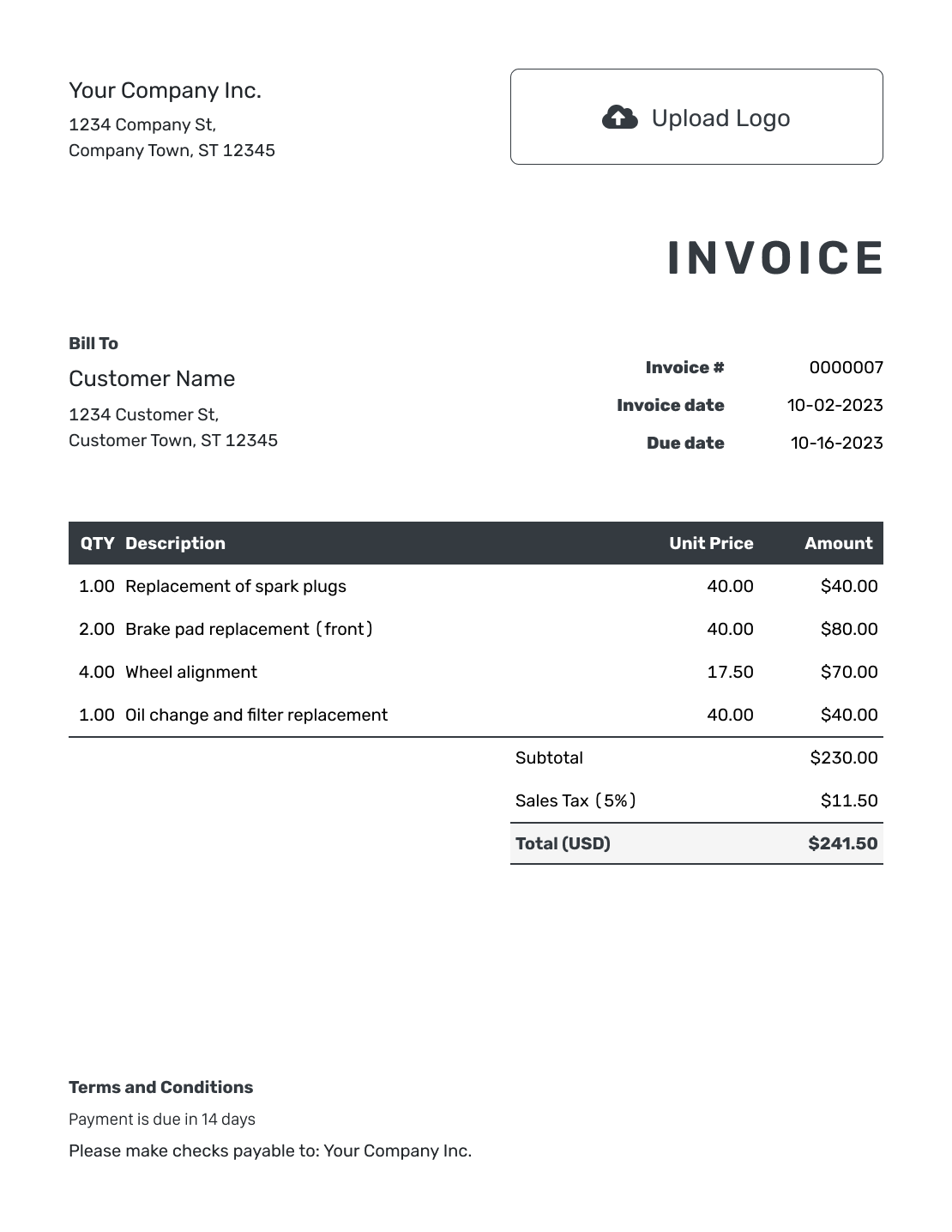
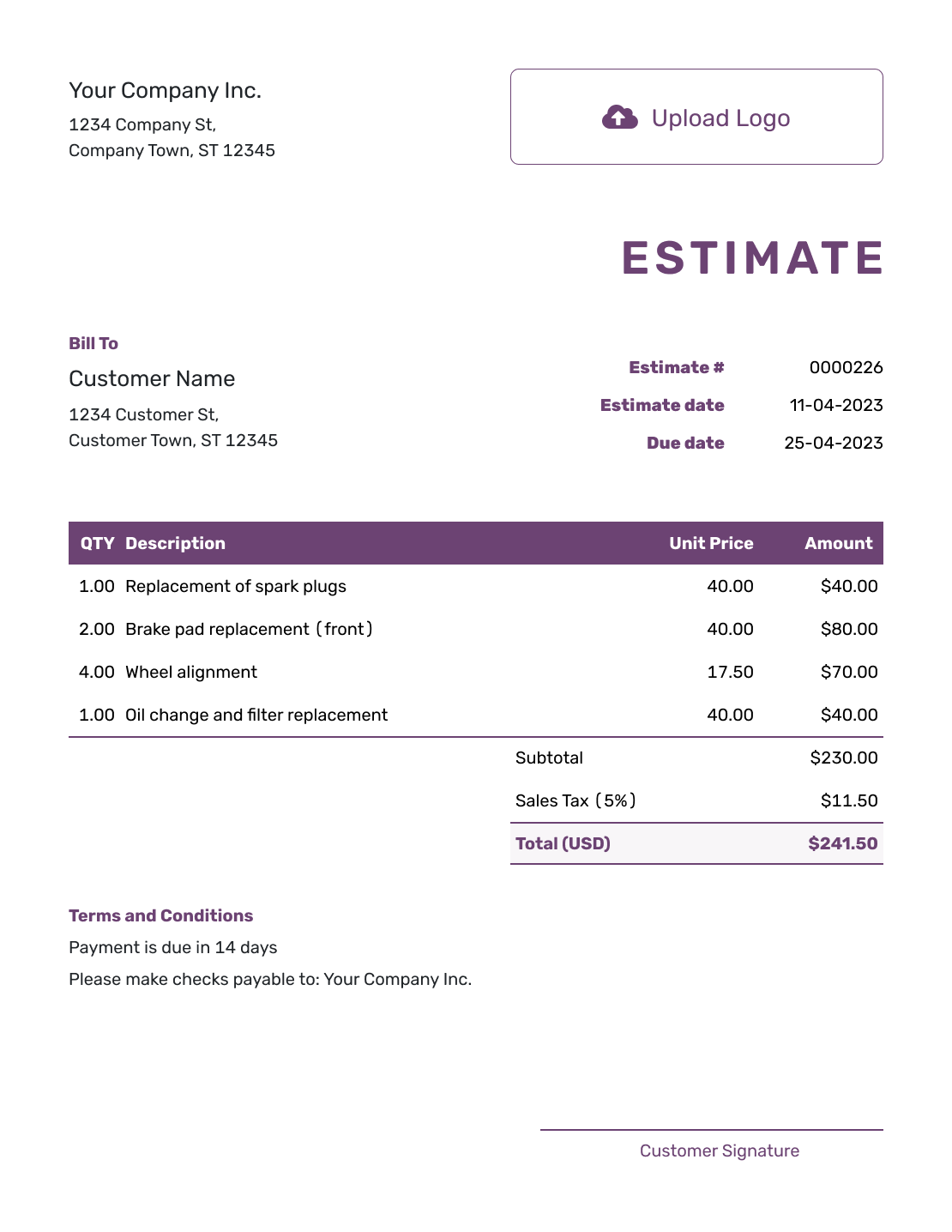
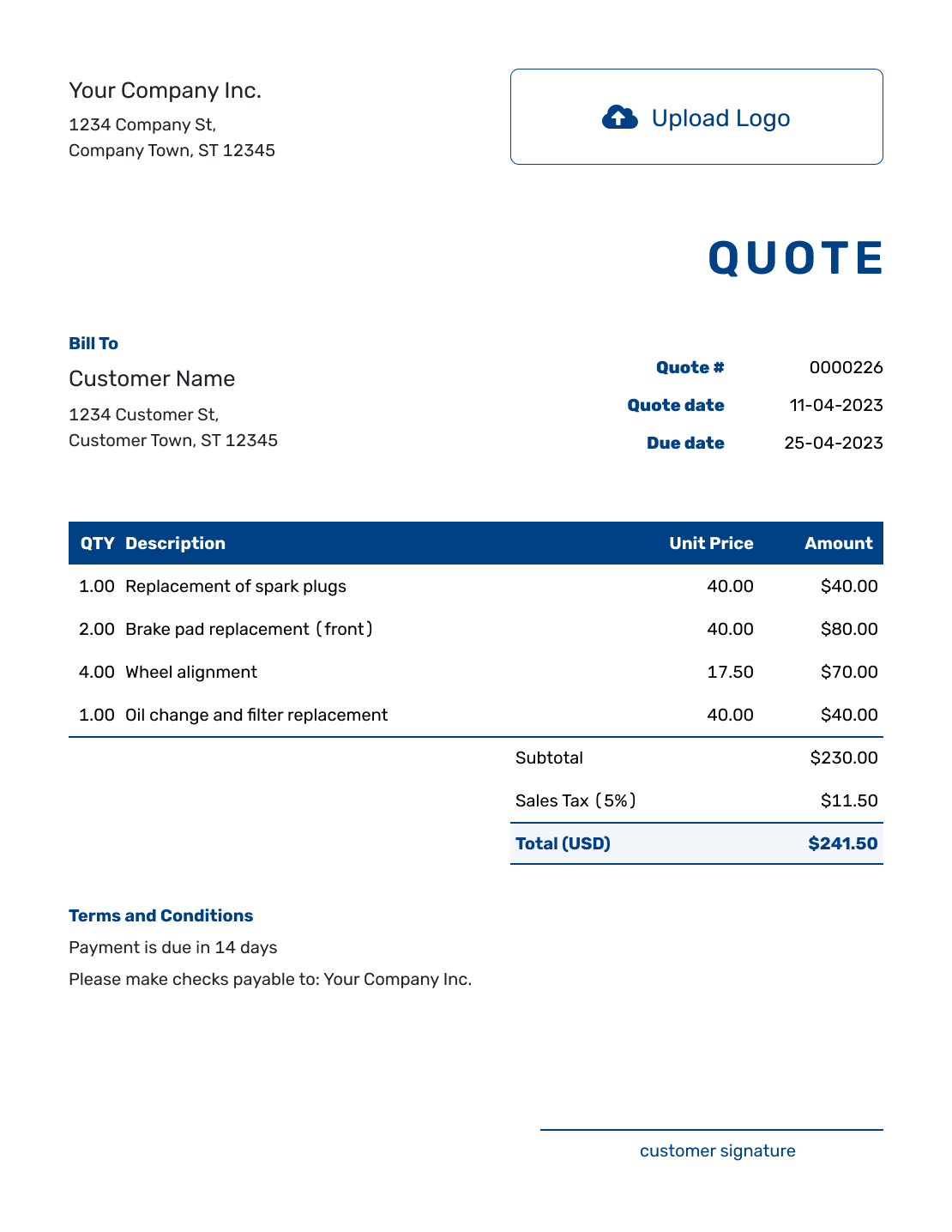
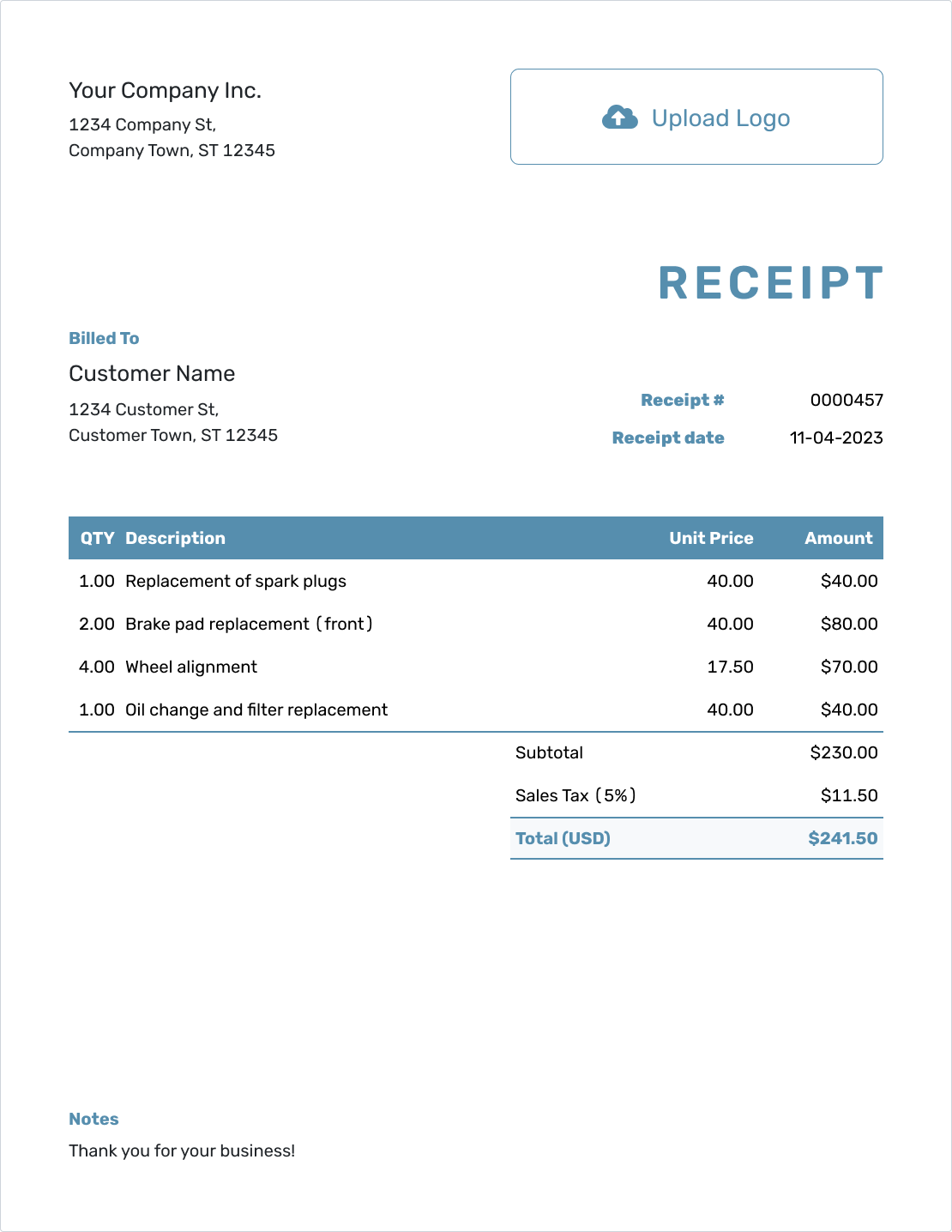
A clear bill of sale gives the buyer and seller a record to keep alongside their tax and title paperwork.
- Identify the seller, buyer and vehicle
- Record the actual price and payment details
- Keep a signed copy for each party