Buying a Car from a Private Seller
Know what to check before you pay
Check the seller’s paperwork and the car’s condition before you commit to a private purchase. Know what to arrange for payment, handover and registration.
Follow the steps below and print the free buyer checklist to take with you.
Document the sale and agreed terms. Give both seller and buyer a signed copy.
What Is Different About Buying Privately?
You buy directly from the owner and arrange the checks and paperwork with them. Before paying, confirm that the seller can transfer the car to you, understand its condition and find out what your state requires.
A car bill of sale records the transaction and agreed terms. The title or other accepted ownership document has a separate job. Check both before the meeting so a missing document does not hold up the purchase.
About This Guide
This is general information, not legal advice. Follow the official forms and transfer instructions for your purchase. See our Terms and Conditions.
Buy a Car Privately in Six Steps
Work through these checks before the keys change hands. The sections below explain what to look for at each stage.
- Ask about the car before you visit. Get the VIN, title status and service history.
- Match the seller, car and documents. Check names, ownership and identifying numbers.
- Check history, recalls and condition. Arrange an independent inspection before committing.
- Agree on the price and payment. Set any conditions and confirm how payment and handover will work.
- Complete the paperwork together. Check the documents and required signatures before the exchange.
- Arrange road use and registration. Confirm insurance, plates or permits, then meet the state’s filing deadlines.
Download the Private Car Buyer Checklist
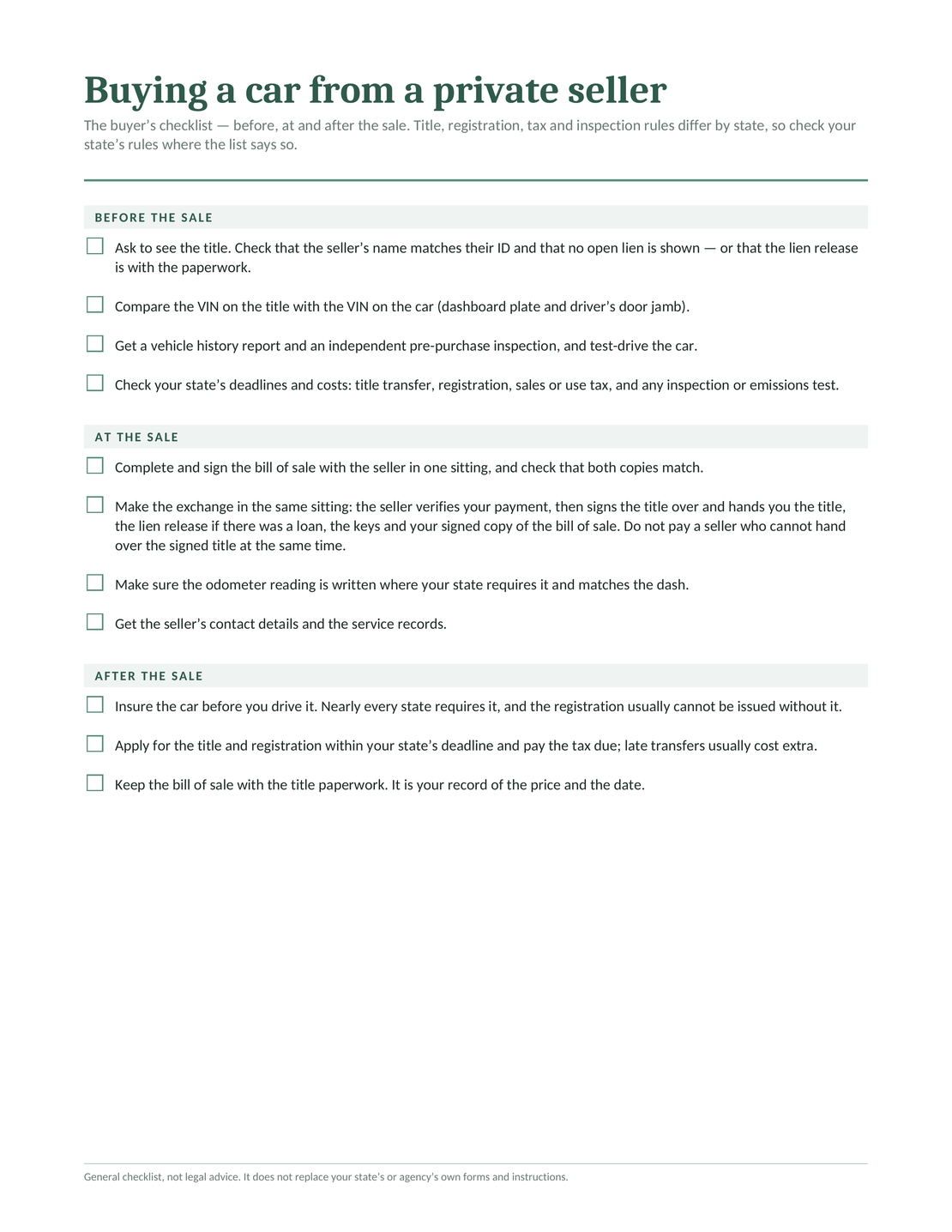
Print this one-page checklist for a straightforward purchase paid in full at handover, with a paper title ready to transfer. It covers checks before the meeting, the document exchange and tasks after the sale.
Take It to the Viewing and Handover
Tick off the checks as you complete them. Keep the checklist with the inspection report and the forms your state requires.
If a lender handles the payoff or the title is electronic, confirm the transfer process with the lender and agency before paying.
The checklist is a reminder, not a bill of sale or ownership document. Use the car bill of sale templates to record the transaction.
1. Ask About the Car Before You Visit
Ask for the VIN and the seller’s name before traveling. Find out whether the title is in their name, whether another owner must sign and whether a lender is still owed money on the car. Ask about accident damage, major repairs and available service records.
Check your state’s private-purchase instructions early. You may need an inspection, specific disclosures, notarized signatures or a permit to take the car home. For an out-of-state purchase, check the pickup state’s requirements too. Use the state chooser below to find the relevant forms and instructions.
Allow time to inspect the car and meet the seller. Pressure to pay before you can see the car, or a demand for gift cards, is a warning sign. The FTC’s car-sale scam advice explains what to watch for.
2. Match the Seller, Car and Ownership Documents
At the viewing, compare the seller’s identification with the ownership document. Read the names of all owners and check that the vehicle details match. If someone is selling for another person, ask the motor vehicle agency which proof of authority it requires.
If the title is missing or the names do not match, pause the purchase until you know the accepted transfer process. The seller may need a replacement title or other documents. A bill of sale does not fix an unexplained ownership problem; see Bill of Sale vs. Title.
Where to Find the VIN
The vehicle identification number, or VIN, identifies the car. Compare the number on the car with the title and registration rather than copying it only from the advertisement.
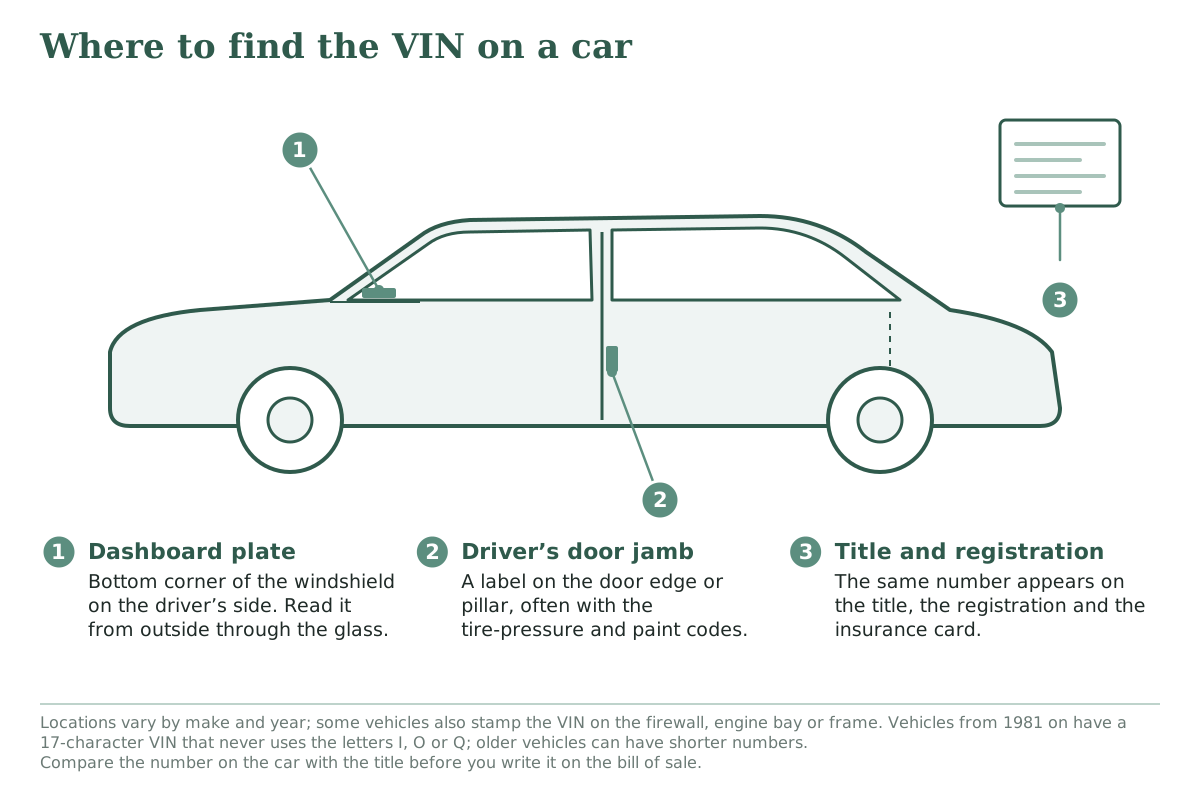
- Dashboard: Look through the lower corner of the windshield on the driver’s side.
- Door or door jamb: Check the label on the driver’s door edge or the pillar beside it.
- Documents: Match the VIN to the title and registration. It is different from the title number.
These common locations are shown in Texas DMV’s VIN guide. Locations vary by model and year. Resolve any mismatch before buying.
3. Check History, Recalls and Current Condition
Each check answers a different question. Use the history report to review recorded events, the recall search to find outstanding recall work, and a mechanic to assess the car you are buying.
Read the Vehicle History
An NMVTIS vehicle history report can show title information, title brands, odometer readings, total-loss and salvage records. Ask about any mismatch with the seller’s description. A report with no listed problems does not prove the car has never been damaged.
Look Up the VIN for Recalls
Use NHTSA’s recall search and follow up on any unrepaired recall with the manufacturer or dealer. The search has limits: it may omit some recent recalls, older recalls and work already completed. A zero result is not a complete assessment of the car’s safety.
Arrange an Independent Inspection
Choose a mechanic to inspect the car before you commit. Ask for written findings and likely repair costs so you can decide whether to proceed, negotiate the price or ask for a repair. A history report does not replace this inspection.
Agree on test-drive arrangements and confirm insurance before driving. Compare the odometer with the title and available service records. The NHTSA mileage guide explains other signs of possible odometer problems.
4. Agree on the Price, Conditions and Payment
Confirm the price and what comes with the car, including keys or accessories. Budget for taxes, title and registration fees, insurance and any repairs you plan to make. Check the state’s charges rather than treating the advertised price as the whole cost.
If you are paying a deposit, agree on when the balance is due and what happens if an inspection condition fails or either person cancels. Record repair promises and other conditions in a car purchase agreement before paying the deposit. Do not assume that every deposit is refundable.
Set Up the Payment and Handover Together
Ask your bank how to arrange the chosen payment and how it can be verified. Agree on the amount, payee, place and timing with the seller. Confirm any changed payment instructions through a contact method you already trust.
Agree in advance how the seller will confirm receipt, and keep your bank’s payment confirmation with the signed paperwork. If you pay by check, ask the bank about verification before arranging the handover.
If the Seller Still Owes a Lender
Contact the lender with the seller, using independently verified contact details. Confirm the payoff amount, who receives each payment, how the lien is released and when you will receive the ownership documents. Check that the agency processing your transfer accepts that arrangement.
A lender still listed on the title does not always mean the loan remains unpaid. For example, New York accepts the original title with original proof of lien satisfaction. Follow the process that applies to the car rather than relying on a promise to sort out the title later.
Read Any As-Is or Warranty Terms
Record known defects and specific promises accurately. Private-sale protections vary by state. For example, Massachusetts law requires disclosure of known defects that impair safety or substantially impair use. Do not assume as-is wording removes every seller duty.
The FTC Used Car Rule applies to covered dealers; a private seller may not provide the same Buyers Guide. If the seller will accept installments after handover, have the payment and transfer terms reviewed separately.
Prepare the Sale Record With the Seller
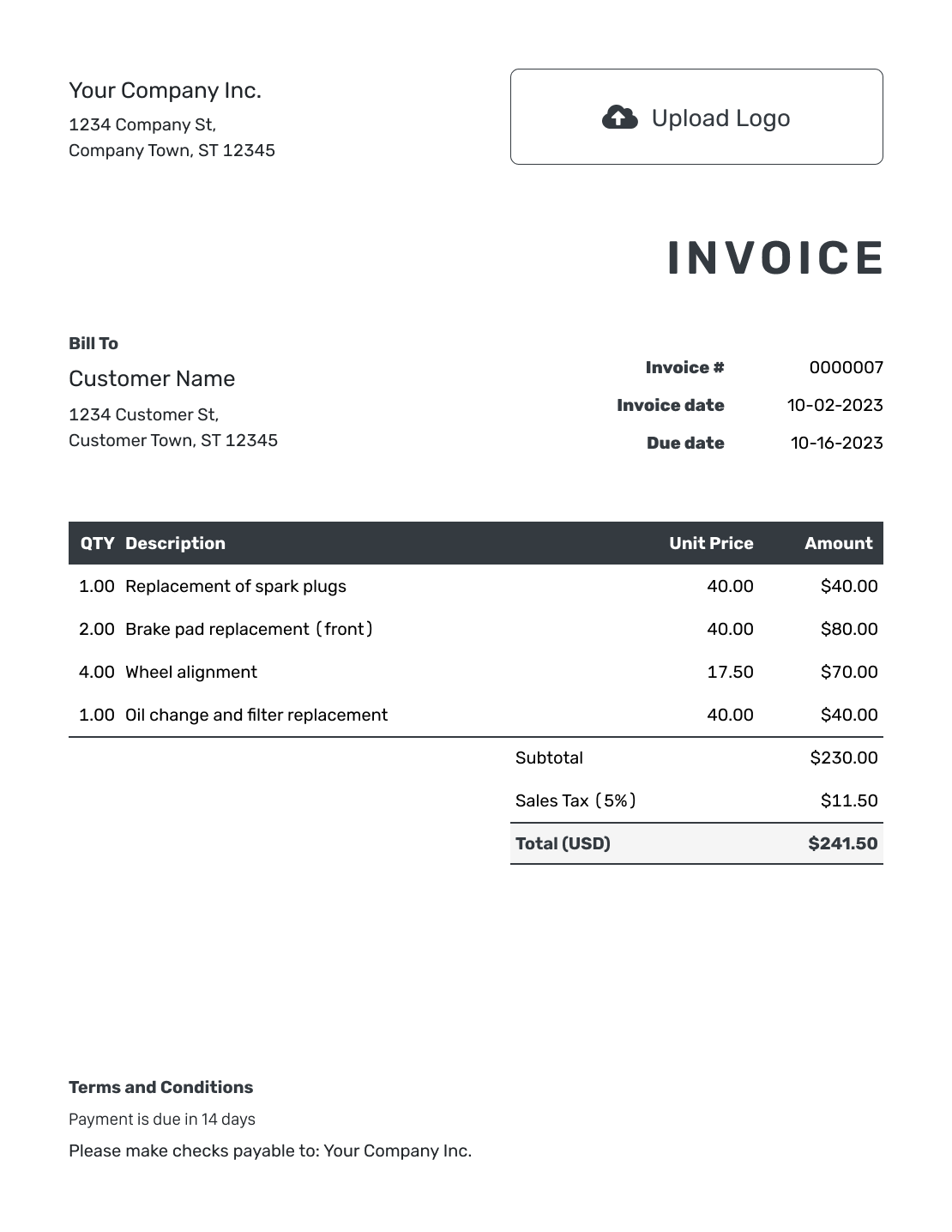
Choose a free car bill of sale in Word, Google Docs or PDF. Record the car, agreed terms and payment, then review the details together before signing.
5. Check the Documents Before the Exchange
Ask the motor vehicle agency where you will title the car which documents it needs. Use this list to prepare, then follow the instructions for your vehicle and state.
| Document | What to Check |
|---|---|
| Title or accepted ownership document | The car and owner details match, the transfer is completed to you, and every required person signs correctly. |
| Lien release, if needed | You have the lender’s release evidence in the form the agency accepts, or an agreed lender-managed release process. |
| Required odometer disclosure | The reading and truthful mileage status are recorded on the title or required official form, with the correct signatures. |
| Bill of sale | It identifies seller, buyer and car, and records the sale date, price, payment received, any balance and agreed terms. |
| Supporting records | Keep payment confirmation, inspection findings and written promises. Gather any required insurance, tax, inspection or registration documents. |
Check names, VINs and amounts before signing. Do not leave your name blank on the title assignment. Use the title transfer guide and odometer disclosure guide for those separate tasks.
For a straightforward paid-in-full sale, coordinate verified payment, the completed documents and the keys at the meeting. Lender-managed or electronic-title transfers may follow a different sequence. Confirm that process in advance so both parties know what they will receive and when.
Before You Complete the Purchase
Check these points while the seller, car and paperwork are together. Resolve any unanswered question before completing the exchange.
- The seller has shown authority to sell, and the VIN matches the car and documents.
- You understand the inspection findings, history and recall results.
- The condition, included items and any repair or warranty promises are recorded.
- The price, payment verification and any lender payoff or release are arranged.
- The ownership documents, required disclosures and bill of sale have the correct details and signatures.
- You have confirmed insurance and a lawful way to take the car home.
Keep the printable buyer checklist with your paperwork. It helps you remember the checks; it does not record payment or transfer ownership.
6. Take the Car Home and Complete Registration
Before driving away, confirm when your insurance begins and which plates, registration or temporary permit you may use. Do not assume the seller’s plates or policy cover you. If you cannot drive the car legally or safely, arrange transport.
Submit the title and registration application by the deadline for your purchase. Pay the applicable taxes and fees, complete any required inspection and keep copies of what you submit. Save the signed bill of sale, agreement, payment evidence and inspection report together.
The details depend on the state. Texas DMV recommends going to the county tax office with the seller to check the transfer. Virginia DMV lists its title, insurance and registration steps. Use your state’s current instructions for the order and deadlines that apply.
Official Forms and Instructions
Choose the state where you will title or register the car. For an out-of-state purchase, check the pickup state’s transfer and permit rules too.
- Alabama
- Alaska
- Arizona
- Arkansas
- California
- Colorado
- Connecticut
- Delaware
- Florida
- Georgia
- Hawaii
- Idaho
- Illinois
- Indiana
- Iowa
- Kansas
- Kentucky
- Louisiana
- Maine
- Maryland
- Massachusetts
- Michigan
- Minnesota
- Mississippi
- Missouri
- Montana
- Nebraska
- Nevada
- New Hampshire
- New Jersey
- New Mexico
- New York
- North Carolina
- North Dakota
- Ohio
- Oklahoma
- Oregon
- Pennsylvania
- Rhode Island
- South Carolina
- South Dakota
- Tennessee
- Texas
- Utah
- Vermont
- Virginia
- Washington
- West Virginia
- Wisconsin
- Wyoming
You can also find your agency through USAGov’s motor vehicle directory. These sources support the checks in this guide:
- Department of Justice: Vehicle History Reports — Title, brand, mileage, total-loss and salvage records.
- NHTSA: Recall Search — Unrepaired recalls and search limitations.
- NHTSA: Odometer Fraud — Mileage checks and disclosure guidance.
- FTC: Phony Online Car Sales — Warning signs before you pay.
- New York DMV: Lienholders — Lien-release evidence in New York.
- Texas DMV: Buying or Selling a Vehicle — Buyer paperwork and transfer steps in Texas.
- Virginia DMV: Buying or Selling a Vehicle — Title, insurance and registration in Virginia.
Sources reviewed .
Private Car Purchase Questions
Start with the title or other accepted ownership document, any required lien-release evidence and your state’s transfer forms. Add the required odometer disclosure and sale record. Ask the motor vehicle agency about insurance, taxes, inspections and registration before the handover.
It may be possible through an agreed lender payoff and release process. With the seller, confirm who receives payment, how the lien is released and when you will receive the title or accepted release evidence. Check that the agency processing the transfer accepts the resulting documents.
Only when the car can legally and safely be driven. Confirm effective insurance and the required plates, registration or temporary permit before the trip. For an out-of-state purchase, check the pickup and home-state requirements. Arrange transport if needed.
No. The report shows recorded history; a mechanic assesses the car’s current condition. Arrange an independent inspection, compare the VIN and mileage with the documents, and check recalls separately.
Pause and ask the motor vehicle agency which ownership and authority documents it accepts. A replacement title or evidence that the seller can act for the owner may be needed. A generic bill of sale does not fix a missing title or unexplained ownership gap.
Do not assume so. Disclosure duties, warranty terms and buyer remedies depend on state law and the facts. Read the terms, record specific promises and check your state’s private-sale rules. Dealer protections do not automatically apply to a private seller.
Keep a Clear Record of Your Purchase
Prepare the sale record with the seller so you each have a copy of the agreed details.
- Identify the seller, buyer and car.
- Record the price and payment received.
- Review the terms before signing.