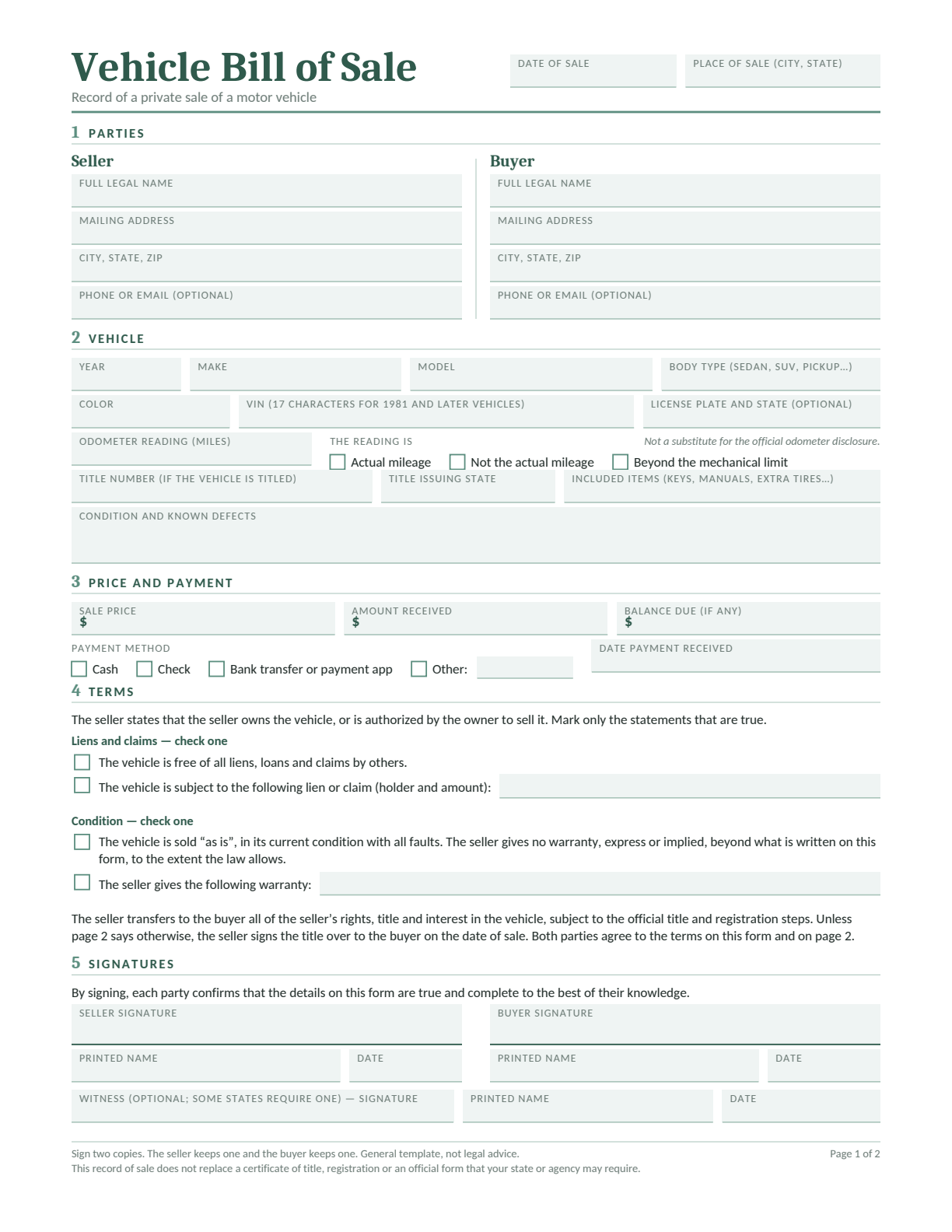
Enter the vehicle’s VIN, mileage and title information, then list the sale price, amount received and any unpaid balance. Record known defects clearly enough that both parties recognize what was disclosed.
Keep page 2 with the signed first page. It provides room for a later pickup, remaining payment or other agreed terms. Arrange notarization separately when the bill will serve as purchase-price evidence.
Edit in Word or Google Docs, type into the fillable PDF, or print the blank PDF to complete by hand.
In Google Docs, sign in and choose Make a copy. Use page 2 for extra terms, then keep both pages together.
A Delaware bill of sale records what the seller transfers, what the buyer pays and any conditions of the agreement. Use it to identify the property and record included items, outstanding payment and delivery arrangements.
The sale record belongs with the ownership documents. DMV handles vehicle and trailer transfers; DNREC handles boat registration. Each has its own requirements for the documents that accompany your application.
Prepare the Sale Record and Delaware Title
For a sale between Delaware residents, follow DMV’s Delaware title-transfer instructions. The seller completes the title assignment, including the buyer, date, price and odometer information. Both sides sign and print their names in the required places.
A personal bill of sale gives you room to explain the vehicle’s condition and the payment arrangement. It does not replace the assignment or the buyer’s application on the title.
Seller: Sign the Title and Report the Sale
Check how joint owners are listed. If the title joins their names with “AND,” all sellers must sign. If it uses “AND/OR,” one owner may complete the seller’s section. Give the assigned original to the buyer and keep a copy.
Follow DMV’s private-sale checklist for your plate and sale report. Remove the plate and return it to DMV or arrange an approved retention or transfer. Complete the Seller’s Report of Sale from the title or the separate form.
Buyer: Apply Promptly, Within 30 Days
Complete the purchaser’s application and any lien information on the title. Bring the ownership papers, insurance evidence and required identity or residency documents to DMV. All buyers must sign the application; DMV recommends that buyer and seller attend together.
The title-transfer law requires application immediately after purchase and no later than 30 days. DMV also says the vehicle may not be operated until a new title is issued in the buyer’s name. Plan the transfer and any approved transport arrangement before collecting the vehicle.
Check Notarization for the Document You Are Using
Delaware does not require notarization of its title assignment. A separate rule applies to price evidence: 30 Del. C. § 3002(b) calls for the purchase price to be evidenced by a notarized bill of sale.
If you will use the bill as evidence of the purchase price, arrange notarization and confirm DMV’s submission requirements for your transfer. Do not assume that the title’s signing rule also covers a separate bill of sale.
Send the Seller’s Report Separately
The Seller’s Report of Sale identifies the vehicle, buyer and seller and records the mileage, price and date. Its signature and identification fields should be completed before submission.
DMV uses this report to flag the record. The form expressly says it does not change ownership or stop all further contact with the seller. Keep confirmation of the report, and make sure the buyer completes the title transfer too.
Delaware Boat Bill of Sale Templates
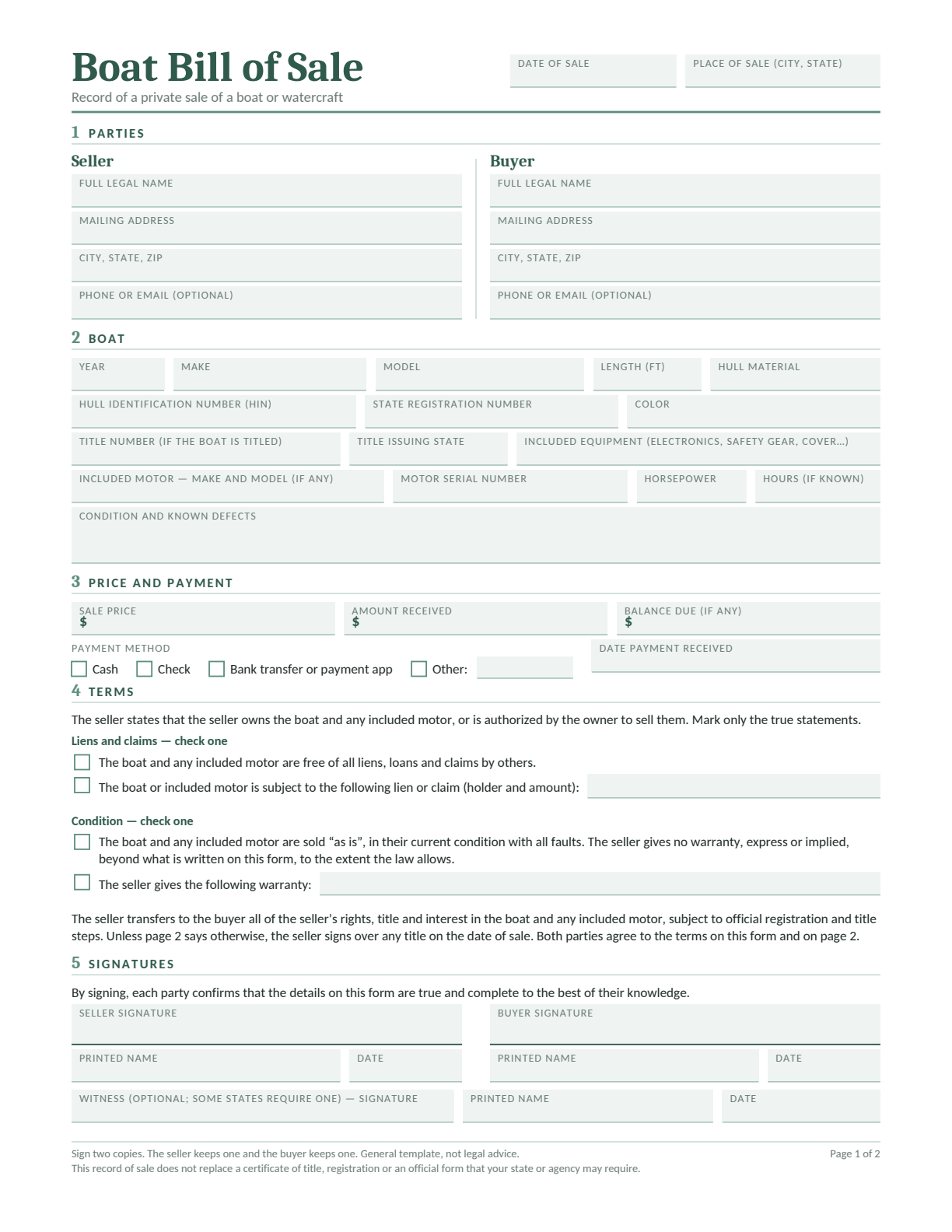
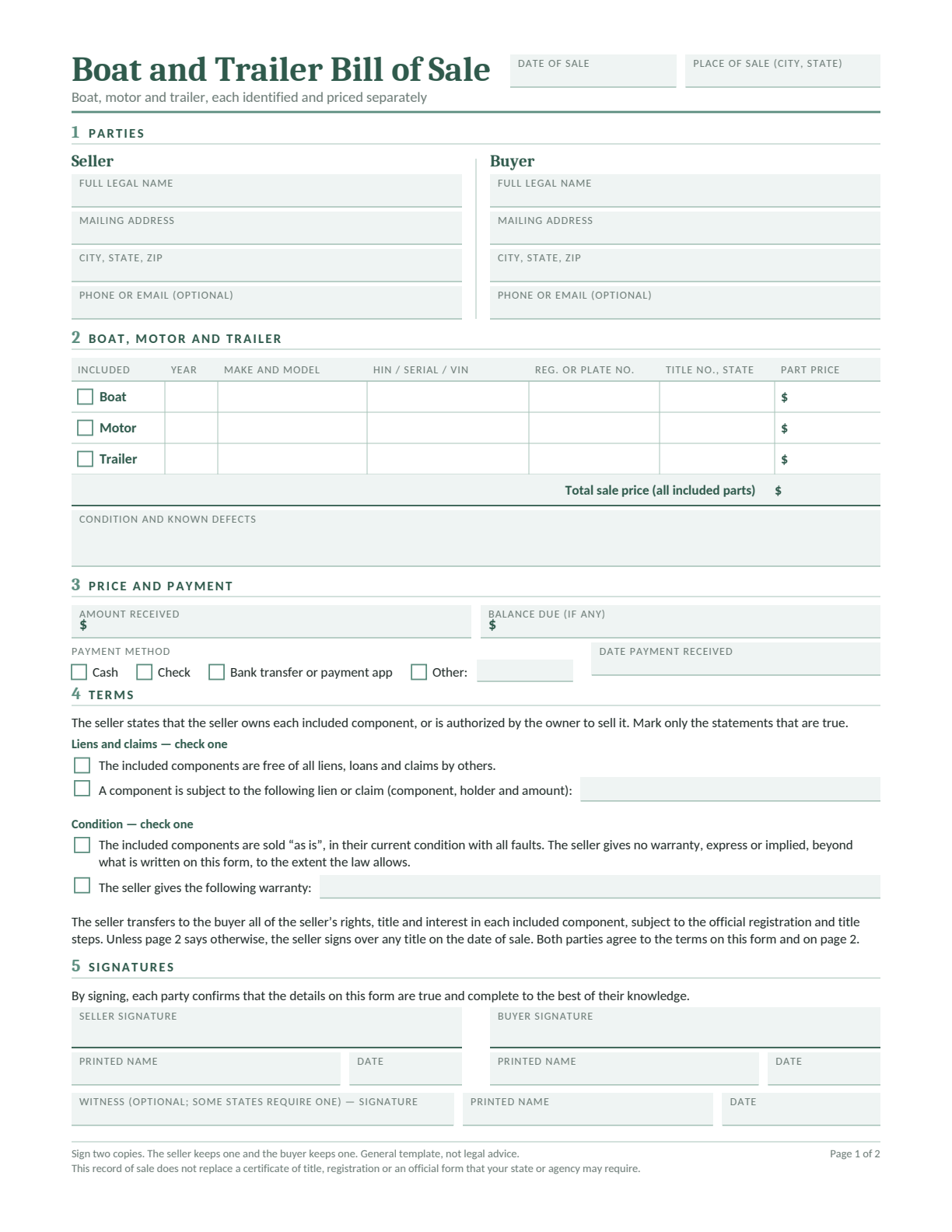
For a boat sale, identify the hull by its HIN and record the motor separately if included. List the agreed amount for the boat, motor and trailer so the documents show exactly what the buyer receives.
Boat Bill of Sale
Record the boat, included equipment, condition, price and payment.
Delaware requires registration of motorboats, including boats with electric motors, when Delaware is their state of principal use. Use DNREC’s boat-registration instructions to identify the ownership evidence for the boat you are buying.
For a boat already registered in Delaware, provide the old registration card and a notarized bill describing the boat. DNREC waives the notarized bill when buyer and seller both appear in person with photo ID. Agree on that arrangement before the handover.
For an out-of-state boat, the documents depend on where it was last recorded. A boat from a title state needs the original title, which DNREC keeps. A boat from a registration-only state needs its registration and a notarized bill of sale. Include a photo or pencil rubbing of the HIN and the owner’s identity document.
Complete the vessel registration application and check its ownership instructions. An unsigned out-of-state title needs a notarized bill as described there. The seller’s 15-day duty to report a sale to Fish and Wildlife is separate from the buyer’s registration; it is not a period for operating an unregistered boat.
Delaware Trailer Bill of Sale
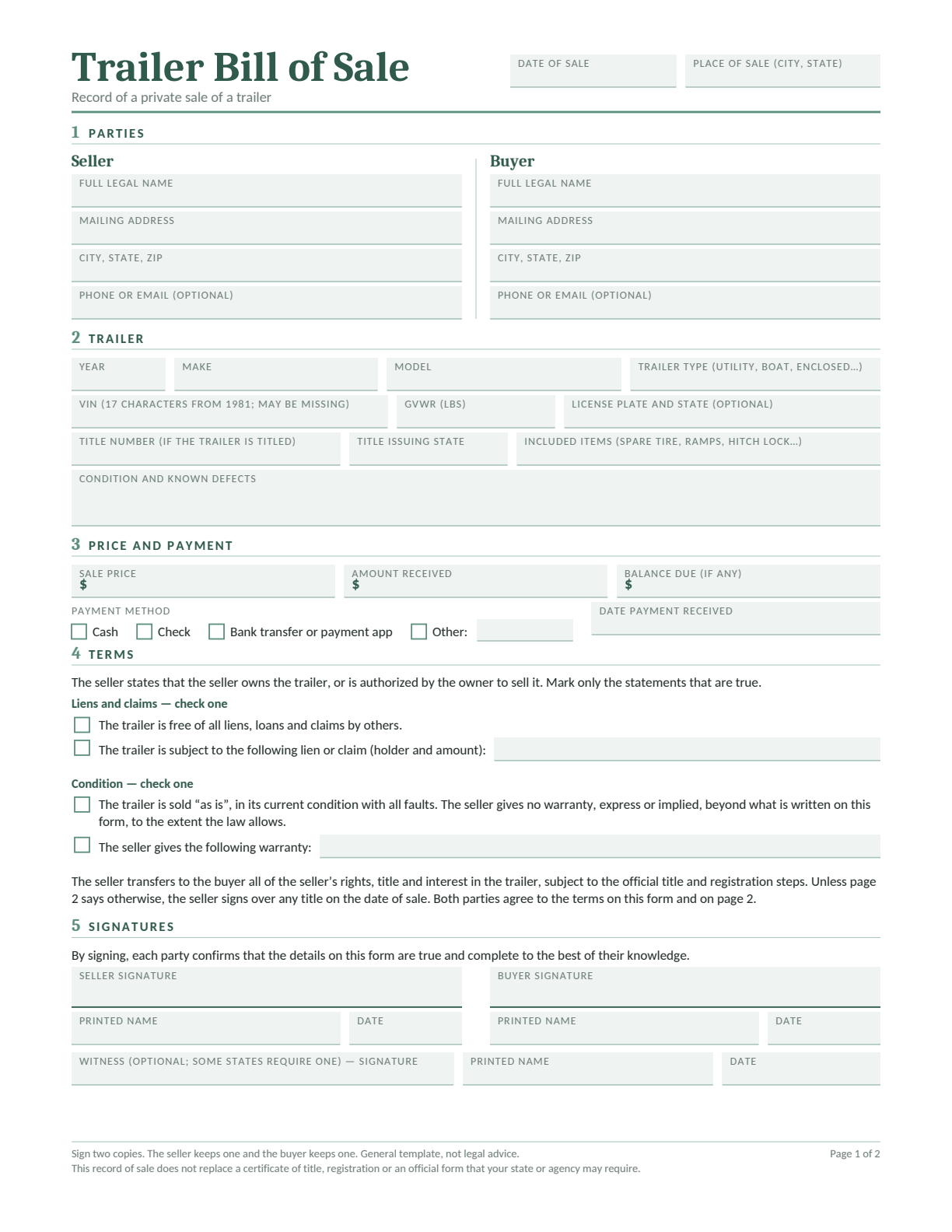
Record the trailer’s VIN, year, make, weight and price separately from the boat. A boat’s DNREC registration does not cover its trailer on the road.
Trailer Bill of Sale
Describe the trailer and included equipment, then record the price, payment and any remaining balance. Use page 2 for extra terms, such as collection arrangements.
Edit in Word or Google Docs, type into the fillable PDF, or print a blank copy. Complete both pages and keep them with the ownership papers.
Delaware DMV’s boat-trailer guidance says trailers must be titled and registered. A light trailer does not become exempt from those ownership steps simply because it carries a small boat.
For a homemade trailer, contact DMV about inspection and identification before the sale or application. The vehicle inspection manual describes the assigned-number process and ownership or material-cost evidence, including receipts or the applicable affidavit. An inspection weight category is not a title exemption.
Completed Delaware Bill of Sale Example
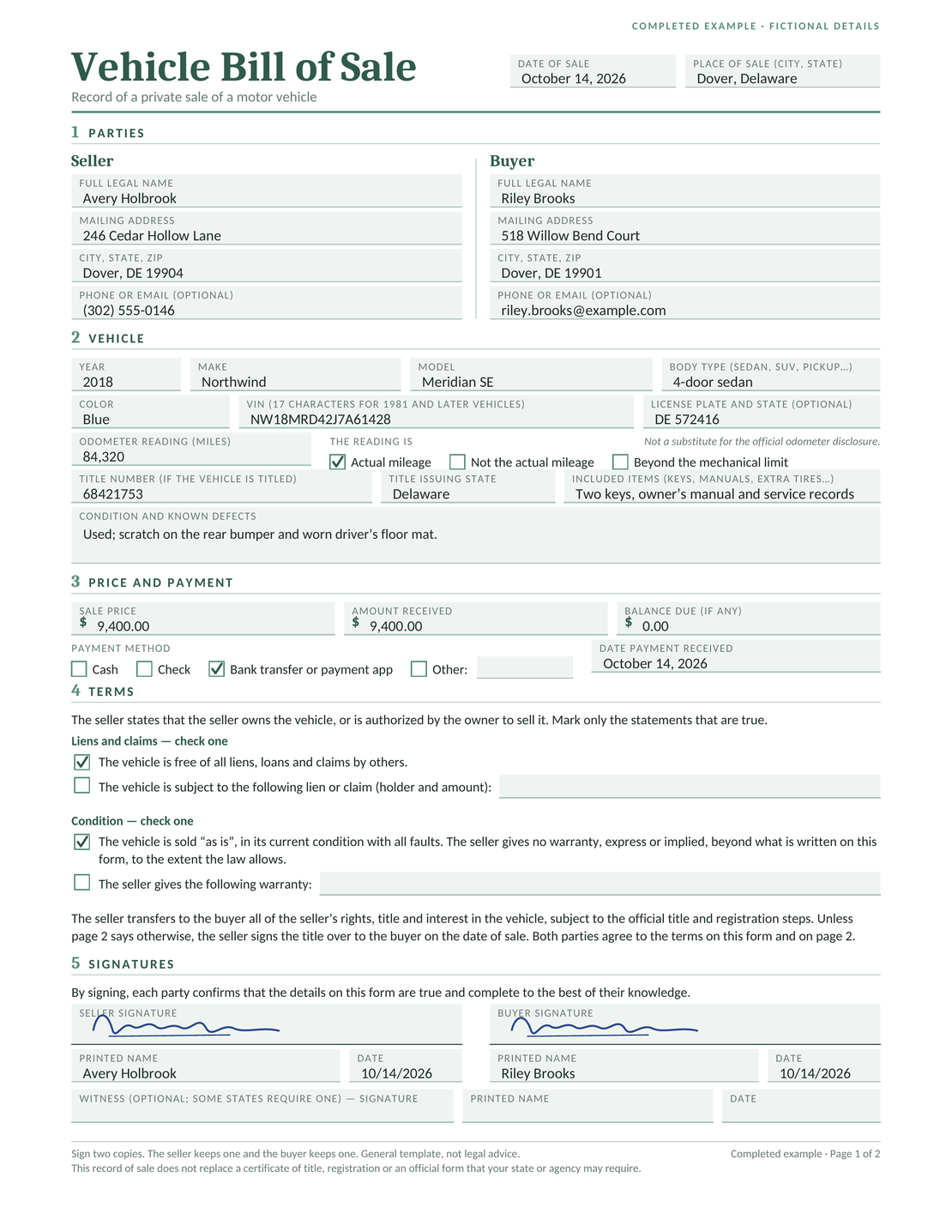
In this fictional Dover sale, Avery sells Riley a 2018 Northwind Meridian SE for $9,400. The full amount has been received, leaving no balance. The condition section identifies a rear-bumper scratch and a worn driver’s floor mat, so those details remain part of the signed record.
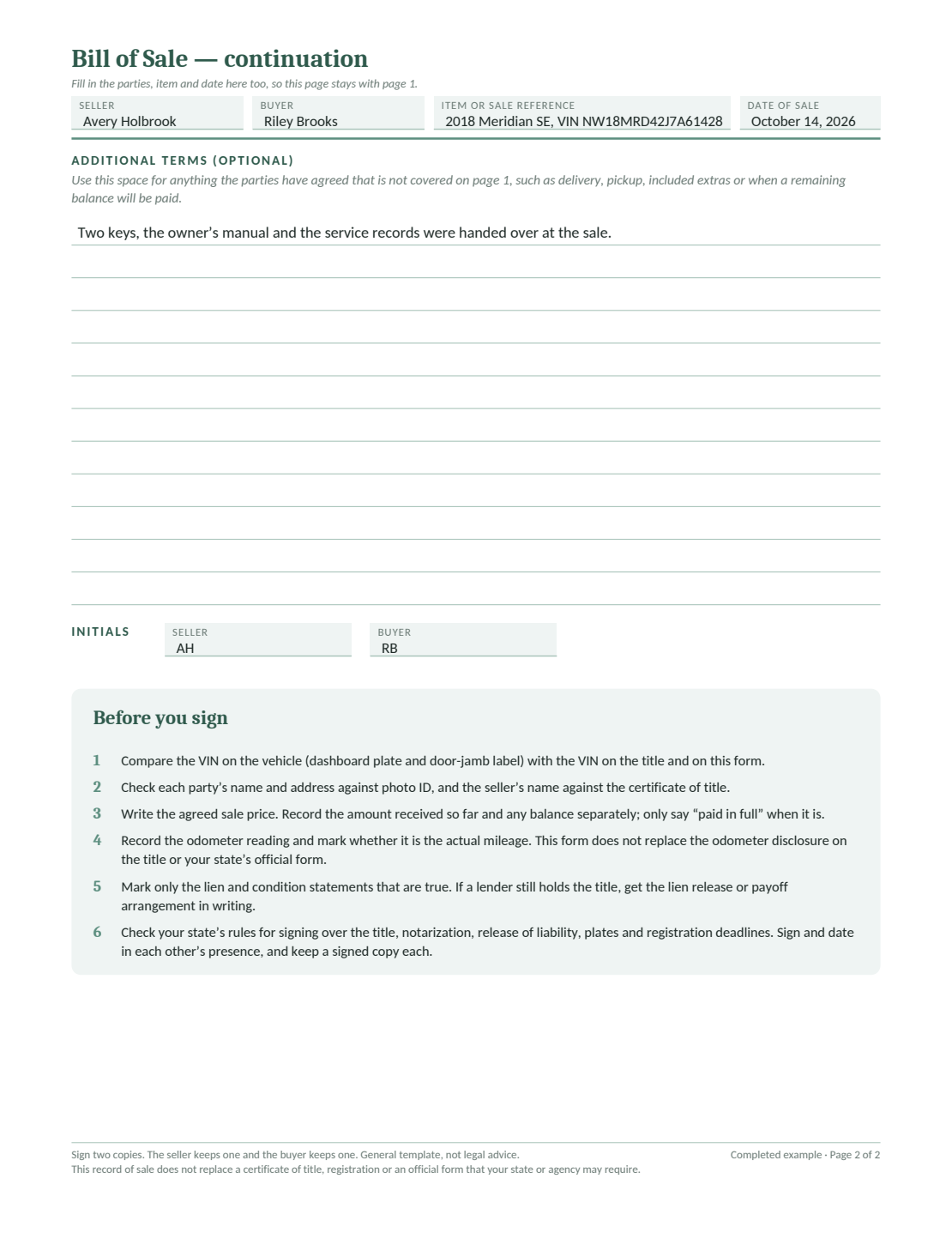
The second page confirms delivery of two keys, the owner’s manual and service records. Riley still needs to complete the DMV transfer, and Avery needs to submit the seller’s report. The example documents the parties’ agreement and handover; it does not show that those agency steps or any required notarization have been completed.
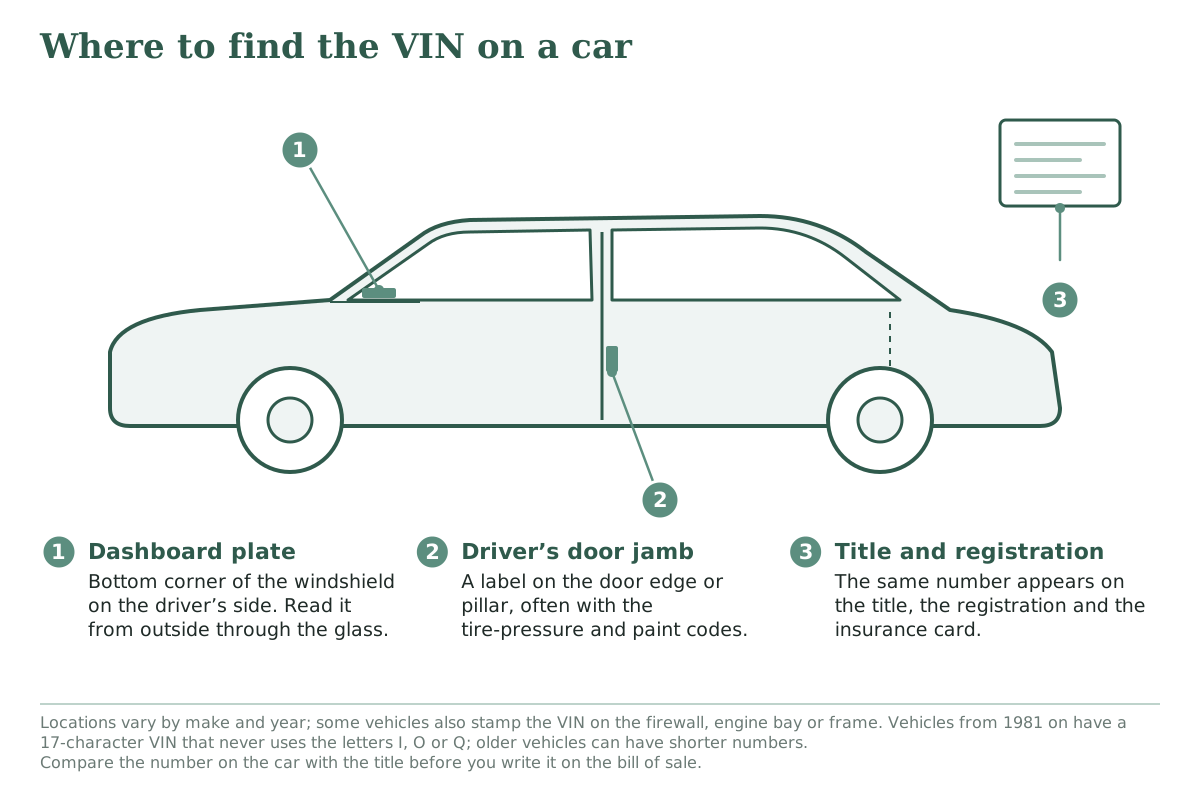
Compare the identifying number on the property with the ownership papers before copying it into your sale record.
Look through the windshield at the driver-side dashboard. Also check the label inside the driver’s door opening. Locations vary, so consult the vehicle’s manual if needed.
Resolve a missing or mismatched number with the agency handling the transfer. Do not guess from an unclear label.
Match the VIN or HIN on the property to the ownership documents and the sale record. Confirm the seller is the owner or has authority to sell, and resolve any lien before recording the property as free of claims.
Review the price, payment status, condition and included equipment together. Decide whether you need a notary or a joint DNREC visit before anyone signs. For a boat and trailer package, check that you have both sets of ownership papers.
Keep the Sale Record with the Transfer Papers
Keep the signed sale record, ownership copies and payment evidence together. Retain page 2 whenever it contains delivery or payment terms. If money remains due, add a dated receipt when the balance is paid.
Save the seller’s reporting confirmation and the buyer’s title or registration documents. Check the new record for the correct owner and identification number before putting the property into use.
No. Complete the title assignment and purchaser’s application as DMV requires. The bill records the price, payment and agreement; it does not itself put the DMV record in the buyer’s name.
The document and purpose matter. Delaware titles do not require a notary, but the motor-vehicle document-fee law calls for a notarized bill as evidence of purchase price. DNREC also requires a notarized bill for specified boat transfers, with an in-person exception for a currently Delaware-registered boat.
Do not treat the application deadline as permission to drive. DMV says a vehicle in this Delaware-resident transfer process may not be operated until a new title is issued in the buyer’s name. Arrange the correct documents or transport before pickup.
Yes. For a currently Delaware-registered boat, DNREC waives the notarized bill when both parties appear in person with photo ID. Bring the old registration card and the other required application and identification documents.
Yes. The trailer needs DMV title and registration, while the boat follows DNREC’s registration process. Record the trailer’s VIN and sale amount separately and obtain the trailer’s ownership documents.
After 14 days, continue for
$12.99/month
only if you choose to upgrade.
We use cookies to provide you with the best possible experience. Cookies also help us analyze user behaviour so we can continue to improve our website. View our cookie policy.