Choose a Vermont bill of sale template to record the price, payment and condition of a vehicle, boat or trailer.
Use the signed sale record with the ownership papers. For an older vehicle, check its registration history before assuming that a title is unnecessary.
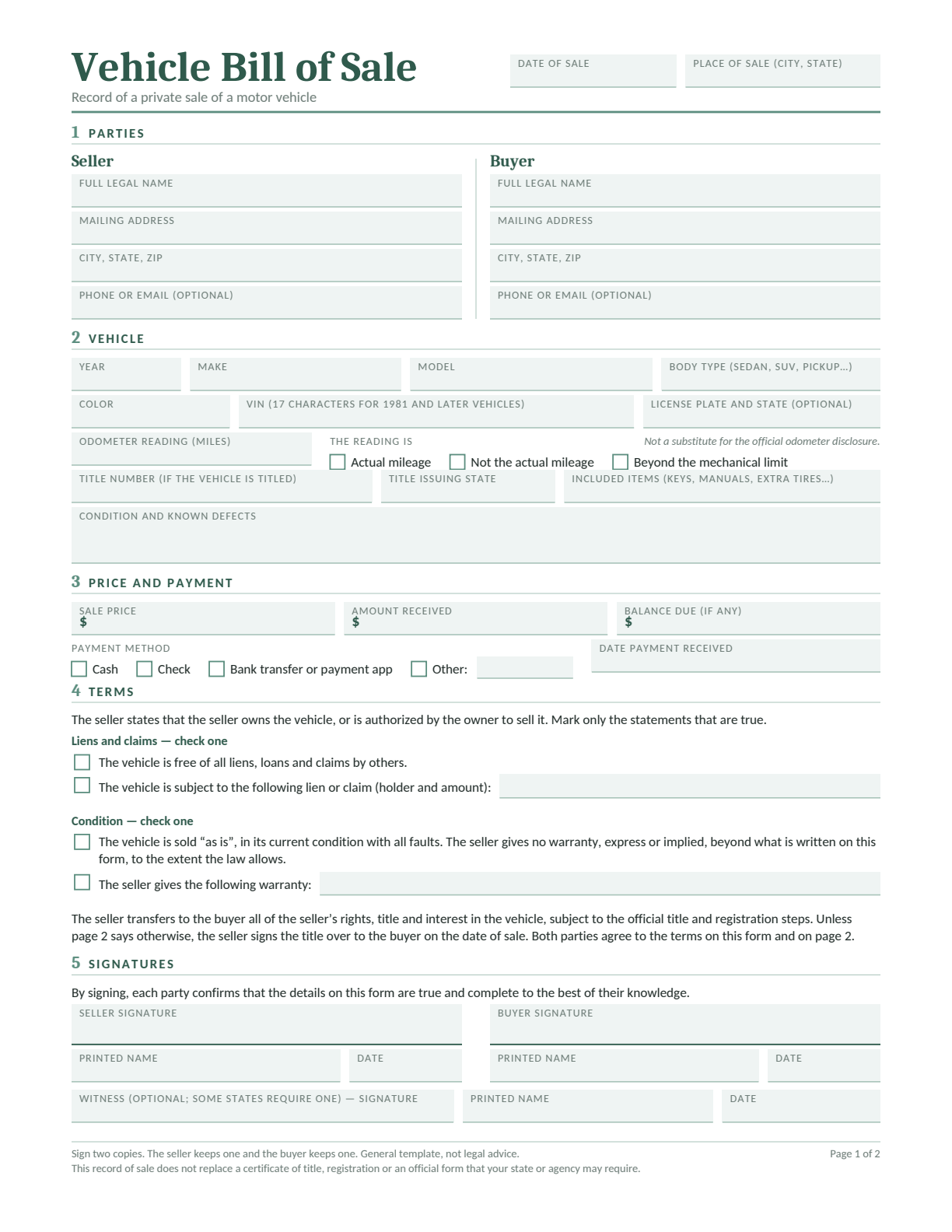
Use the vehicle template to record the VIN, year, make, model, price and payment. Describe known damage and list the title, registration certificate or lien release being handed over. For a vehicle that needs an odometer disclosure, complete the title’s disclosure or the official VT-005 section as well.
Edit in Word or Google Docs, type into the fillable PDF, or print the blank PDF to complete by hand.
In Google Docs, sign in and choose Make a copy. Use page 2 for extra terms, then keep both pages together.
A Vermont bill of sale identifies the property, the people making the transfer and the amount paid. It also gives both parties a record of defects, included equipment and any payment or pickup still due.
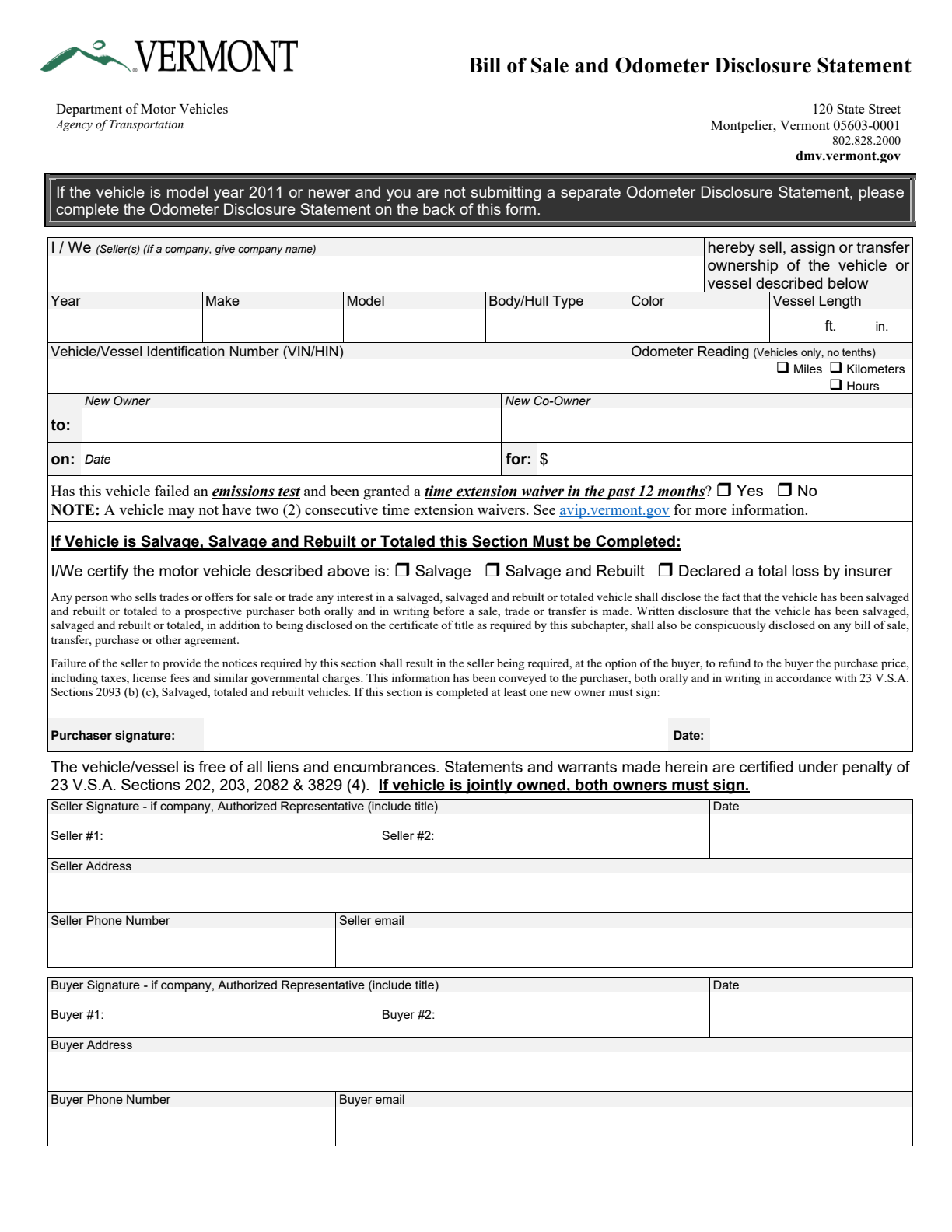
Vermont DMV provides Form VT-005 for a vehicle or vessel sale, with a separate odometer disclosure on its second page. A private sale agreement can add useful terms, but the buyer still needs the ownership evidence required for the particular vehicle, boat or trailer.
Vermont Bill of Sale and Odometer Disclosure (VT-005)
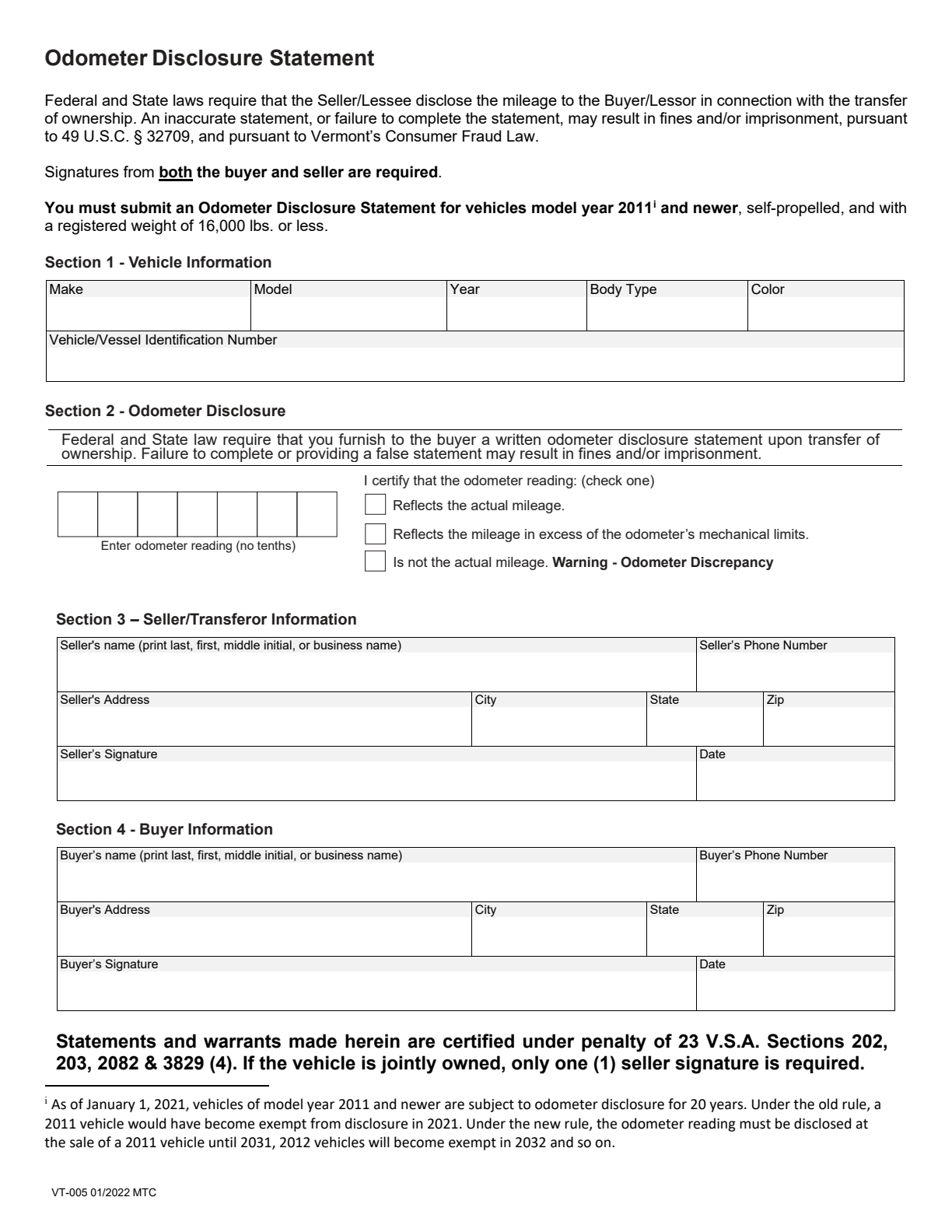
VT-005 can record a vehicle or vessel sale. Its reverse side supplies the odometer disclosure used for a covered motor vehicle; complete both sides when that disclosure is needed.
What to Fill In
Property and parties: Identify the seller, new owner and co-owner. Copy the year, make, model and VIN or HIN from the property and its ownership record; include the applicable body or hull details.
Price and disclosures: Enter the sale date and full price. Answer the emissions-waiver question for a vehicle and complete the salvage section when applicable.
Signatures: Complete the seller and buyer signature, address and contact fields. Both jointly owning sellers sign the bill-of-sale side; the separate odometer side states that one seller signature is sufficient. There is no notary certificate.
Odometer disclosure: For a covered vehicle, complete the reverse-side mileage certification and both parties’ signatures unless submitting a separate accepted disclosure.
The form declares the vehicle or vessel free of liens. Resolve any lien before signing that statement. Keep both sides, including the completed odometer disclosure when required.
Preview of the official form. 01/2022. Open the PDF for the complete form and instructions.
Match the sale record to Vermont ownership papers
For a used vehicle that has been titled, obtain the original title assigned by all owners and resolve any recorded lien. Vermont’s registration instructions also call for bills of sale where needed to establish the complete ownership chain. A bill of sale alone does not replace an existing title.
Older vehicles need a closer look. The current title exemption for a vehicle more than 15 years old on January 1, 2024 depends on Vermont registration and no change of ownership since that date. Do not treat “2009 or older” as a permanent exemption that automatically passes to a new buyer.
Seller: supply the ownership history
Assign the title when one exists, release any lien and give the buyer a signed bill of sale. If your older vehicle was lawfully registered without a title, provide the registration certificate and any intervening sale records. DMV’s title guidance explains the evidence needed for vehicles that have never been titled.
Remove your plates and keep copies of the transfer papers. If the buyer will register the vehicle elsewhere, settle that state’s title requirements before handover; Vermont registration evidence may need additional supporting paperwork.
Buyer: prepare the title and registration application
Compare the VIN on the vehicle with every ownership document, then complete the Registration/Tax/Title Application, VD-119. Use DMV’s new-registration instructions to assemble the original ownership records and any required inspection or verification.
For a covered self-propelled vehicle of model year 2011 or newer and registered weight of 16,000 pounds or less, complete the required odometer disclosure on the assigned title or VT-005. Arrange registration or an appropriate transit permit before driving the purchase; a signed bill of sale is not a road-use permit.
Vermont Boat Bill of Sale Templates
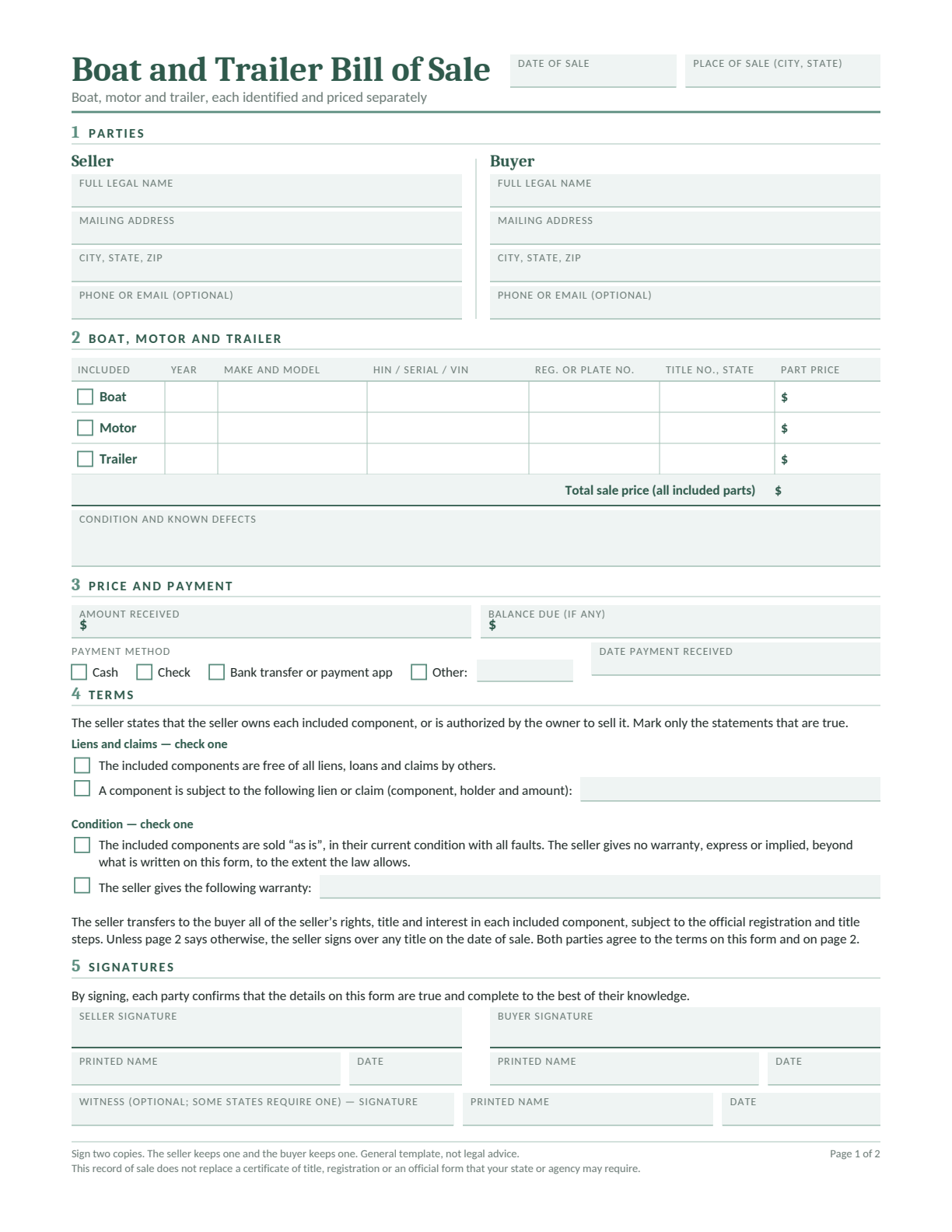
Choose the boat-only form for a vessel sale, or the combined form when an outboard motor and trailer are included. Record each item’s identifier and price so the boat application and trailer paperwork can be prepared separately.
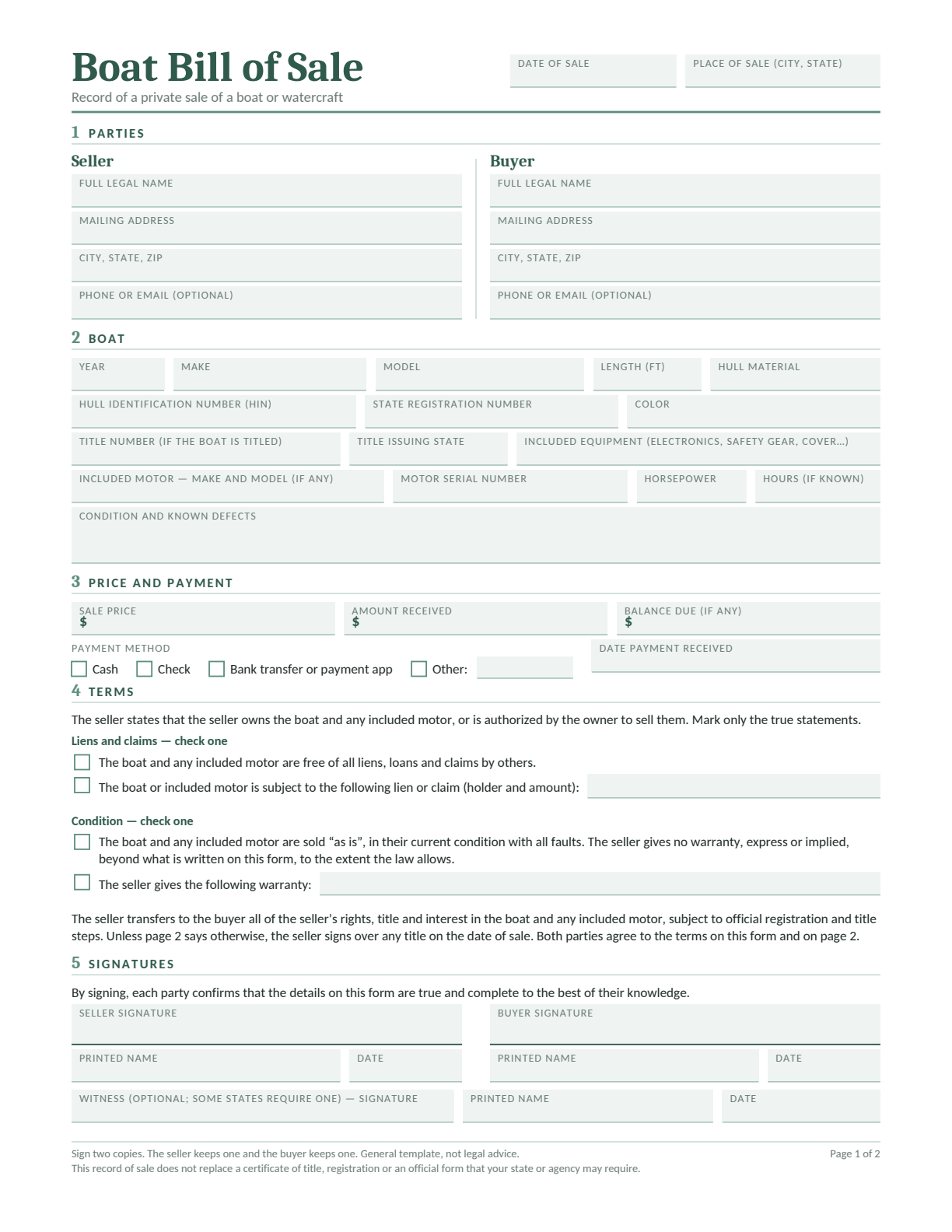
Boat Bill of Sale
Record the boat, included equipment, condition, price and payment.
Vermont DMV handles motorboat registration and vessel titles. For a previously titled boat, obtain the assigned original title with liens released. For one that has never been titled, collect the last registration and the bills of sale connecting that owner to you; the boat application instructions describe the supporting records.
Vessel title exemptions differ from vehicle exemptions. Under 23 V.S.A. § 3807, boats under 16 feet and vessels more than 15 years old are among the exempt categories. A title exemption does not by itself remove a motorboat’s registration requirement.
The seller must notify DMV within 15 days of transferring an interest in a Vermont-numbered motorboat. The sale generally ends the existing registration certificate, so the buyer should arrange their own registration before operating. See the motorboat registration law.
Vermont Trailer Bill of Sale
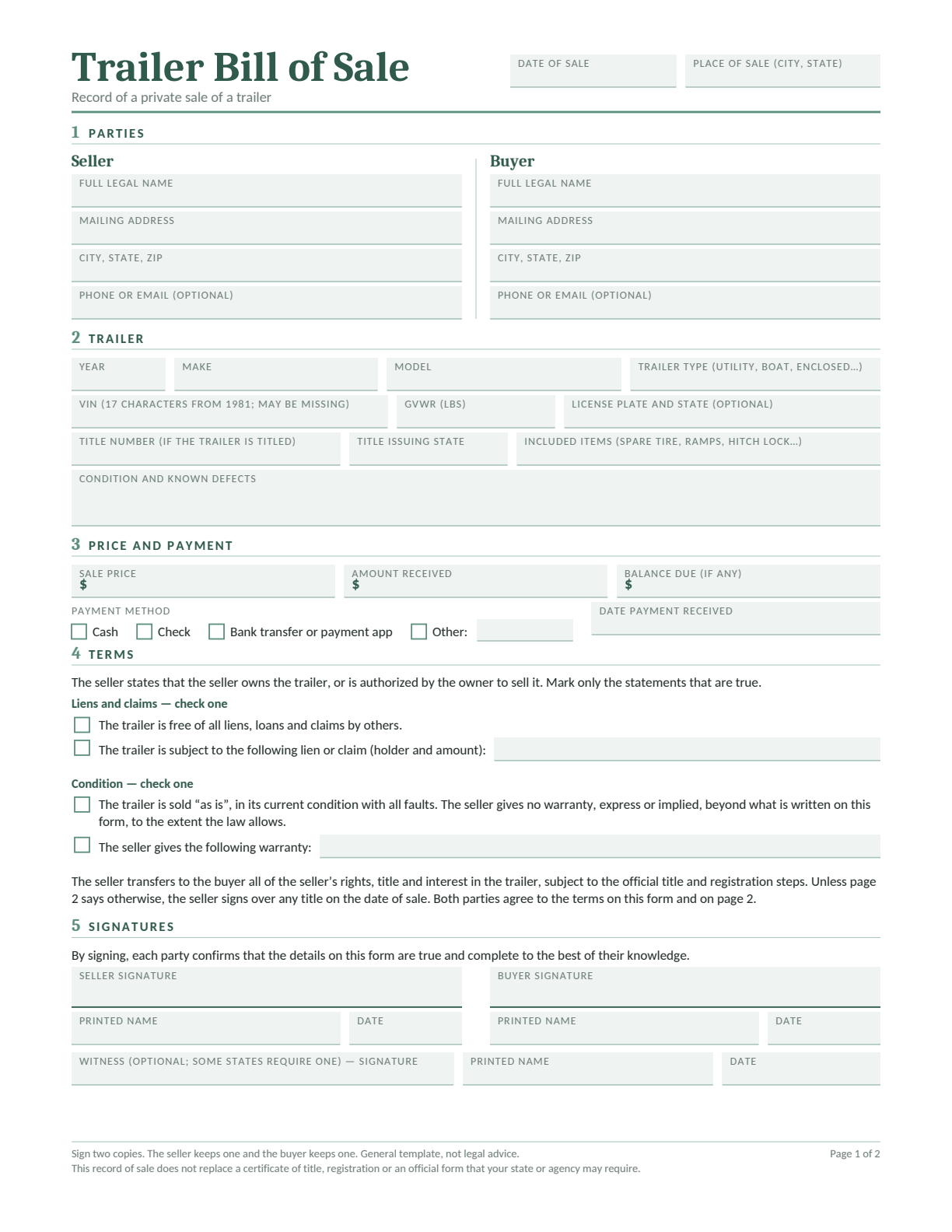
Record the trailer’s own VIN, manufacturer, year and unladen weight, even when it is sold with a boat. Unladen weight matters because Vermont’s trailer title threshold does not use the weight of the loaded boat and trailer together.
Trailer Bill of Sale
Describe the trailer and included equipment, then record the price, payment and any remaining balance. Use page 2 for extra terms, such as collection arrangements.
Edit in Word or Google Docs, type into the fillable PDF, or print a blank copy. Complete both pages and keep them with the ownership papers.
A trailer with an unladen weight of 1,500 pounds or less is exempt from a Vermont certificate of title under the title statute. That exemption concerns the title; complete the applicable registration process before towing on public roads.
For a heavier or previously titled trailer, obtain the assigned title and supporting sale records. If the trailer is homemade or its identification number cannot be verified, resolve DMV’s identification and ownership requirements before paying on the assumption that a receipt will be enough.
Completed Vermont Bill of Sale Example
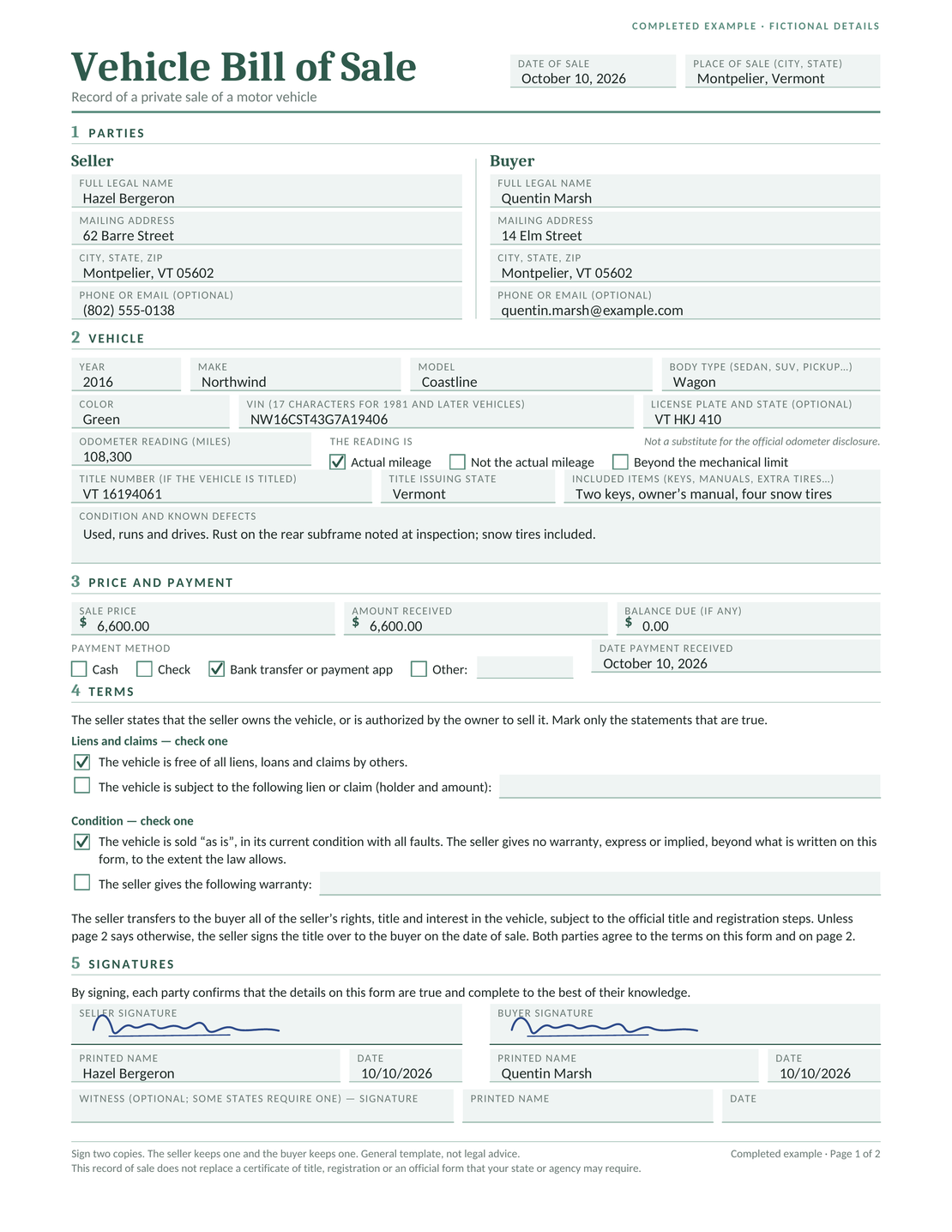
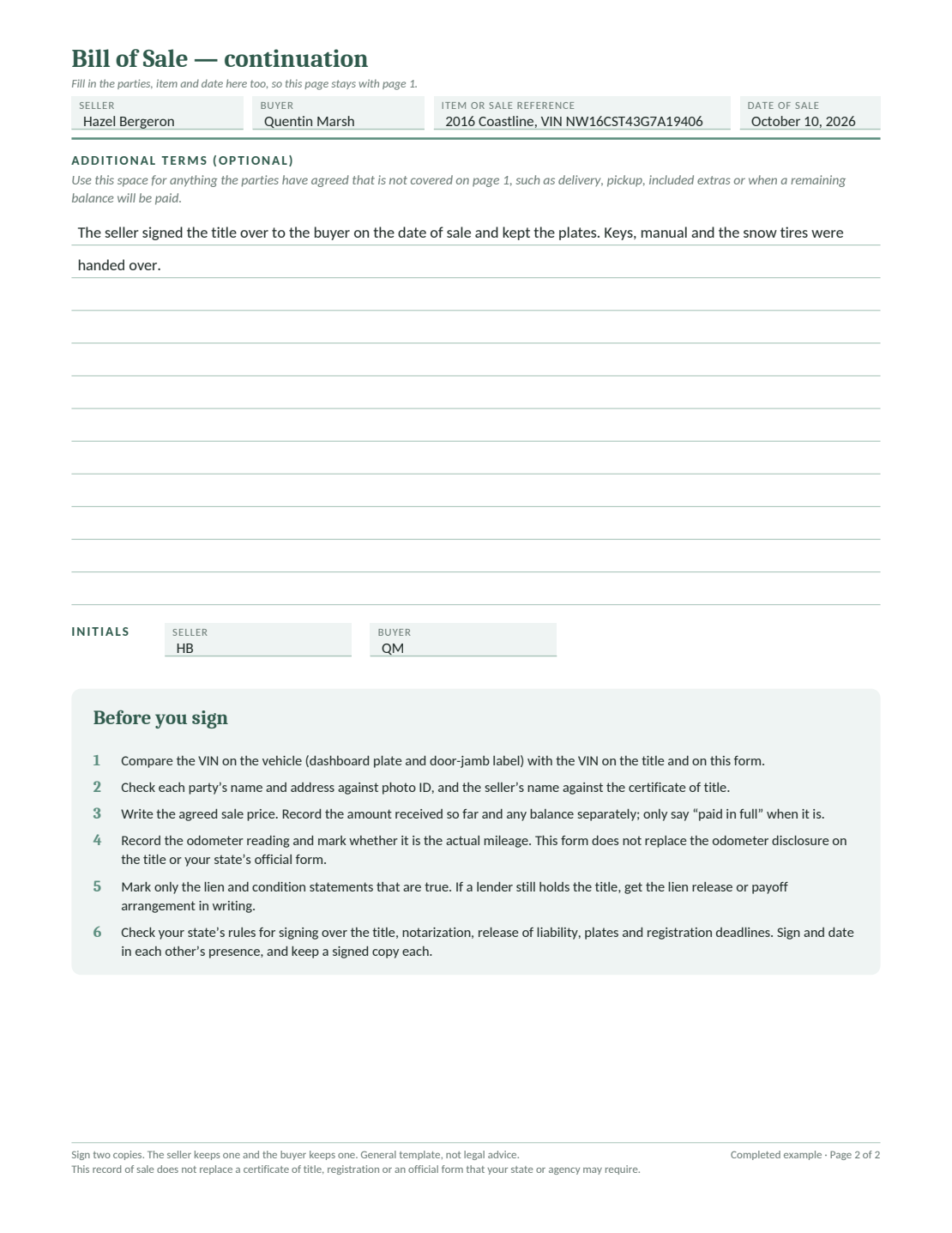
In this fictional sale in Montpelier, Vermont, Quentin Marsh buys a 2016 Northwind Coastline from Hazel Bergeron for $6,600.00. The seller records the full $6,600.00 received, leaving a $0.00 balance.
The condition notes disclose rust on the rear subframe noted at inspection and include a set of snow tires in the deal. Hazel hands over the signed title, keys, manual and snow tires while retaining the plates.
The names, identifiers and signatures are fictional. This completed sale record does not show that a title application, registration or seller notice has been accepted by the relevant agency.
Page 1: Parties, vehicle, payment and signatures
Page 2: Agreed handover terms and signing checklist
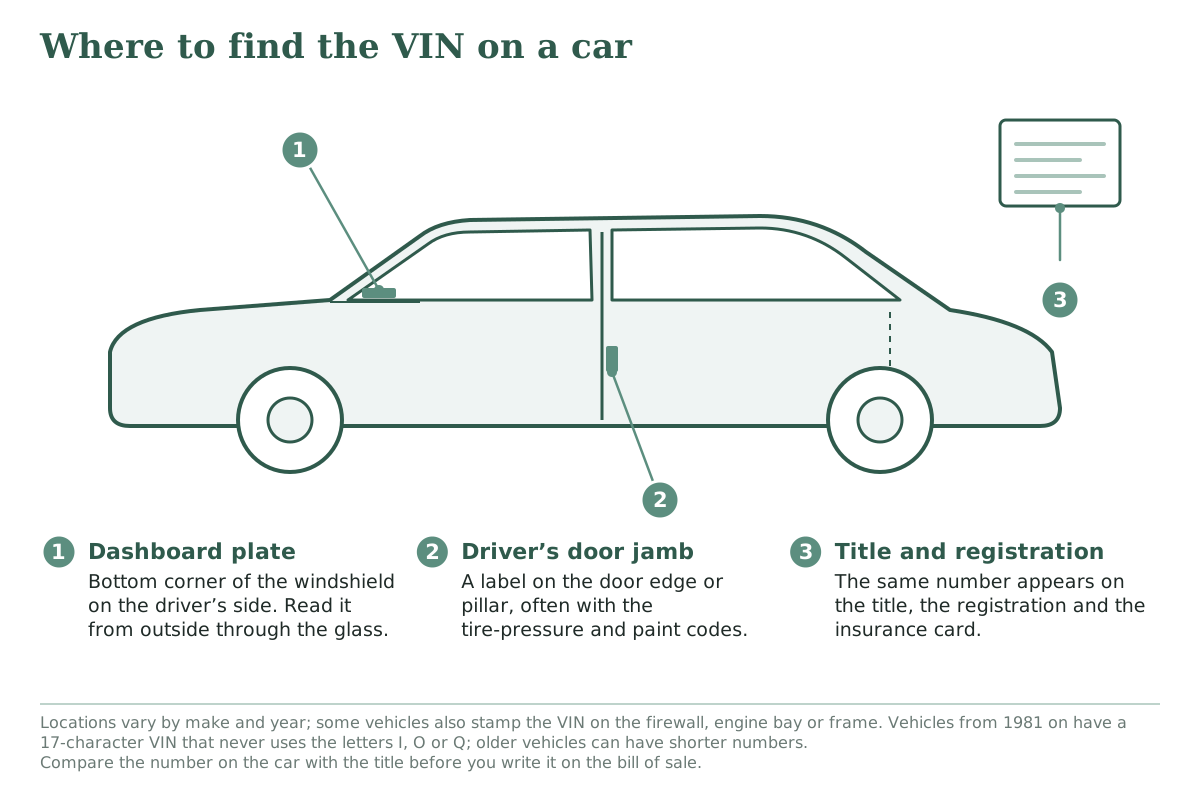
Compare the identifying number on the property with the ownership papers before copying it into your sale record.
Look through the windshield at the driver-side dashboard. Also check the label inside the driver’s door opening. Locations vary, so consult the vehicle’s manual if needed.
Resolve a missing or mismatched number with the agency handling the transfer. Do not guess from an unclear label.
Compare the seller’s name with the ownership record and check every required owner’s signature.
Match the VIN or HIN on the property to the title, registration and sale record.
Record the agreed price, money actually received and any remaining balance separately.
Describe known defects and the equipment included in the price.
Confirm the ownership papers and transport arrangements before handover.
VT-005 has no notary block. Both parties should complete its applicable signature fields, including the separate odometer disclosure when required. An out-of-state title may have its own acknowledgment instructions.
Keep the Sale Record with the Transfer Papers
Give each party a signed copy of both pages. Keep payment evidence, lien releases and copies of the ownership papers with it. If pickup or a final payment happens later, add a dated receipt or acknowledgment that refers to the same vehicle or vessel.
Keep the agency’s receipt when you submit a title application or seller report. Signing a private form and submitting official paperwork are separate actions.
Those records may establish ownership for a vehicle that was lawfully registered without a title. Obtain the prior registration and a complete chain of sale records, then check the buyer’s title application requirements. The older-vehicle exemption depends on ownership history, not age alone.
No. When a formal odometer disclosure is required, complete the accepted title disclosure or the separate disclosure section on VT-005. The general template’s mileage entry is a useful record but is not that certification.
VT-005 has seller and buyer signature fields but no notary certificate. Follow any separate requirements printed on an out-of-state ownership document.
A vessel more than 15 years old is exempt from Vermont’s vessel title requirement. Motorboat registration is a separate requirement, so age alone does not remove the need to register.
No. The title exemption uses the trailer’s unladen weight. Record the trailer itself rather than the combined weight of a boat, cargo and trailer.
After 14 days, continue for
$12.99/month
only if you choose to upgrade.
We use cookies to provide you with the best possible experience. Cookies also help us analyze user behaviour so we can continue to improve our website. View our cookie policy.