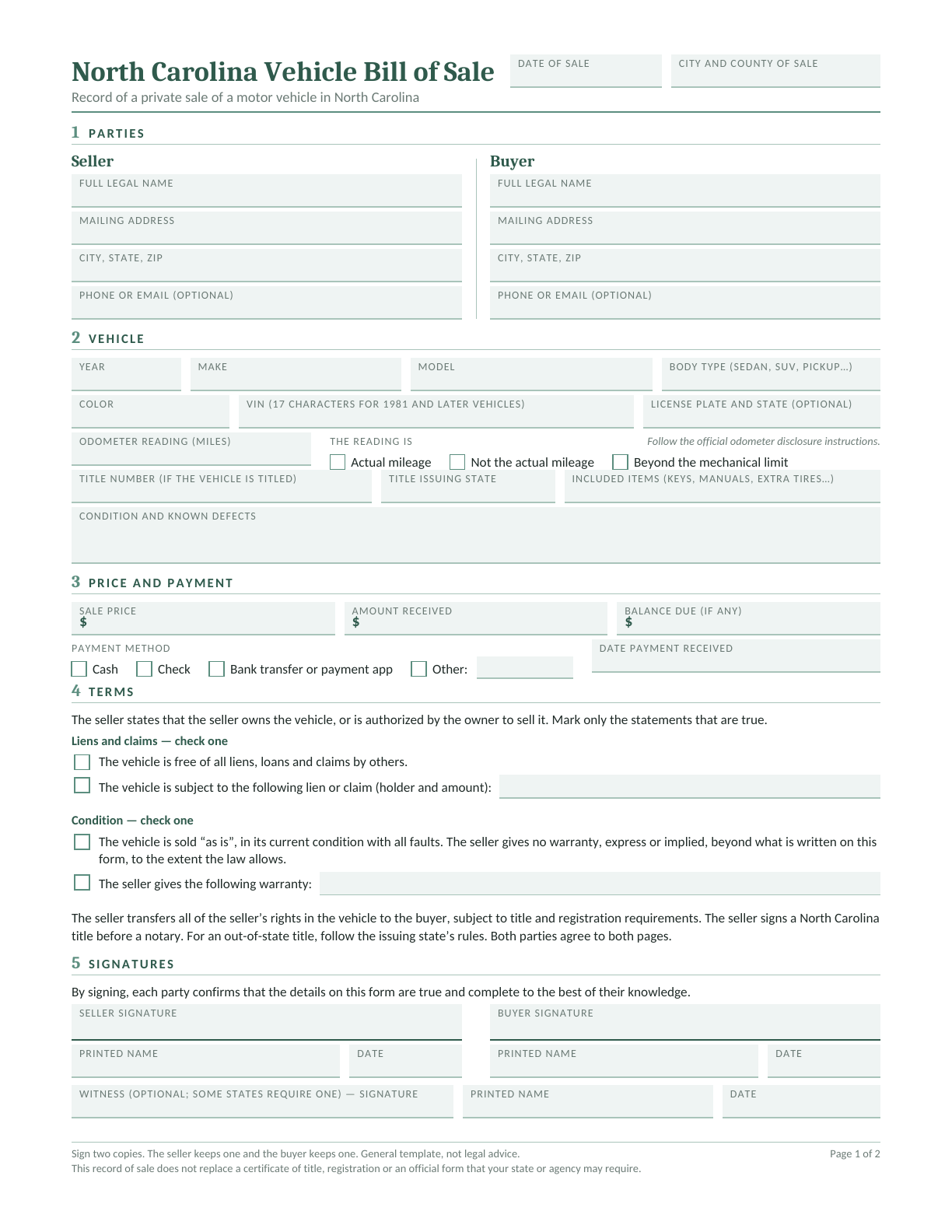
The North Carolina vehicle template records the VIN, mileage, payment and agreed condition, with space for extra terms and a notary acknowledgment. The acknowledgment on this sale record does not replace notarization of the title assignment or MVR-1 application.
Edit in Word or Google Docs, type into the fillable PDF, or print the blank PDF to complete by hand.
In Google Docs, sign in and choose Make a copy. Use page 2 for extra terms, then keep both pages together.
A North Carolina bill of sale records what the buyer and seller agreed, including the price, payment, condition and delivery. It helps explain the transaction if either person needs to check it later.
For an ordinary private vehicle transfer, NCDMV’s required-document list centers on the assigned title, title application and disclosures. The general sale record supplements those papers. The boat agency has a different rule for a non-titled vessel bought from an individual.
Arrange the Notarized Title Assignment
For a North Carolina title, the seller’s assignment must be notarized. Complete the buyer’s name and address, sale date and required disclosures. The buyer’s MVR-1 title application also requires notarization; use NCDMV’s title instructions for all required owner signatures.
Complete the applicable odometer and damage disclosures, including MVR-180 and MVR-181 where required. Do not assume that writing mileage or known defects on the sale agreement replaces those documents.
Seller: Return or Transfer Your Plate
Give the buyer the properly assigned title and any lien release. Remove your plate and keep copies of the sale and transfer documents.
Follow NCDMV’s plate instructions to transfer or surrender it. Return a plate that will not be transferred before canceling liability insurance.
Prepare accepted identification and North Carolina insurance evidence for registration. Check the inspection status if transferring an existing plate to the vehicle.
Keep the Notary Steps Attached to the Correct Document
A notary acknowledgment on a bill of sale does not cure an unnotarized North Carolina title assignment. Bring the actual title and application, along with identification, when arranging the signing. Leave official notary entries and seals for the notary.
North Carolina Boat Bill of Sale Templates
The North Carolina Wildlife Resources Commission handles boats. Choose the hull-only or bundle template and identify the motor and trailer separately when they are included in the price.
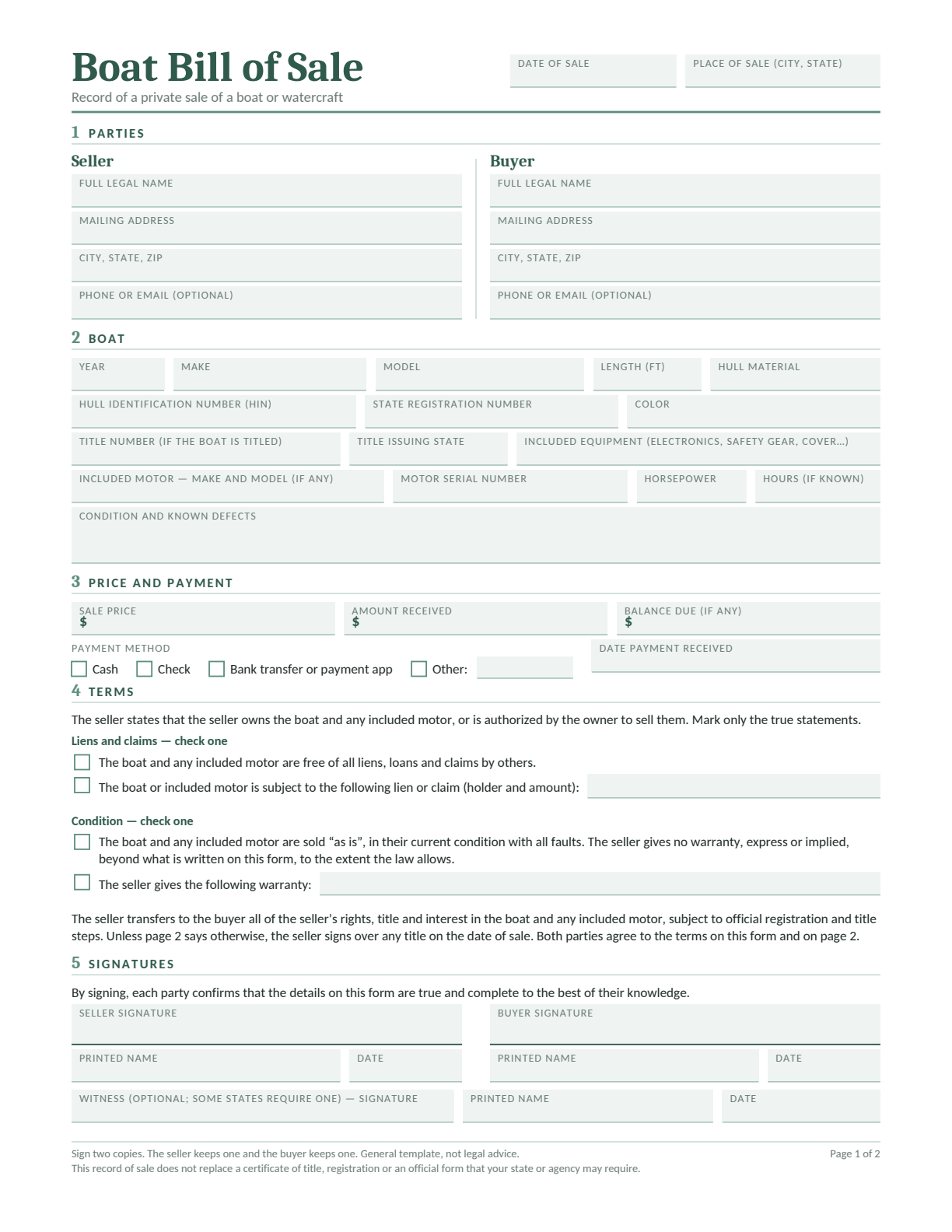
Boat Bill of Sale
Record the boat, included equipment, condition, price and payment.
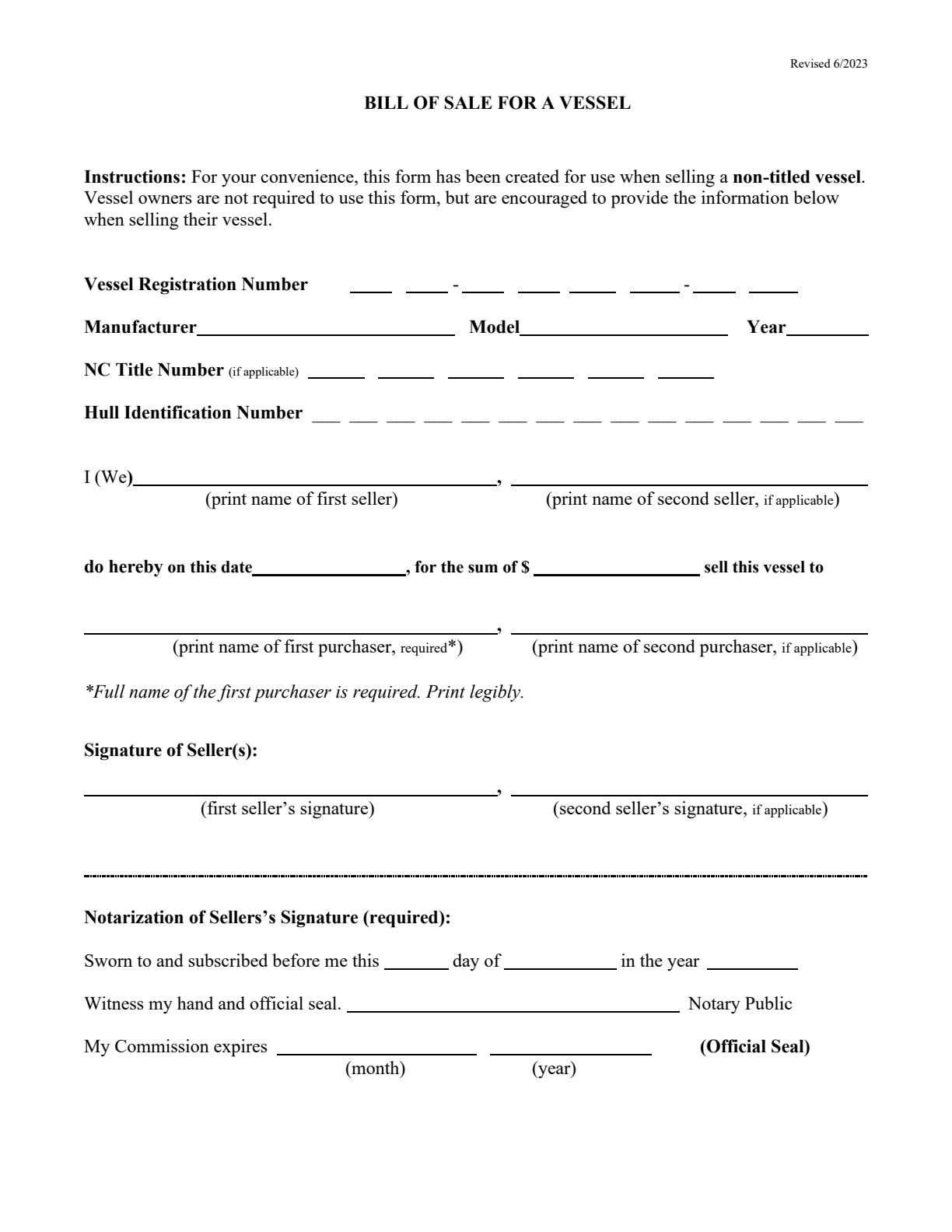
NC Wildlife provides this optional form for selling a non-titled vessel. The form itself is optional, but the seller’s signature must be notarized when a private-sale bill of sale is used as the required ownership proof.
What to Fill In
Vessel: Enter the registration number, manufacturer, model year and HIN, plus a title number if applicable.
Sale: Print the seller and purchaser names and enter the sale date and price.
Seller signatures: Arrange notarization of the required seller signatures.
Notary: Leave the certificate, commission details and seal for the notary to complete.
A titled vessel normally transfers with its original properly assigned title. Use the agency’s instructions for that route.
Preview of the official form. Rev. 6/2023. Open its PDF for the complete form and instructions.
Choose the Titled or Non-Titled Boat Route
For a titled vessel bought from an individual, supply the original title with the seller’s assignment properly completed and notarized as required. For a non-titled vessel bought privately, NC Wildlife requires a notarized bill of sale. A handwritten record can work if it contains the required information.
Every new or transfer application needs the completed and signed VL-1 application. Vessels at least 14 feet long, personal watercraft and vessels with a lien fall within the title requirements. Motorized operation also brings registration requirements, including an electric trolling motor.
The hull’s number identifies the vessel; the outboard serial number identifies the included motor. A trailer title belongs in a separate NCDMV transfer, even when all items are listed in one sale agreement.
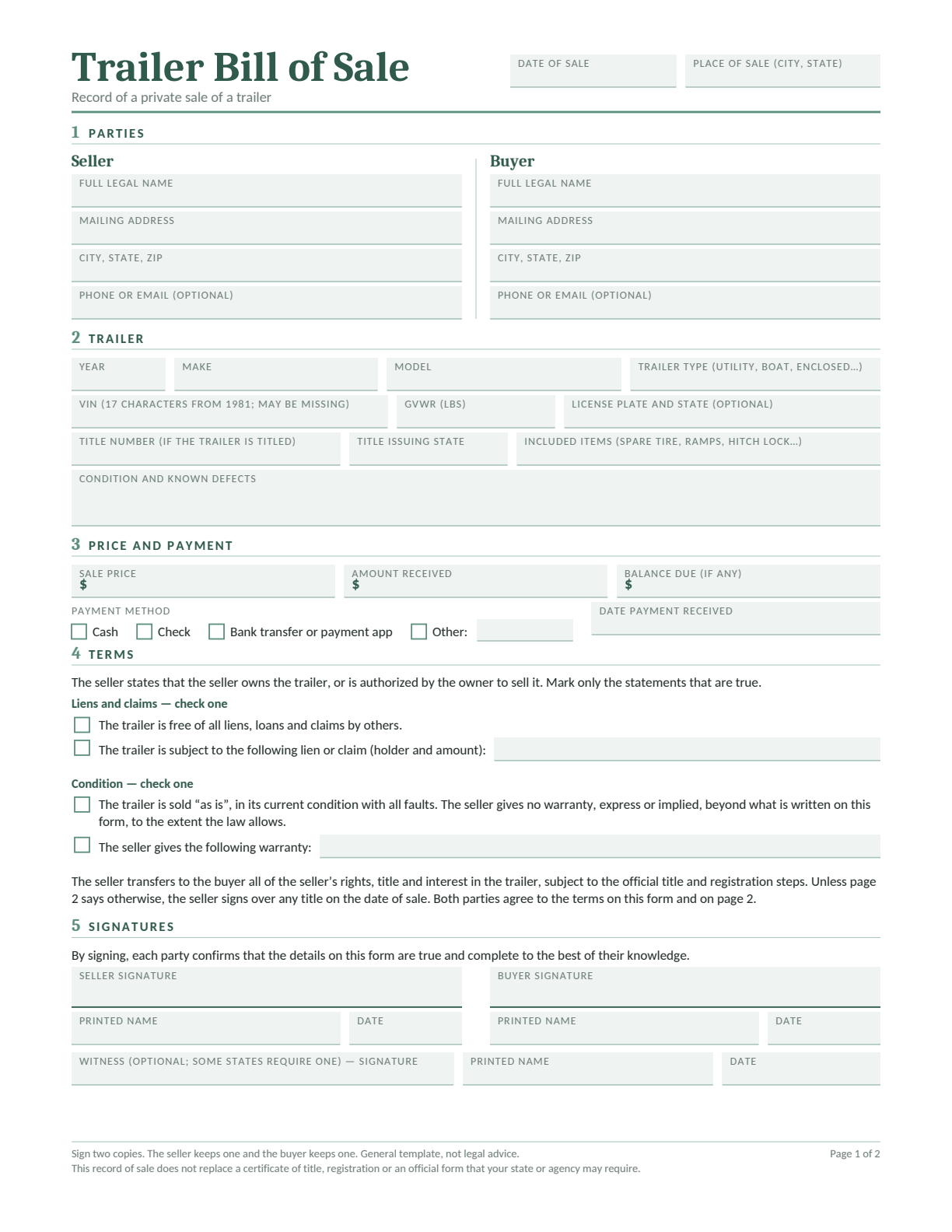
North Carolina Trailer Bill of Sale
North Carolina generally titles and registers a trailer in a similar way to a car. The boat’s Wildlife registration does not cover a road trailer.
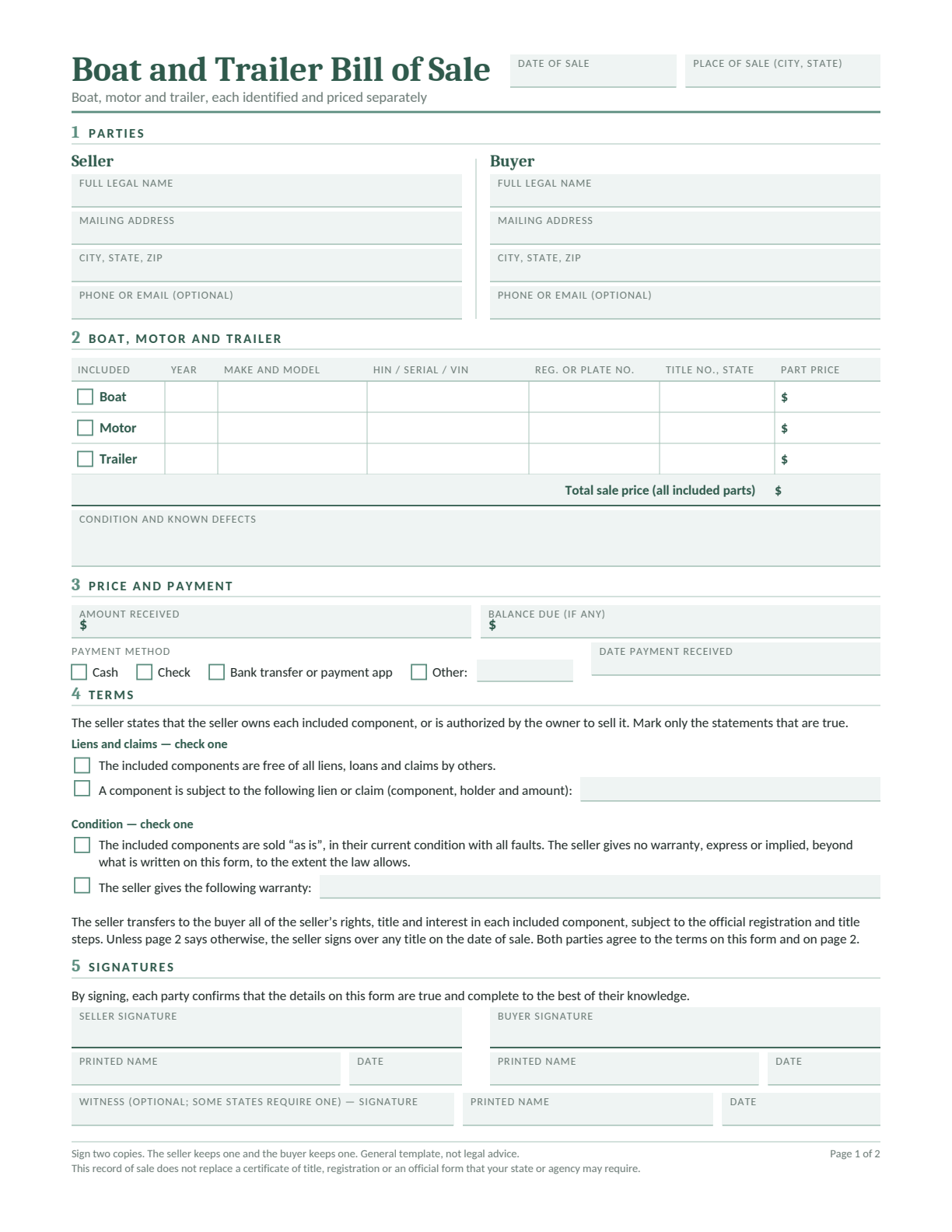
Trailer Bill of Sale
Describe the trailer and included equipment, then record the price, payment and any remaining balance. Use page 2 for extra terms, such as collection arrangements.
Edit in Word or Google Docs, type into the fillable PDF, or print a blank copy. Complete both pages and keep them with the ownership papers.
Follow NCDMV’s trailer instructions for the ordinary title and registration process. A trailer arriving from a state that does not title trailers may need review through the Highway Patrol’s Investigative Services Unit.
The ISU also examines homemade trailers in appropriate cases. Keep original ownership papers and parts receipts and obtain the agency’s directions for identification. Do not make up a VIN or treat a general sale record as approval of a homemade trailer.
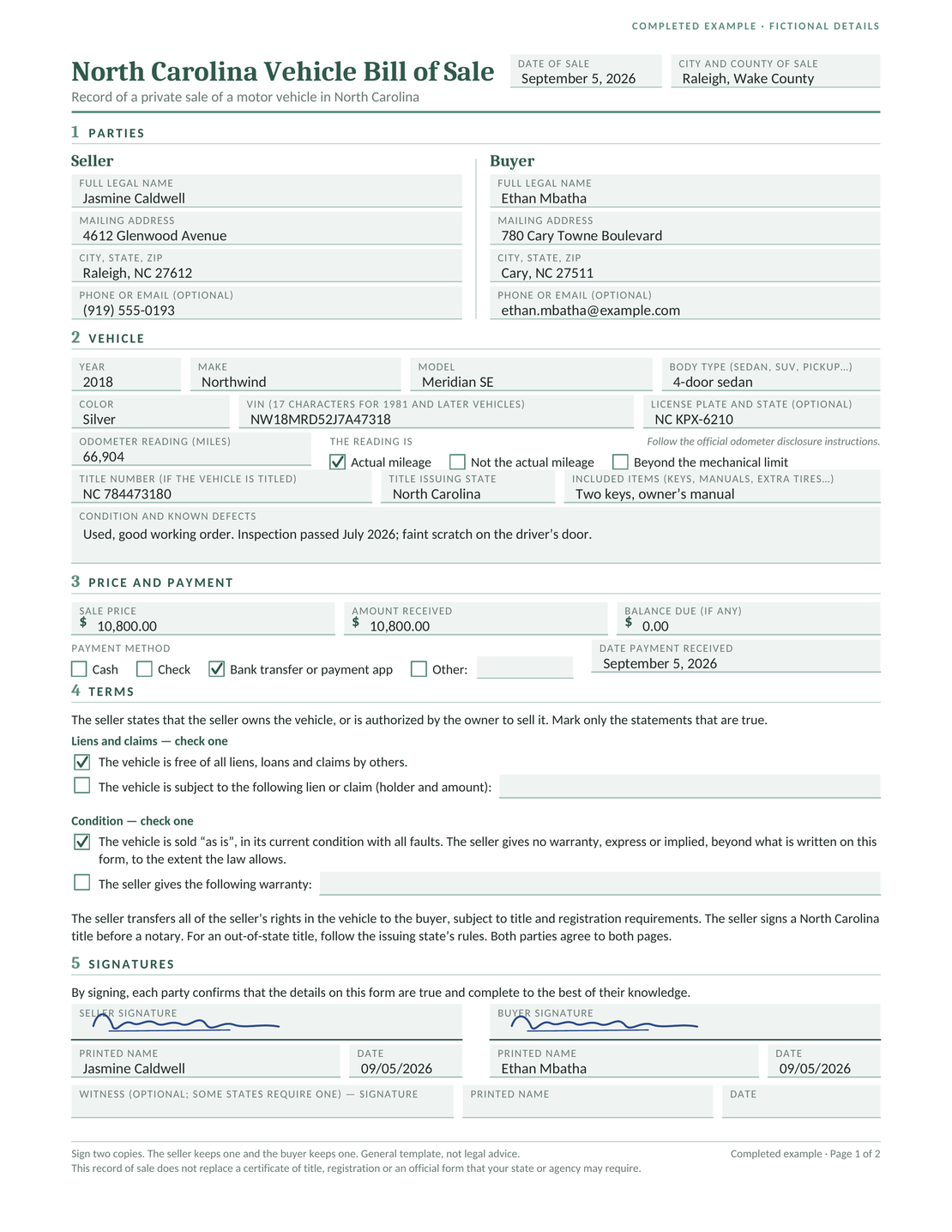
Completed North Carolina Bill of Sale Example
Jasmine sells Ethan a silver 2018 Northwind Meridian SE in Raleigh for $10,800. The fictional example records 66,904 miles, full payment and no balance. It notes a faint scratch on the driver’s door and a July 2026 inspection.
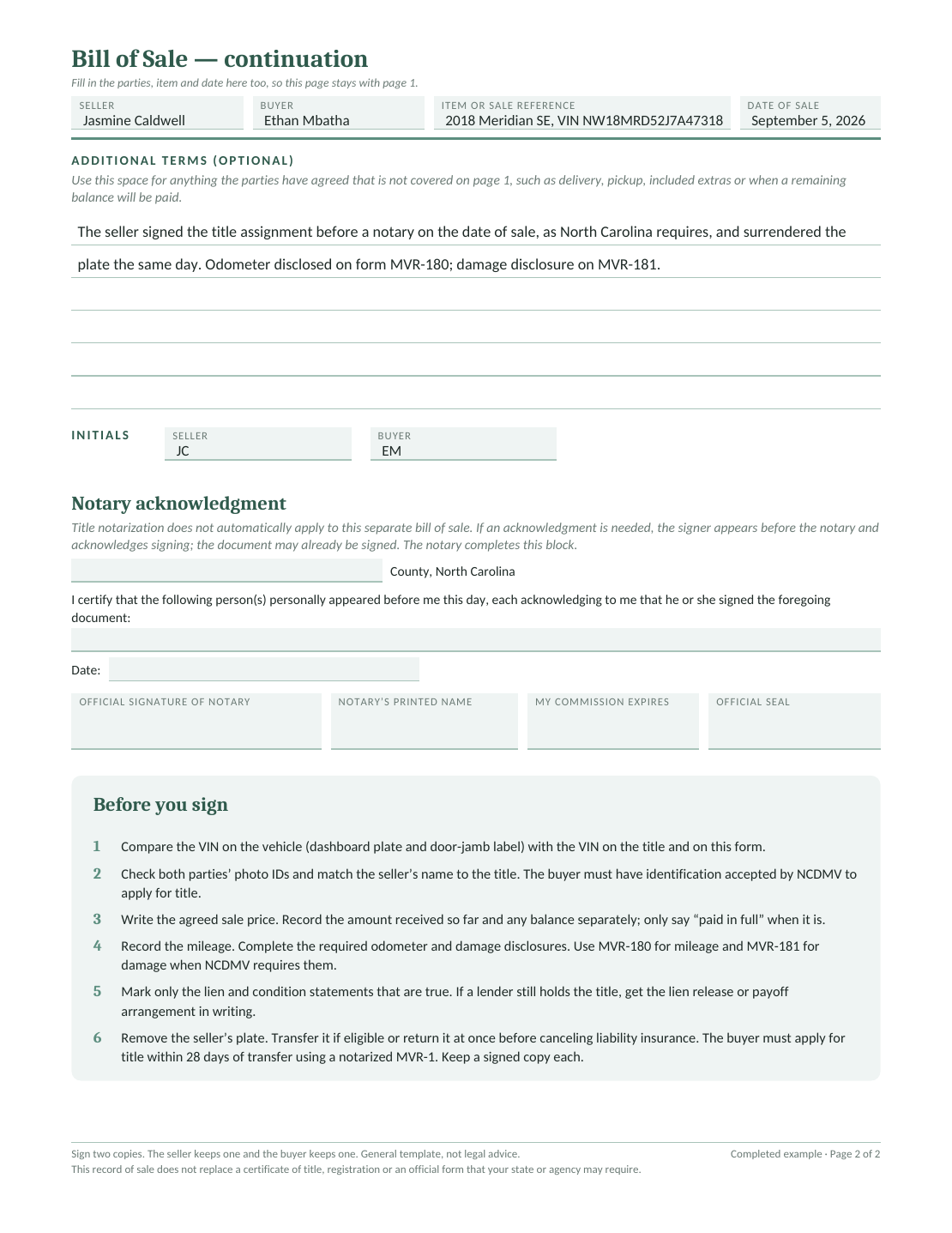
Page 2 says Jasmine signed the title assignment before a notary and surrendered the plate. It also records odometer disclosure on MVR-180 and damage disclosure on MVR-181.
The sale record’s own notary acknowledgment remains blank. It is not a completed notarized instrument, and the written description does not prove that any official title or registration filing occurred.
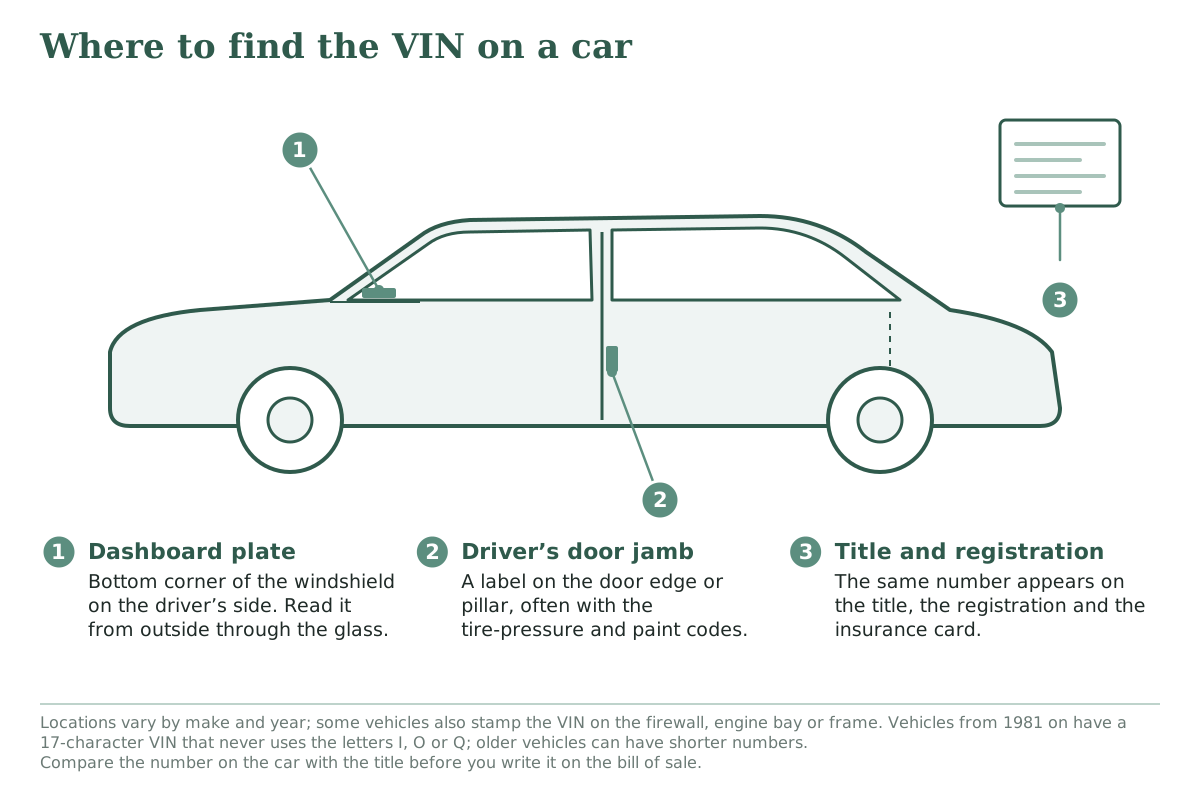
Compare the identifying number on the property with the ownership papers before copying it into your sale record.
Look through the windshield at the driver-side dashboard. Also check the label inside the driver’s door opening. Locations vary, so consult the vehicle’s manual if needed.
Resolve a missing or mismatched number with the agency handling the transfer. Do not guess from an unclear label.
Arrange notarization of the North Carolina title assignment.
Prepare the separate notarized MVR-1 application.
Complete required odometer and damage disclosures.
Plan the seller’s plate return or transfer and the buyer’s registration.
For a non-titled private boat sale, the seller’s bill-of-sale signature needs notarization. Use the official vessel form or another record meeting NC Wildlife’s requirements.
Keep the Sale Record with the Transfer Papers
Keep both pages of the signed sale record together with copies of the ownership papers and proof of payment. If a balance remains, record the later payment separately and keep it with the original agreement.
Save confirmations for any sale report, title application or registration request. A promise in the bill of sale describes what the parties agreed; the responsible person still needs to complete that action.
Its private-transfer list uses the title, MVR-1 and disclosures. The listed bill of sale is associated with dealer purchases. A private sale record is still useful for payment and condition terms.
The North Carolina title assignment and MVR-1 application need it. Notarizing the general bill of sale does not replace either step.
Within 28 days after transfer under G.S. 20-73. This is the application deadline, not a promise that the new title will arrive within 28 days.
Yes, if it contains the agency’s required vessel and party information and the seller’s signature is notarized. Using the official vessel form helps keep those entries together.
No. NC Wildlife handles the vessel; the trailer goes through NCDMV, with additional review possible for a homemade or previously untitled trailer.
After 14 days, continue for
$12.99/month
only if you choose to upgrade.
We use cookies to provide you with the best possible experience. Cookies also help us analyze user behaviour so we can continue to improve our website. View our cookie policy.