Use Florida Form HSMV 82050 to record a sale or prepare the seller’s notice of sale. Follow its signature instructions and complete the separate title or registration steps.
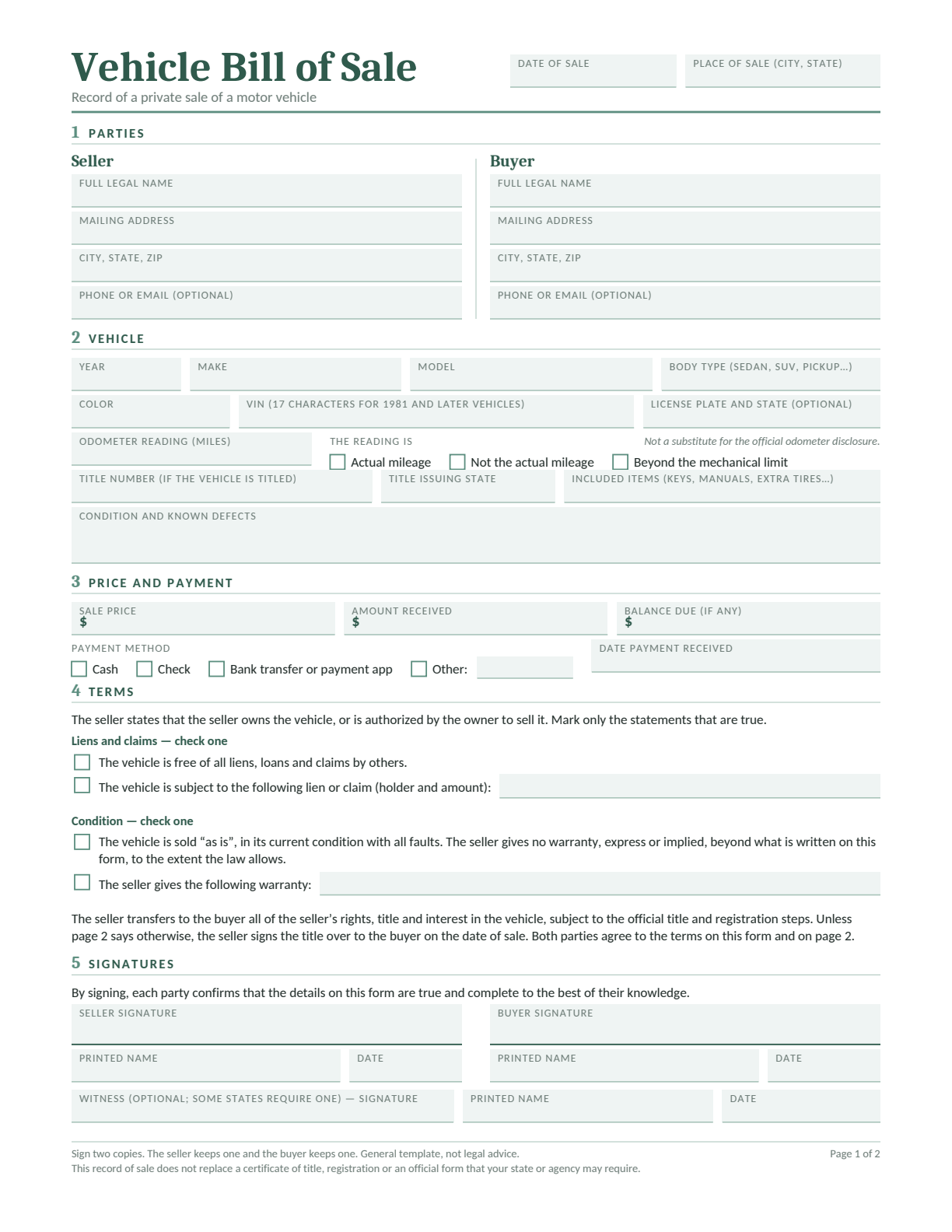
You can also use a Docelf template to record the item’s condition, payment and extra terms. Choose a car, boat or trailer template in Word, Google Docs or PDF.
Document the sale and agreed terms. Give both seller and buyer a signed copy.
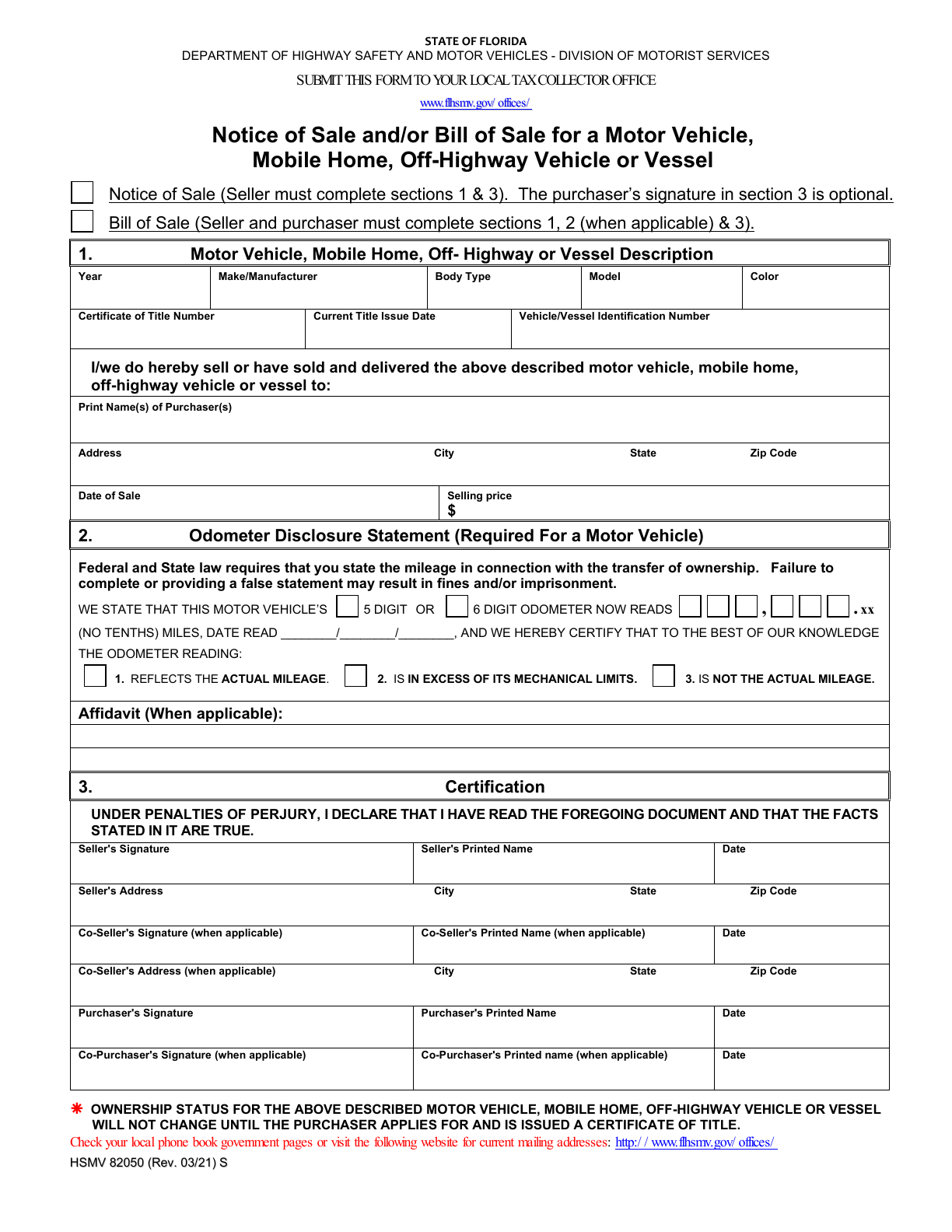
Official Florida Form HSMV 82050
HSMV 82050 is Florida’s Notice of Sale and/or Bill of Sale form. Choose the purpose at the top before filling in the numbered sections.
Notice of Sale
The seller completes sections 1 and 3. The buyer’s signature is optional for this purpose. Submit the notice as instructed by the receiving tax collector or license plate agent.
Bill of Sale
Seller and buyer complete sections 1, 2 when applicable, and 3. Keep a signed copy each. This records the sale; it does not complete the buyer’s title application.
How to Fill In HSMV 82050
The form has three numbered sections. Use the ownership documents and check the identifying number against the vehicle, boat or trailer.
Description and sale: Enter the identifying details, buyer’s name and address, sale date and price.
Odometer disclosure: Complete the mileage information when applicable. Follow the official title-transfer instructions too.
Certification: Read the statement, then complete the signatures, printed names, addresses and dates required for your selected purpose.
Signing a notice does not submit it. Check where and how your receiving office accepts it, and keep proof of submission.
Choose a template for what you’re selling. These general Docelf templates give you space for the sale details, payment, condition and extra terms. Use them with the official paperwork your transfer requires.
A bill of sale identifies the seller, buyer and property and records the date, price and agreed terms. Payment details show what the seller has actually received and whether the buyer still owes anything.
This page covers ordinary private vehicle, boat and utility-trailer sales. For household goods or equipment, use the general bill of sale templates. Gifts, estates, dealer sales and unusual ownership situations need their own transfer instructions.
Florida Vehicle Title and Seller-Notice Steps
For a vehicle already titled in Florida, complete the title’s transfer section with the buyer, sale date, price and required odometer information. A separate bill of sale does not replace the title assignment.
Remove your license plate before handover. Follow the tax collector’s instructions to transfer or surrender it.
Buyer: Apply for Title
Apply for title within 30 days after delivery. Bring the assigned title, application and required supporting documents.
That deadline is not permission to drive without valid registration. Arrange the required registration, insurance and plates before road use.
Paper and Electronic Titles
A paper title must be properly completed and handed over. With an electronic title, the seller can request a paper title, or seller and buyer can arrange reassignment together at the tax collector’s office.
See Orange County’s vehicle transfer instructions for both options, then confirm the process with your receiving office. Resolve a missing title before treating the transfer papers as complete.
Florida Boat Bill of Sale Templates
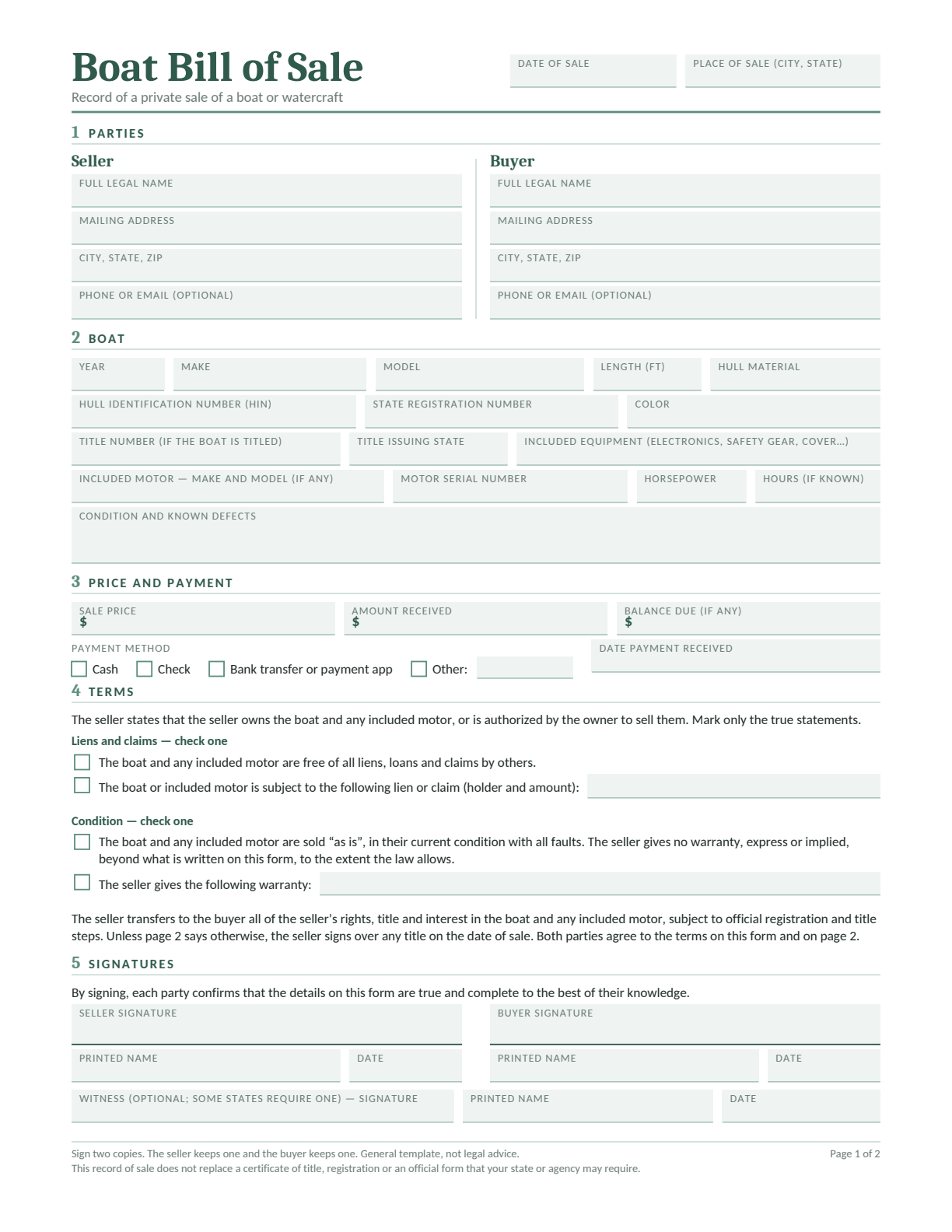
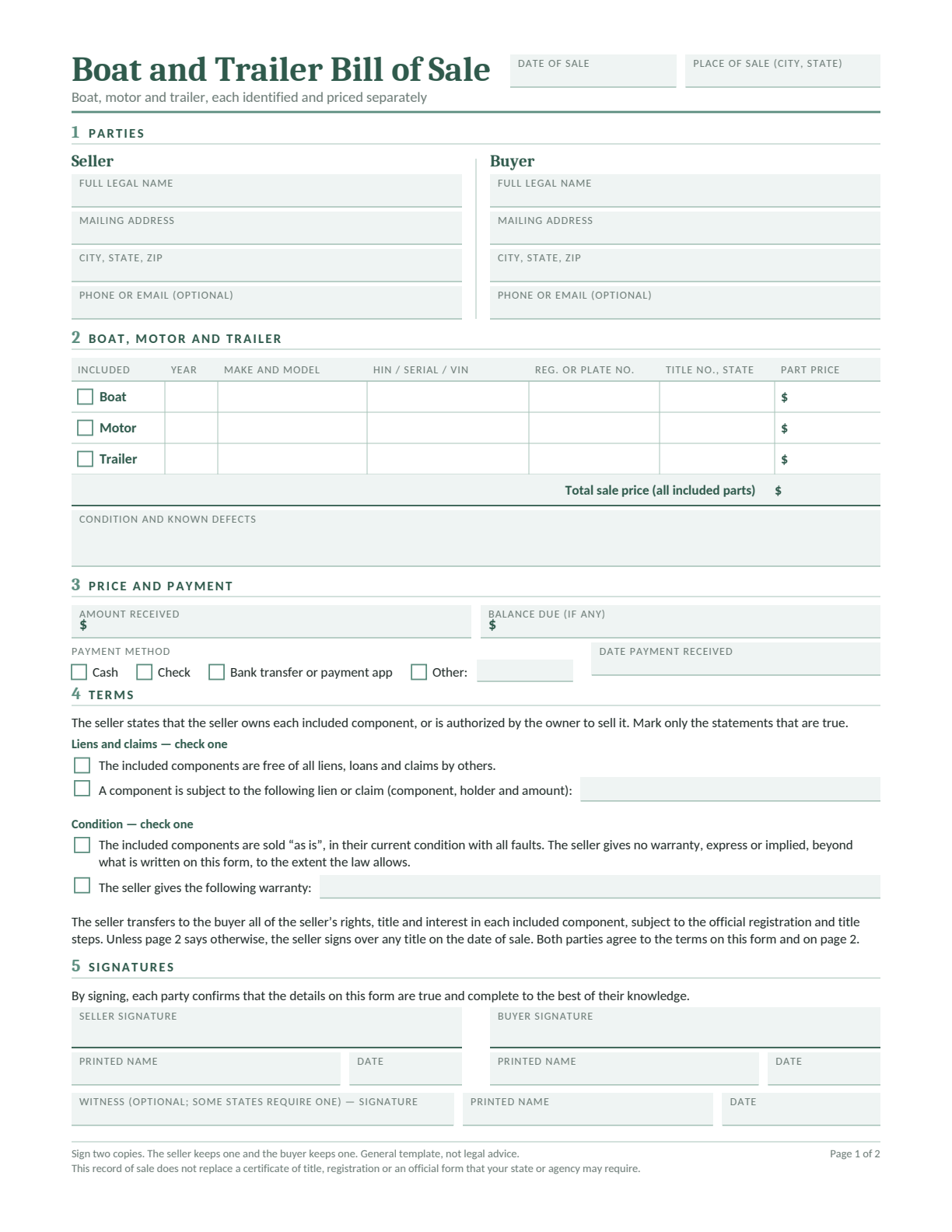
Both templates have two pages and are available in Word, Google Docs, blank PDF and fillable PDF. Keep the boat, motor and trailer clearly identified in a package sale; the trailer has its own road-registration paperwork.
Boat Bill of Sale
For a boat sale. Record its identifying details, condition, included equipment, price and payment.
For temporary operation during the initial registration period, the bill of sale carried aboard must include the details required by section 328.46:
The vessel’s make, length, propulsion and hull identification number.
A statement that Florida is the state of principal use.
The buyer’s name, address with ZIP code and signature, and the seller’s name and signature.
The sale date and a notice that temporary operating authority expires 30 days after that date.
HSMV 82050 and the general Docelf templates do not provide dedicated spaces for every one of these details. Confirm how to include them with your tax collector before relying on a sale record for temporary operation.
Florida Trailers: Check the Empty Weight
For an ordinary utility or boat trailer, Florida’s title threshold uses net or empty weight: the trailer without its load.
Under 2,000 pounds empty: registration is required for road use, but no Florida title is issued.
2,000 pounds or more empty: title and registration are required.
Gross vehicle weight rating (GVWR) is the trailer’s rated maximum loaded weight. It is different from the empty weight used for Florida’s title threshold.
Keep the trailer’s identifying number and previous registration details with your sale record. The document list can differ for a Florida-registered, out-of-state, new or homemade trailer. Check the Hillsborough trailer checklist or Sarasota trailer checklist, then confirm the requirements with your receiving county.
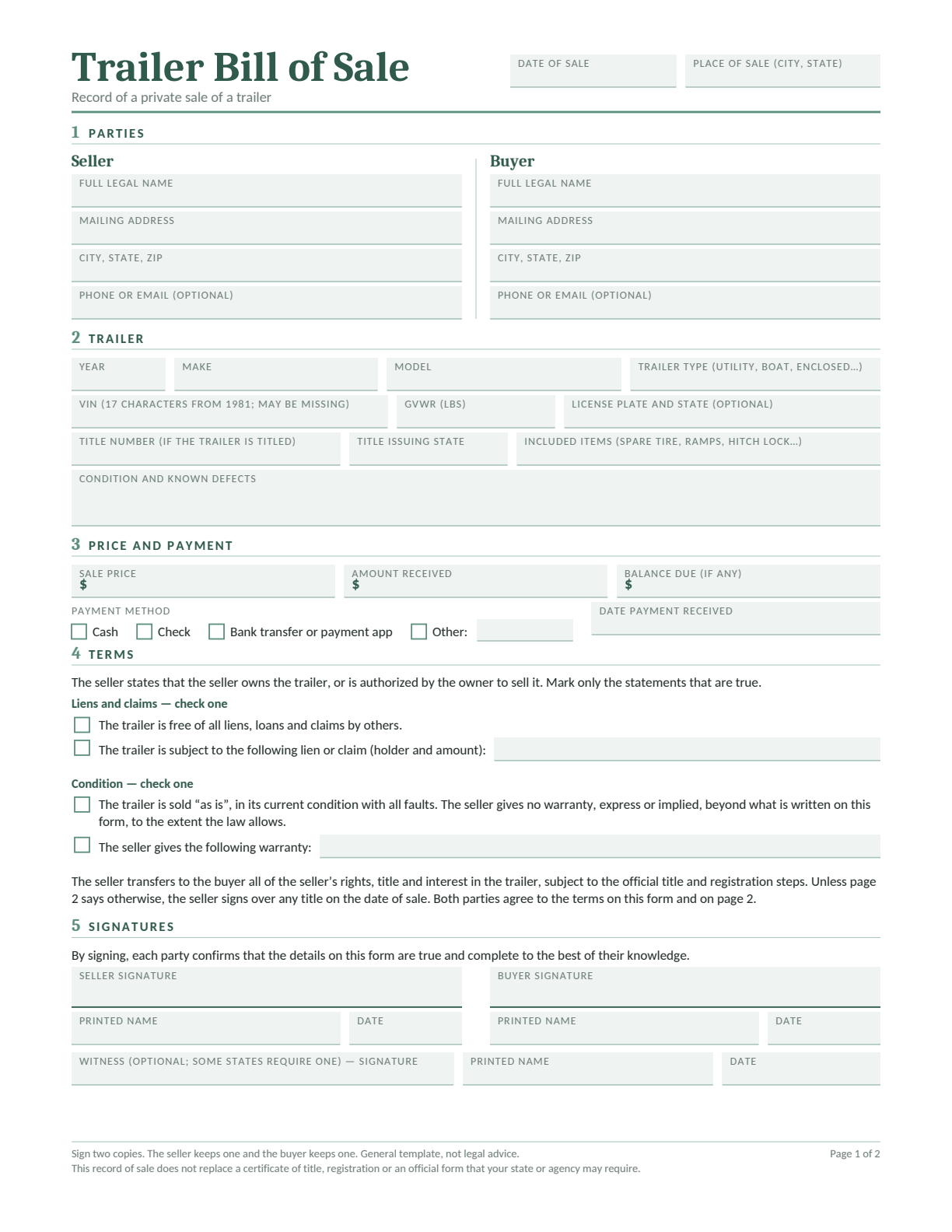
Trailer Bill of Sale
Record the trailer’s year, make, VIN, condition and payment. The form has a GVWR field; record the empty weight separately in the description or extra terms.
Edit in Word or Google Docs, type into the fillable PDF, or print a blank copy. Complete both pages and keep them with the ownership papers.
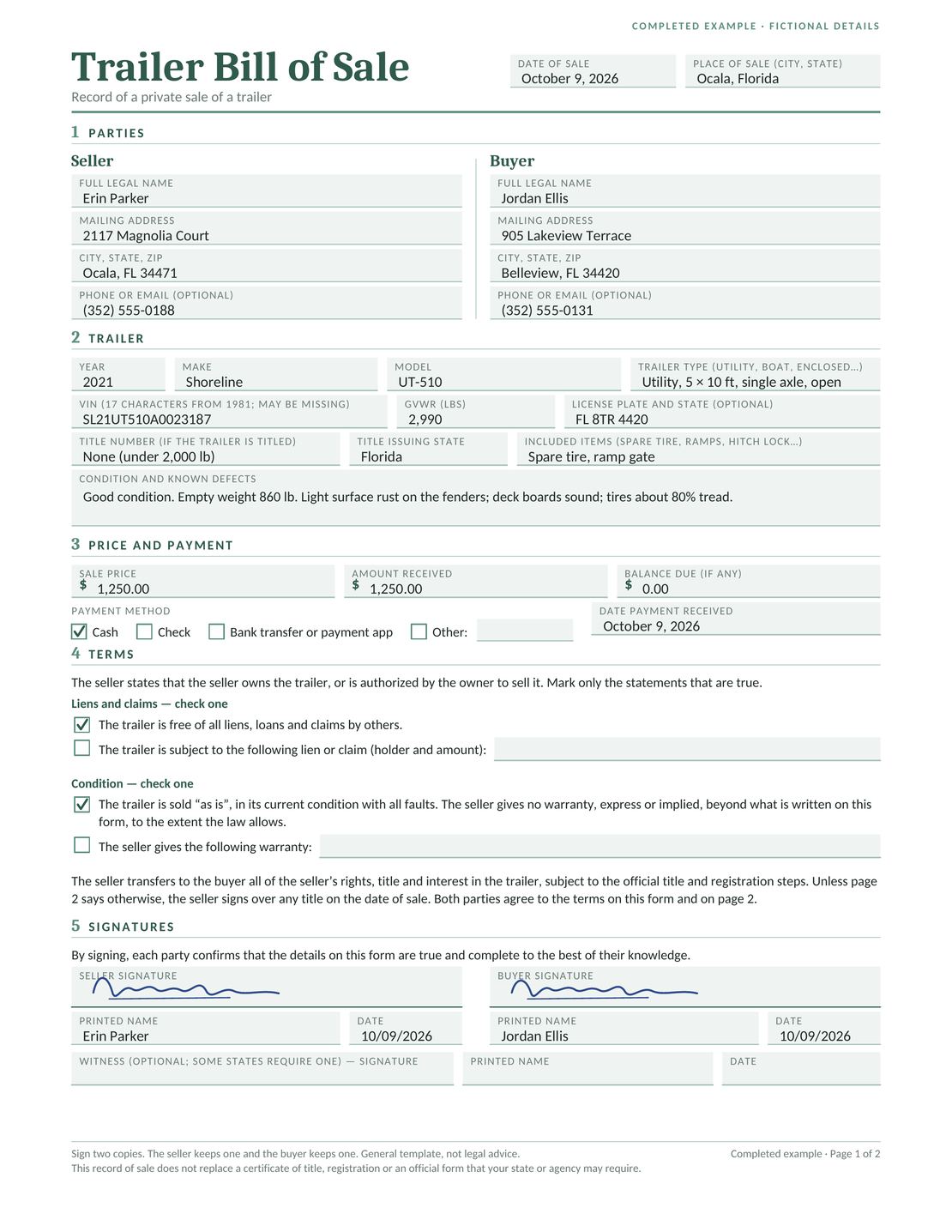
Erin sells Jordan a 2021 Shoreline UT-510 utility trailer for $1,250 in Ocala, Florida, on October 9, 2026. The names, identifying numbers and signatures are fictional.
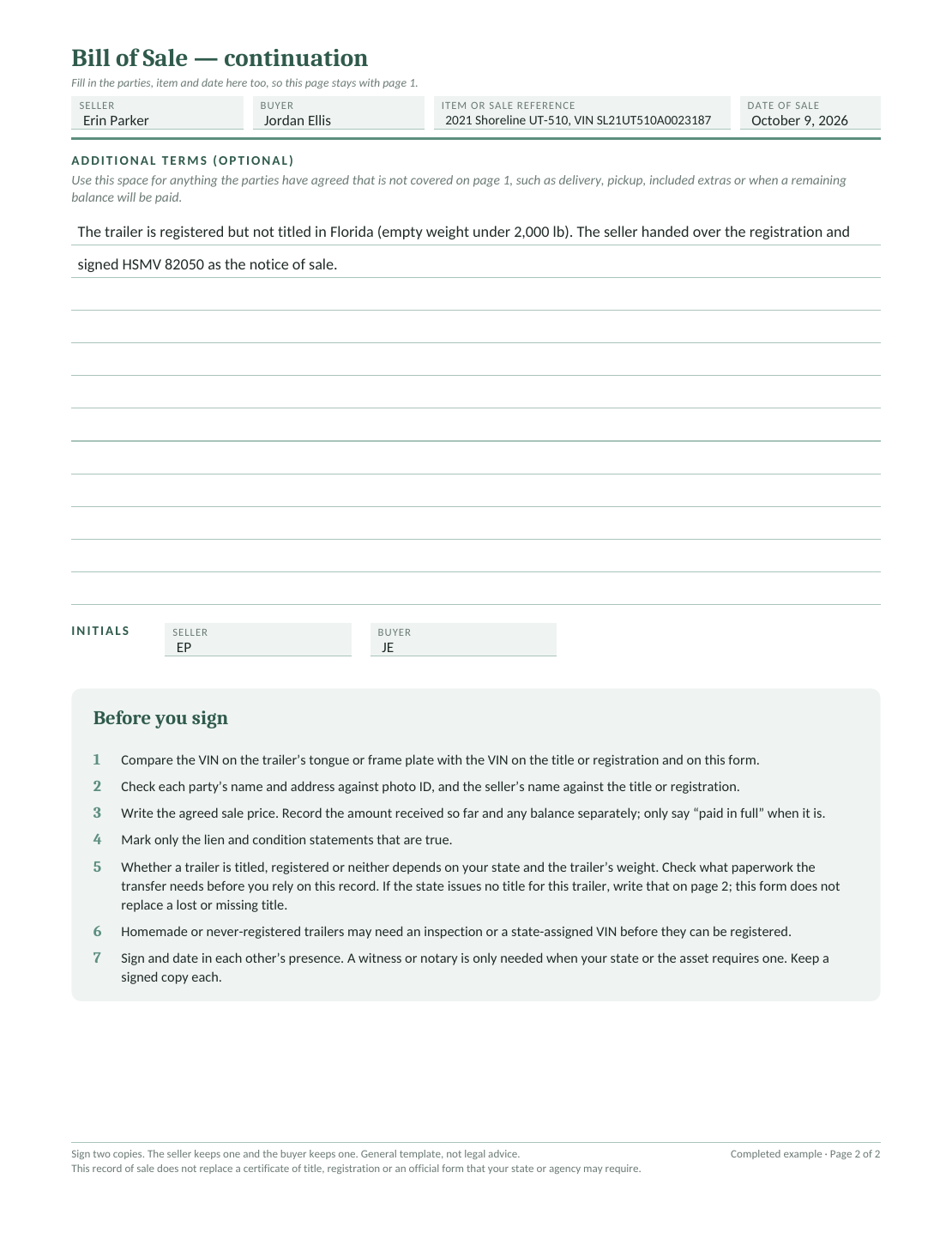
The trailer weighs 860 pounds empty and has a GVWR of 2,990 pounds. The empty weight is below Florida’s 2,000-pound title threshold, so the example records that it is registered but not titled.
Erin receives the full $1,250 in cash, leaving a $0 balance. The condition notes describe light surface rust, sound deck boards and tire tread. A spare tire and ramp gate are included.
Page 2 records that Erin handed over the registration and signed HSMV 82050 as the notice of sale. Signing the notice does not confirm it has been submitted.
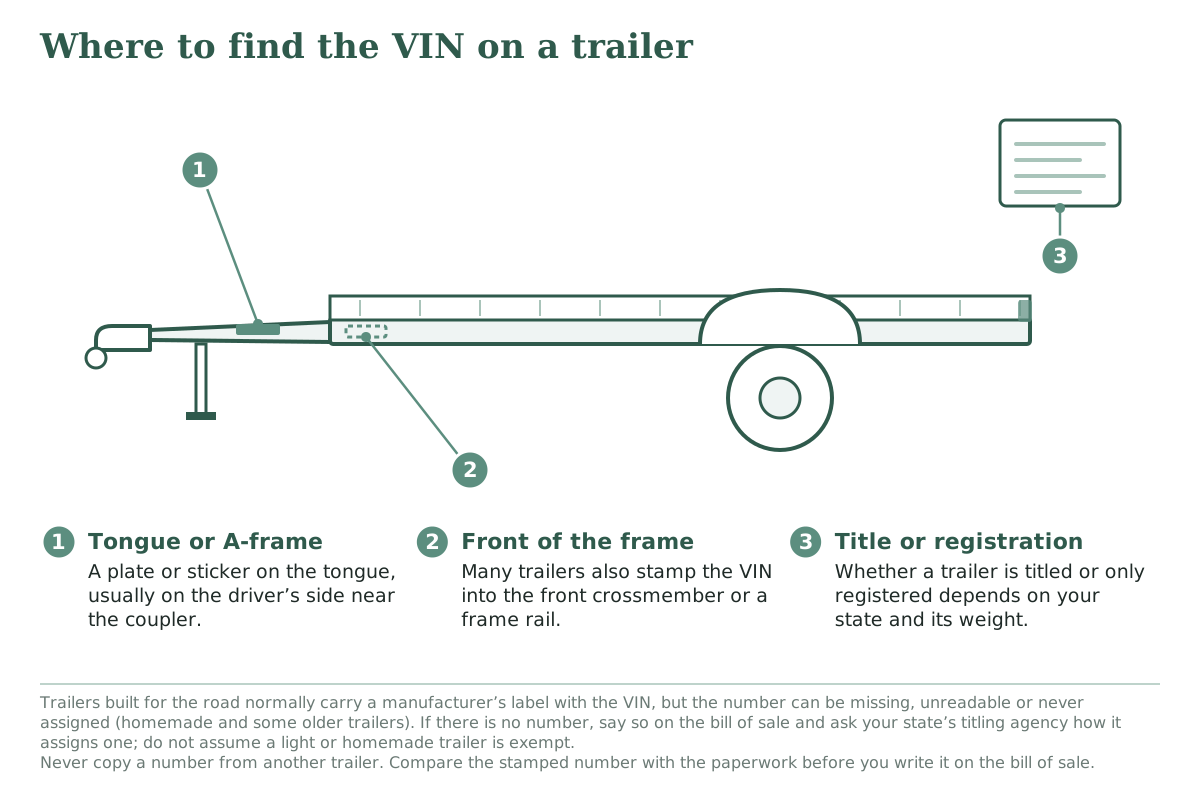
Compare the vehicle identification number (VIN) on the trailer with its registration or title before copying it into the form.
Check the tongue or front frame for a stamped number or manufacturer’s plate. Locations vary, so check the manufacturer’s information if you cannot find it.
Resolve a missing or mismatched number with the tax collector before completing the transfer. Do not invent a VIN.
Match the seller and any co-owners to the ownership records.
Compare the VIN, HIN or trailer identifier on the property with its documents.
Resolve any lien and get the release papers required for the transfer.
Record the actual condition, included equipment and any promises.
Separate the agreed price from the amount received and any remaining balance.
Check the receiving office’s signature, identification and supporting-document instructions.
HSMV 82050 has a certification under penalty of perjury and no notary block. Other transfer documents or situations can have different requirements. For example, Duval County’s vessel instructions require a notarized bill of sale for a boat arriving from a state that does not issue titles.
Keep Your Copies and Finish the Transfer
Keep the signed sale record, proof of payment and transfer papers together. Seller notices and buyer applications are separate steps, even when both people complete them at the same office.
Seller: submit the required notice and keep proof of submission. Follow your receiving office’s accepted methods; some counties allow electronic submission.
Buyer: complete the title and registration applications within the relevant deadlines and keep the receipts.
Both: check that names, identifying numbers, sale date and price match across the records.
Confirm taxes, fees and any local charges with the tax collector. Check road or water-use requirements before using the purchase.
Use the current forms and the instructions of the tax collector or license plate agent handling your transfer. These links go to state or county sources.
Key requirements reviewed October 31, 2026 using the cited statutes and official county instructions. Confirm the documents needed for your own sale with the receiving office.
HSMV 82050 is the official notice of sale and/or bill of sale. Follow the instructions for the purpose you select. A Docelf template can also record condition, payment and extra terms; it does not replace the required official transfer papers.
HSMV 82050 has no notary block. Follow the instructions for your particular transfer, since related documents and special situations can require notarization. Check with the receiving office before signing if you are unsure.
For an ordinary Florida-titled vehicle, no. Complete the title assignment and buyer’s title application. If the title is electronic or missing, arrange the proper process with the tax collector before handover.
Use net or empty weight, not gross vehicle weight rating. Ordinary utility and boat trailers below 2,000 pounds empty are not titled in Florida; those at 2,000 pounds or more require a title. Road-registration requirements still apply.
The Docelf package template has separate entries for each component and its price. Keep their identifying details clear, and complete the boat and trailer transfer requirements separately.
No. Submit the seller’s notice using the method accepted by your receiving office and keep proof of submission. The buyer still needs to complete the title and registration steps.
After 14 days, continue for
$12.99/month
only if you choose to upgrade.
We use cookies to provide you with the best possible experience. Cookies also help us analyze user behaviour so we can continue to improve our website. View our cookie policy.