A Tennessee car sale needs the properly assigned title. A boat purchase instead starts with a sale record and the county clerk’s certification for TWRA registration.
Choose a vehicle, boat or trailer template to record the price, payment and included equipment.
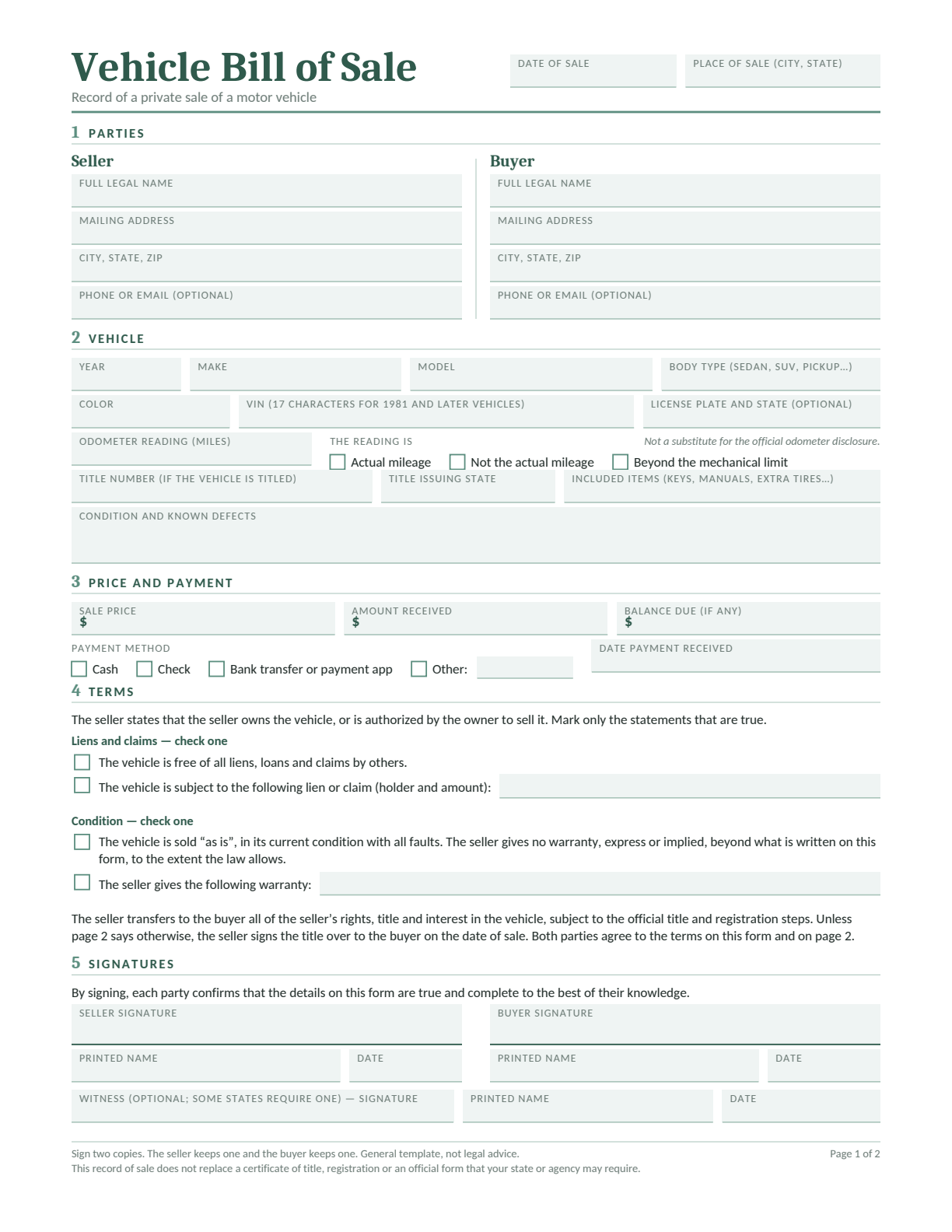
Enter the vehicle’s VIN and mileage, then describe the condition and any keys, tools or other accessories included. Record payment received separately from the total price. Keep the assigned title and official odometer disclosure with the private agreement.
Edit in Word or Google Docs, type into the fillable PDF, or print the blank PDF to complete by hand.
In Google Docs, sign in and choose Make a copy. Use page 2 for extra terms, then keep both pages together.
A Tennessee bill of sale records the agreement and payment for property changing hands. It identifies the seller, buyer and item, and gives the parties room to describe condition and collection arrangements.
A vehicle title, TWRA boat registration and a trailer sale follow different processes. The Tennessee County Clerks’ service publishes vehicle and boat sale forms; these are not substitutes for the ownership documents required in a titled-vehicle transfer.
County Clerk Motor Vehicle Bill of Sale
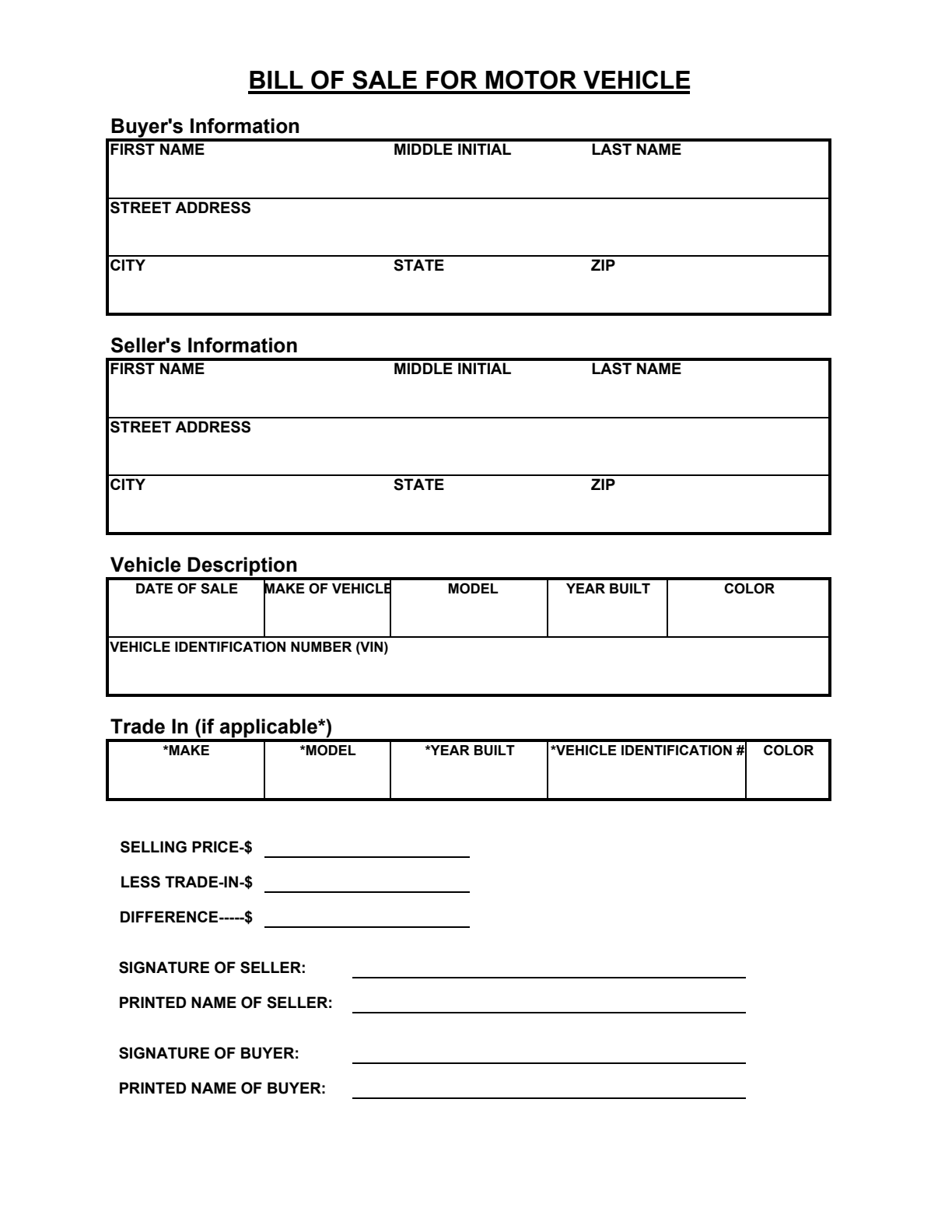
The Tennessee County Clerks’ portal provides this motor-vehicle sale form. It records the parties, vehicle, price and any trade-in; check its use with the clerk handling your transfer.
What to Fill In
Parties and vehicle: Enter the buyer and seller addresses and the complete vehicle description and VIN.
Price and trade: Record the selling price. Complete the trade-in description, allowance and difference only when there is a real trade.
Signatures: Both parties print their names and sign. Complete the official title and odometer papers separately.
Preview of the official form. Open its PDF for the complete form and instructions.
Get the Assigned Title Before Completing the Sale
Tennessee Revenue’s used-vehicle checklist calls for a valid title properly assigned to the buyer, identification and residency evidence, plus the applicable mileage disclosure. The general bill of sale records the deal; it does not cure a break in the ownership chain.
Fill in the buyer’s information and required mileage certification on the ownership papers. Give the buyer the properly assigned title and a copy of the sale record showing the actual price and payment.
Remove your Tennessee plate and keep it for the appropriate transfer or cancellation process. If a lender holds the title, agree how the lien will be released and the title delivered before describing the vehicle as lien-free.
Buyer: Take the Papers to Your County Clerk
Prepare the assigned title, identification, proof of residence and any required odometer statement. Bring your current registration if you are transferring a plate. The county-clerk document list also explains when a non-dealer transfer affidavit is needed for a gift, family transfer or low-price sale.
Arrange title and registration before driving on public roads. Confirm an out-of-state title’s signing requirements before the seller leaves; Tennessee follows applicable requirements on the ownership document.
Tennessee Boat Bill of Sale Templates
TWRA asks for both parties’ telephone numbers as well as names, addresses and signatures. Add those details even though a general template labels contact information optional.
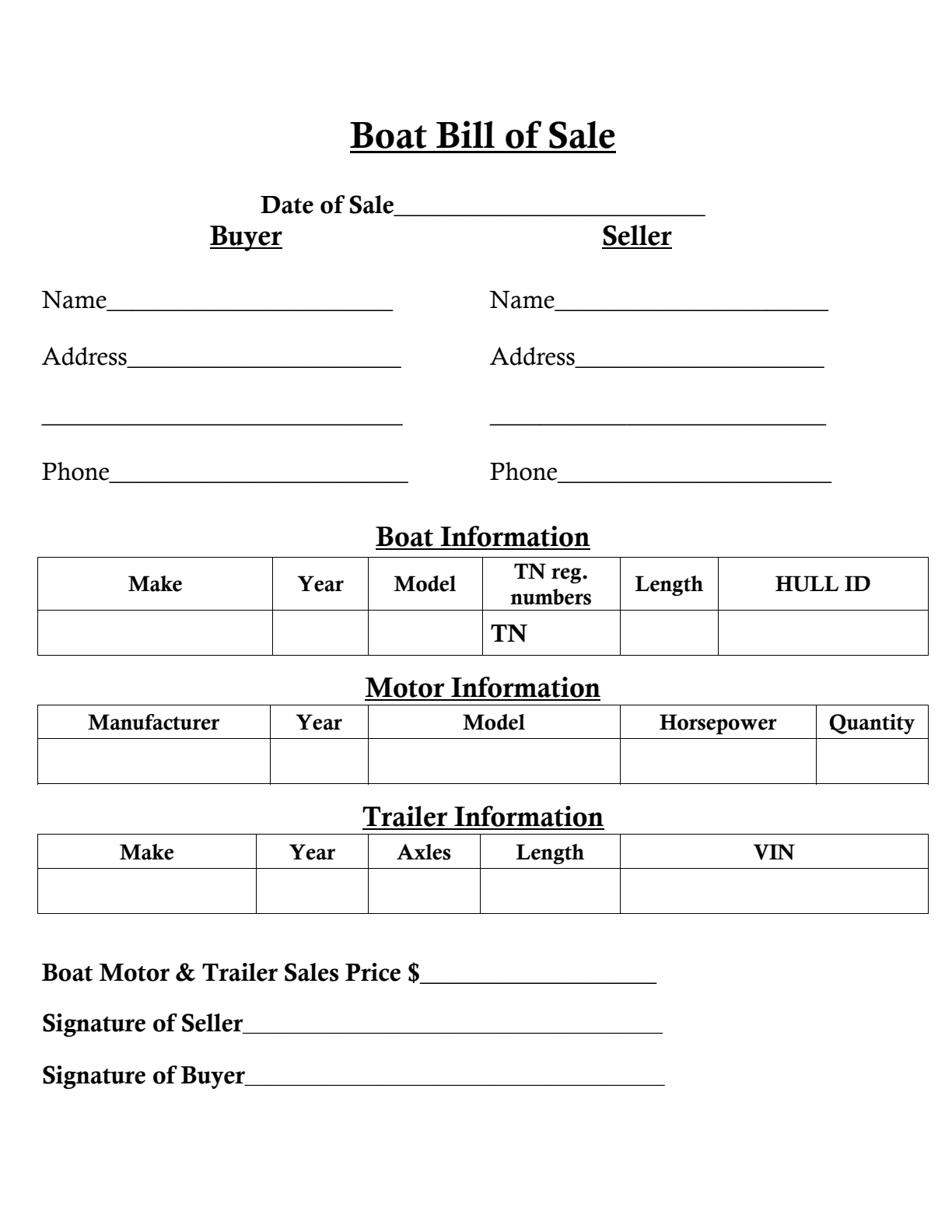
Boat Bill of Sale
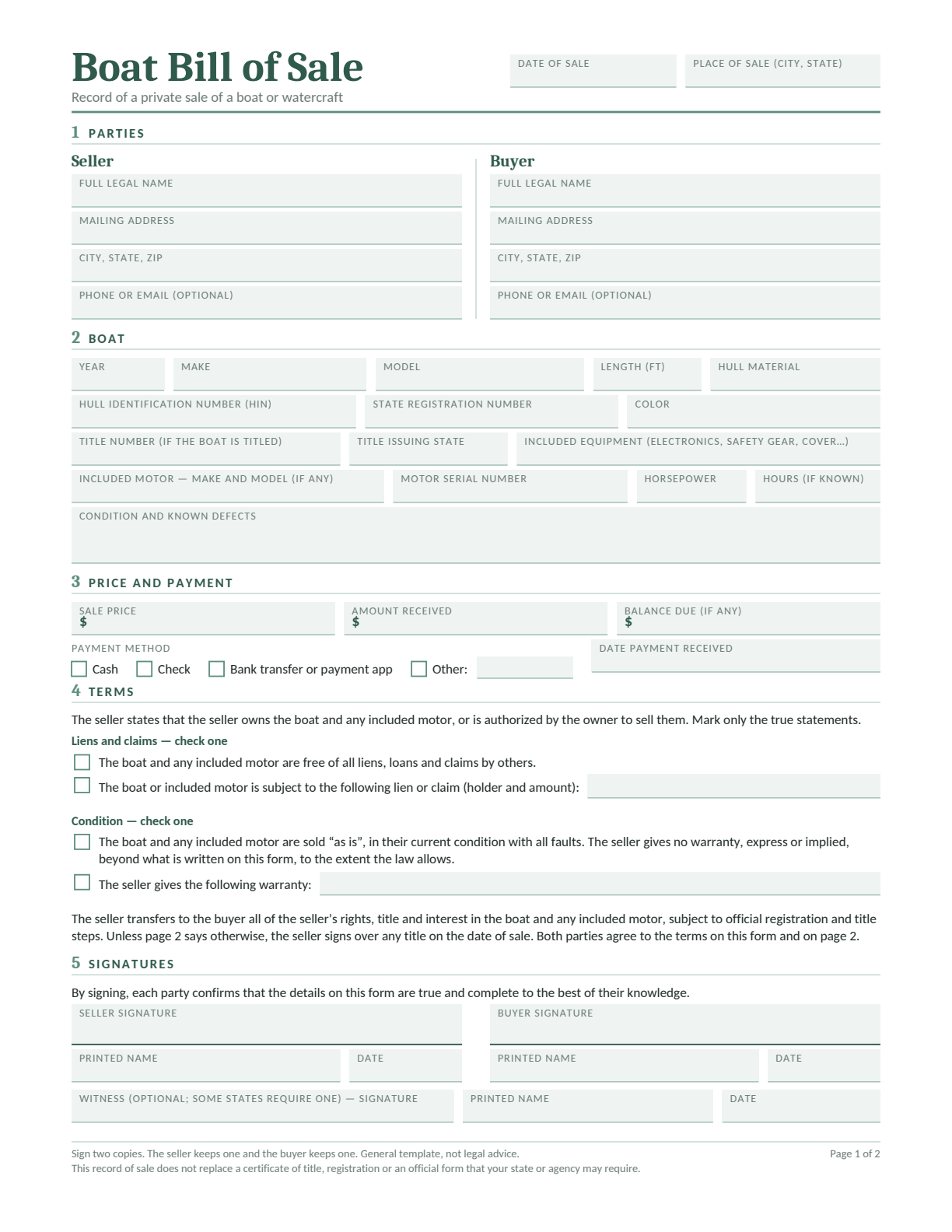
Record the boat, included equipment, condition, price and payment.
This county-clerk form has separate boat, motor and trailer sections. It can help assemble the sale information for the clerk’s boat-tax and registration certification.
What to Fill In
Parties: Include both names, addresses and telephone numbers.
Each component: Complete the boat HIN and registration number, motor details and trailer VIN where applicable.
Sale and signatures: Enter the sale date and price and obtain both signatures. Retain a copy for each party.
Check that all information requested by TWRA is present before taking the form to the clerk.
Preview of the official form. Open its PDF for the complete form and instructions.
Get the County Clerk’s Certification, Then Register With TWRA
Tennessee registers boats through TWRA and does not issue ordinary boat titles. For a private purchase, TWRA’s instructions direct the buyer to the county clerk with a bill of sale showing the date, price, year, make, model and HIN, plus both parties’ contact details and signatures.
The clerk certifies the Application for Boat Certificate of Number after the applicable tax step. Submit the certified application and required payment through TWRA’s accepted process. Keep the actual temporary registration document; a private bill of sale is not that permit.
Check the HIN on the boat itself. If a post-1972 boat lacks a readable, correctly formatted HIN, follow TWRA’s photo and correction instructions rather than inventing a replacement. Record an included trailer separately.
Tennessee Trailer Bill of Sale
Tennessee trailer treatment depends on the trailer’s type and use. A boat trailer’s exemption is different from the title process for other trailers.
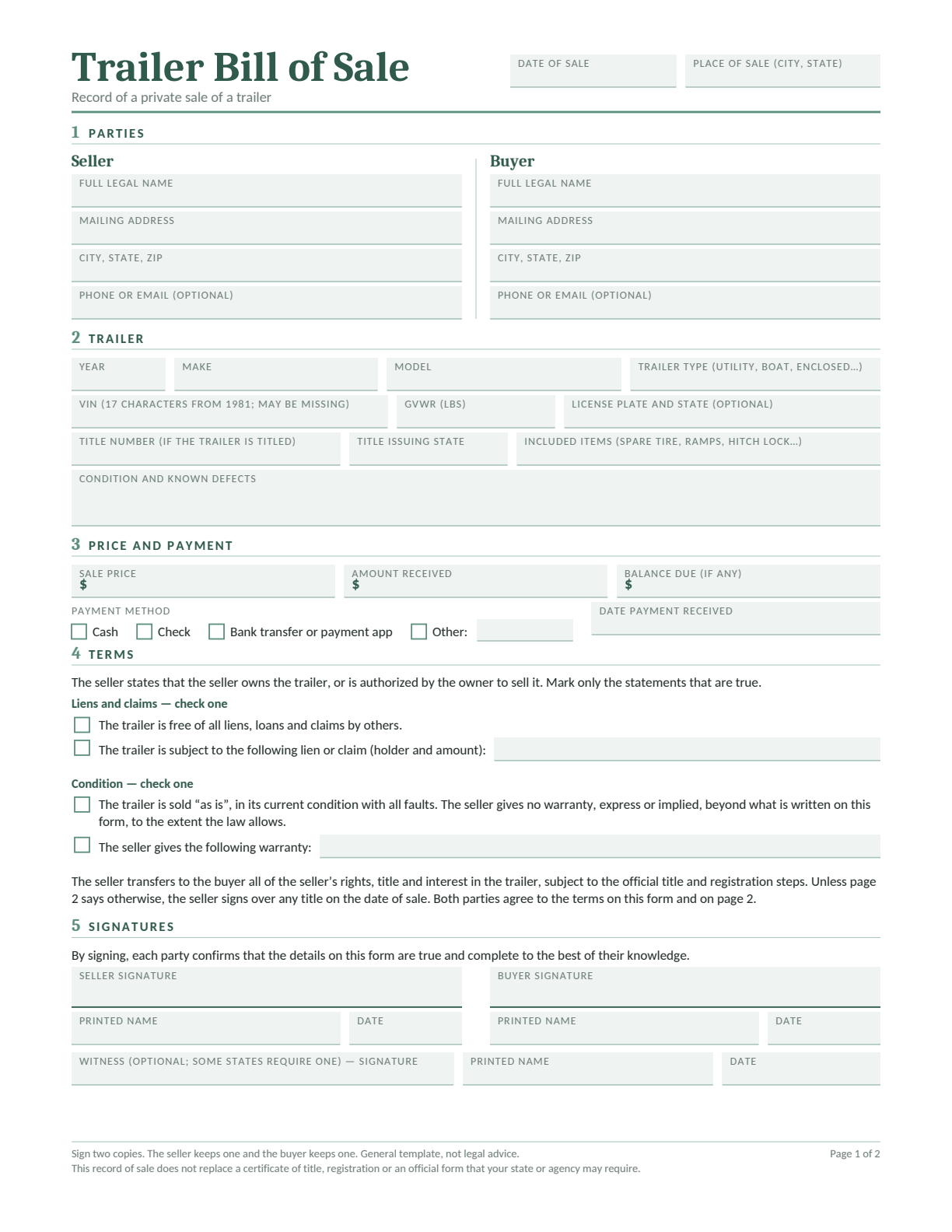
Trailer Bill of Sale
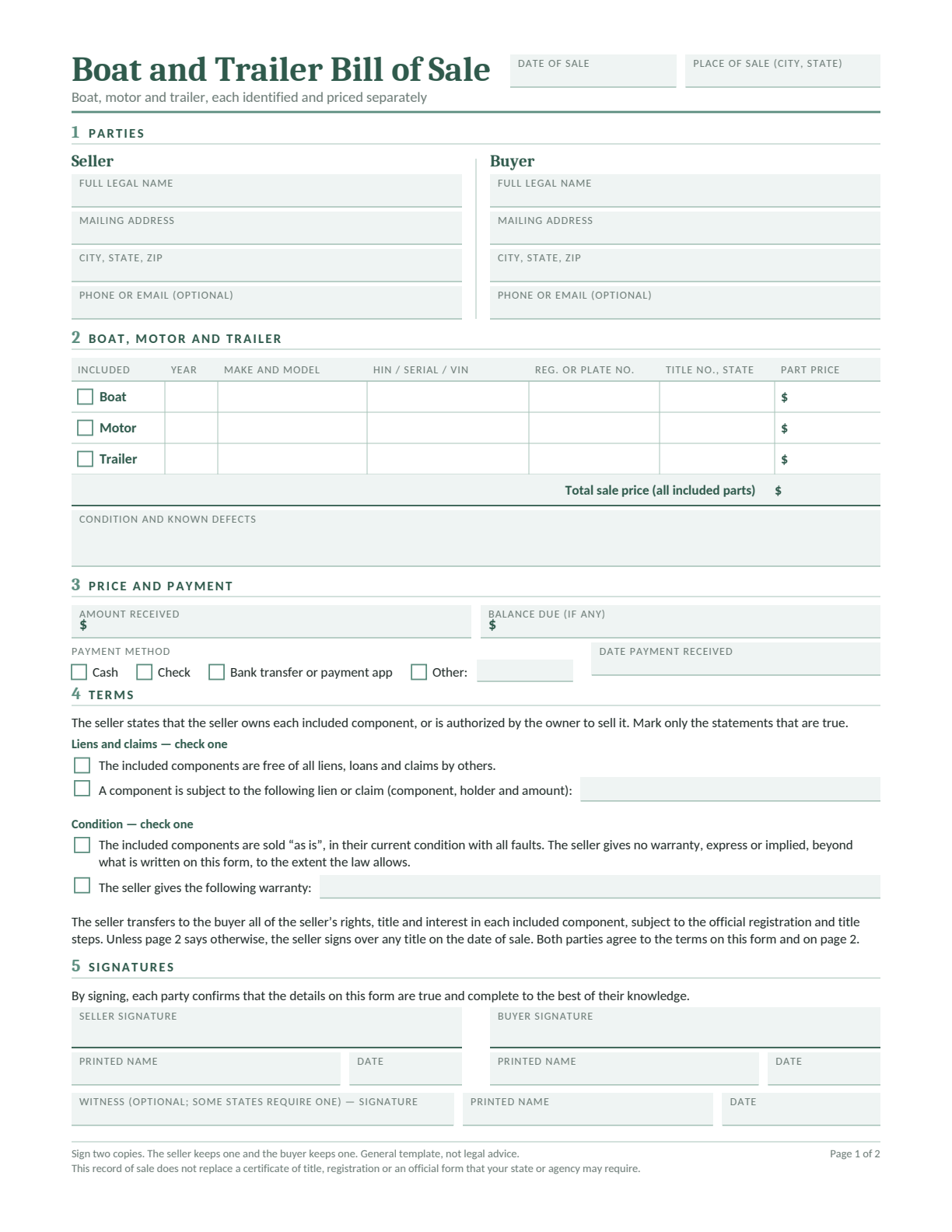
Describe the trailer and included equipment, then record the price, payment and any remaining balance. Use page 2 for extra terms, such as collection arrangements.
Edit in Word or Google Docs, type into the fillable PDF, or print a blank copy. Complete both pages and keep them with the ownership papers.
The general trailer guidance also lists farm, utility and pop-up trailers among categories not registered in Tennessee. Other trailers follow the title and registration process. Confirm commercial use and unusual construction with the clerk rather than extending a private-use exemption automatically.
For a homemade trailer that needs title or registration, gather construction receipts and the required inspection evidence. A bill of sale identifies the purchase but does not replace an assigned serial number or inspection.
Completed Tennessee Bill of Sale Example
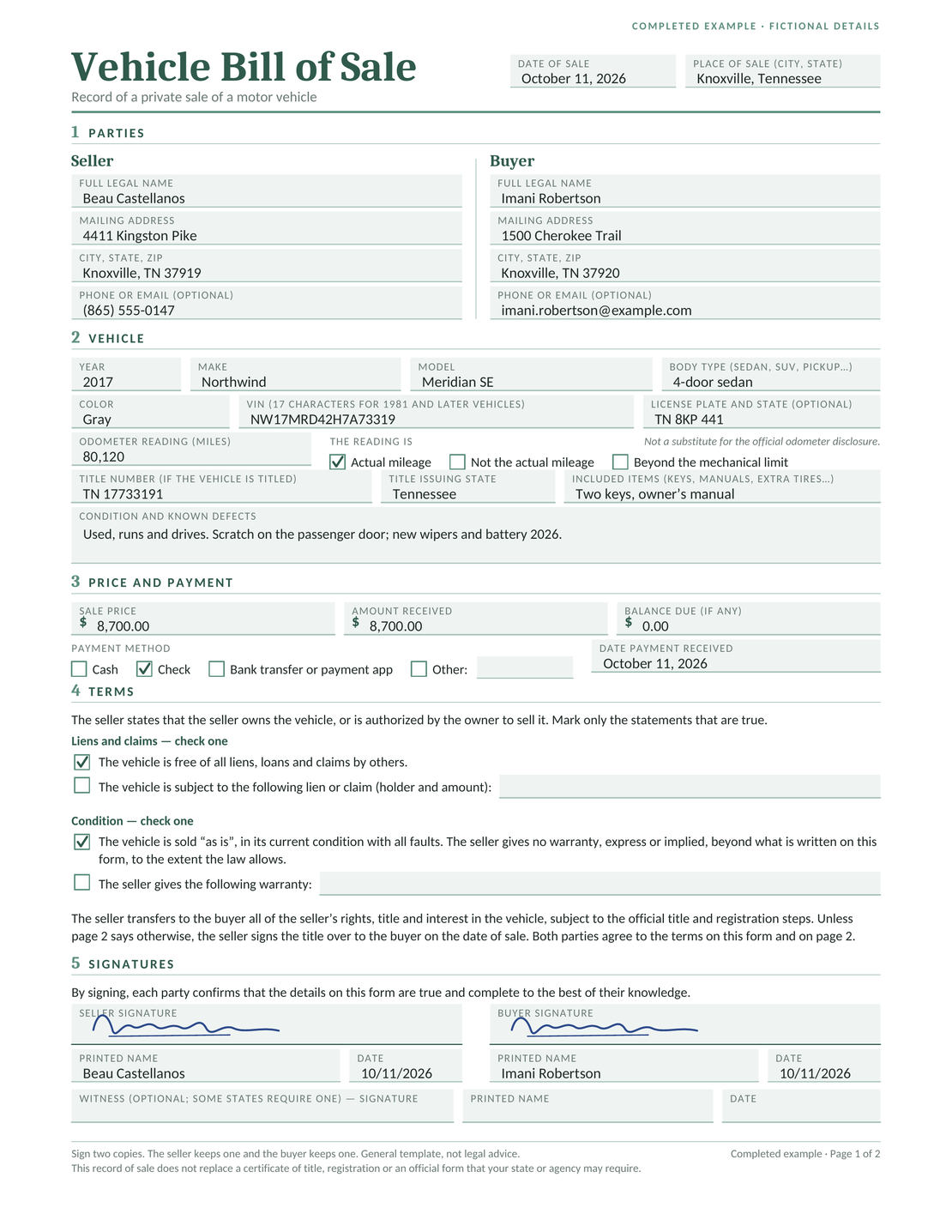
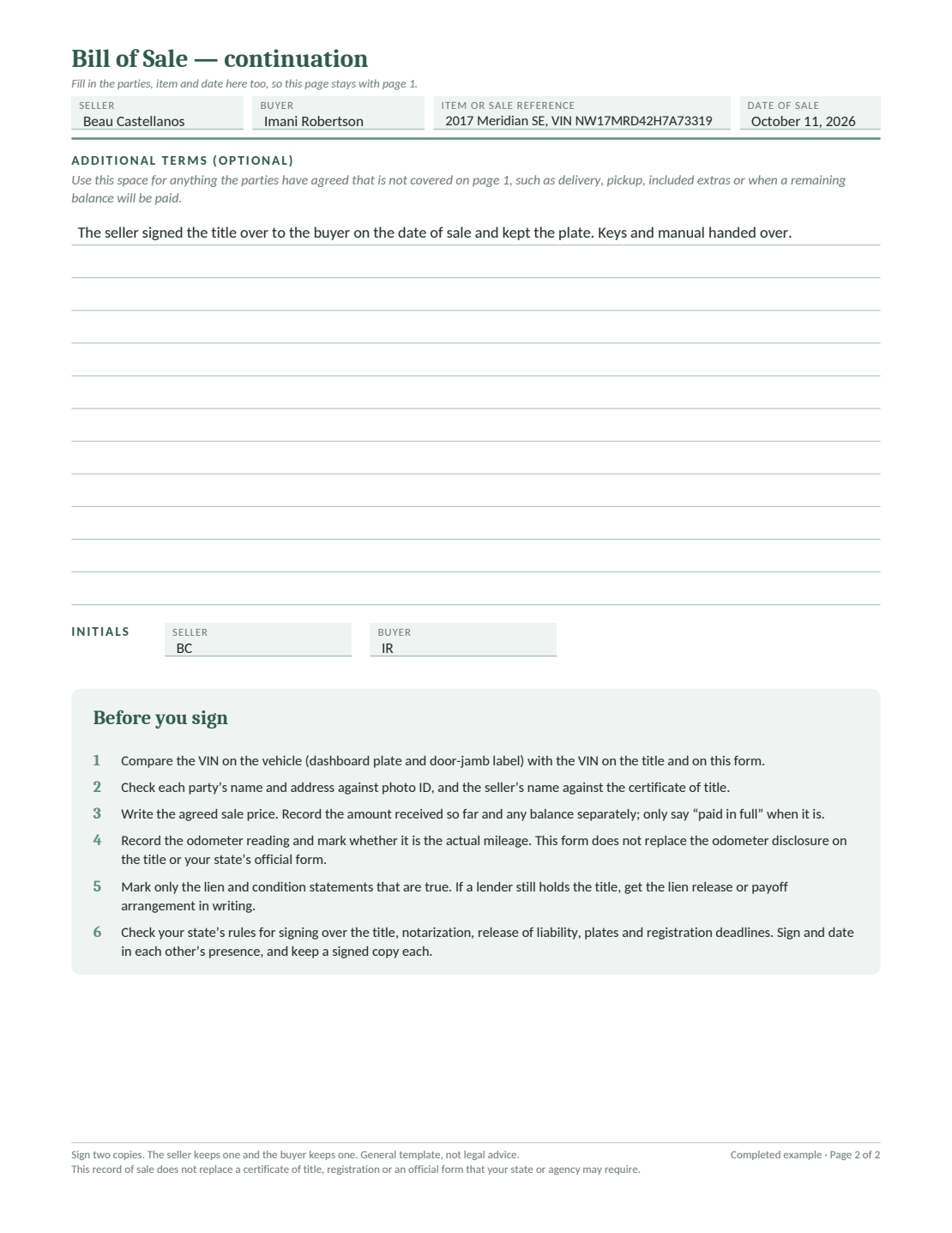
In this fictional sale in Knoxville, Tennessee, Imani Robertson buys a 2017 Northwind Meridian SE from Beau Castellanos for $8,700.00. The seller records the full $8,700.00 received, leaving a $0.00 balance.
Beau discloses the passenger-door scratch and notes the new wipers and battery fitted in 2026. The terms record the signed title, keys and manual going to Imani, while Beau keeps the plate.
The names, identifiers and signatures are fictional. This completed sale record does not show that a title application, registration or seller notice has been accepted by the relevant agency.
Page 1: Parties, vehicle, payment and signatures
Page 2: Agreed handover terms and signing checklist
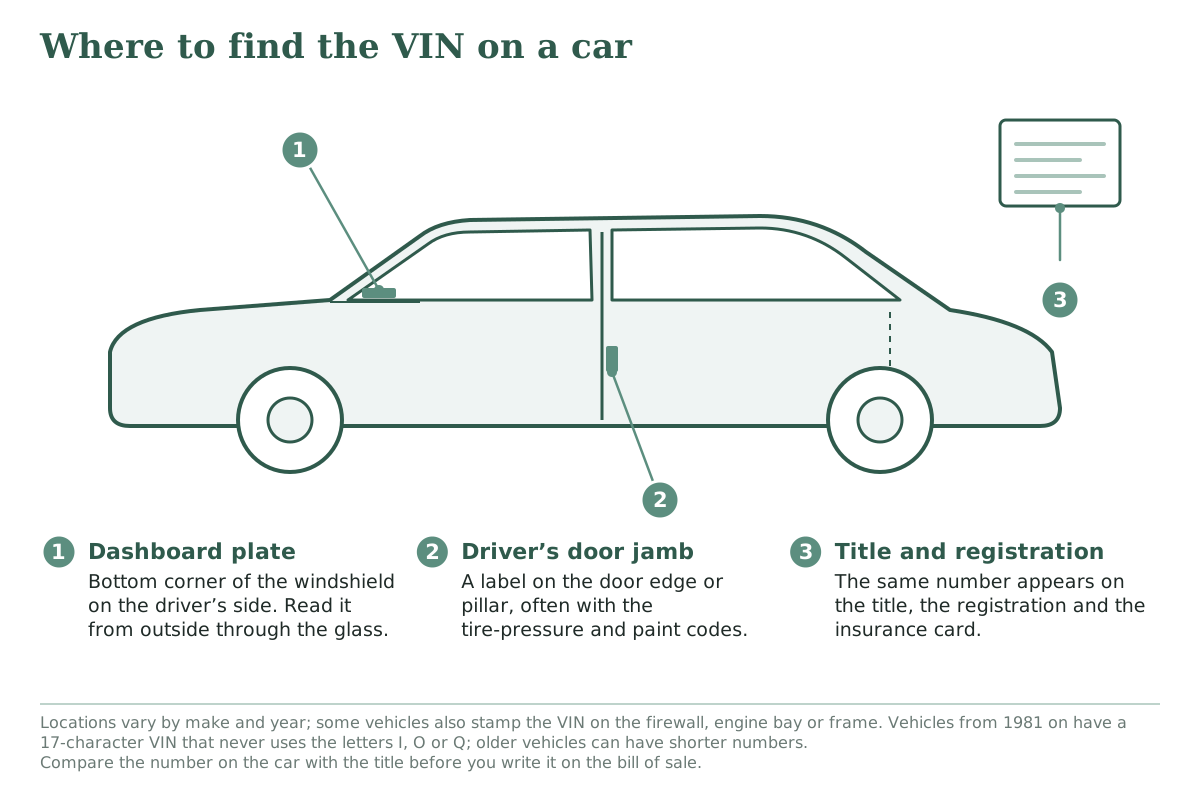
Compare the identifying number on the property with the ownership papers before copying it into your sale record.
Look through the windshield at the driver-side dashboard. Also check the label inside the driver’s door opening. Locations vary, so consult the vehicle’s manual if needed.
Resolve a missing or mismatched number with the agency handling the transfer. Do not guess from an unclear label.
Compare the seller’s name with the ownership record and check every required owner’s signature.
Match the VIN or HIN on the property to the title, registration and sale record.
Record the agreed price, money actually received and any remaining balance separately.
Describe known defects and the equipment included in the price.
Confirm the ownership papers and transport arrangements before handover.
The county-clerk sale forms have no notary block. An out-of-state title or separate affidavit may have its own requirements. Notarizing a general vehicle bill of sale does not replace the properly assigned title.
Keep the Sale Record with the Transfer Papers
Give each party a signed copy of both pages. Keep payment evidence, lien releases and copies of the ownership papers with it. If pickup or a final payment happens later, add a dated receipt or acknowledgment that refers to the same vehicle or vessel.
Keep the agency’s receipt when you submit a title application or seller report. Signing a private form and submitting official paperwork are separate actions.
No. Revenue expressly says a properly endorsed title showing the ownership chain is needed. Resolve missing title papers through the clerk.
No. They record the sale. The buyer still completes the applicable title, tax and registration steps.
TWRA’s private-purchase checklist asks for both parties’ names, addresses, telephone numbers and signatures, together with the vessel and sale details.
Tennessee uses boat registration through TWRA. Collect the seller’s registration evidence and signed bill of sale, then complete the county-clerk and TWRA process.
Revenue says boat trailers do not need a Tennessee title or registration. Keep the sale record and check the destination state if the trailer is moving elsewhere.
After 14 days, continue for
$12.99/month
only if you choose to upgrade.
We use cookies to provide you with the best possible experience. Cookies also help us analyze user behaviour so we can continue to improve our website. View our cookie policy.