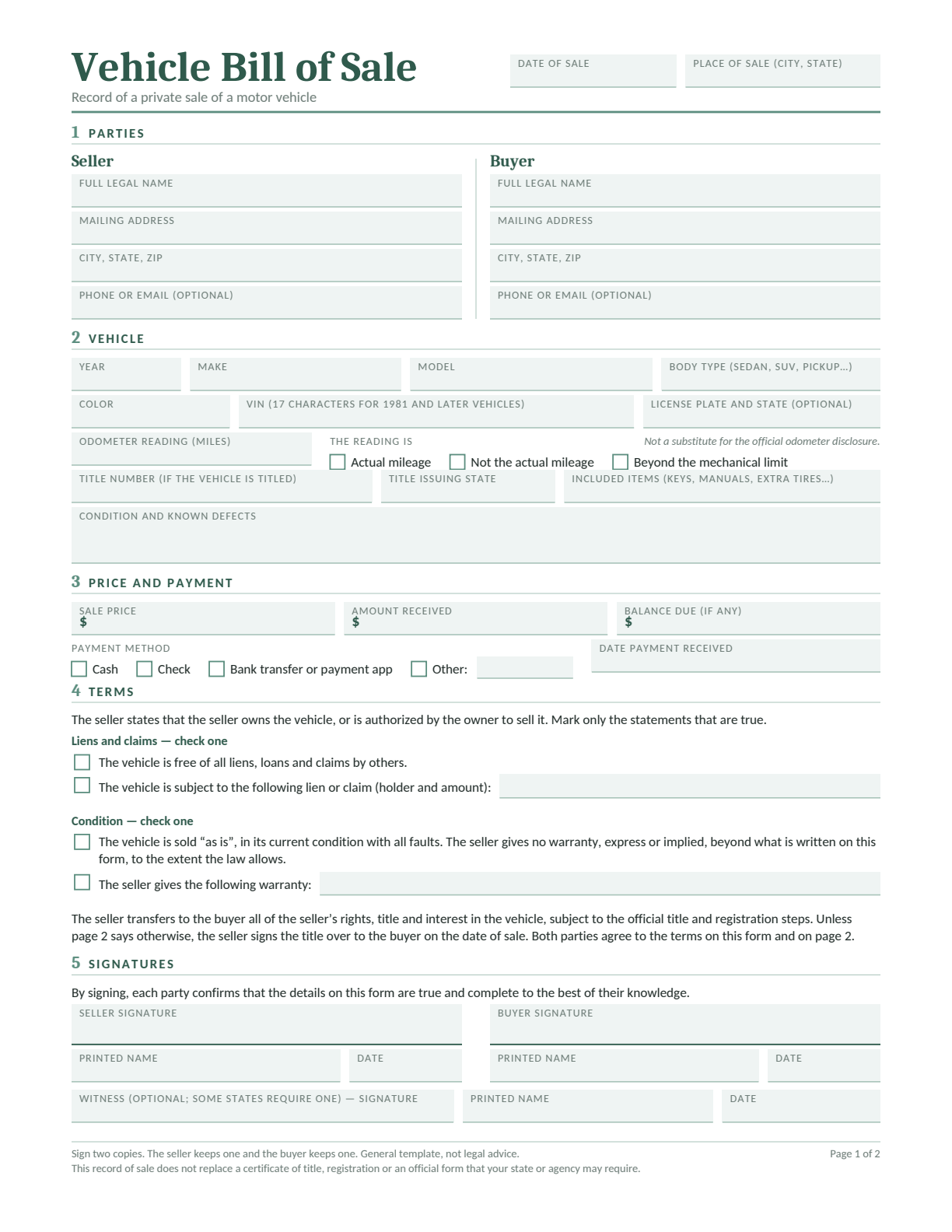
Record the seller and buyer, the vehicle’s VIN and mileage, and the price agreed for the sale. Keep the amount received separate from any remaining balance. Describe known defects and list included keys, documents and equipment.
Edit in Word or Google Docs, type into the fillable PDF, or print the blank PDF to complete by hand.
In Google Docs, sign in and choose Make a copy. Use page 2 for extra terms, then keep both pages together.
An Arkansas bill of sale records the property, people and price in a private transaction. It can also show whether payment is complete and which keys, records or equipment are included.
DFA uses sale and odometer information with the title paperwork. Its official combined form is useful when a separate disclosure is needed. A boat or trailer purchase has its own identification and application details, even when sold as one package.
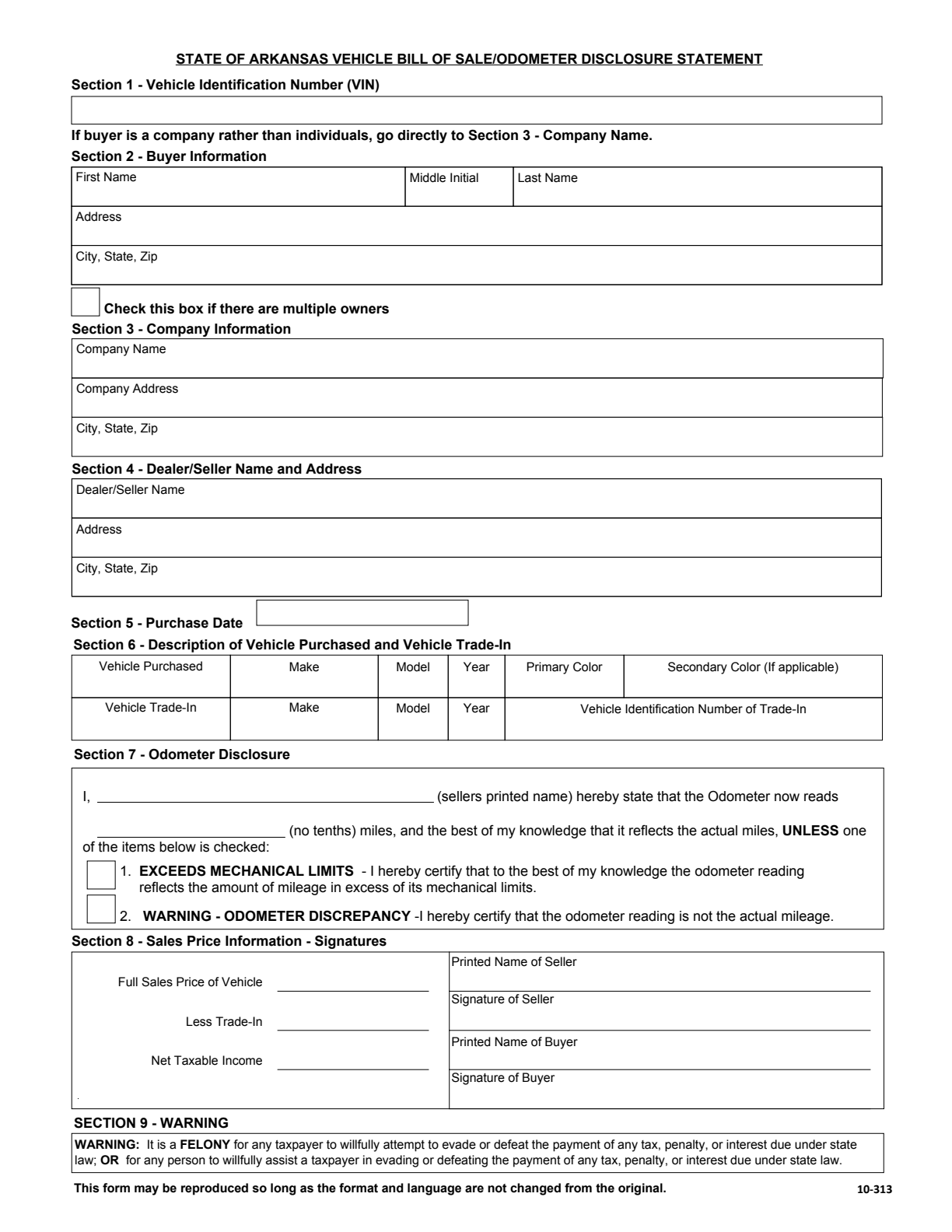
Arkansas Vehicle Bill of Sale / Odometer Statement
DFA form 10-313 combines the sale details and odometer disclosure. It provides separate buyer, seller, vehicle and price sections for a transfer that needs this information outside the title.
What to Fill In
Parties and vehicle: Enter the VIN, buyer and seller details, purchase date, make, model, year and colors. Use the company section only when appropriate.
Mileage: Enter whole miles and read the certification. Mark an exception only if the reading exceeds the mechanical limits or is not actual mileage.
Price and signatures: Show the full price, any vehicle trade-in and the resulting net amount. Both seller and buyer print their names and sign.
The form has no notary block. Keep its official language unchanged and complete any required title assignment separately.
Preview of the official form. Open its PDF for the complete form and instructions.
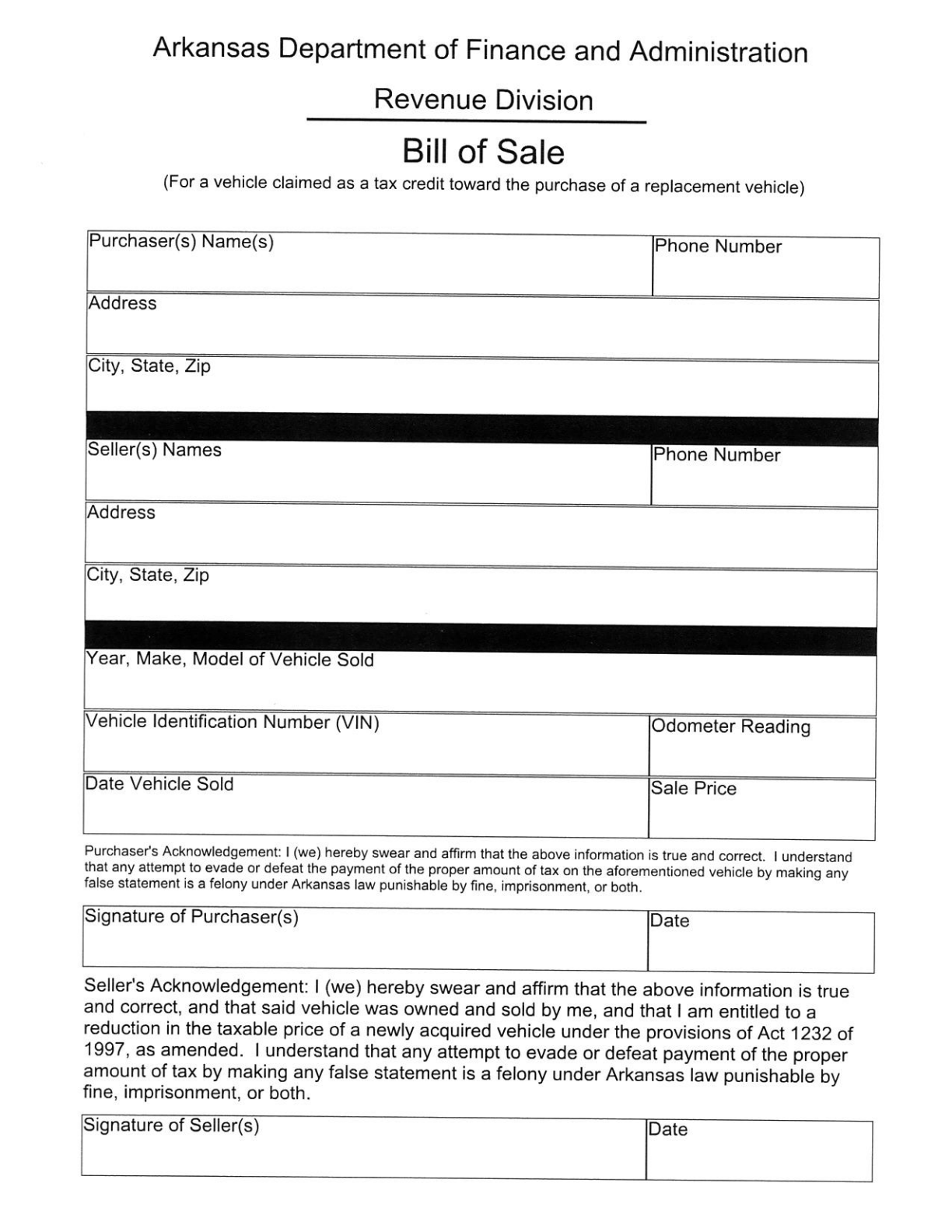
Arkansas Bill of Sale for Vehicle Tax Credit
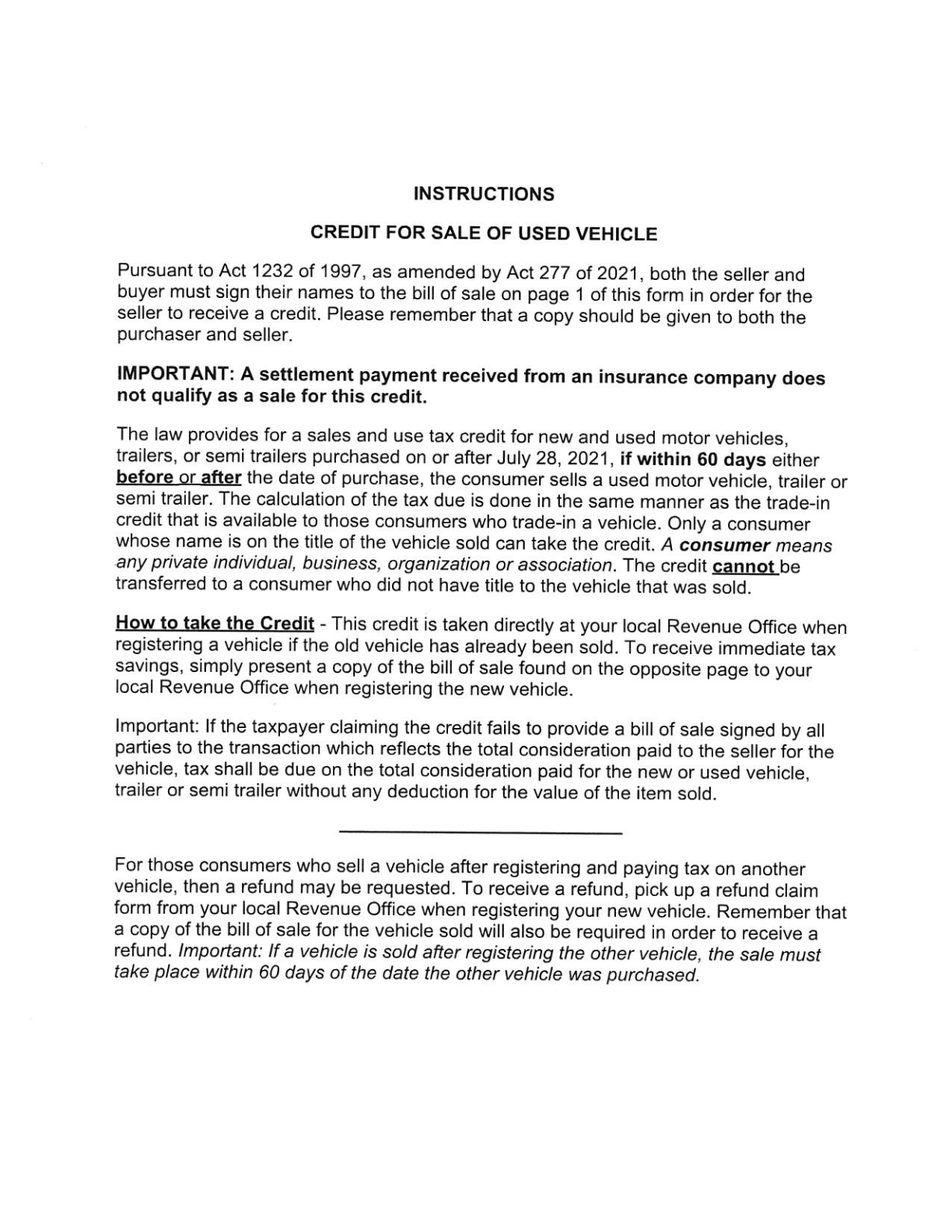
This separate DFA bill is for a seller claiming the sale toward a replacement-vehicle tax credit. Its instructions cover qualifying sales within 60 days before or after the replacement purchase; it is not the combined odometer form above.
What to Fill In
Buyer and seller: Enter each party’s name, address and phone number.
Vehicle sold: Describe the sold vehicle, including VIN and mileage, then enter its sale date and actual price.
Certifications: Both parties read and sign their acknowledgments. Keep a copy for the buyer and seller, and follow the eligibility instructions on page 2.
Only an eligible titled owner can claim the credit. An insurance settlement is not a qualifying sale.
Preview of the official form. Open the PDF for the complete form and instructions.
Check the Title’s Sale and Odometer Sections
DFA’s registration instructions call for an assigned title and the full purchase-price information. A properly completed Arkansas title with control number 3003001 or higher can supply the bill-of-sale and odometer sections. An older Arkansas title or an out-of-state title needs separate sale and conforming odometer documents.
Use the official form below when those separate details are needed, and keep the personal sale record for condition, payment and extra terms. Complete the required mileage disclosure with both parties’ signatures; do not use a general receipt’s mileage box as a substitute.
Seller: Assign the Title and Keep a Copy
Complete the title assignment with the buyer’s correct name and give the buyer the original. Keep copies of the ownership and sale documents. Retain your vehicle plate and current registration if you plan to transfer it to a replacement vehicle.
You may submit DFA’s Notice of Transfer of Ownership after the sale. The form describes this notice as optional and requires you to certify that the title was properly endorsed and delivered. It does not replace the buyer’s application.
Buyer: Title and Register Within 60 Days
For an ordinary motor vehicle, apply within 60 calendar days after transfer, or the applicable prior-lien release. The DFA buyer FAQs list the title, bill of sale, odometer statement, any lien contract, assessment, property-tax and insurance evidence.
Check the application before submitting it to a State Revenue Office or through the available online service. Joint owners connected by “and” must all sign the application. Arrange the correct tag before driving; the application deadline alone is not a temporary plate.
Keep Evidence of Assessment and Payment
A complete ownership file is only part of an Arkansas registration. The buyer also needs county assessment information, proof that required personal property taxes are paid and liability insurance. Check those records early so a missing county record does not delay an otherwise complete transfer.
If you are selling one vehicle and buying a replacement, retain a bill signed by both parties. DFA offers a separate bill for a qualifying sold-vehicle tax credit, with eligibility instructions on its second page.
Arkansas Boat Bill of Sale Templates
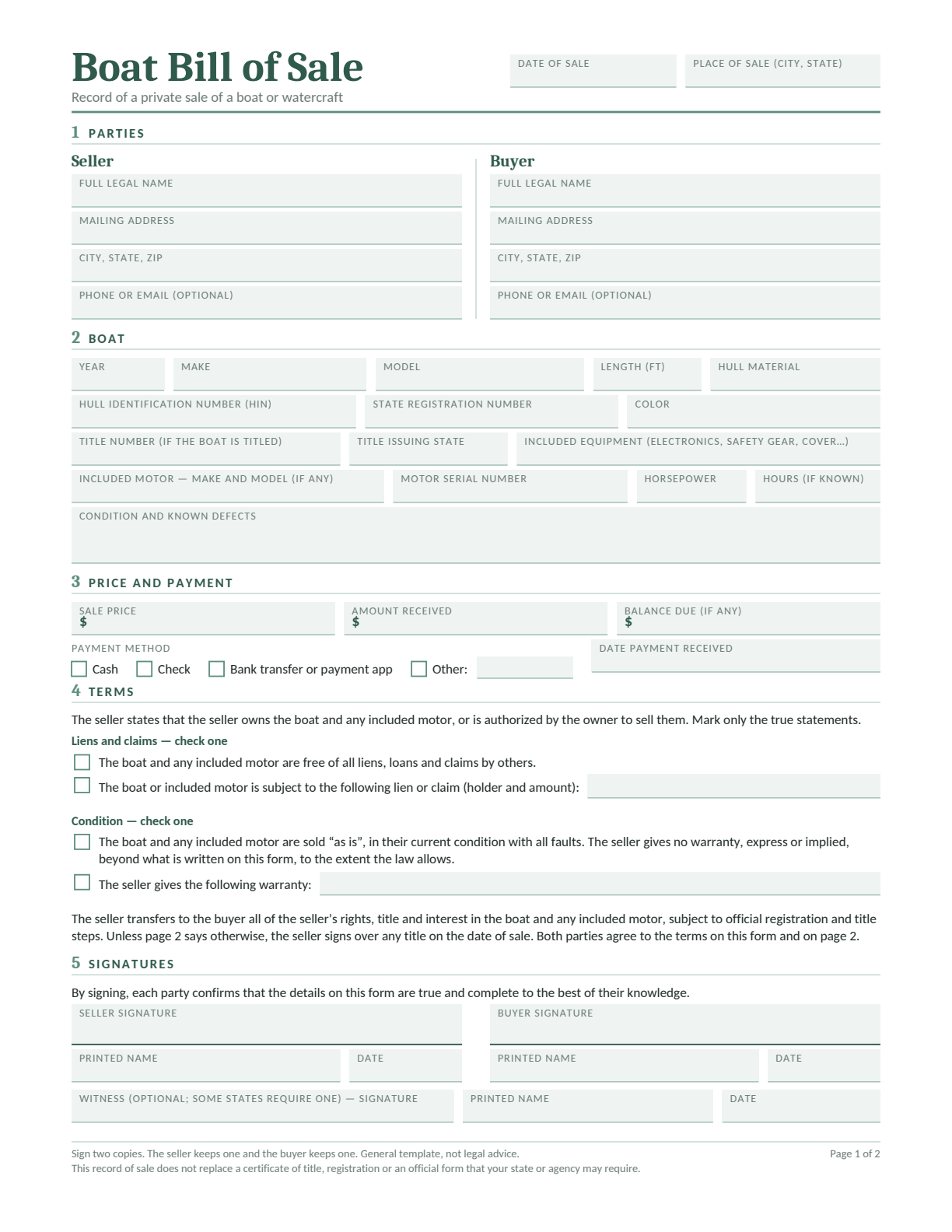
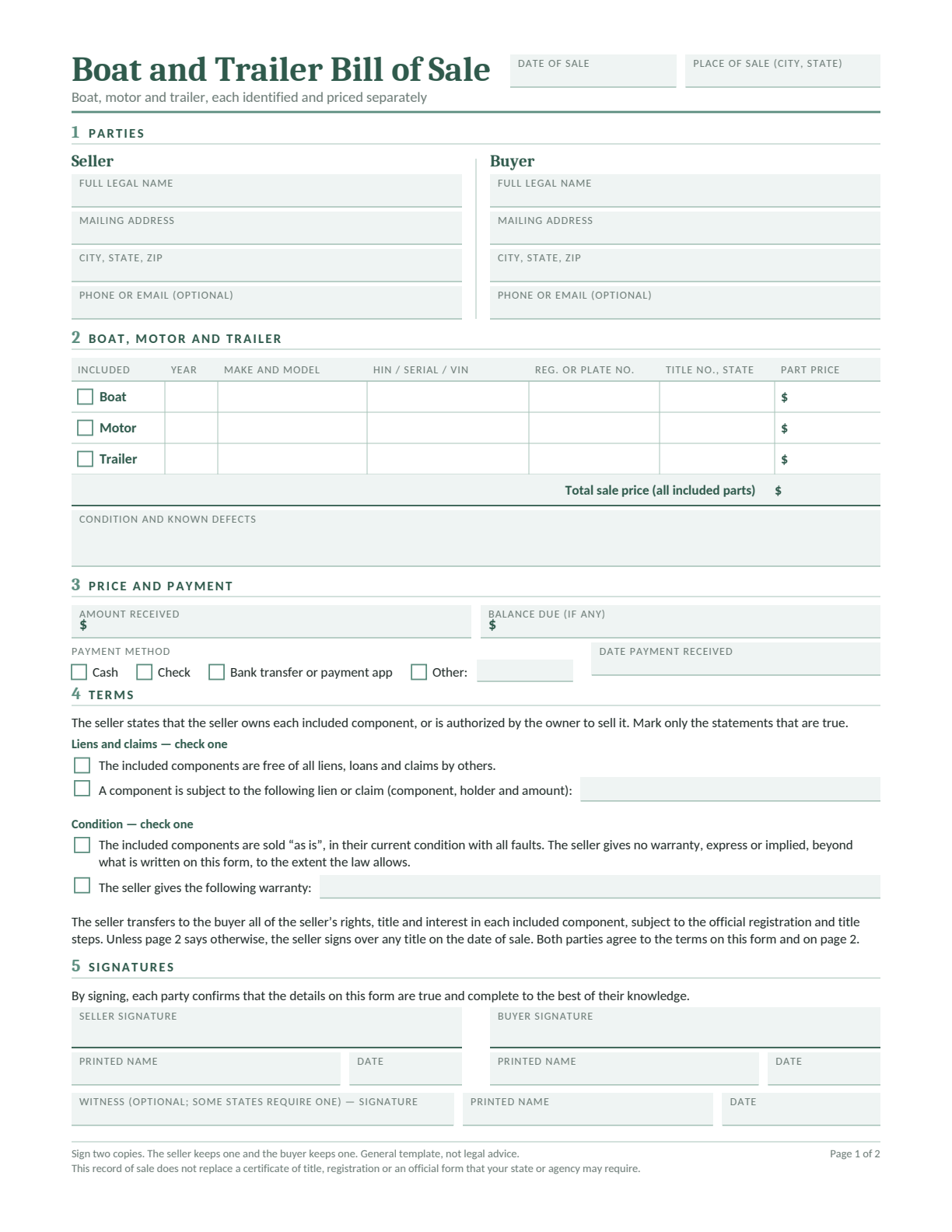
Identify the hull, engine and any included trailer separately. Record the HIN, motor serial number and horsepower, with a separate trailer price so the ownership and tax records remain clear.
Boat Bill of Sale
Record the boat, included equipment, condition, price and payment.
Register a boat propelled by sail or machinery for use on Arkansas public waters unless it qualifies for an exemption. The buyer must apply for a new registration or ownership transfer within 30 days. Boats manufactured in 2020 or later also fall within Arkansas’s title program. See the AGFC boating handbook.
AGFC’s registration checklist calls for the last registered owner’s bill of sale or a new boat’s manufacturer document, assessment evidence, required insurance and HIN verification by printed photograph or pencil rubbing. Obtain an assigned title as well when the boat is titled.
Complete the DFA watercraft application with the hull and motor information. Personal watercraft and boats powered by more than 50 horsepower need liability insurance. If the HIN is missing or the boat is homemade, arrange the required identification inspection before expecting a routine transfer.
Arkansas Trailer Bill of Sale
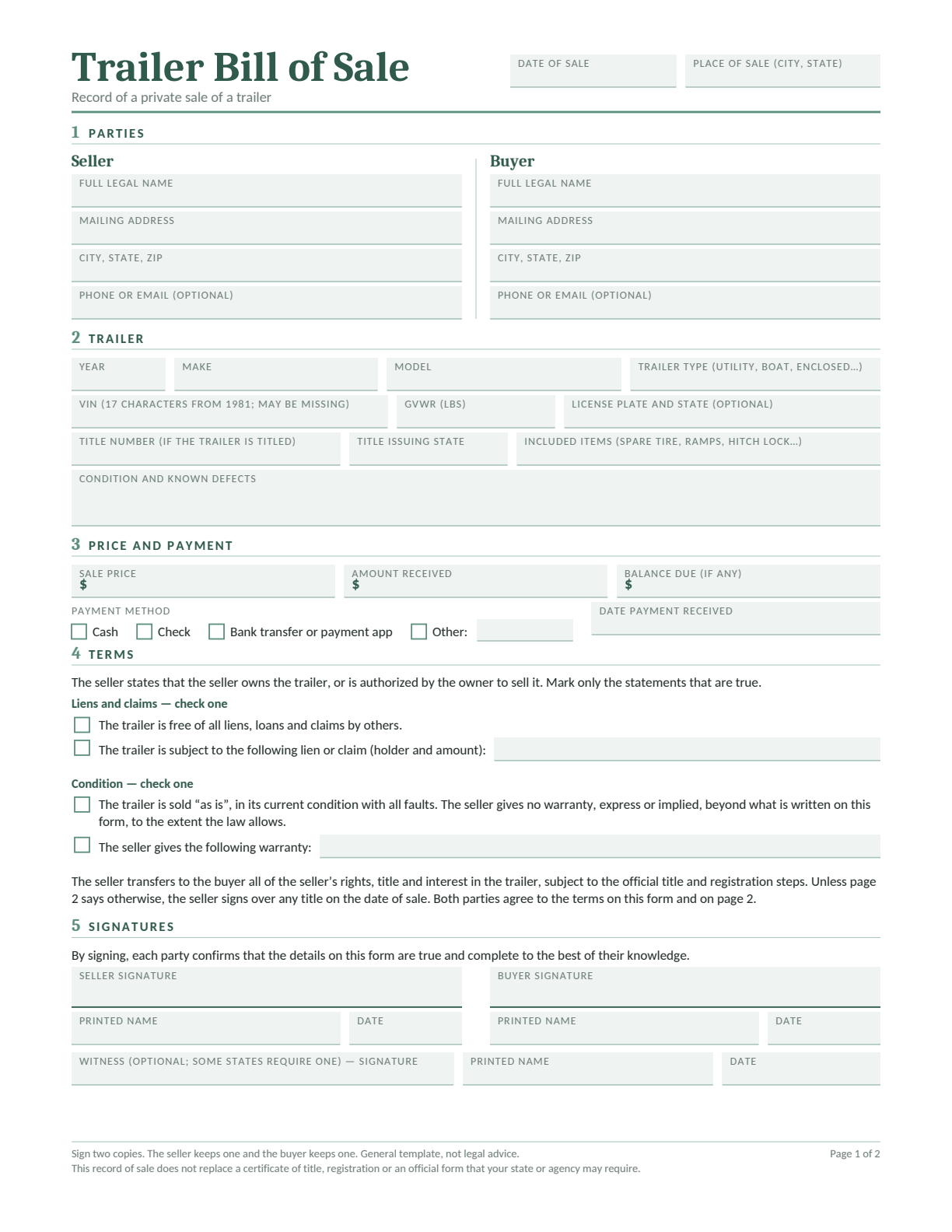
Use the trailer template to record its own VIN, price and condition. A trailer sold with a boat still needs its own ownership paperwork and follows a different deadline from an ordinary car.
Trailer Bill of Sale
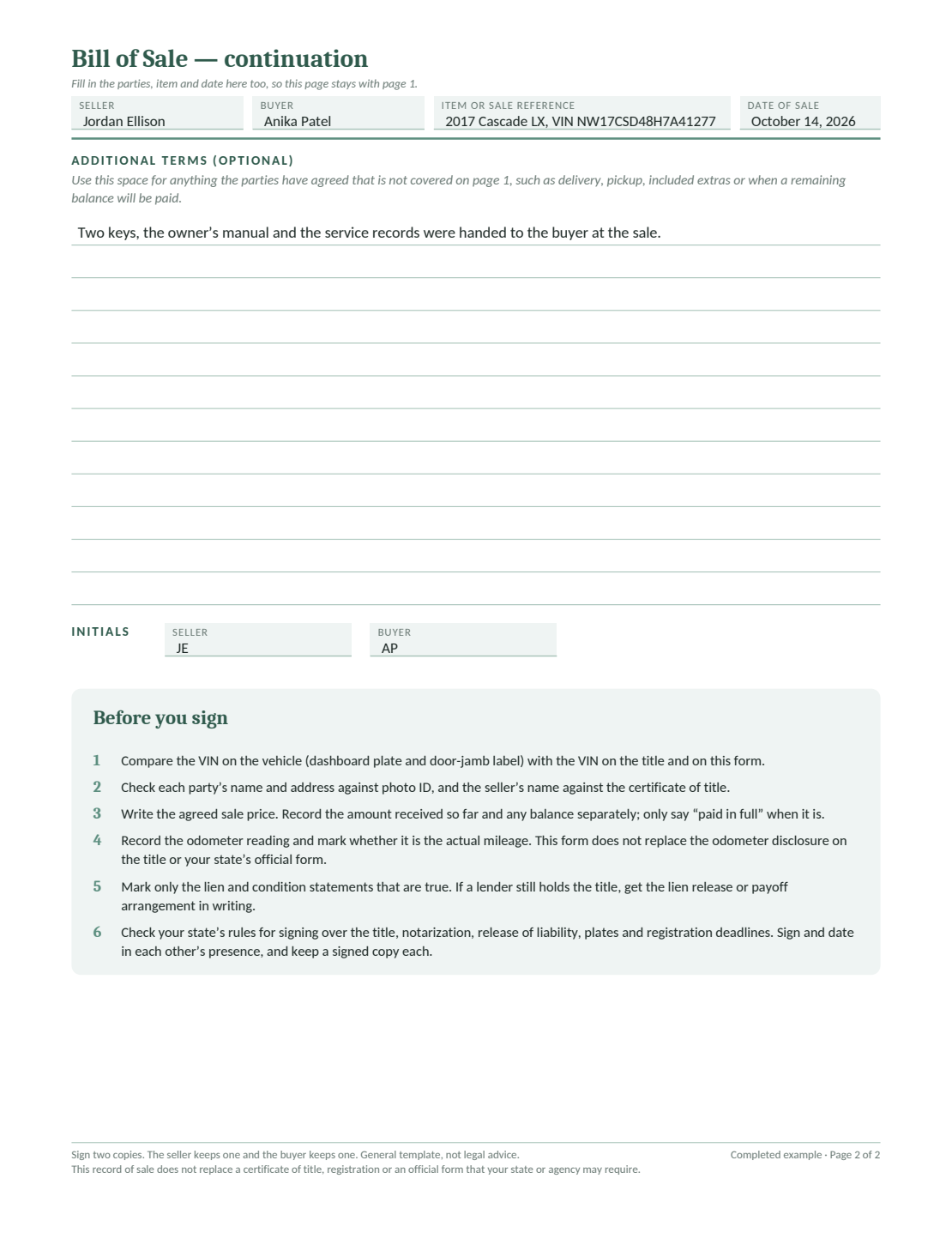
Describe the trailer and included equipment, then record the price, payment and any remaining balance. Use page 2 for extra terms, such as collection arrangements.
Edit in Word or Google Docs, type into the fillable PDF, or print a blank copy. Complete both pages and keep them with the ownership papers.
DFA gives trailers 30 calendar days after transfer, or the applicable prior-lien release, for title and registration. The 60-day motor-vehicle period should not be applied to a trailer. Bring the assigned ownership document and the sale information required by DFA’s registration instructions.
If the trailer is part of a boat package, allocate its price rather than leaving the whole payment described as a boat sale. Check the trailer’s plate class and ownership record with the Revenue Office. For a homemade or unidentified trailer, gather construction receipts and ask the office which evidence and inspection it requires before finalizing the purchase.
Completed Arkansas Bill of Sale Example
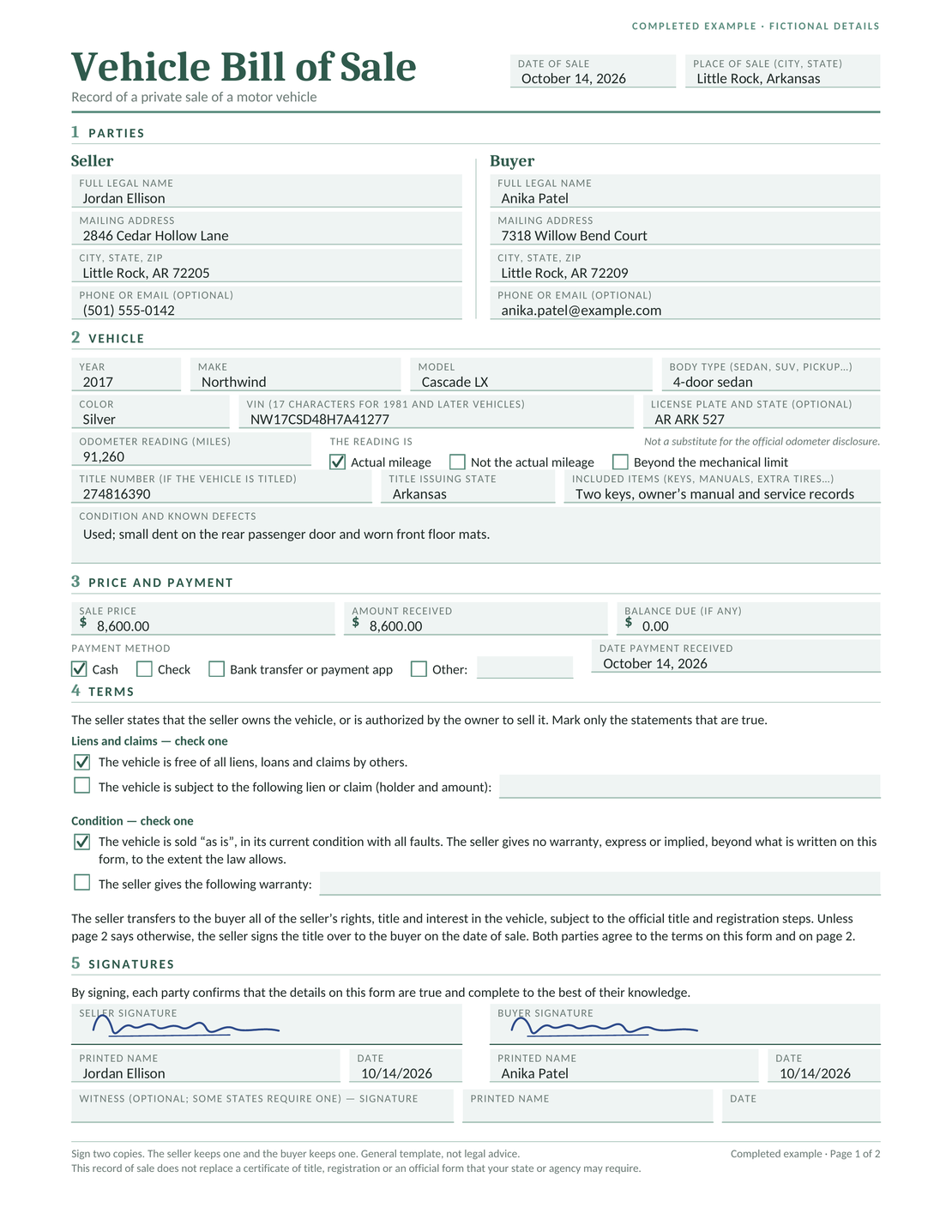
This fictional Little Rock sale records Jordan’s 2017 Cascade LX sold to Anika for $8,600. The full amount is received, leaving a zero balance. A small dent in the rear passenger door and worn front floor mats are disclosed in the condition section.
Page 2 confirms that two keys, the owner’s manual and service records were handed over at the sale. It does not show an official odometer disclosure, a seller notice or a processed title application. Those documents and steps must be checked separately for the actual transfer.
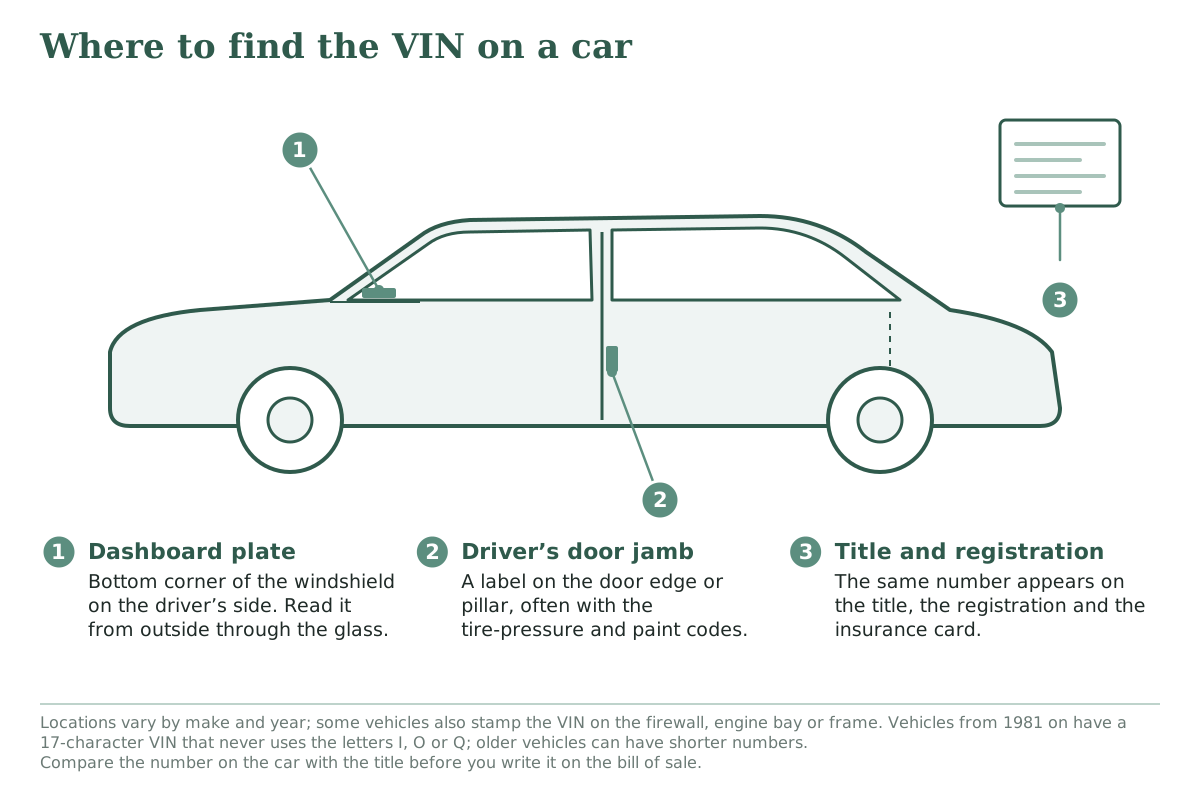
Compare the identifying number on the property with the ownership papers before copying it into your sale record.
Look through the windshield at the driver-side dashboard. Also check the label inside the driver’s door opening. Locations vary, so consult the vehicle’s manual if needed.
Resolve a missing or mismatched number with the agency handling the transfer. Do not guess from an unclear label.
Match the VIN or HIN to the property and ownership papers.
Check whether the title supplies the sale and odometer sections or separate forms are needed.
Record the actual price and trade-in allowance, if any.
List known defects and the keys, equipment and records being delivered.
For a boat package, separate the trailer’s description and price.
Form 10-313 uses seller and buyer signatures without a notary block. A special affidavit needed to correct an altered title may have additional signing requirements.
Keep the Sale Record with the Transfer Papers
Keep a signed copy of the sale record, title assignment and payment evidence. A seller claiming a replacement-vehicle tax credit should also preserve the documents and dates supporting that claim.
The buyer should keep proof of submitting the title and registration application. Store any county assessment, tax-payment and insurance records with the new registration, so the next renewal is easier to prepare.
DFA says the completed sale and odometer sections on an Arkansas title with control number 3003001 or higher can be sufficient. Older Arkansas and out-of-state titles require the separate documents described in its registration instructions.
The official combined sale and odometer form has buyer and seller signature lines and no notary block. Follow any separate requirements for a special affidavit or corrected title.
Ordinary motor vehicles use a 60-day period. Trailers and motorboats use 30 days. DFA’s instructions also address the release of a prior lien.
DFA says boats from 2020 onward receive titles; earlier boats use registration. Confirm the existing ownership record and obtain the documents for the boat being purchased.
DFA’s Notice of Transfer of Ownership describes filing as optional. Keep the signed title and sale records regardless, and do not confuse a notice with the buyer’s application.
After 14 days, continue for
$12.99/month
only if you choose to upgrade.
We use cookies to provide you with the best possible experience. Cookies also help us analyze user behaviour so we can continue to improve our website. View our cookie policy.