Choose a free Connecticut bill of sale template for a vehicle, boat or trailer. Record the price, payment and condition before the property changes hands.
Check which ownership papers the buyer needs and how the seller should cancel a vehicle registration.
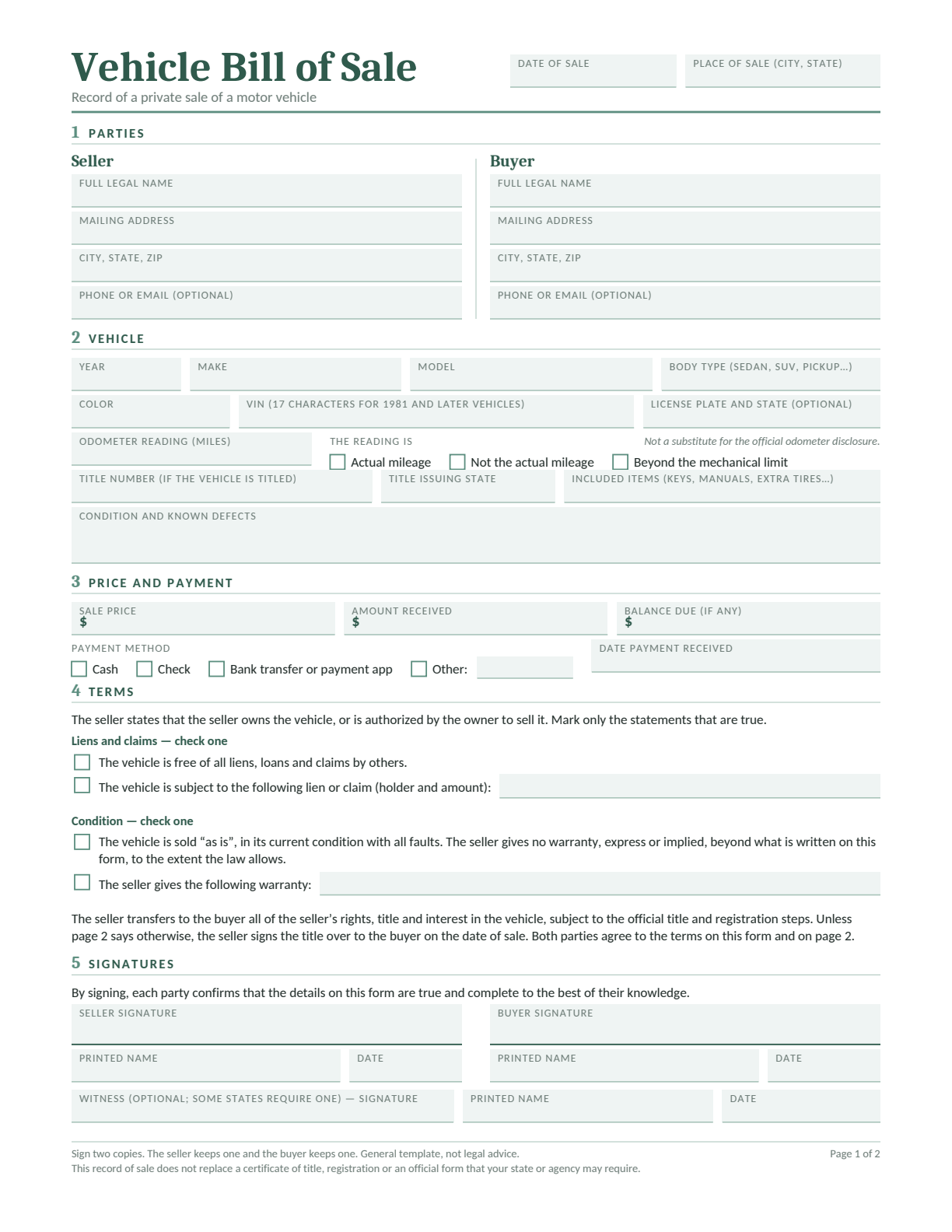
Record the seller and buyer, the vehicle’s VIN and mileage, and the price agreed for the sale. Keep the amount received separate from any remaining balance. Describe known defects and list included keys, documents and equipment.
Edit in Word or Google Docs, type into the fillable PDF, or print the blank PDF to complete by hand.
In Google Docs, sign in and choose Make a copy. Use page 2 for extra terms, then keep both pages together.
A Connecticut bill of sale identifies the property, the people making the sale and the amount paid. It gives the buyer a purchase record and helps the seller show when the property left their ownership.
Connecticut DMV requires a bill of sale with the ownership evidence for a new vehicle registration. You can use the state’s H-31 or write your own with the required information. The bill accompanies an assigned title or other accepted ownership papers; it does not complete registration.
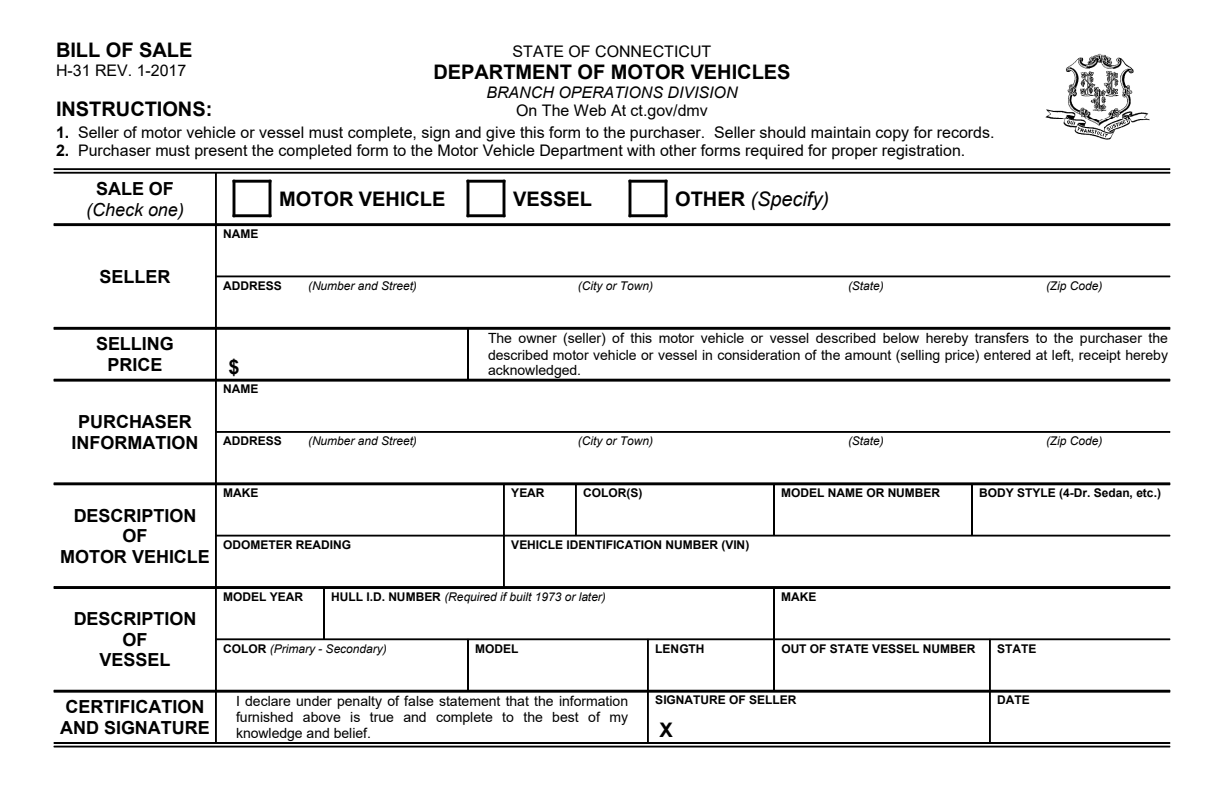
Connecticut Bill of Sale H-31
H-31 is Connecticut DMV’s bill of sale for a motor vehicle, vessel or other property. The seller completes and signs it, gives it to the purchaser and keeps a copy. The purchaser submits it with the other registration documents.
What to Fill In
Sale type and parties: Select the property type and enter the purchaser’s and seller’s names and full addresses.
Price and description: Enter the selling price. Complete the vehicle section with its VIN and mileage, or the vessel section with its HIN, size and other identifying details.
Seller certification: The seller checks the completed details, then signs and dates the certification. H-31 has no buyer signature line or notary block.
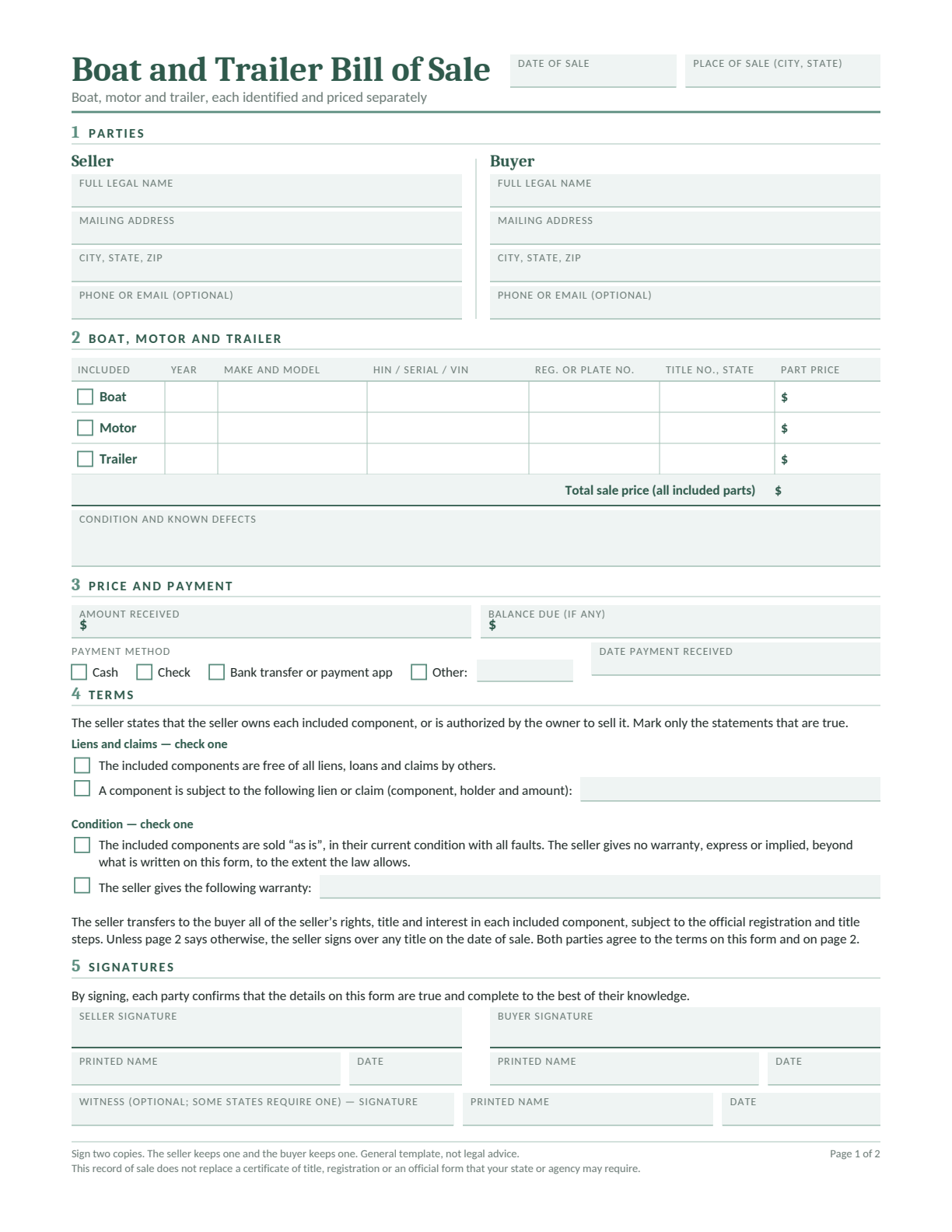
For a boat and trailer package, identify and price each item clearly. A vessel HIN and a trailer VIN describe different property.
Preview of the official form. Rev. 1-2017. Open its PDF for the complete form and instructions.
Prepare the Bill of Sale and Ownership Papers
For a Connecticut-titled car, complete the title assignment and give the buyer a signed bill of sale. DMV’s private-sale instructions accept a self-written bill with both parties’ names and addresses, the make, model, year, color and VIN, the sale price, sale date and seller’s signature.
Write the mileage consistently on the sale record and required title disclosure. H-31 includes an odometer box, but a mileage entry in a separate receipt does not excuse the title’s disclosure requirements.
Seller: Remove Plates and Cancel Registration
Give the buyer the completed ownership papers and keep copies. Remove your plates. Cancel the registration with DMV and print the cancellation receipt if you do it online.
Keep insurance in place while the registration is active. DMV warns that property tax assessment can continue until cancellation; retain the receipt and bill of sale if your town’s assessor needs evidence of the sale. See the seller’s cancellation steps.
Buyer: Gather the Registration Documents
Check the seller’s name and the VIN against the ownership document before paying. For an ordinary used car, gather the assigned title, bill of sale, identification, insurance and registration/title application H-13B. Check any emissions or VIN-verification requirement for the vehicle.
Arrange registration before driving under your ownership. A seller’s old plates and the signed bill are not a new registration. Use DMV’s registration checklist to prepare for the appointment.
Buying an Older Car Without a Title
Connecticut does not require a title for vehicles more than 20 model years old. For a qualifying non-titled vehicle, DMV calls for the previous owner’s registration and a supplemental assignment Q-1 and/or H-31. This age exemption is different from losing a title that the vehicle still requires. Check the accepted proof of ownership before completing a purchase without one.
Connecticut Boat Bill of Sale Templates
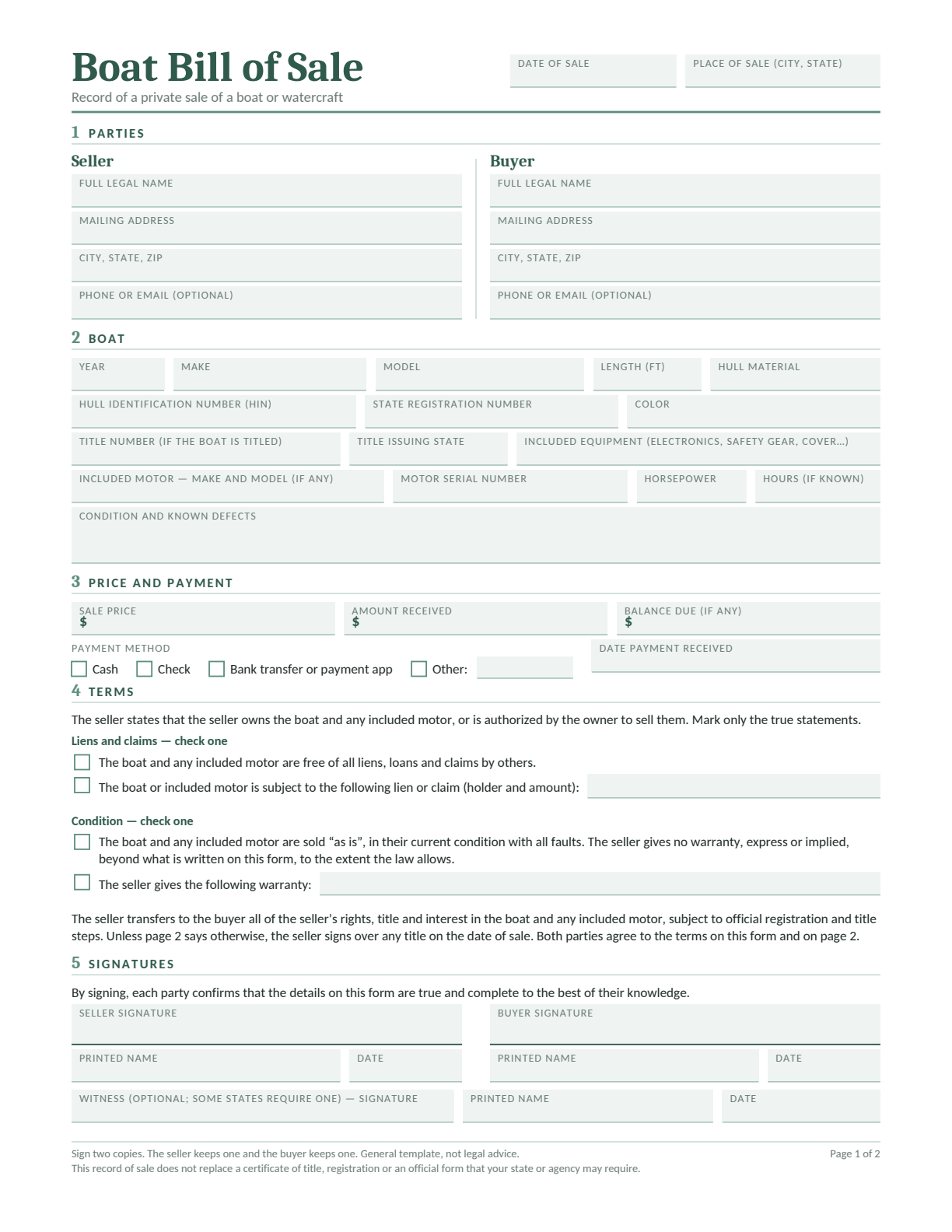
Use the boat template for the hull and included equipment, or the bundle template when a motor and trailer are sold with it. Separate their descriptions and prices so the buyer can prepare the vessel and trailer applications.
Boat Bill of Sale
Record the boat, included equipment, condition, price and payment.
Connecticut DMV registers vessels; DEEP publishes the boating rules. DEEP requires registration before launching for boats with motors of any size and boats powered only by sail that are at least 19½ feet long. Buying a currently registered boat still requires registration in the buyer’s name.
Complete the vessel application B-148 and supply the bill of sale and ownership evidence. Connecticut titles model-year 2017 and newer vessels unless an exemption applies; for a 2016 or older vessel, obtain the last owner’s registration. The existing Connecticut vessel number stays with the boat. DMV’s vessel checklist explains the documents.
Where a Connecticut vessel title is required, section 15-206 sets a 20-day application period after the later of the ownership transfer or Connecticut becoming the state of principal use. Keep this title deadline separate from the requirement to register before launching.
Connecticut Trailer Bill of Sale
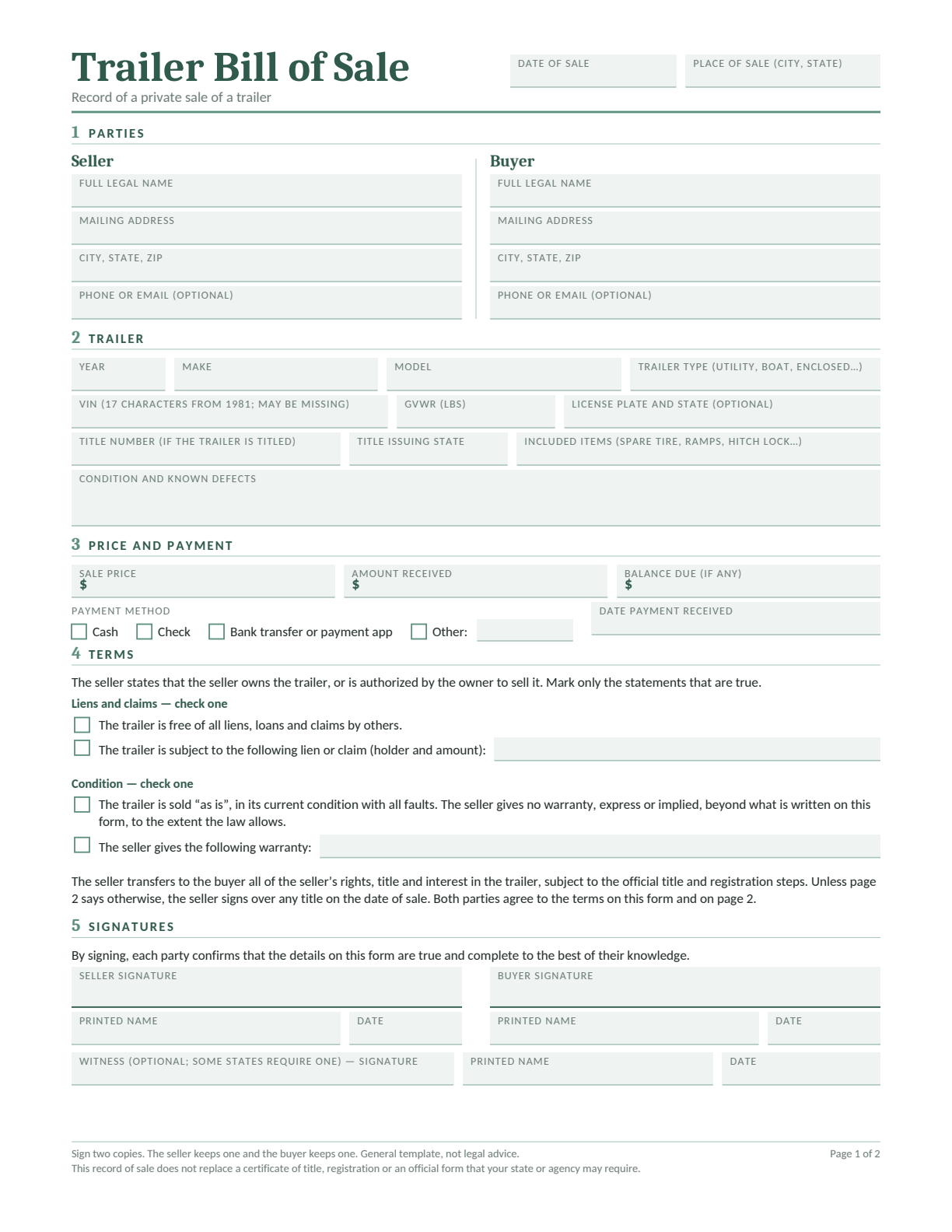
A trailer needs its own ownership record even when it carries a boat purchased in the same deal. Record its VIN, weight information and separate price, along with any title or previous registration handed over.
Trailer Bill of Sale
Describe the trailer and included equipment, then record the price, payment and any remaining balance. Use page 2 for extra terms, such as collection arrangements.
Edit in Word or Google Docs, type into the fillable PDF, or print a blank copy. Complete both pages and keep them with the ownership papers.
Connecticut’s title exemption covers trailers with a gross weight of 3,000 pounds or less. That exemption does not itself remove the registration requirement. Follow DMV’s personal-use trailer registration instructions and bring the bill of sale plus the ownership evidence appropriate to its age, weight and prior state.
If a manufacturer’s VIN label has become illegible or disappeared, do not fill the gap with a number you choose. DMV has a trailer VIN reassignment process requiring ownership evidence, a bill of sale showing the original VIN and an inspection. Homemade trailers also need DMV’s inspection and identification process.
Completed Connecticut Bill of Sale Example
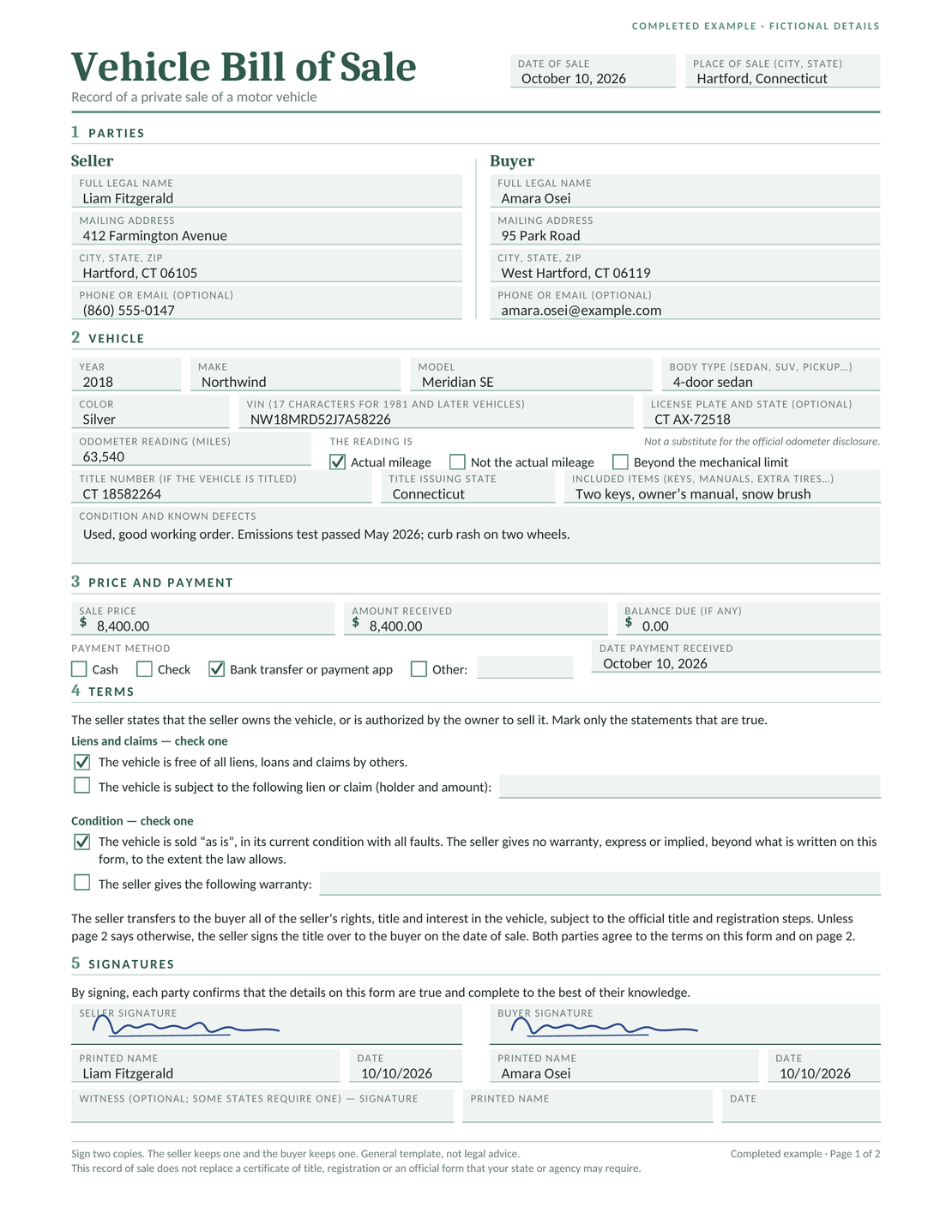
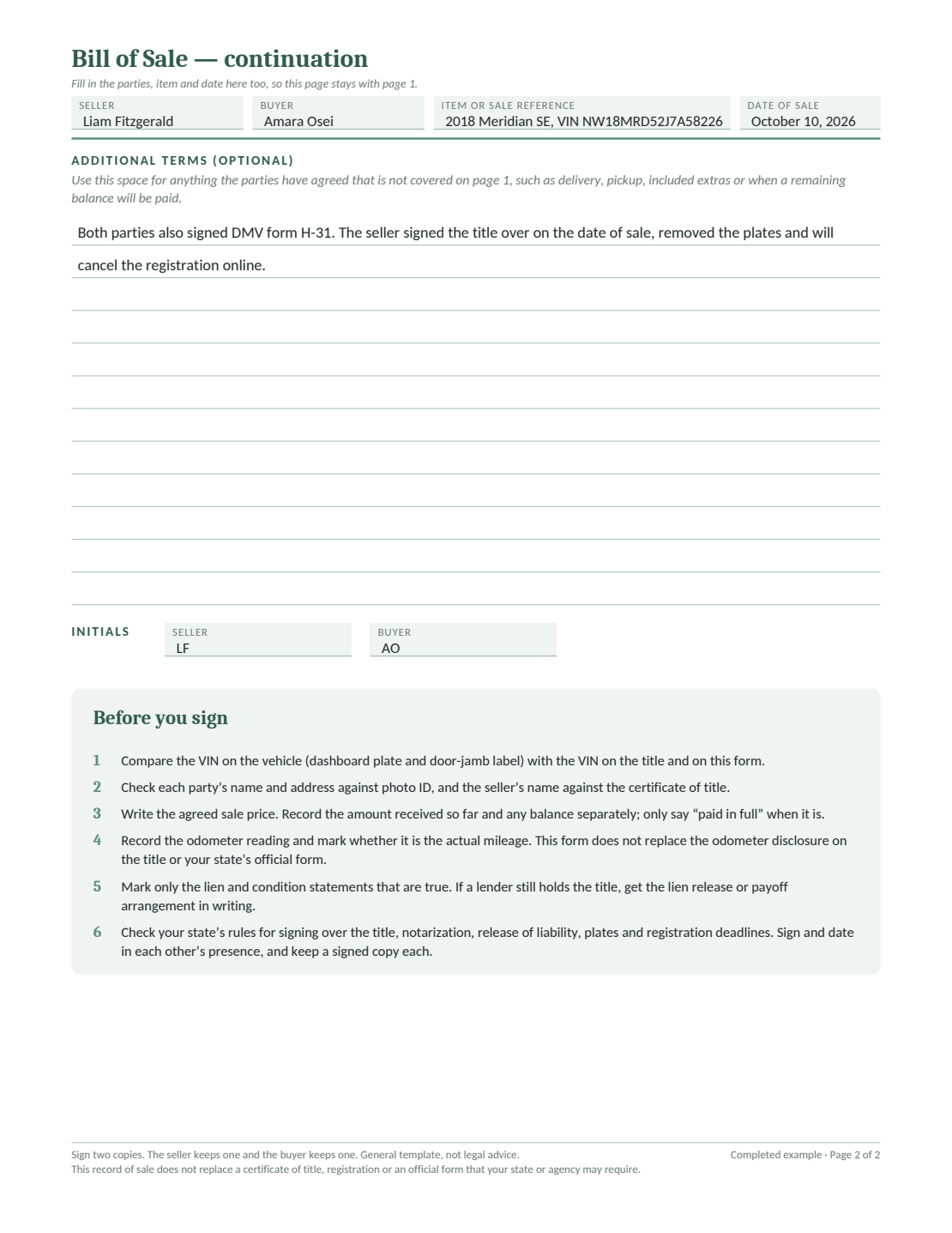
In this fictional Hartford sale, Liam sells Amara a 2018 Meridian SE for $8,400. The full price is recorded as received, with no balance left to pay. The condition notes mention a May emissions test and curb rash on two wheels, and list two keys and a snow brush with the car.
The second page records that the title was assigned and the plates removed, while online registration cancellation is still planned. It also mentions a separate H-31. The official H-31 requires the seller’s signature; the statement that both people signed does not mean that form has a buyer signature line. The example is not a DMV cancellation receipt.
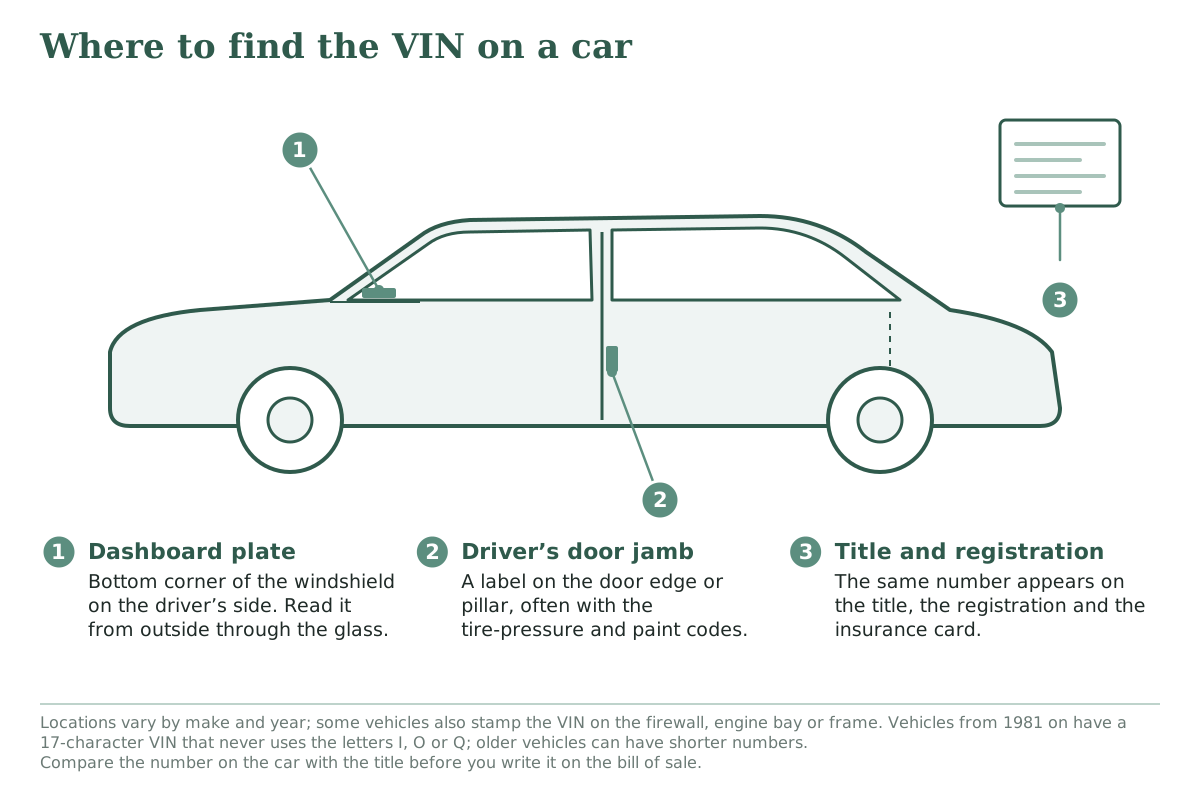
Compare the identifying number on the property with the ownership papers before copying it into your sale record.
Look through the windshield at the driver-side dashboard. Also check the label inside the driver’s door opening. Locations vary, so consult the vehicle’s manual if needed.
Resolve a missing or mismatched number with the agency handling the transfer. Do not guess from an unclear label.
Match the car VIN, boat HIN or trailer VIN to its ownership papers.
Confirm which title or previous registration the buyer will receive.
Write the actual price, amount received and remaining balance separately.
List known damage and any included motor, trailer or equipment.
Agree who keeps plates and when the registration cancellation will be completed.
H-31 has no notarization requirement on the form. A separate special-purpose document, such as a power of attorney or ownership affidavit, may have its own signing instructions.
Keep the Sale Record with the Transfer Papers
Keep the sale record, a copy of the assigned ownership papers and proof of payment together. For a vehicle, add the registration cancellation receipt when it arrives; it may be useful if the town sends a later property tax bill.
The buyer should save the registration application and resulting documents. If the agreement promises a later title, document or equipment delivery, keep evidence that it actually happened.
Yes. DMV accepts a self-written bill containing the buyer’s and seller’s names and addresses, vehicle description including VIN and color, price, sale date and seller’s signature.
H-31 has a seller certification and signature line without a notary block. Follow separate notarization instructions if your transfer requires another document.
Connecticut exempts vehicles more than 20 model years old from its title requirement. The previous registration and accepted assignment or sale documents are still needed; the bill alone is not automatically enough.
A vehicle can remain subject to town property tax assessment until DMV registration is canceled. Keep the receipt and bill of sale to support any request to the local assessor.
Yes, if it identifies and prices the property clearly. The buyer still completes the separate vessel and trailer registration steps with DMV.
After 14 days, continue for
$12.99/month
only if you choose to upgrade.
We use cookies to provide you with the best possible experience. Cookies also help us analyze user behaviour so we can continue to improve our website. View our cookie policy.