Rhode Island asks for a bill of sale with a private vehicle registration. An older car’s paperwork also depends on the title changes that began in 2024.
Choose a vehicle, boat or trailer template and check the different signing requirements for each.
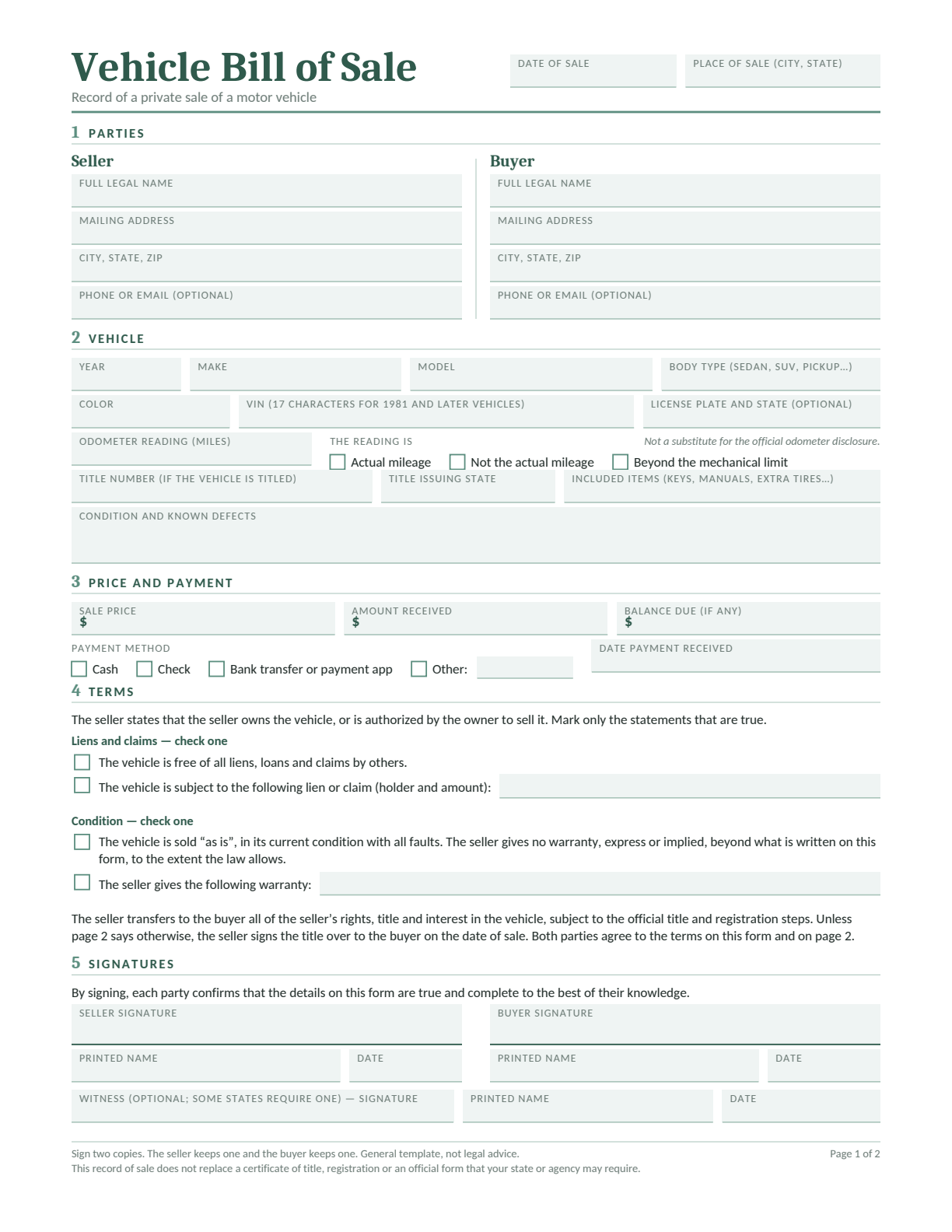
Use the vehicle form to record the VIN, mileage, condition and money received. DMV’s own sample also asks for cylinder count, so add that in the description or Additional terms if you use this general template.
Edit in Word or Google Docs, type into the fillable PDF, or print the blank PDF to complete by hand.
In Google Docs, sign in and choose Make a copy. Use page 2 for extra terms, then keep both pages together.
A Rhode Island bill of sale identifies the buyer, seller and property and records the sale date, price and payment. Keep it with the title or other accepted ownership evidence for the item.
DMV handles vehicles and trailers. DEM handles boats and outboards and requires notarized sale documents for used purchases. The vehicle sample’s signing rules should not be carried over to a boat sale.
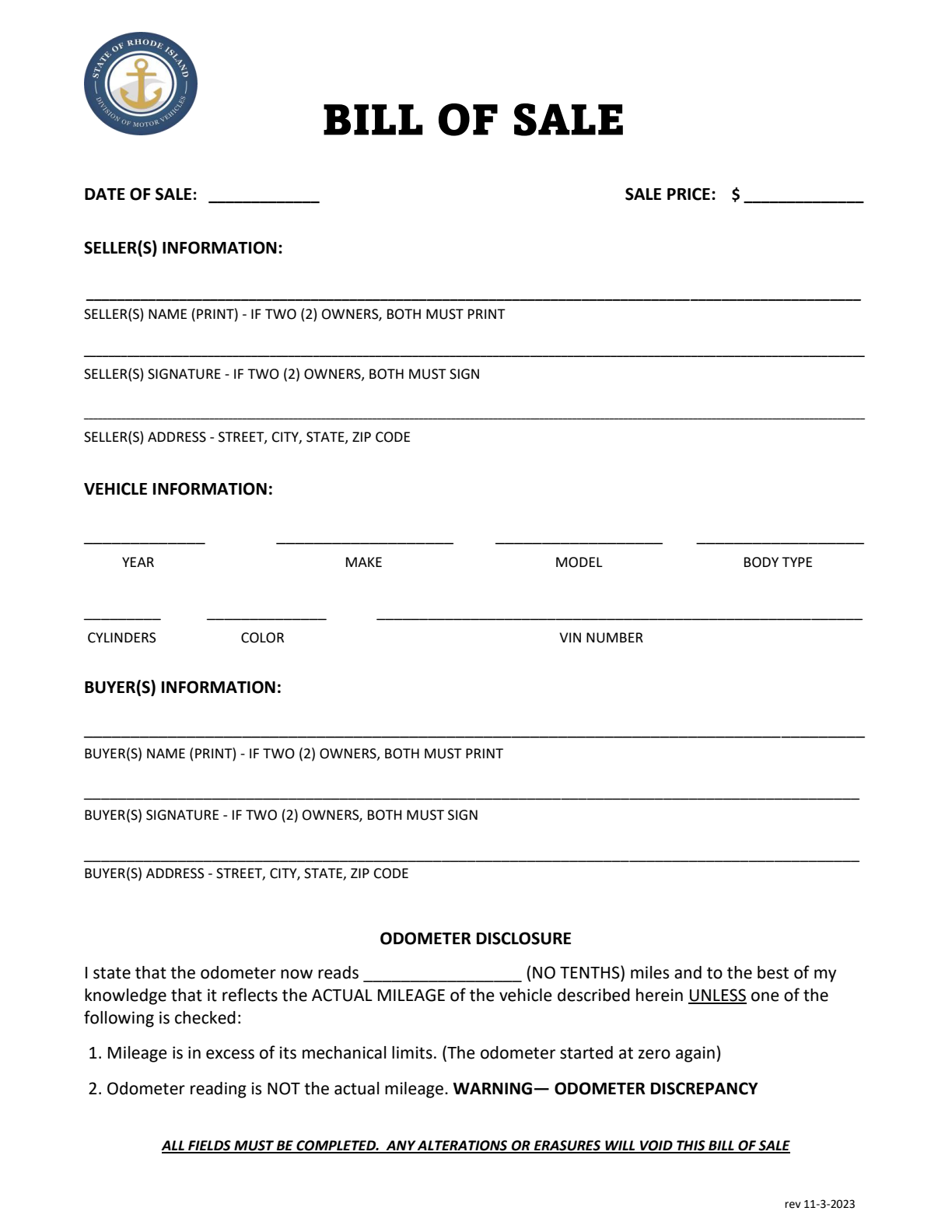
Rhode Island DMV Sample Bill of Sale
DMV offers this sample for the vehicle sale record required in its private-party checklist. It includes an odometer statement and ordinary signature lines, with no notary block.
What to Fill In
Sale and parties: Enter the date, price, printed names, addresses and signatures. Where there are two owners, follow the sample’s requirement for both.
Vehicle: Complete the year, make, model, body type, cylinders, color and VIN.
Odometer and review: Enter the reading and correct status. Complete all fields before signing; the sample warns that alterations or erasures void it.
Complete the title’s required disclosure and assignment too; the sample is not an issued title.
Preview of the official form. 11-3-2023. Open its PDF for the complete form and instructions.
Check the Car’s Title and Registration History
DMV’s private-party checklist includes a bill of sale alongside the accepted ownership documents, TR-1 application, insurance and tax paperwork. Use the assigned title when one exists.
Rhode Island changed its older-vehicle rules on January 1, 2024. Do not assume a model-year-2000-or-older car can always be sold without a title. The DMV registration and title guidance distinguishes vehicles first registered under the former rules from those registered after the change; confirm the seller’s registration history and collect the required proof.
Seller: Supply the Ownership Record
Complete the bill of sale and the appropriate title assignment. Where the former older-vehicle procedure applies, give the buyer the accepted prior ownership evidence as well; a handwritten sale record alone is not enough.
Keep your plates and arrange their transfer or registration cancellation. Retain copies of both pages of the sale record and the ownership papers you handed over. Check a lien release before describing the car as free of liens.
Buyer: Prepare DMV’s Private-Sale Documents
Bring the title or accepted alternative evidence, signed bill of sale, identification, insurance and the applications listed on the new-registration page. Out-of-state ownership records may also trigger a VIN check.
A vehicle’s tax and title obligations can apply even if you do not register it immediately. The DMV titles page explains that distinction. Arrange the tax and title steps promptly instead of treating storage as an exemption.
Rhode Island Boat Bill of Sale Templates
For a Rhode Island used boat or outboard sale, plan for notarization of the seller’s signature. Choose the package template if a trailer is included, with separate identifiers and prices.
Boat Bill of Sale
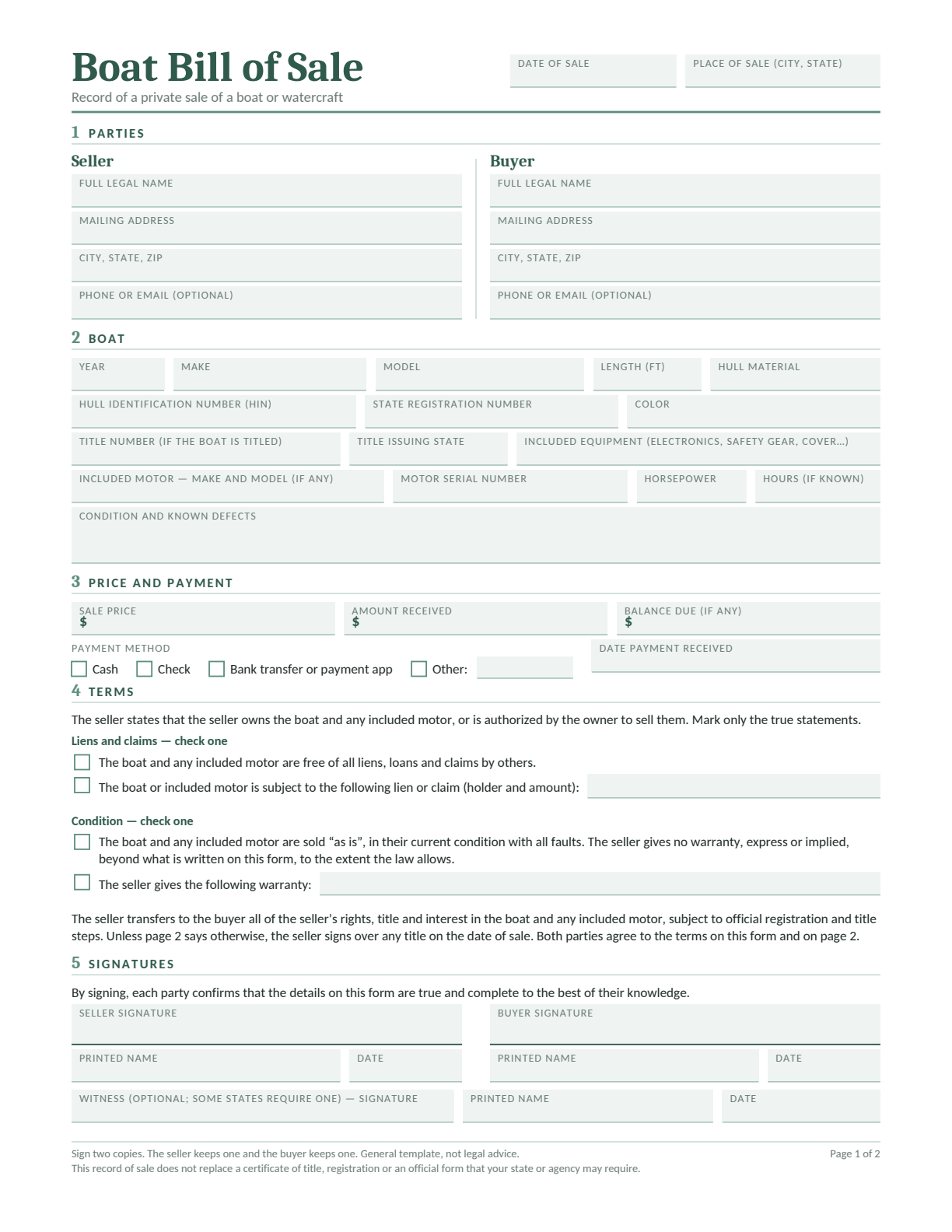
Record the boat, included equipment, condition, price and payment.
DEM’s used-boat instructions require a notarized bill of sale or gift statement from the seller and the applicable assigned title. A boat from a non-titling state needs the seller’s current registration evidence. The boat, title and outboard applications have their own signing requirements.
Vessels 14 feet or less are exempt from the boat-title requirement, but powered boats can still require registration. DEM also has a separate outboard-motor application. Collect a tracing of the HIN and record the motor serial number before the seller leaves.
The seller reports the boat sale to DEM within 15 days by completing the reverse of the registration certificate and mailing it as instructed. The boat trailer goes to DMV, not into the boat registration.
Rhode Island Trailer Bill of Sale
Rhode Island uses the trailer’s gross vehicle weight rating for the title threshold. Copy GVWR from the manufacturer’s label; it is different from empty weight.
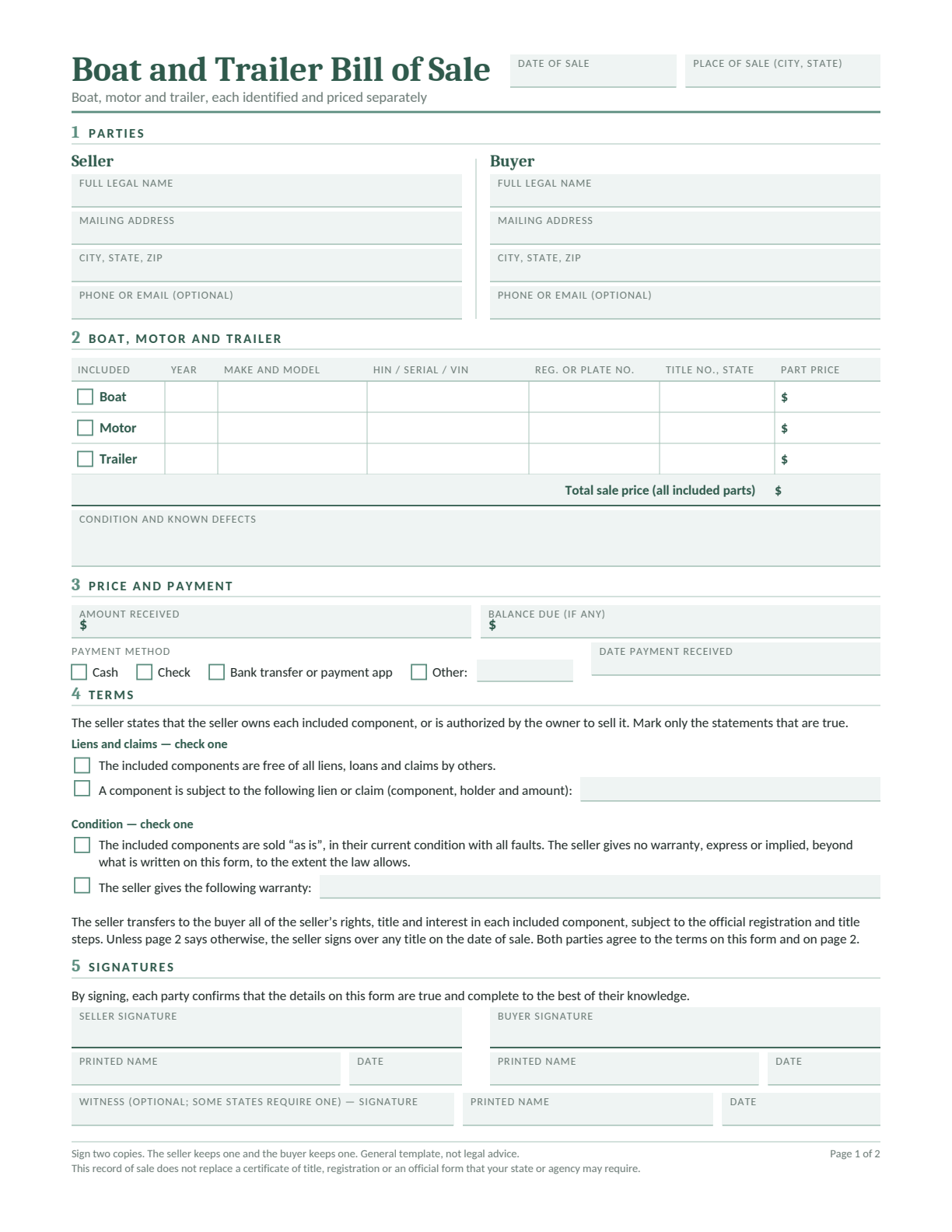
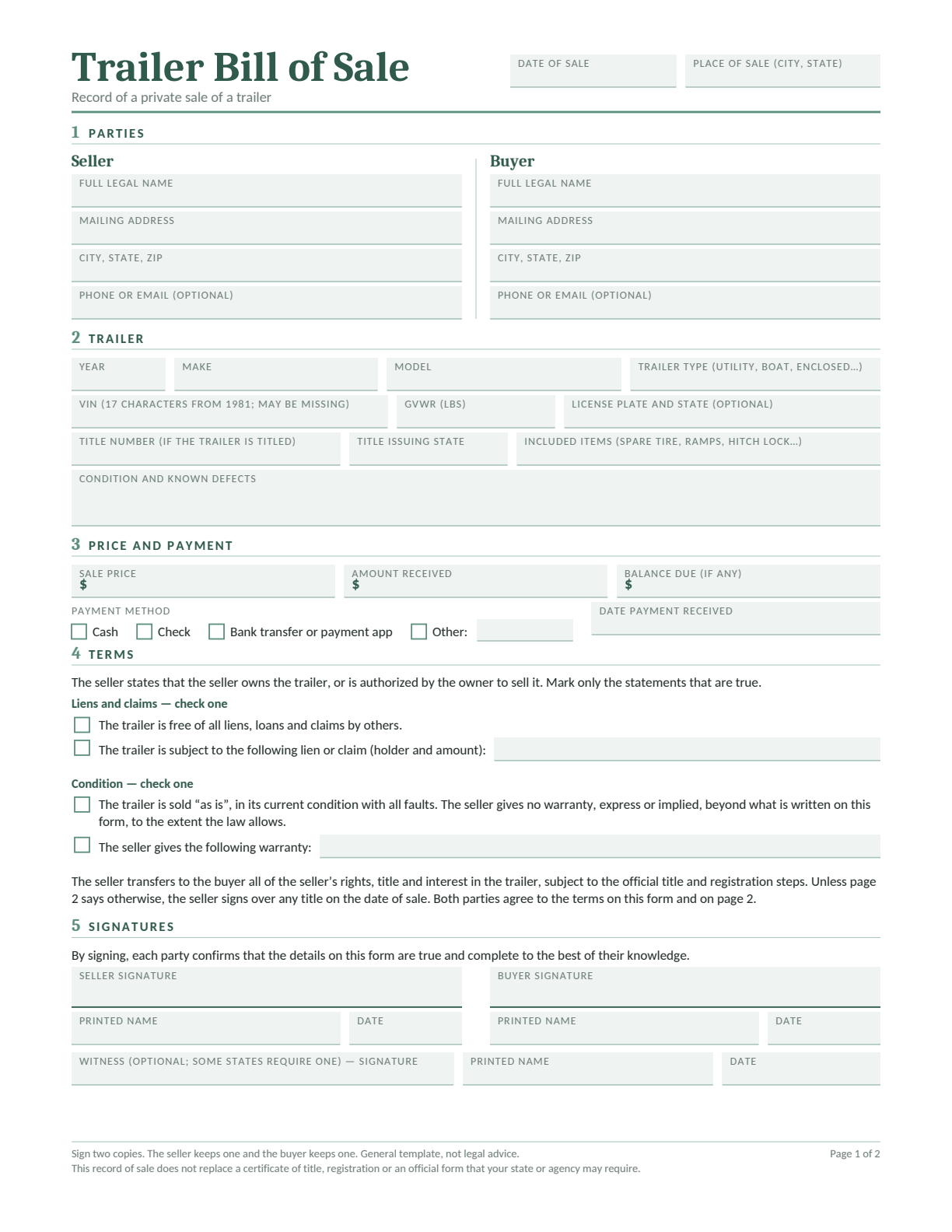
Trailer Bill of Sale
Describe the trailer and included equipment, then record the price, payment and any remaining balance. Use page 2 for extra terms, such as collection arrangements.
Edit in Word or Google Docs, type into the fillable PDF, or print a blank copy. Complete both pages and keep them with the ownership papers.
DMV’s trailer checklist requires a title for trailers with GVWR of 3,001 pounds or more. The purchase checklist includes a bill of sale, application, tax paperwork and insurance details for the towing vehicle. For a trailer from a non-titling state, collect the accepted proof of the seller’s previous ownership.
Homemade trailers follow a separate affidavit procedure and are not titled. A purchased homemade trailer still needs the bill of sale and proof of previous ownership. Describe the construction history accurately rather than treating missing papers as proof that it is homemade.
Completed Rhode Island Bill of Sale Example
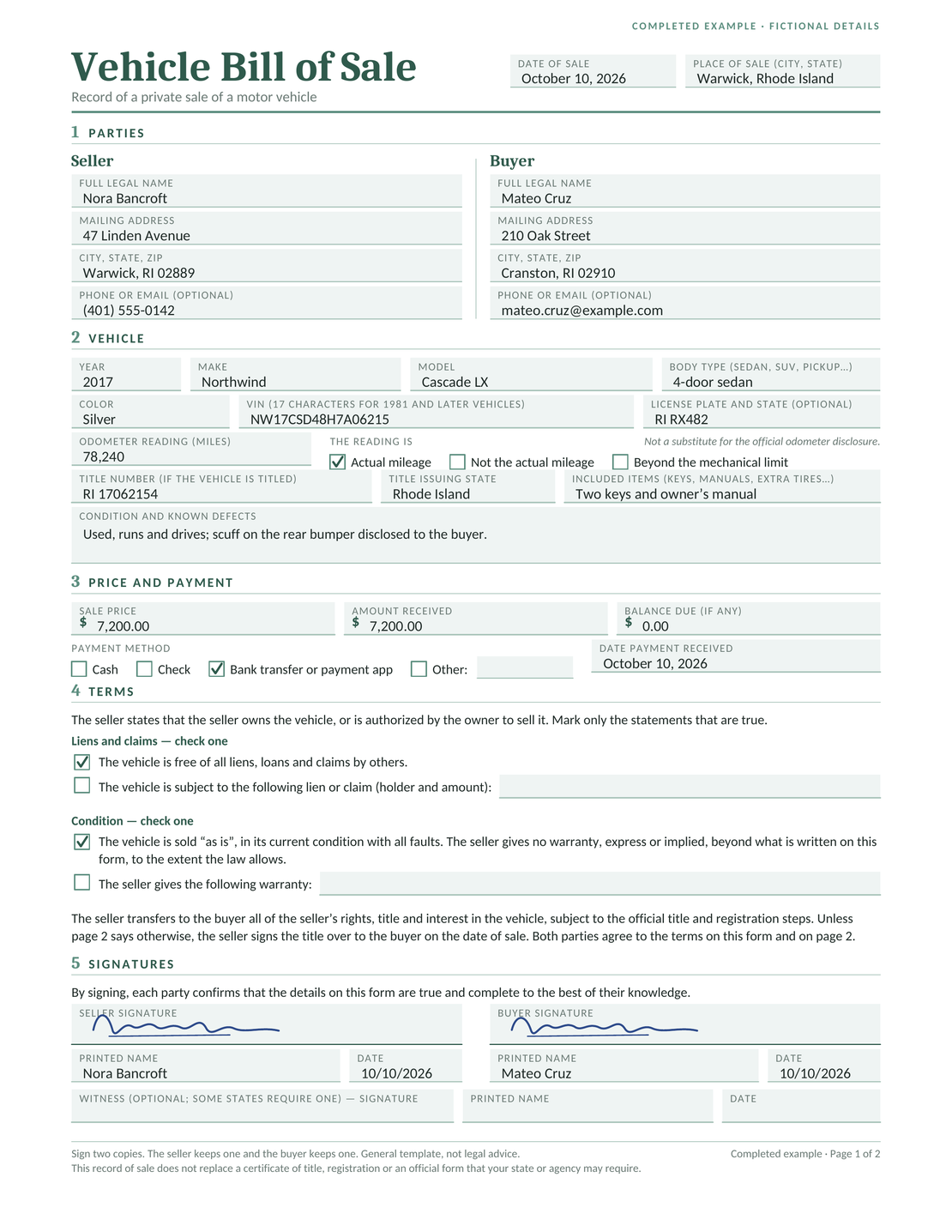
In this fictional sale in Warwick, Rhode Island, Mateo Cruz buys a 2017 Northwind Cascade LX from Nora Bancroft for $7,200.00. The seller records the full $7,200.00 received, leaving a $0.00 balance.
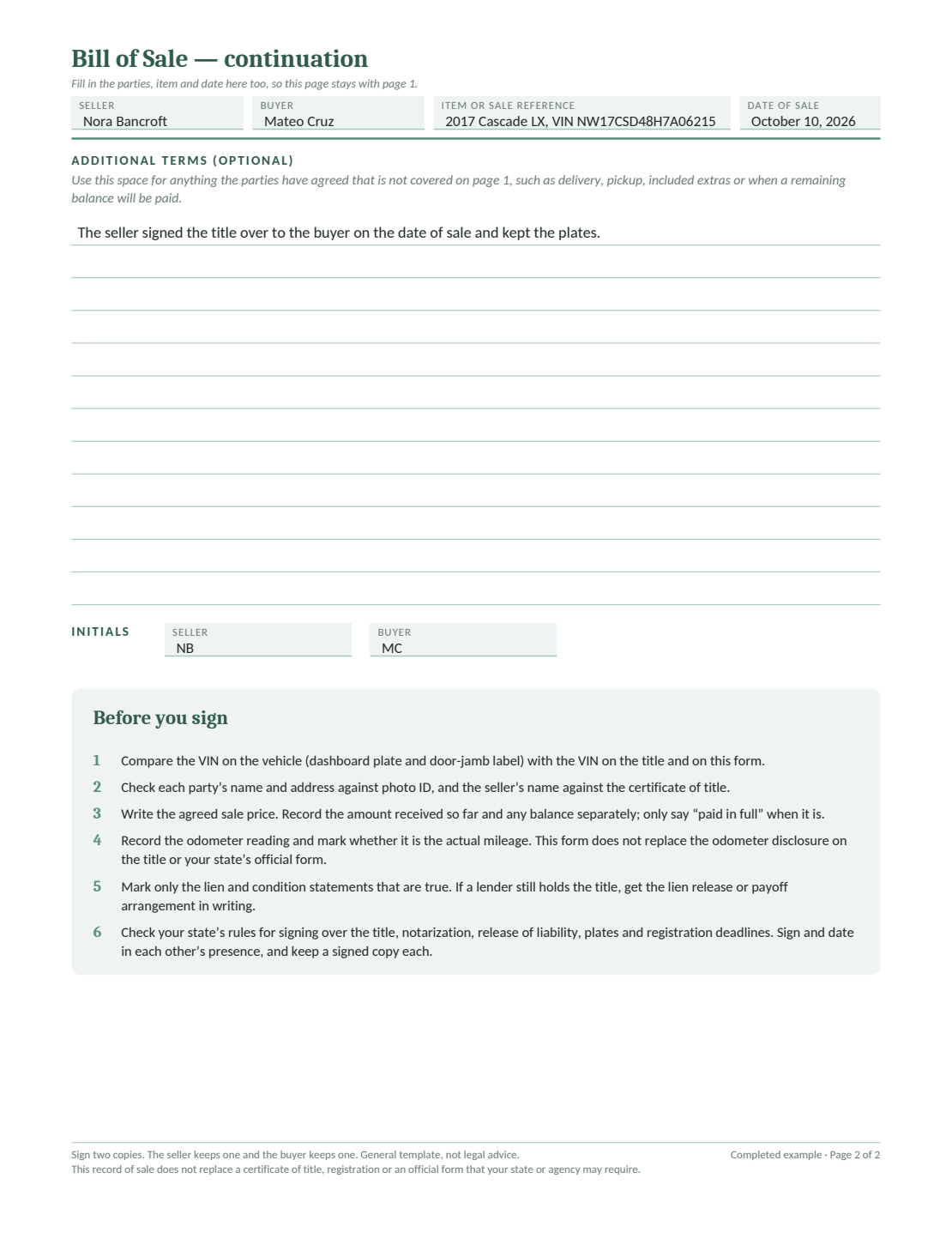
The rear-bumper scuff is disclosed in the condition entry. The handover terms say Nora signs the title over to Mateo on the sale date and keeps the plates, making the ownership paperwork and plate arrangement clear.
The names, identifiers and signatures are fictional. This completed sale record does not show that a title application, registration or seller notice has been accepted by the relevant agency.
Page 1: Parties, vehicle, payment and signatures
Page 2: Agreed handover terms and signing checklist
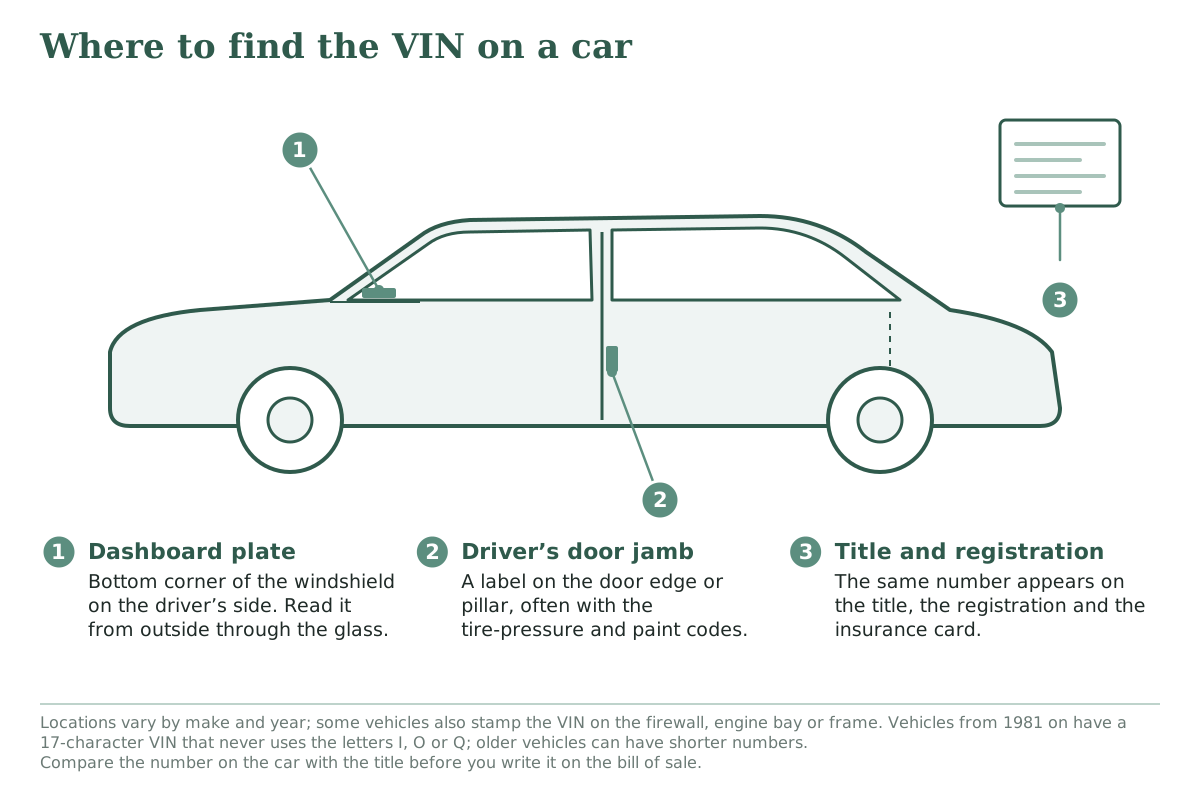
Compare the identifying number on the property with the ownership papers before copying it into your sale record.
Look through the windshield at the driver-side dashboard. Also check the label inside the driver’s door opening. Locations vary, so consult the vehicle’s manual if needed.
Resolve a missing or mismatched number with the agency handling the transfer. Do not guess from an unclear label.
Compare the seller’s name with the ownership record and check every required owner’s signature.
Match the VIN or HIN on the property to the title, registration and sale record.
Record the agreed price, money actually received and any remaining balance separately.
Describe known defects and the equipment included in the price.
Confirm the ownership papers and transport arrangements before handover.
The DMV vehicle sample has no notary block. An absent registrant’s application signature can have separate requirements. DEM requires the seller’s signature on used-boat and outboard sale documents to be notarized; arrange the correct notarial certificate rather than using the optional witness line.
Keep the Sale Record with the Transfer Papers
Give each party a signed copy of both pages. Keep payment evidence, lien releases and copies of the ownership papers with it. If pickup or a final payment happens later, add a dated receipt or acknowledgment that refers to the same vehicle or vessel.
Keep the agency’s receipt when you submit a title application or seller report. Signing a private form and submitting official paperwork are separate actions.
No. The 2024 change means the answer depends on the vehicle’s Rhode Island registration history and existing title record. Obtain DMV’s required ownership evidence before purchase.
It has no notary section. Boat and outboard transactions follow DEM’s separate notarization requirements.
The DMV sample specifically says both owners must print their names and sign when there are two owners. Follow the title’s ownership requirements as well.
No. Rhode Island’s published title threshold is GVWR of 3,001 pounds or more.
The seller has a separate 15-day notice duty to DEM. Keep a copy of that notice as well as the bill of sale.
After 14 days, continue for
$12.99/month
only if you choose to upgrade.
We use cookies to provide you with the best possible experience. Cookies also help us analyze user behaviour so we can continue to improve our website. View our cookie policy.