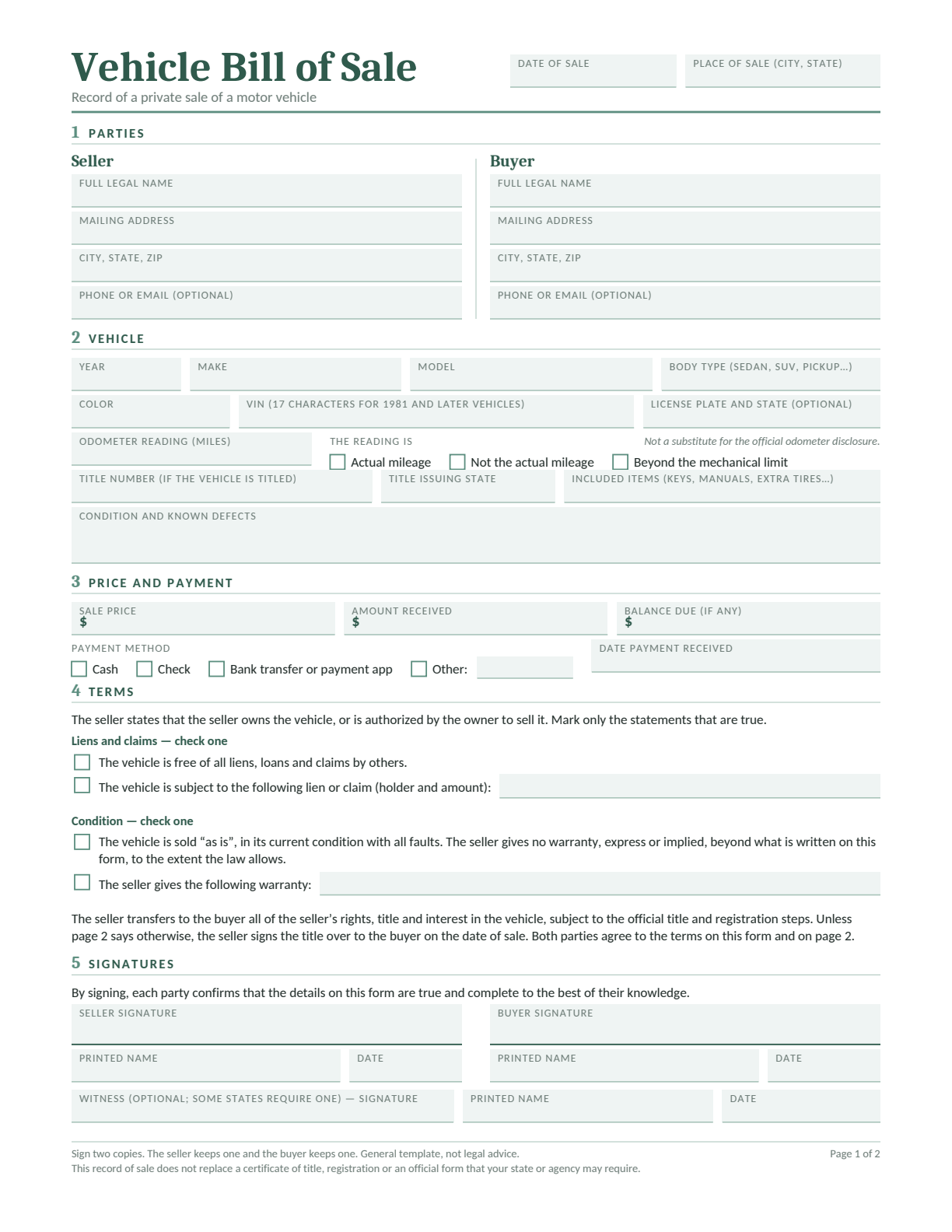
Record the seller and buyer, the vehicle’s VIN and mileage, and the price agreed for the sale. Keep the amount received separate from any remaining balance. Describe known defects and list included keys, documents and equipment.
Edit in Word or Google Docs, type into the fillable PDF, or print the blank PDF to complete by hand.
In Google Docs, sign in and choose Make a copy. Use page 2 for extra terms, then keep both pages together.
A Washington bill of sale records the agreement between seller and buyer. It identifies the property and states the sale date and price. A fuller record can also show payment, included equipment and any promised work.
DOL’s Vehicle/Vessel Bill of Sale is separate from the Report of Sale. Signing it does not submit the seller’s report or put the title in the buyer’s name. Keep those jobs separate when planning the handover.
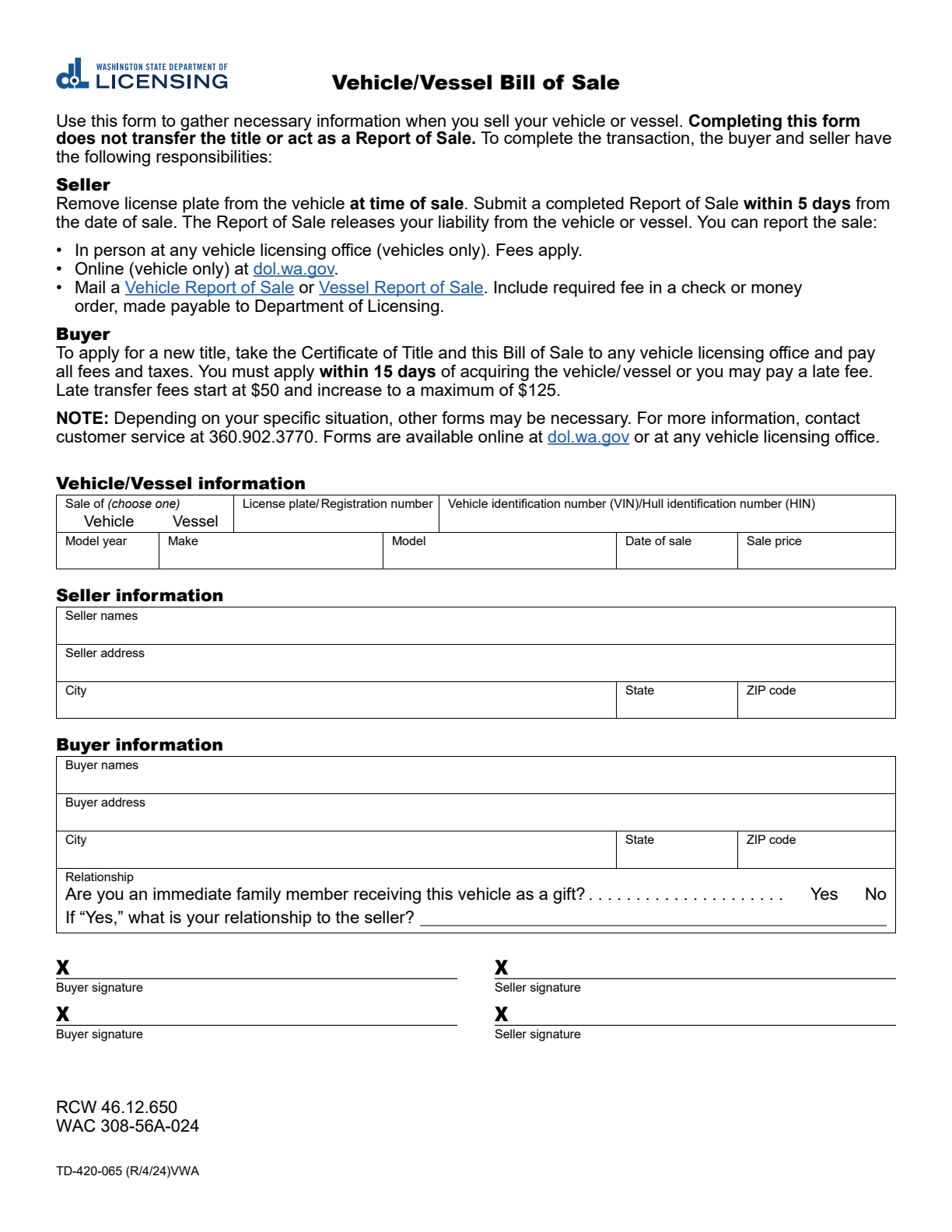
Washington Vehicle/Vessel Bill of Sale
TD-420-065 records the price and parties for a vehicle or vessel. Its printed instructions explain that it does not transfer title or serve as a Report of Sale.
What to Fill In
Property: Choose vehicle or vessel. Enter its plate or registration number, VIN or HIN, year, make and model.
Transaction: Enter the actual sale date and price. Complete the family-gift question only as applicable.
Parties: Use full seller and buyer names and current addresses.
Signatures: Have the buyers and sellers sign their respective lines and keep copies.
Use the title or accepted disclosure document for required odometer reporting.
Preview of the official form. R/4/24. Open its PDF for the complete form and instructions.
Use the Bill of Sale Alongside the Title
DOL’s seller instructions call for a bill of sale signed by both parties unless the sale price and date are included on the title. Use the official TD-420-065 when preparing the transfer papers, and a fuller agreement if you need to record condition or payment terms.
All required owners must release interest. Complete the title’s odometer disclosure when required; the official bill of sale has no mileage field. A buyer should resolve a missing title with a licensing office before taking the vehicle.
Seller: Remove Plates and File a Report
Remove the vehicle’s license plates when you sell it. Give the buyer the properly released title and sale record. Meeting at a vehicle licensing office lets you check the papers together.
Submit the Report of Sale within five business days. Keep its confirmation as well as the signed agreement; the bill of sale itself is not a filed report.
Buyer: Apply Within 15 Days
Apply for the new title within 15 days of delivery. Bring the released title, bill of sale when needed and the application to a vehicle licensing office.
Follow the buyer instructions for signatures on the title application and for new plates or a trip permit. Arrange lawful registration and insurance before driving away.
When a Separate Release Needs Certification
A signature releasing ownership on the title normally does not need notarization. Under Washington’s release-of-interest rule, a separate document used instead of that title release can require notarized or certified signatures. The buyer’s title application also has its own signing instructions. Do not apply a general “no notary” statement to every document.
Washington Boat Bill of Sale Templates
For a Washington boat sale, distinguish the hull, outboard motor and trailer in the agreement. Give each identifying number its own place and separate the trailer price from the vessel and equipment.
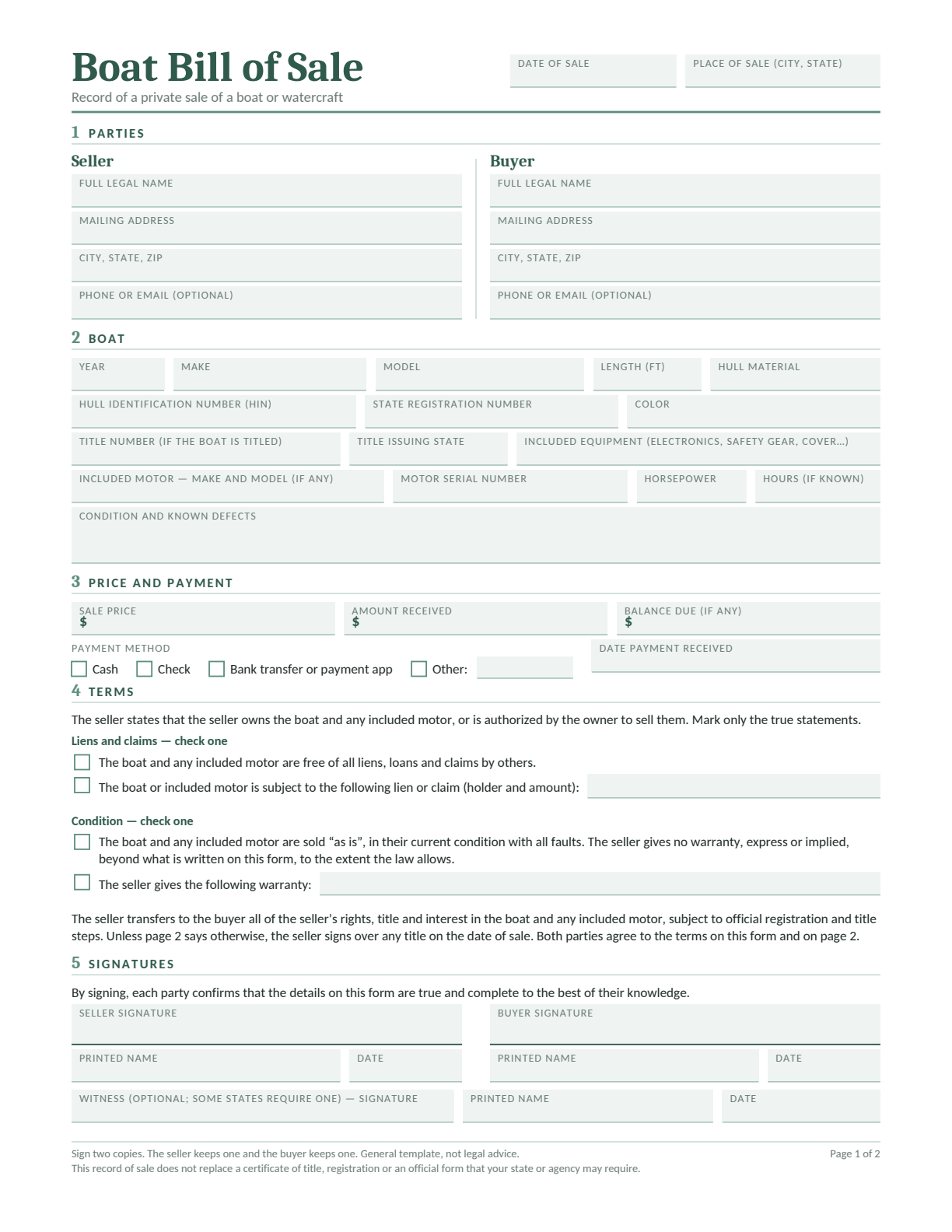
Boat Bill of Sale
Record the boat, included equipment, condition, price and payment.
DOL handles vessel titles and registration through vehicle licensing offices. A buyer acquiring a vessel subject to state titling must apply for title within 15 days. A federally documented vessel has a different ownership-document route.
Give the buyer the released vessel title and a record of the transaction. Use the HIN on the hull, not the motor serial number. The vessel application and a release used instead of the title may have separate certification requirements.
Use the trailer’s VIN and its own sale price, even when it travels with a boat. A manufactured trailer with an existing title follows the vehicle transfer process.
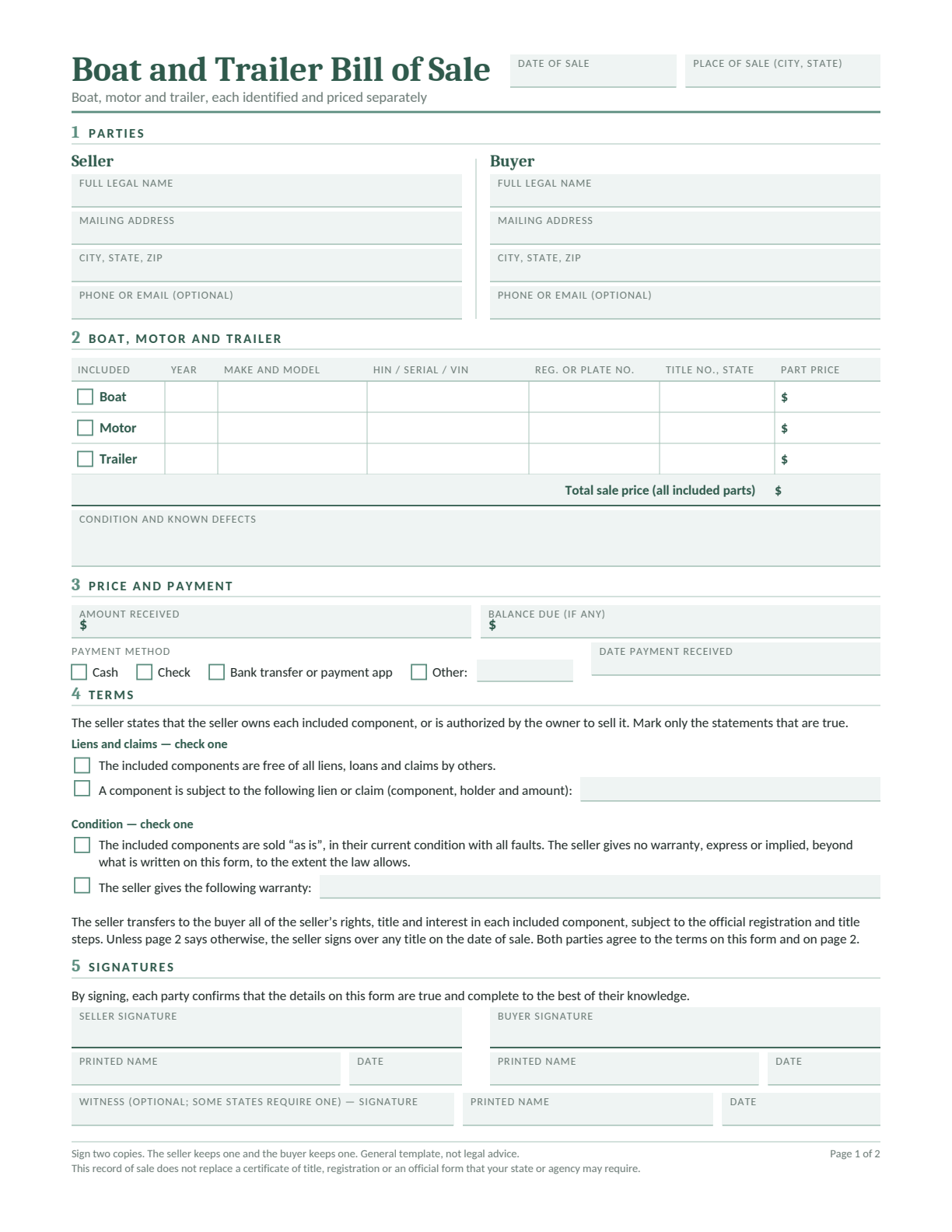
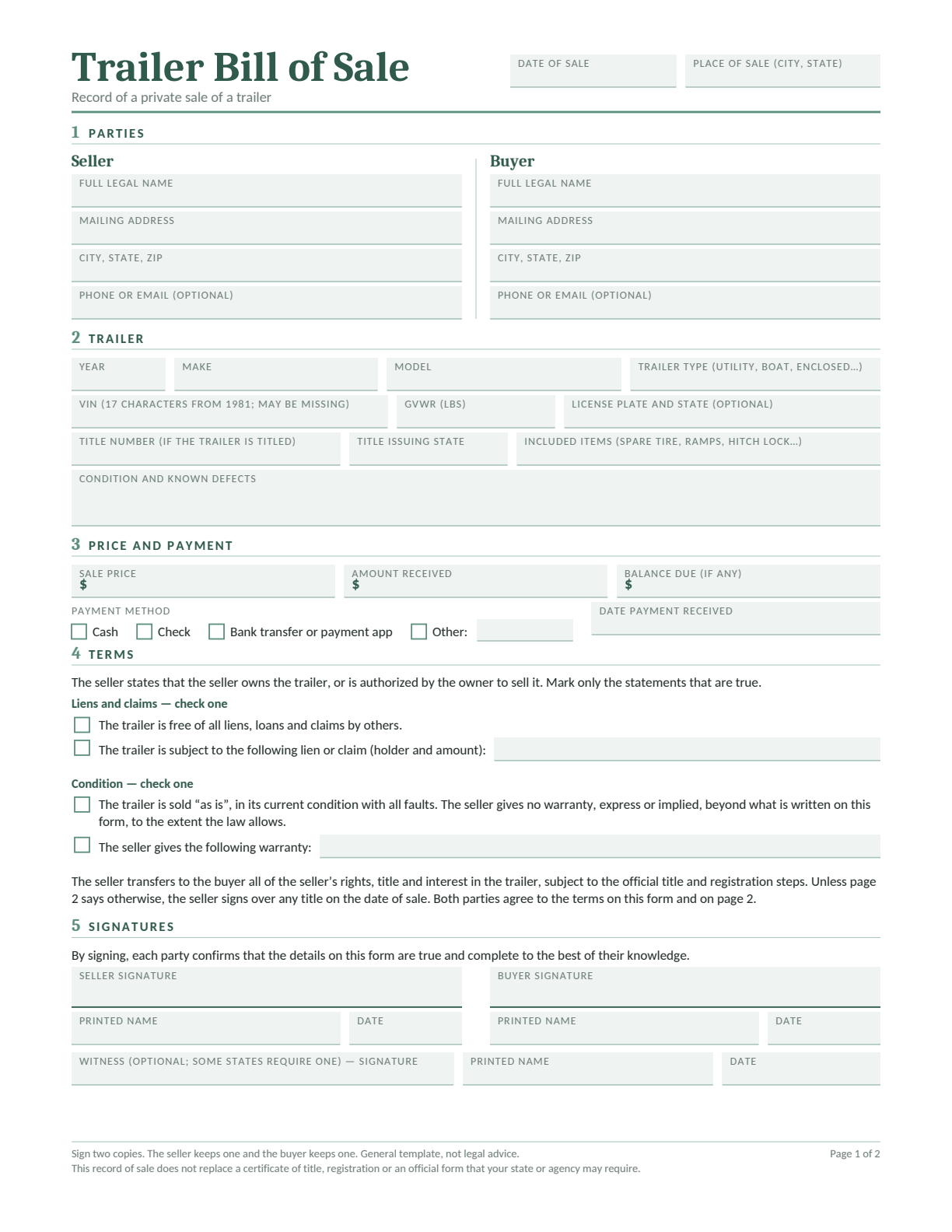
Trailer Bill of Sale
Describe the trailer and included equipment, then record the price, payment and any remaining balance. Use page 2 for extra terms, such as collection arrangements.
Edit in Word or Google Docs, type into the fillable PDF, or print a blank copy. Complete both pages and keep them with the ownership papers.
Before buying an untitled homemade trailer, check the Washington State Patrol inspection requirements. Keep original receipts for the frame and other major components. Private-party parts purchases can require notarized bills of sale.
The inspection process may require a licensing-office referral, a certified scale weight and assignment of a VIN. Do not invent a VIN or assume a signed general form will establish ownership of an unidentifiable trailer.
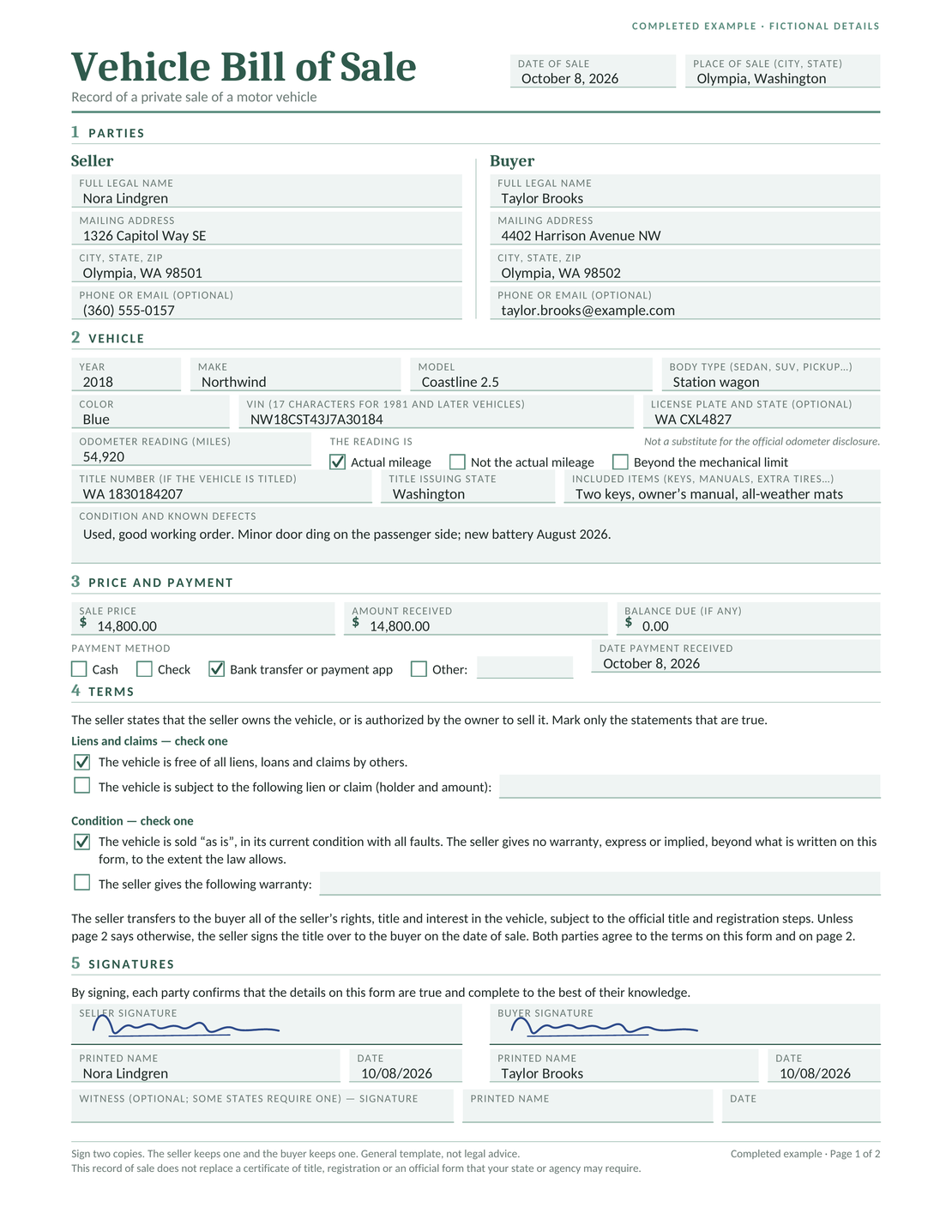
Completed Washington Bill of Sale Example
Nora sells Taylor a blue 2018 Northwind Coastline 2.5 in Olympia for $14,800. The fictional record shows the full price received and no remaining balance.
The vehicle has 54,920 miles. The condition note identifies a minor passenger-side door ding and a battery replaced in August 2026, while the included-items entry lists two keys, the owner’s manual and all-weather mats.
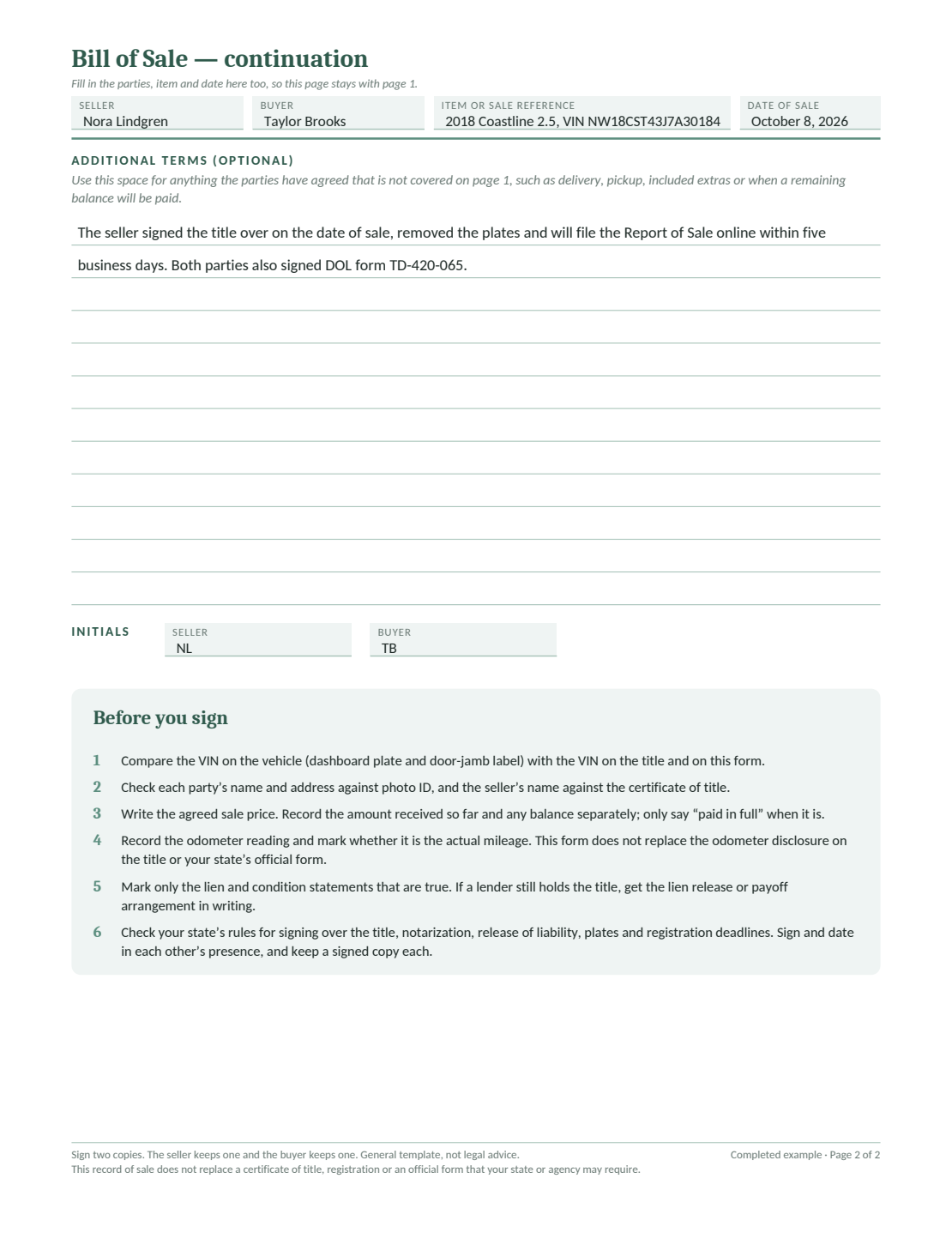
Page 2 says Nora signed over the title and removed the plates. Both parties also signed TD-420-065, and Nora plans to file the Report of Sale within five business days. The example does not prove that DOL received a report or processed the transfer.
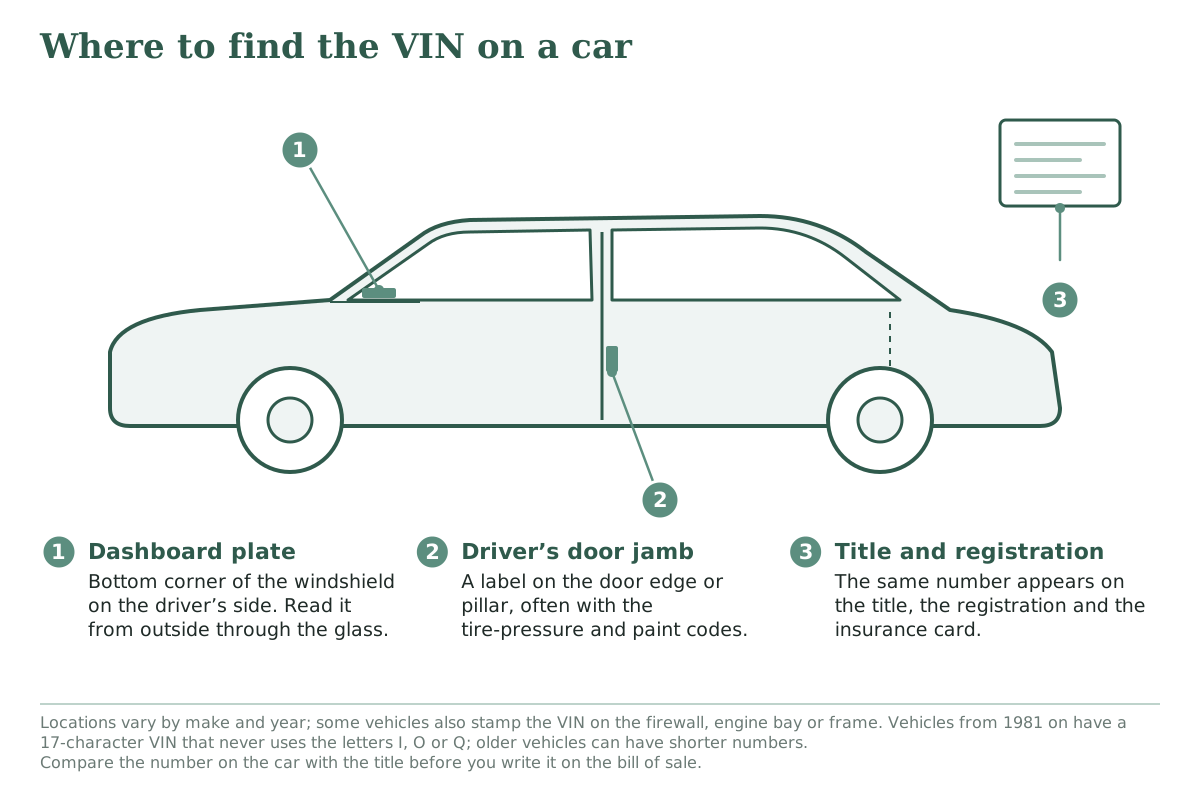
Compare the identifying number on the property with the ownership papers before copying it into your sale record.
Look through the windshield at the driver-side dashboard. Also check the label inside the driver’s door opening. Locations vary, so consult the vehicle’s manual if needed.
Resolve a missing or mismatched number with the agency handling the transfer. Do not guess from an unclear label.
Match the VIN or HIN to the title and the property.
Check that every required owner has released interest.
Record the sale date and price consistently on both documents.
Identify whether a separate release needs notarization or certification.
Plan plates or a trip permit for the buyer’s journey.
The ordinary TD-420-065 has no notary block. A separate release, title application or homemade-trailer ownership document can require additional signing steps.
Keep the Sale Record with the Transfer Papers
Keep both pages of the signed sale record together with copies of the ownership papers and proof of payment. If a balance remains, record the later payment separately and keep it with the original agreement.
Save confirmations for any sale report, title application or registration request. A promise in the bill of sale describes what the parties agreed; the responsible person still needs to complete that action.
No. The bill records the transaction. The Report of Sale tells DOL about it, and the buyer’s title application is another separate step.
DOL says both parties sign a bill of sale unless the title includes both the sale price and date. Keep a signed agreement for any condition, payment or delivery terms.
No. The ordinary official form has no notary block. A record used instead of the title’s release of interest can require notarized or certified signatures under WAC 308-56A-265.
The statute gives the seller five business days to report a vehicle sale. The buyer has 15 days to apply for the new title.
No. The boat and trailer have separate records. Handle the trailer through the vehicle sale and title process.
After 14 days, continue for
$12.99/month
only if you choose to upgrade.
We use cookies to provide you with the best possible experience. Cookies also help us analyze user behaviour so we can continue to improve our website. View our cookie policy.