Free Formal Estimate Template
Present the estimate in a clear formal order
Put the scope, dates, pricing and terms in a clear business order. The structured estimate shows you are prepared and helps customers feel ready to choose you.
Email, print or download your estimate as a PDF.
14-day free trial. No credit card required.
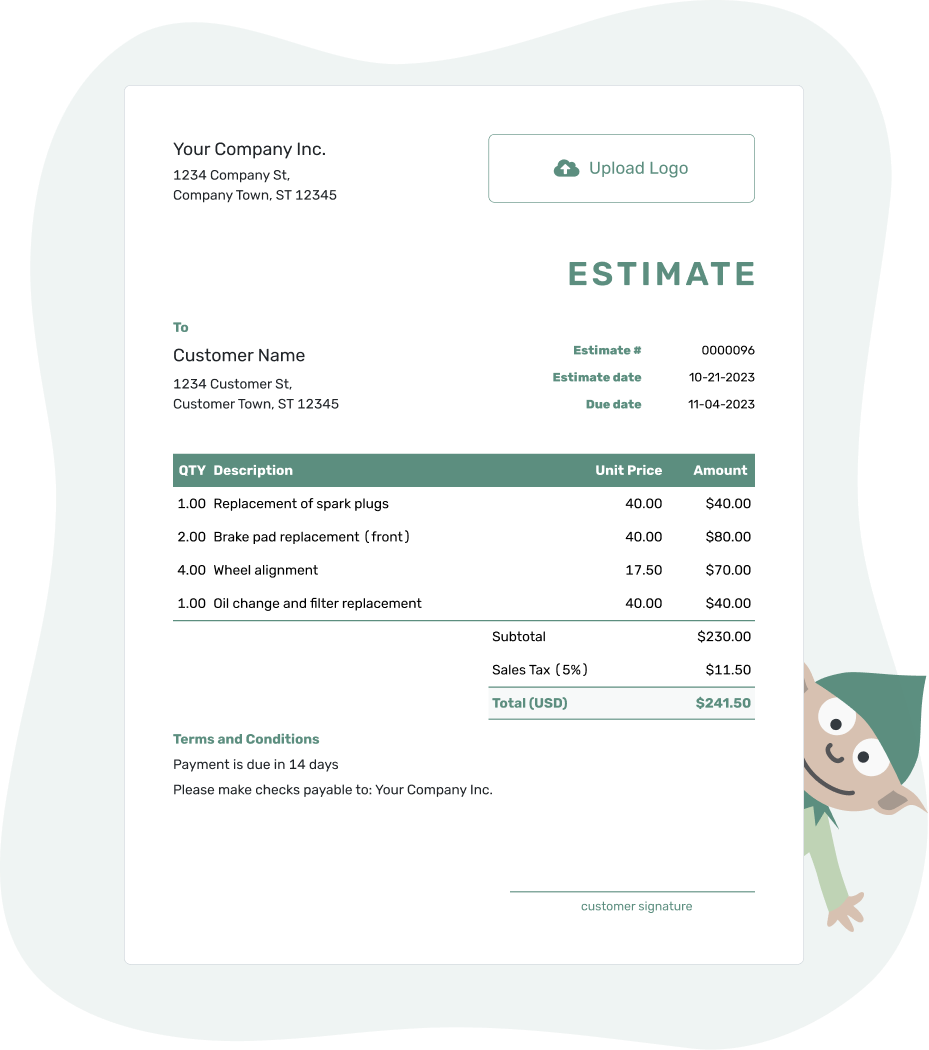
Price the job. Send the estimate. Get back to work.
Formal Estimate Template Examples
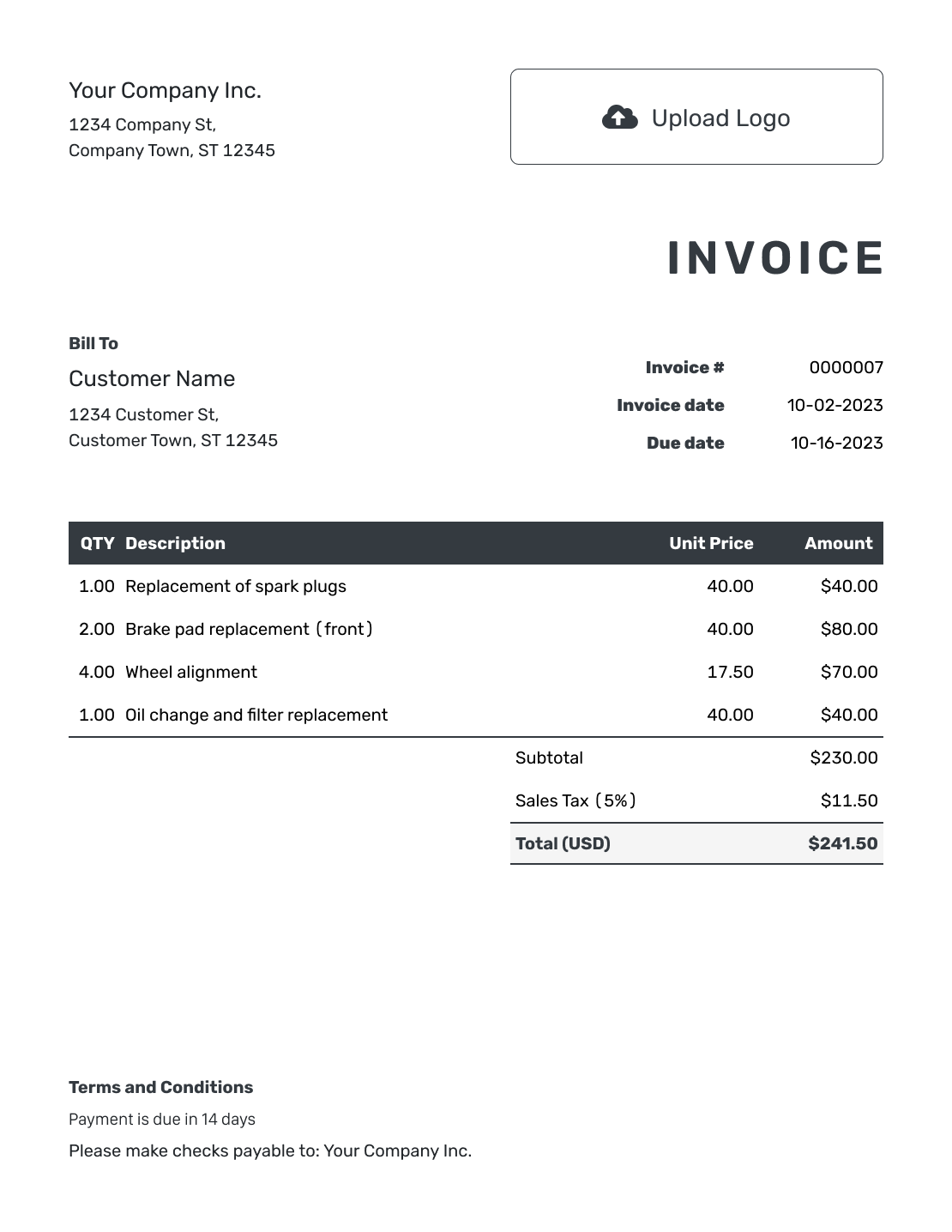
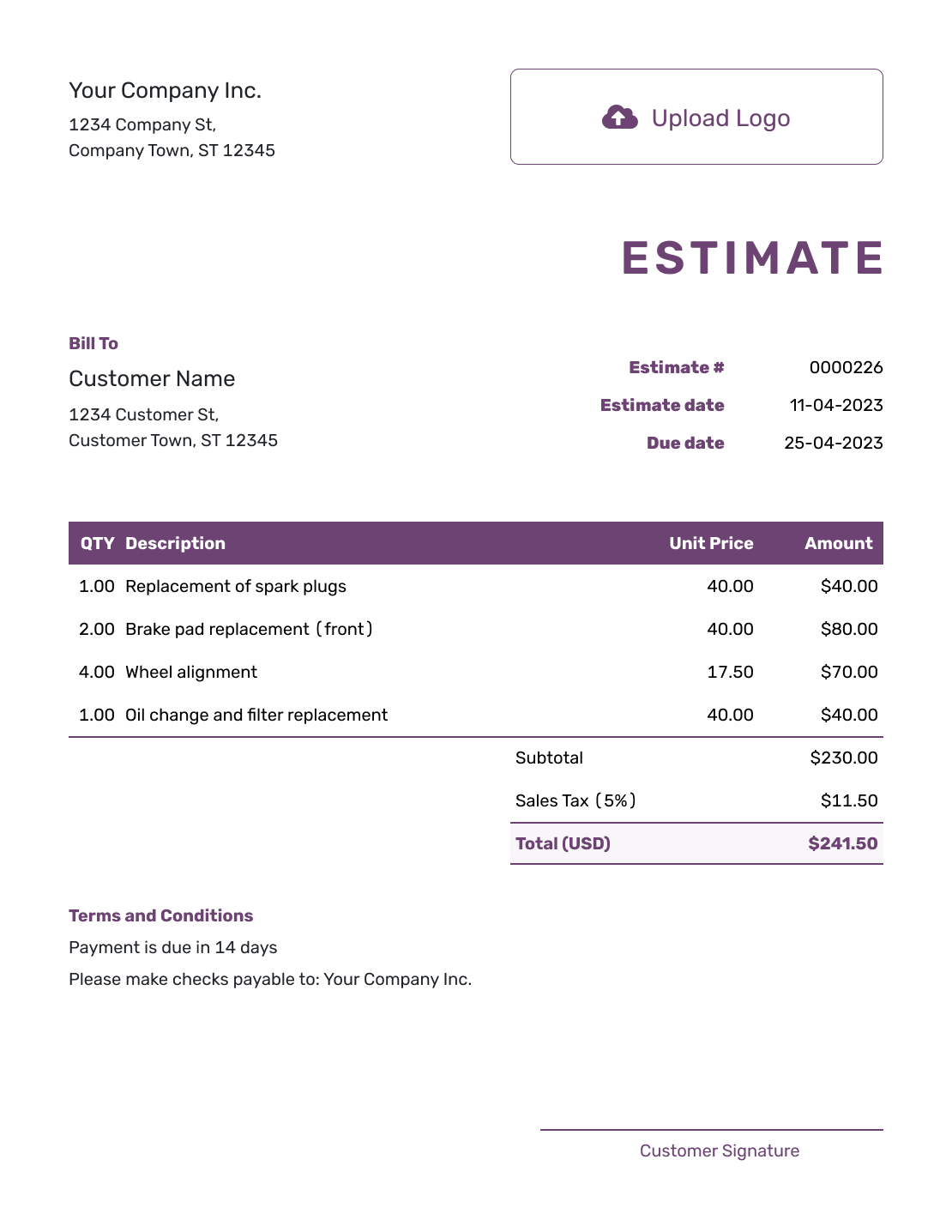
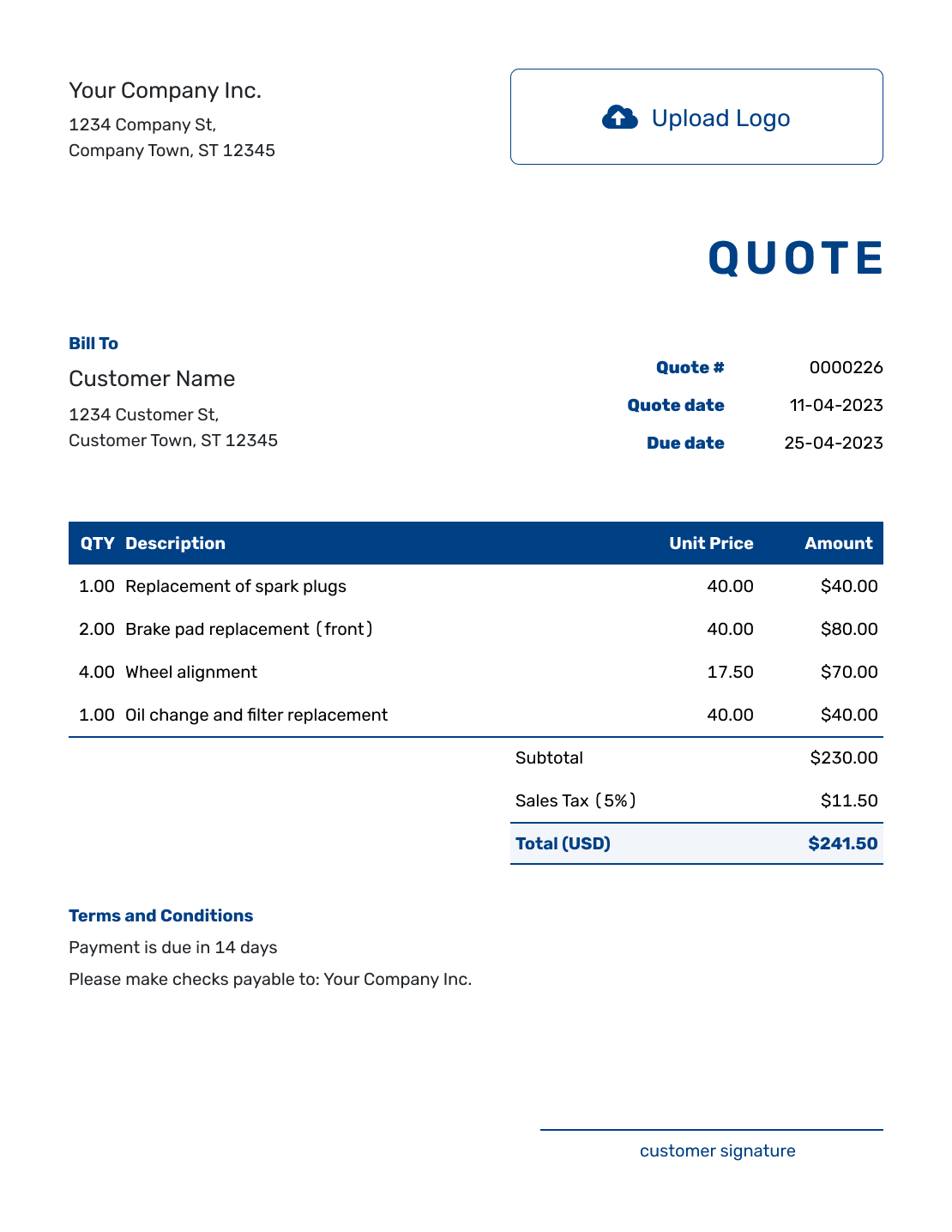
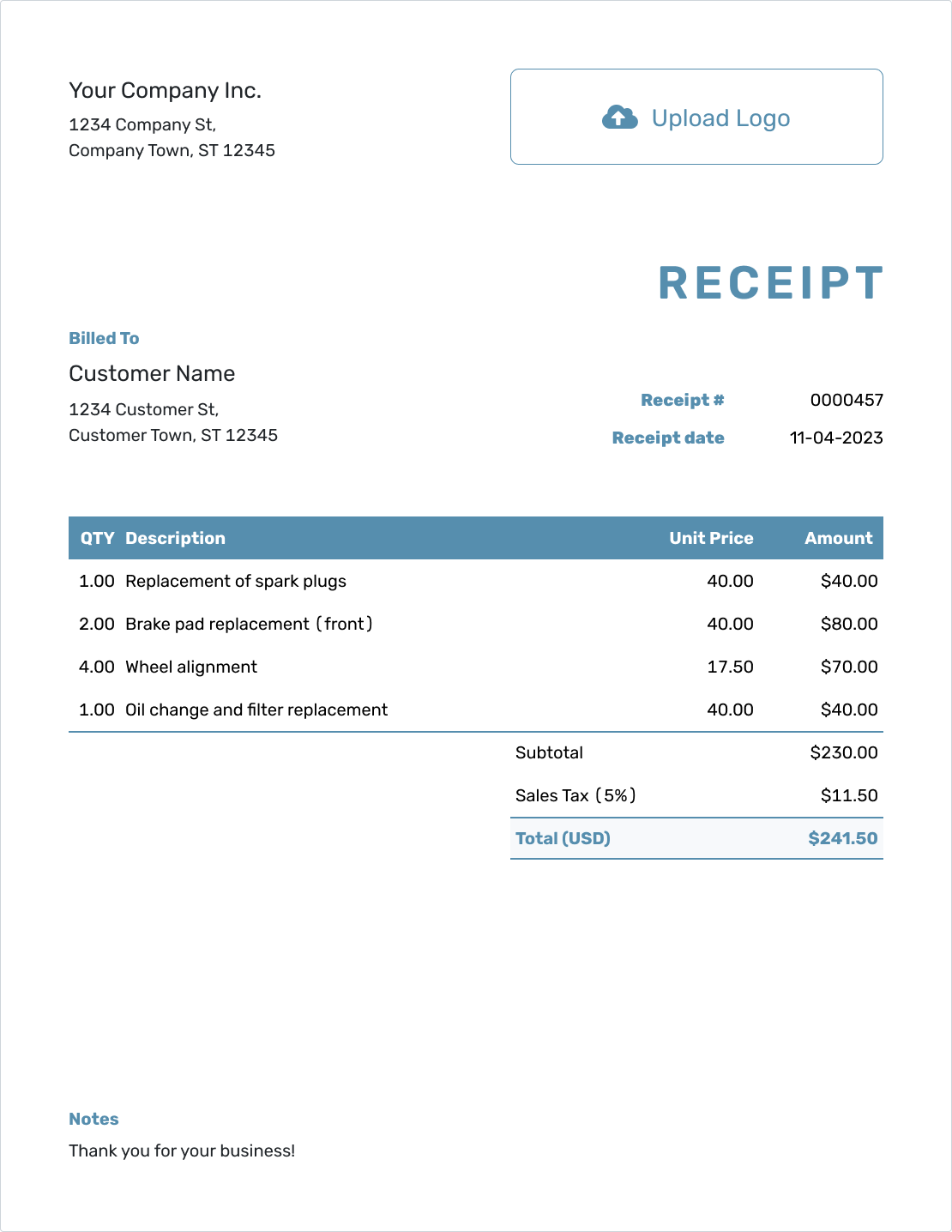
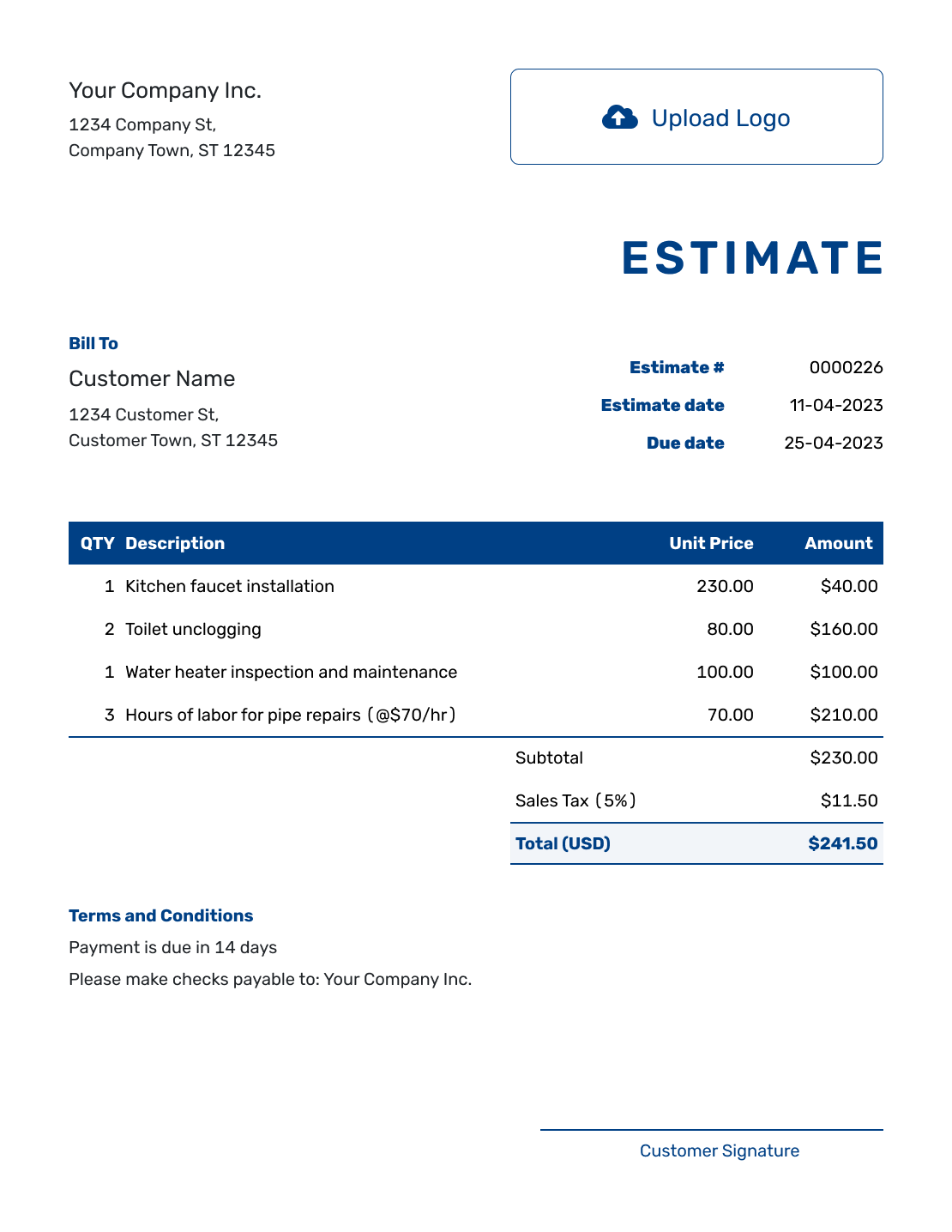
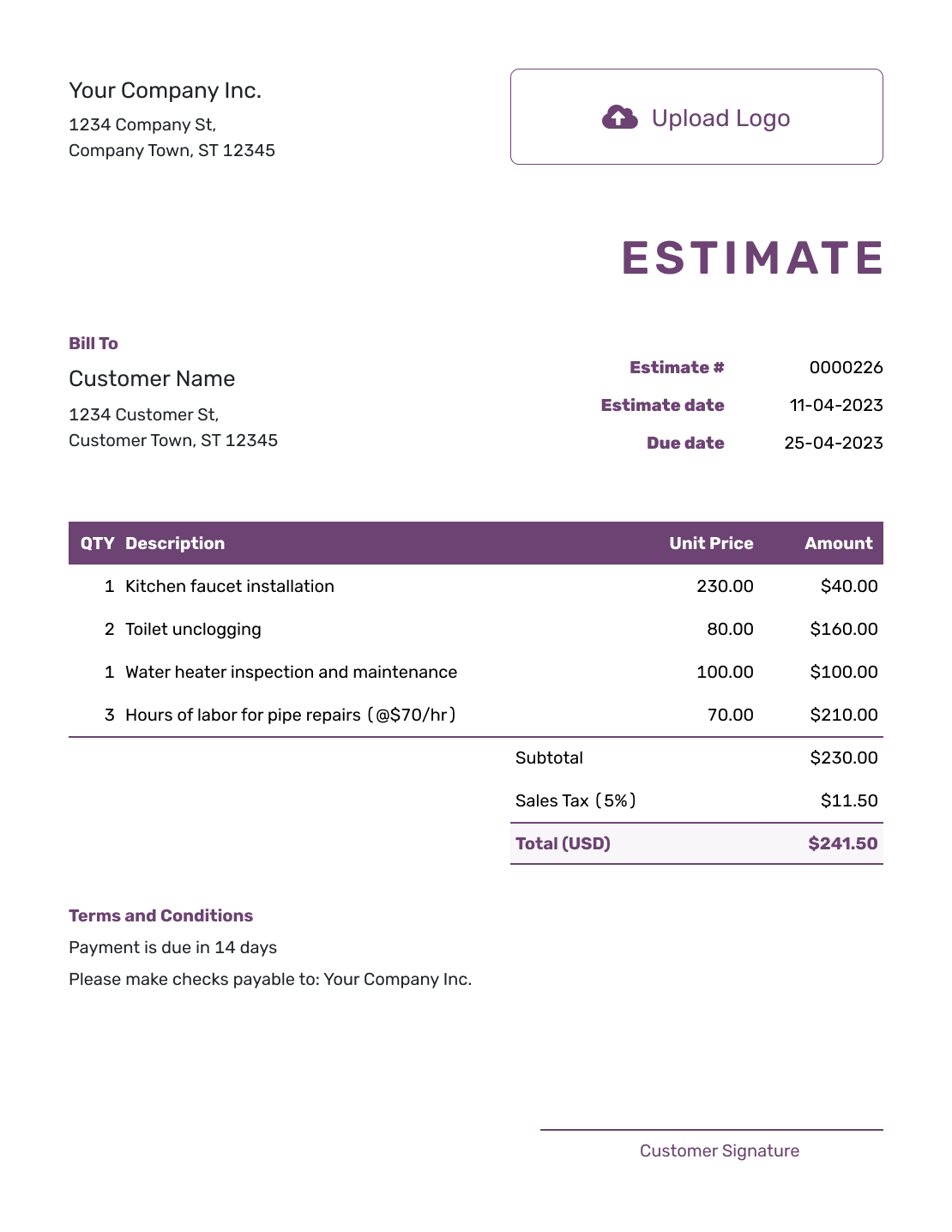
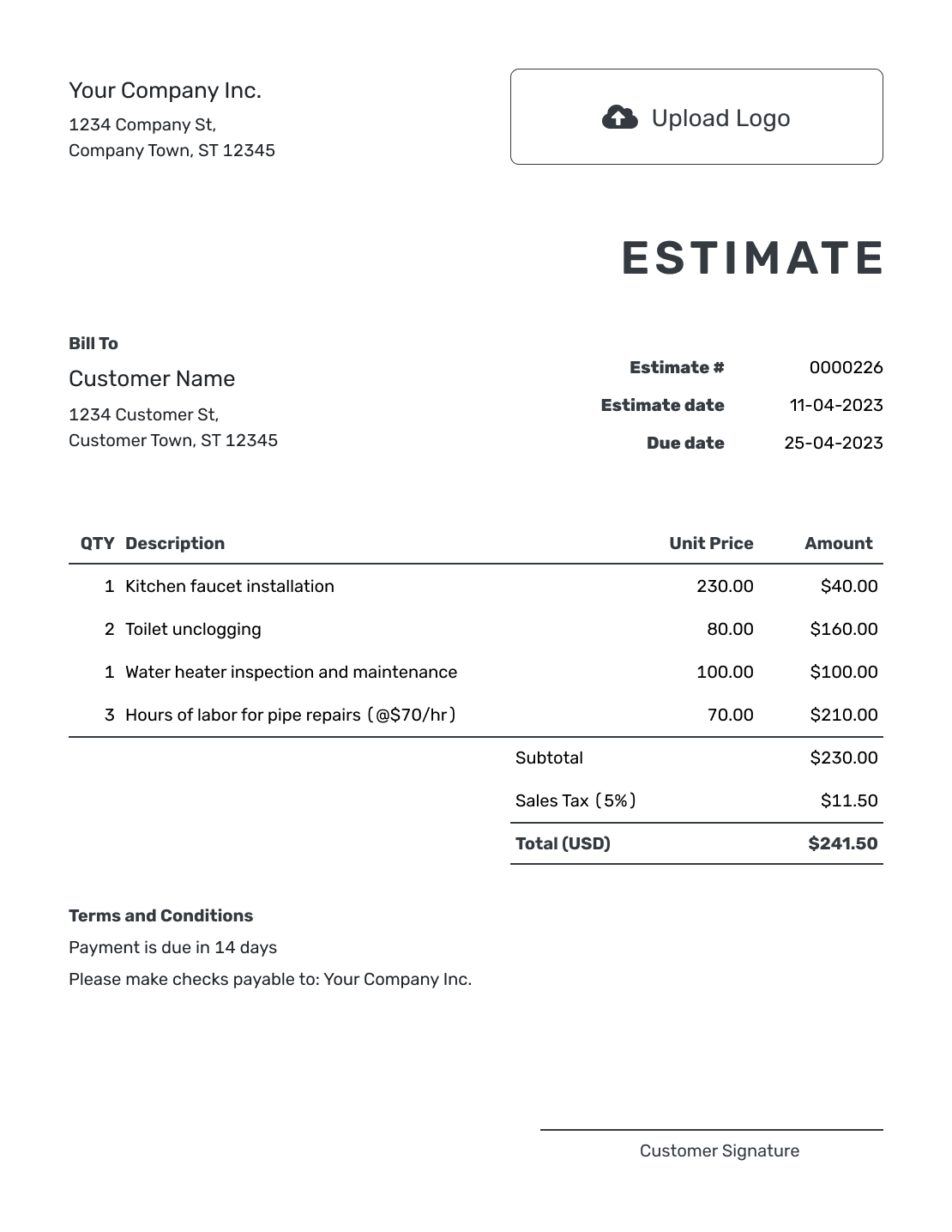
Use these layouts for a clear business presentation. Keep the reference details, scope, pricing, dates and terms in a consistent order.
What Is a Formal Estimate?
A formal estimate presents expected work and a likely price in a structured business document. Use one when a customer has several reviewers, needs a job reference, or wants a complete record before work begins.
Formal means easy to identify and review. Keep the wording plain, put the scope and price in a clear order, and add signatures when they help record the response. Dense wording does not make an estimate more useful.
How to Write a Formal Estimate
Use a businesslike order without making the wording stiff. The customer should be able to identify the estimate, review the work and understand the likely price quickly.
- Your Business: Add your business name and the contact details for questions.
- Your Logo: Match the logo used on your other business documents.
- The Customer: Add the customer company and the contact reviewing the estimate.
- Number and Dates: Add an estimate number, issue date, and a valid-until date when needed.
- Scope and Pricing: List the expected work in job order, with quantities and unit prices.
- The Likely Total: Check line amounts and any applicable tax or discount. Docelf calculates the total.
- Terms and Review: Add the job reference and terms in Terms and Conditions. Preview the estimate, then send it.
How to Present Formal Estimate Line Items
Name the work in the order you expect to complete it. When a customer has several jobs under review, connect the estimate to a job reference so each reviewer knows which work the price covers.
This fictional office painting estimate is for customer reference FAC-217 and uses US dollars. Preparation, painting labor, and paint total $2,720.00. An illustrative 8% tax on the $320.00 of paint adds $25.60; use the tax treatment that applies to your job.
| QTY | Description | Unit Price | Amount |
|---|---|---|---|
| 1200 | Office wall preparation — square feet | $0.50 | $600.00 |
| 1200 | Two-coat wall painting labor — square feet | $1.50 | $1,800.00 |
| 8 | Interior wall paint — gallons | $40.00 | $320.00 |
| Subtotal | $2,720.00 | |
| Sales Tax (8% example, materials only) | $25.60 | |
| Estimated Total | $2,745.60 |
What to Include in Formal Estimate Terms
Use Terms and Conditions for the customer reference, scope assumptions, validity, and expected timing. Put the reference near the start so someone who was not part of the original conversation can match the estimate to the job.
Keep the opening and response request direct, as in the sample below. Adapt the assumptions and time limits to the work and use only policies your business actually follows.
Example: Terms and Conditions
- Customer reference FAC-217: office wall preparation and painting, with an estimated total of $2,745.60.
- Covers 1,200 square feet of walls and two coats of paint. Assumes clear access and sound surfaces; ceiling work and major wall repairs are excluded.
- This estimate is valid for 30 days. Please review it within that period and reply with any questions or requested changes.
- We will confirm the start date after approval and agree on any changes to the scope or price before the affected work begins.
Put the Formal Estimate in a Clear Business Order
Each part should help the customer identify, review or respond to the estimate.
Reference Details
Keep the customer, job, estimate number and dates easy to find. Put a customer reference or purchase order number in Terms and Conditions.
Scope and Deliverables
Describe the expected work in a logical order and name what is outside the estimate.
Pricing and Likely Total
Show how quantities and unit prices add to the estimated total. Show discounts and taxes separately when they apply.
Terms and Response
State timing, validity, assumptions and how the customer can respond. Add signatures only when useful.
Create a Formal Estimate Ready for Review
Add the customer, scope, dates and expected costs in a clear order. Docelf calculates the total. Review the terms, then email or download the estimate.
Formal, Professional, or Basic Estimate?
Choose the style that matches the customer and the amount of structure the job needs.
Formal
Use a formal estimate when reference details, dates, terms or signatures need a clear business order.
Professional
Use a professional estimate when clear presentation and consistent branding are the main concern.
Basic
Use a basic estimate when the job has a short scope, few line items and limited terms.
More Formal Estimate Layouts
Choose a layout for your customer copy. Every preview opens the same estimate editor, where you can add the job details and choose the document design.
-
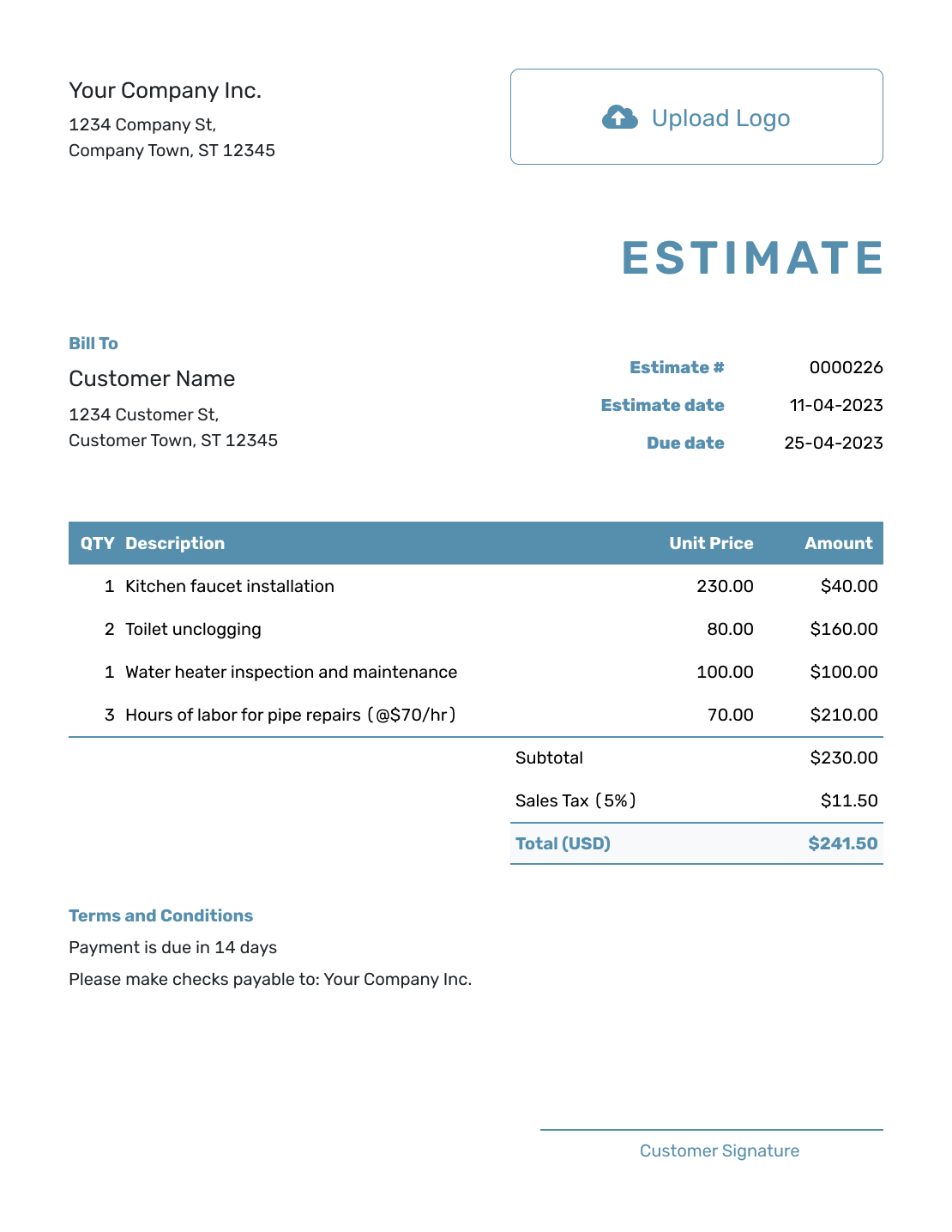
Blank Formal Estimate Template
Create Free Estimate -
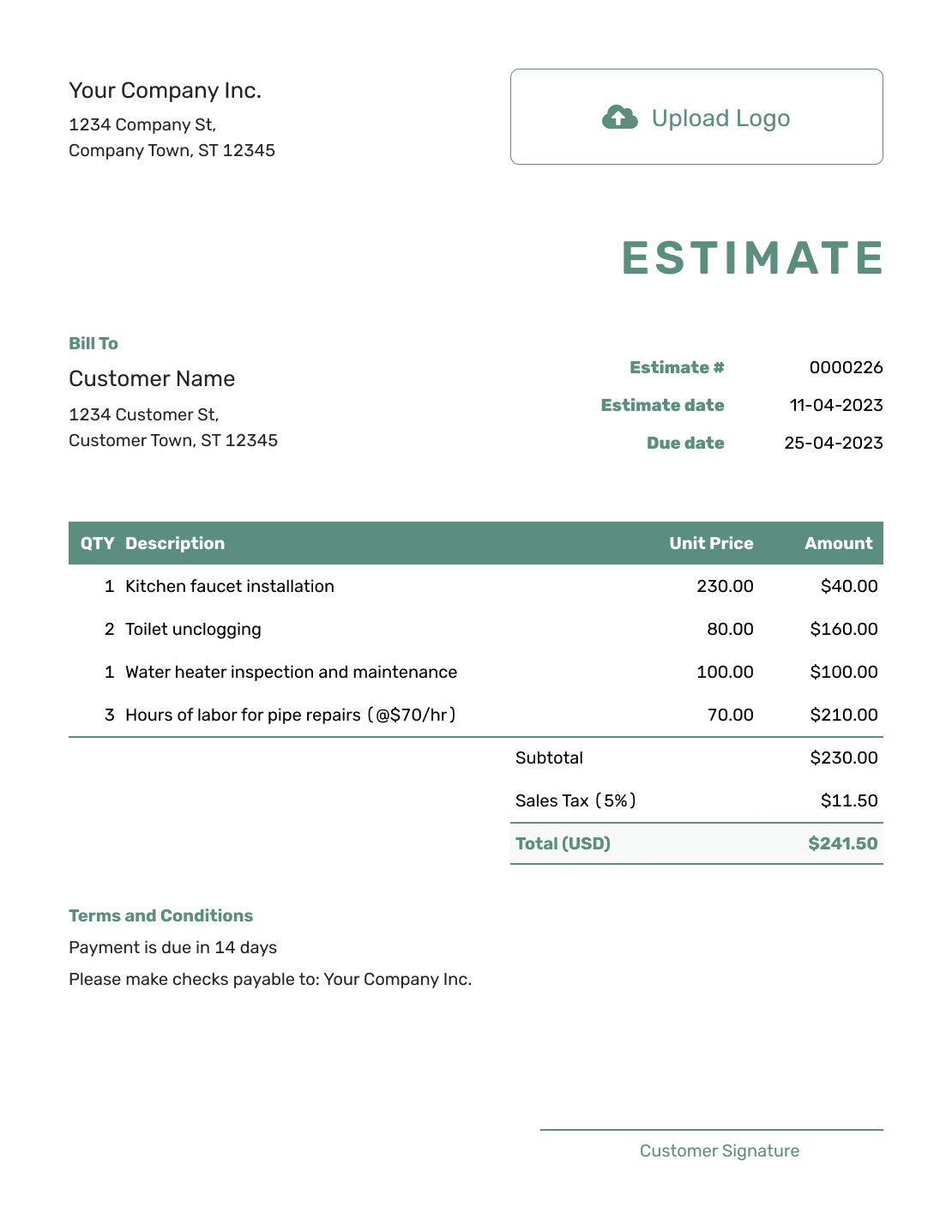
Simple Formal Estimate Template
Create Free Estimate -
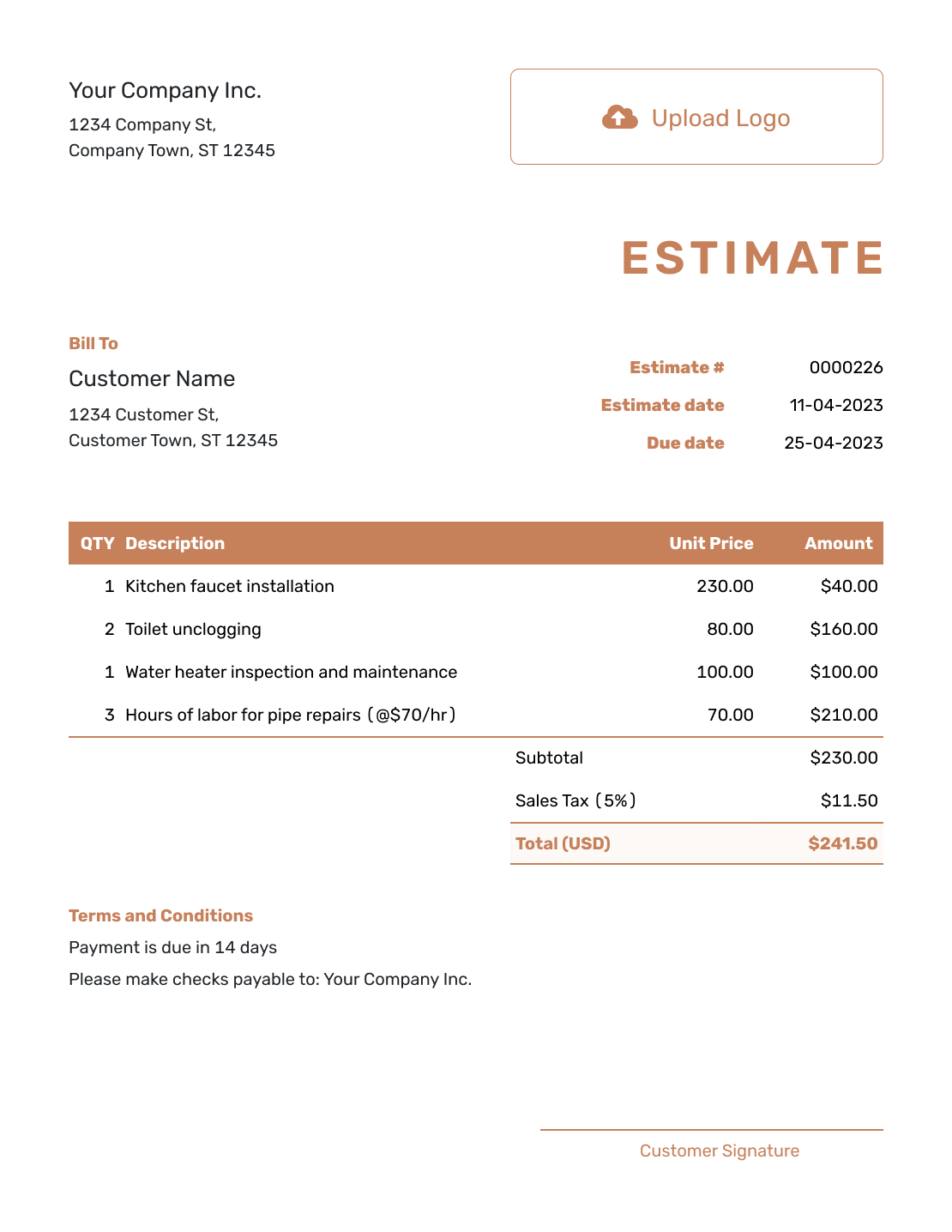
Downloadable Formal Estimate Template
Create Free Estimate -
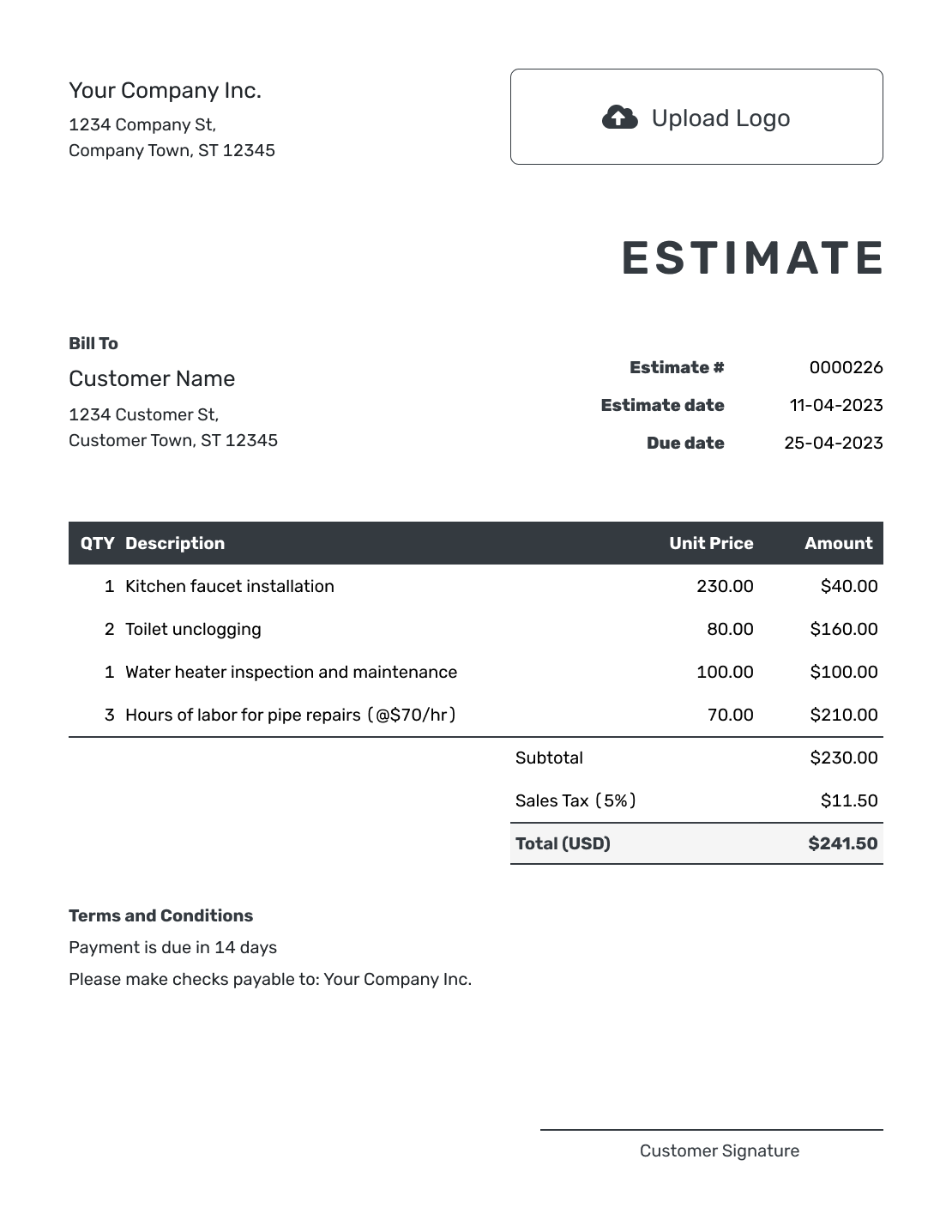
Editable Formal Estimate Template
Create Free Estimate -
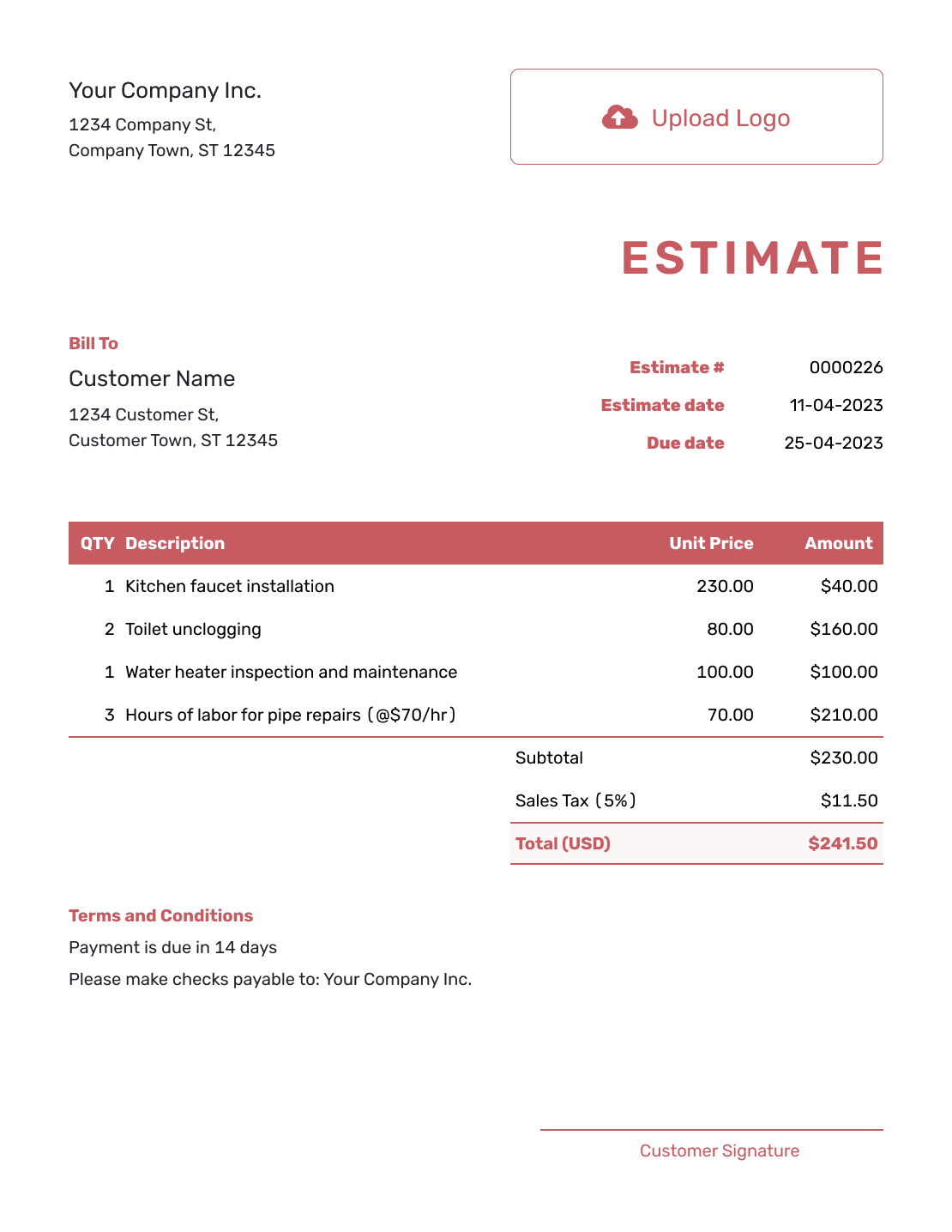
Fillable Formal Estimate Template
Create Free Estimate -
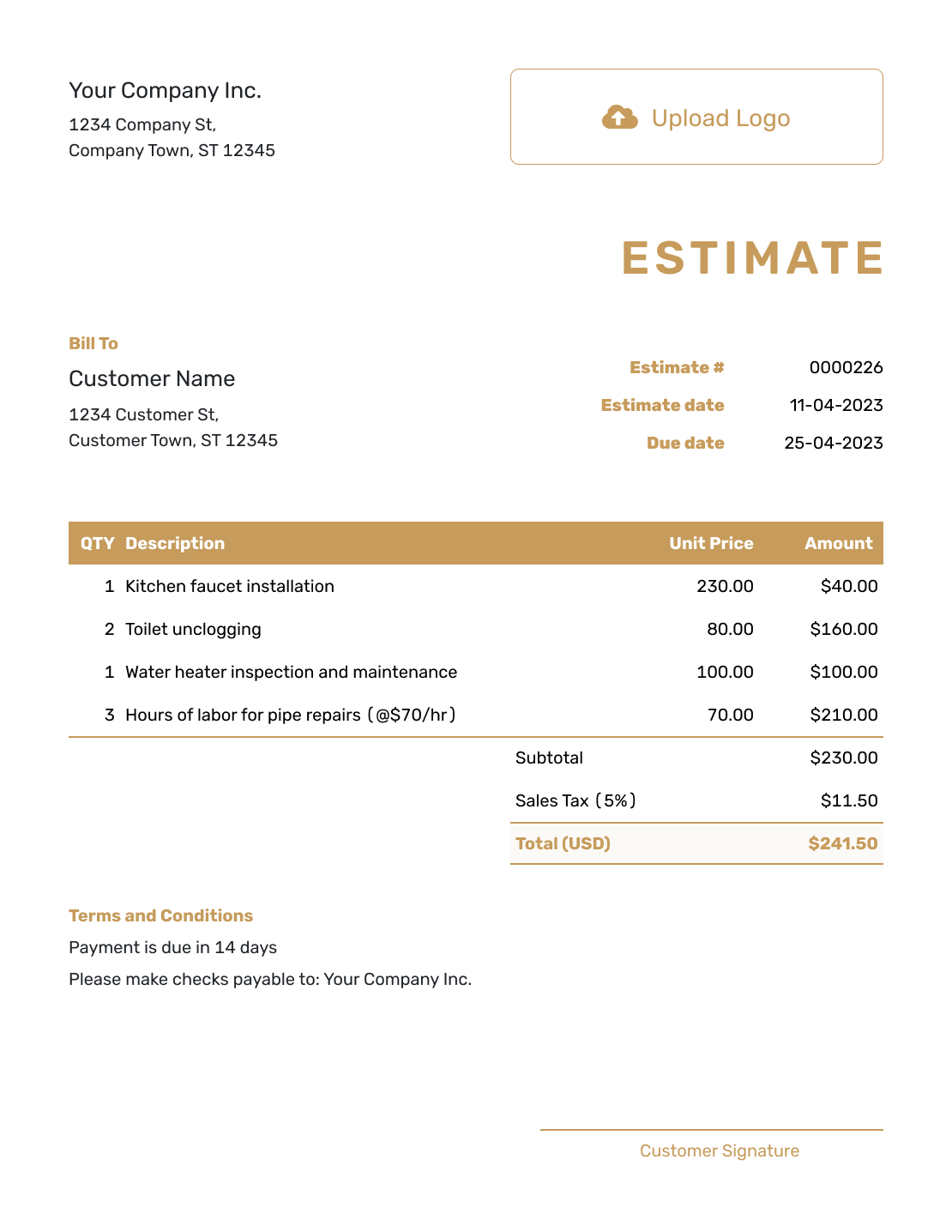
Professional Formal Estimate Template
Create Free Estimate
Related Formal and Business Estimate Styles
Use the document guide for a fuller business record, or browse the other styles and formats below.
After You Send the Formal Estimate
- After emailing from Docelf, check delivery and opening history. Docelf emails you when the customer accepts or declines
- Revise it if the scope, dates or likely price change
- When billing begins, create the invoice from the estimate and check its scope and prices against the work provided
Formal Estimate Template FAQs
Find answers about structure, wording, references, signatures and sending a formal estimate.
-
What is a formal estimate?
A formal estimate presents expected work and a likely price in a structured business document. It usually gives extra attention to reference details, dates, assumptions, terms and signatures.
-
When should I use a formal estimate template?
Use one when the customer has a purchasing process, several reviewers, a reference number or a job that needs a more complete business record before work begins.
-
Does a formal estimate need formal language?
It should sound professional, not stiff. Use direct sentences, familiar labels and plain terms so the customer can understand the work and likely price on the first read.
-
What should a formal estimate include?
Identify your business, the customer, and the job. Add an estimate number and dates, then show the scope, priced line items, and estimated total. Use Terms and Conditions for the reference, assumptions, exclusions, timing, and response details that the job needs.
-
Should I add a customer reference or purchase order number?
Add it when the customer uses one to identify the job or match paperwork. Put it near the start of Terms and Conditions so each reviewer can match the estimate to the job.
-
Can I add signature fields to a formal estimate?
Yes. Docelf supports company and customer signature fields on estimates when signatures help document the response.
-
Can I create an invoice from an accepted formal estimate?
Yes. Create the invoice from the estimate in Docelf and reuse the relevant customer, item, price and document details.
Ready to Send a Clear, Formal Estimate?
Send an estimate that makes sense to everyone reviewing the job, including a colleague who joins the review later.
- Describe the work and likely price
- Add the customer reference and useful terms
- Preview the document, then email or save a PDF