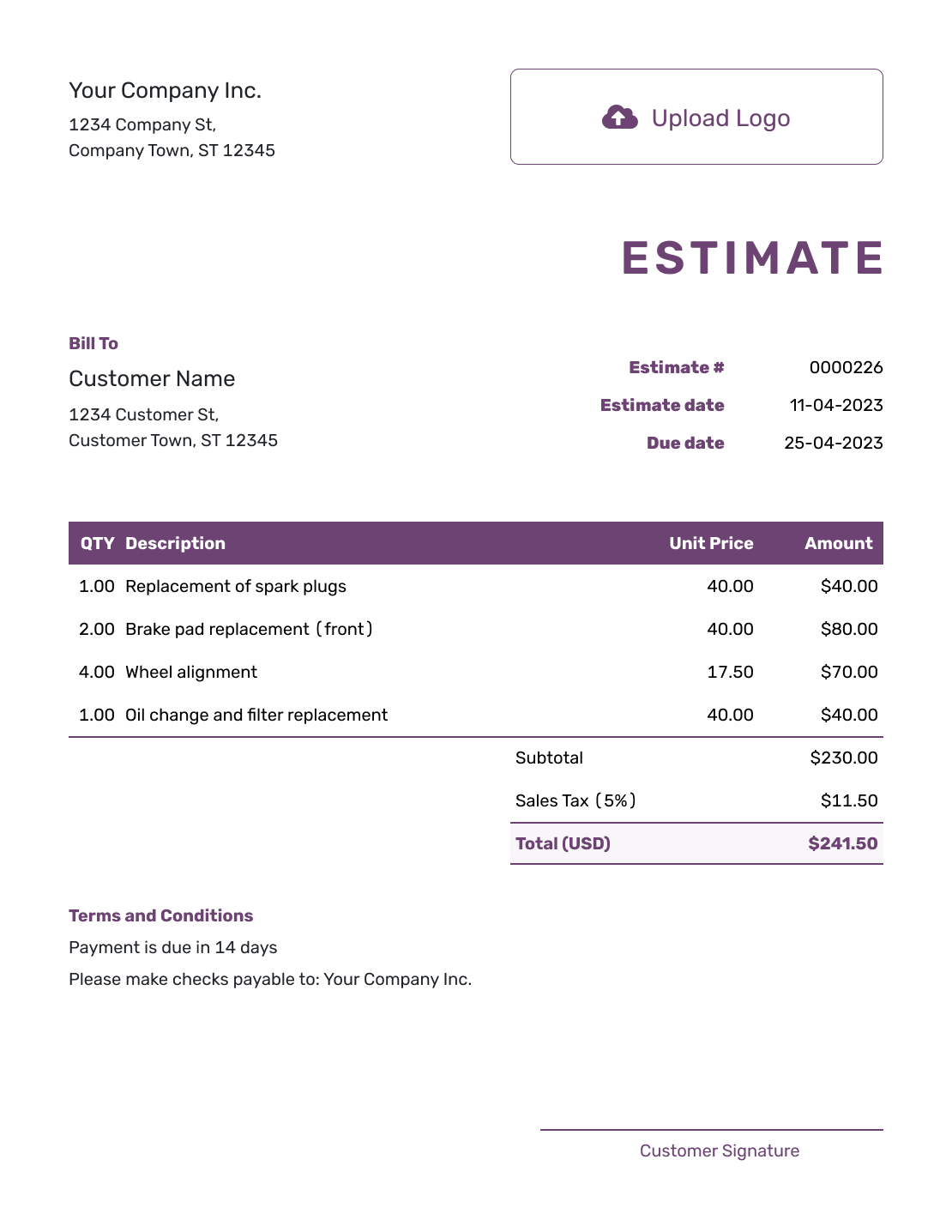
Free Good Faith Estimate Template
Show expected costs and assumptions clearly
Use a good faith estimate to show expected services, charges and assumptions before the work begins. Clear cost information helps clients understand the plan and choose your business.
Email, print or download your estimate as a PDF.
14-day free trial. No credit card required.
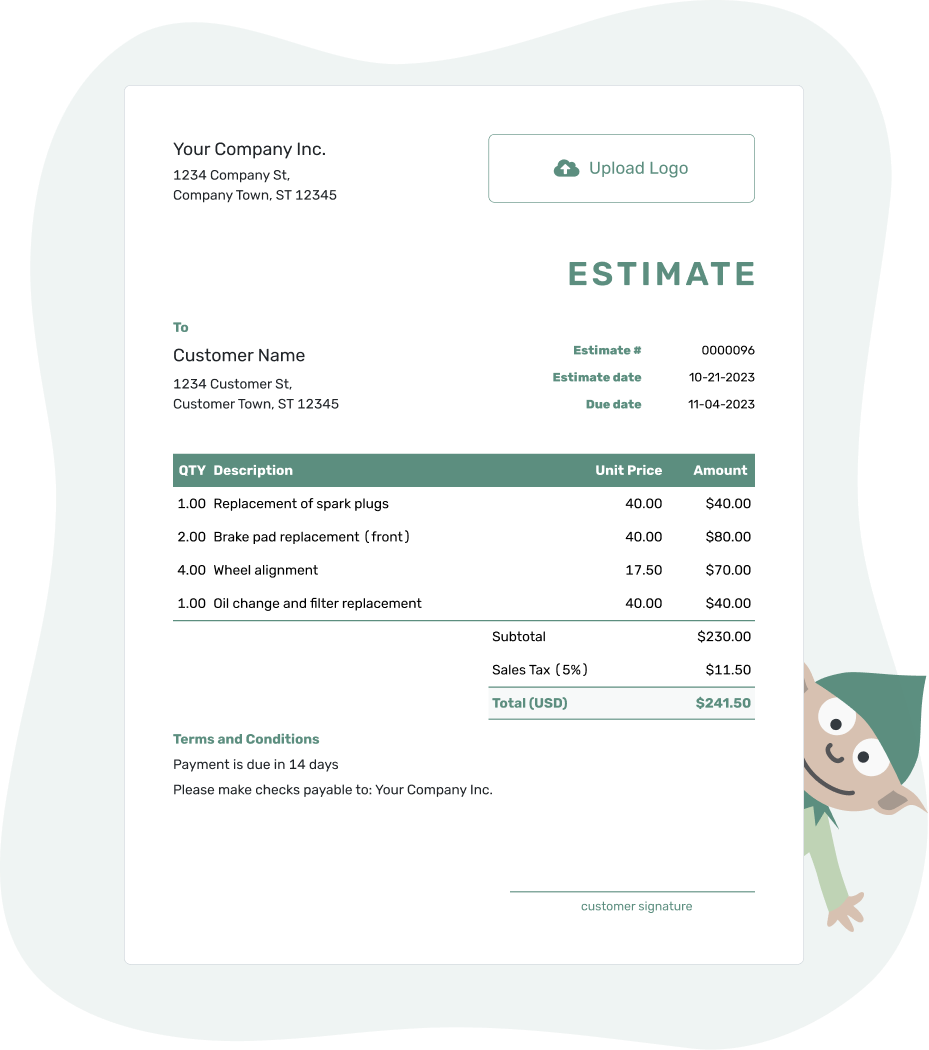
Price the job. Send the estimate. Get back to work.
Explain the Likely Cost of Your Services
A general business good faith estimate shows the work you expect to provide and the cost based on what you know now. The useful part is the explanation behind the price: which quantities are known, which charges are allowances, and which choices still need the client's input.
This page is a general business resource. If you need a U.S. healthcare Good Faith Estimate, use the CMS sample for uninsured or self-pay patients and check the applicable healthcare requirements. This template is not a healthcare Good Faith Estimate form.
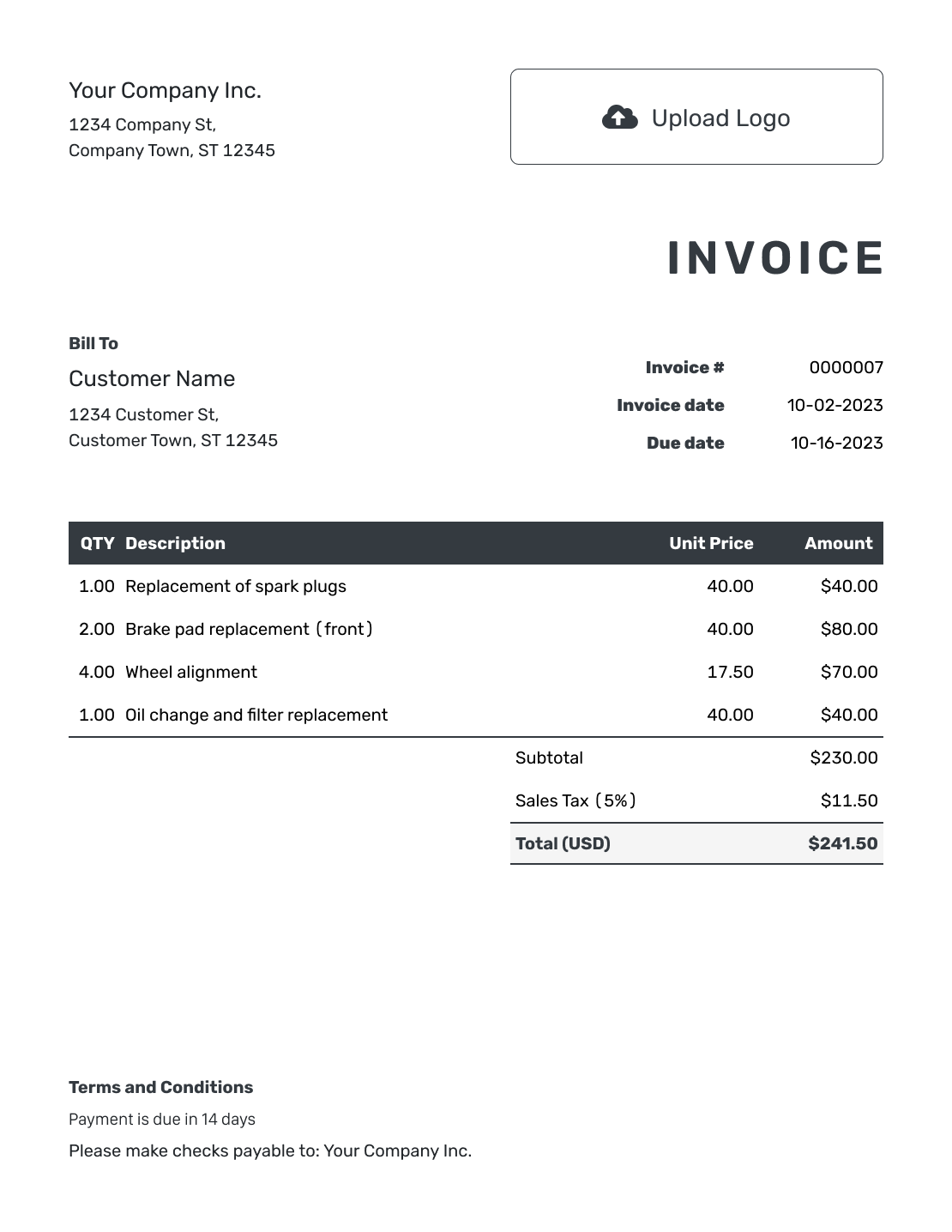
Good Faith Estimate, Quote, or Invoice?
Use the document that matches the next decision. These are the ordinary business uses of an estimate, quote, and invoice.
Good Faith Estimate
Show expected services, charges, and assumptions when the likely price is based on what is known now.
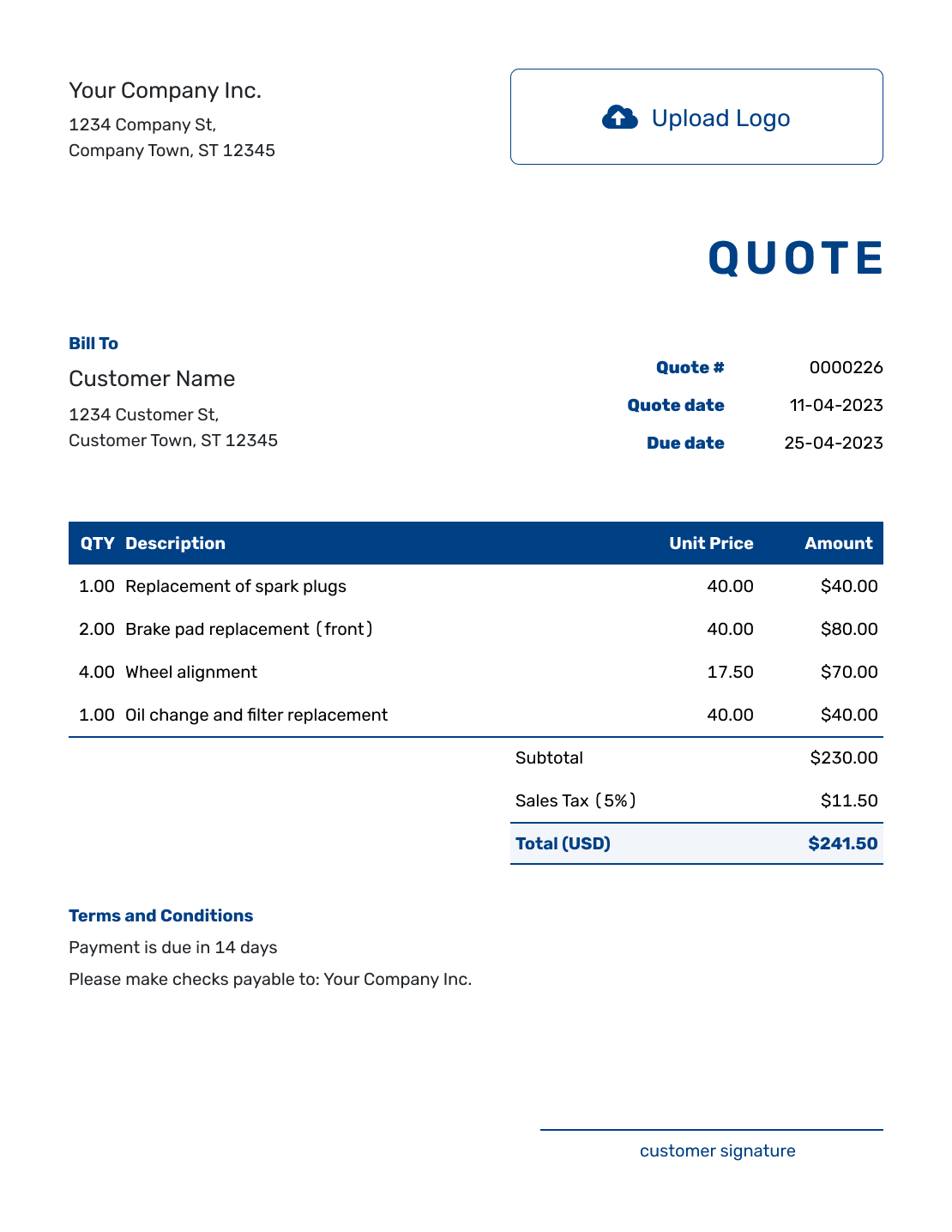
Quote
Present a specific offer with the scope, price, validity period, and terms the client can review.
Invoice
Ask for payment when a service, product, deposit, or completed stage is ready to bill.
Use an Estimate While Details Are Still Open
You can give a useful estimate before every detail is settled. It helps a client plan a budget or approve further work while you confirm the remaining details.
- Services planned before every quantity or choice is final
- Work that depends on inspection, access, timing, or outside costs
- A client who needs a cost breakdown before deciding
- A job where assumptions or allowances materially affect the likely price
How to Create a Good Faith Estimate
Start with the client and the work being discussed. Build the price from the expected services, then explain the assumptions in Terms and Conditions.
- Identify the Client and Service: Add your business and client details, the project or service, an estimate number, and the issue date.
- List Expected Services: Describe the work or services you reasonably expect to provide.
- Add Quantities and Charges: Enter quantities and unit prices. Label an allowance clearly when the amount is a provisional budget for an undecided cost.
- Check the Total: Check any applicable tax or discount and the estimated total. Include a separately charged delivery service in the item table.
- State the Assumptions: Use Terms and Conditions to explain the assumptions, exclusions, and how you will agree changes with the client.
- Add Review Details: Include timing, terms, and a valid-until date or response deadline when useful.
- Review and Send: Preview the estimate and check the prices against the scope. Email it, print it, or download it as a PDF when ready.
How to Fill In Good Faith Estimate Line Items
Separate the work you expect to do from costs you are still confirming. An hourly line shows the expected hours and rate. An allowance shows an amount set aside for a cost that has not yet been finalized.
This fictional design-planning job uses US dollars. It includes two hours of planning, eight hours of design work, and provisional sample and travel costs. All four items have an illustrative 8% tax; use the tax treatment that applies to your own work.
| QTY | Description | Unit Price | Amount |
|---|---|---|---|
| 2 | Planning sessions (hours) | $150.00 | $300.00 |
| 8 | Design and sourcing work (hours) | $110.00 | $880.00 |
| 1 | Samples and delivery allowance | $180.00 | $180.00 |
| 1 | Local travel allowance | $120.00 | $120.00 |
| Subtotal | $1,480.00 | |
| Sales Tax (8% illustrative) | $118.40 | |
| Estimated Total | $1,598.40 |
What to Include in Good Faith Estimate Terms
Use Terms and Conditions to explain the basis of the estimate. For this job, the client needs to know the expected hours, what the allowances cover, and that product purchases cost extra.
Explain how you will review changes before doing additional work. Adapt the sample to your own service and the requirements that apply to it; include only terms you actually use.
Example: Terms and Conditions
- Includes two planning hours and eight hours of design and sourcing work.
- Allows $180 for samples and delivery and $120 for local travel, before tax.
- Product purchases are not included. Sample, delivery, and travel costs will be reviewed once locations and selections are confirmed.
- We will explain any change to the scope or estimated total and ask for your approval before the additional work begins.
Put the Expected Costs in Writing
Add the services and prices you can explain. Docelf calculates the total, so you can focus on the assumptions your client needs to review.
After You Send the Good Faith Estimate
Check the document history to see whether your client opened the emailed estimate. If the services or assumptions change, explain the difference and send an updated version for review.
When it is time to bill, create an invoice from the estimate. Docelf copies the relevant client, item, price, and document details; check them against the work you are billing.
Related Estimate Templates and Guides
Use the main estimate template for everyday pricing, the quote comparison when the offer may be specific, and the invoice guide when billing is the next step.
Good Faith Estimate Template FAQs
-
What is a good faith estimate?
For a general business service, it is an honest projection of the expected work and cost based on the information available. Show the assumptions behind that price so the client can see what still needs to be confirmed.
-
Is a good faith estimate the final price?
For the general business estimate shown here, the amount is a projection based on the stated scope and assumptions. If those details change, explain the new cost and agree the next step with your client before doing extra work.
-
How is a good faith estimate different from a quote?
A good faith estimate shows expected services and a likely cost. A quote presents a more specific offer with a defined price, scope, validity period, and terms. Use the document that matches how certain the work and price are.
-
What assumptions should I include?
Include the facts that materially affect the likely price, such as expected quantities, client choices, access, timing, outside costs, allowances, or work that is not included.
-
Should a good faith estimate have a valid-until date?
Use one when rates, material costs, availability, or other price inputs should be reviewed after a certain date. The date tells the client when to ask for an updated estimate.
-
Can a client accept a good faith estimate in Docelf?
Yes. Clients can accept or decline an estimate online without a Docelf account. The status updates when they respond, and Docelf sends you an email notification.
-
Can I create an invoice from the estimate?
Yes. You can create an invoice from an estimate when it is time to bill. Docelf copies the relevant client, item, price, and document details. Review the invoice against the agreed work before sending it.
-
Is this a healthcare Good Faith Estimate form?
No. This page explains general business estimates. A U.S. healthcare Good Faith Estimate has a separate purpose and requirements. Use the CMS resource linked above for that task; this page does not establish healthcare compliance.
Ready to Create a Good Faith Estimate?
Give your client a cost breakdown they can use to decide how to proceed.
- Show expected services and likely cost
- Explain the assumptions in Terms and Conditions
- Email or download a professional PDF