Free Estimate Templates by Industry
Start with the work you need to price
Start with a template built for the work you need to price. Useful details make the estimate easier to trust and help customers choose your business.
Create the estimate in Docelf, then email it, print it or download a PDF.
14-day free trial. No credit card required.
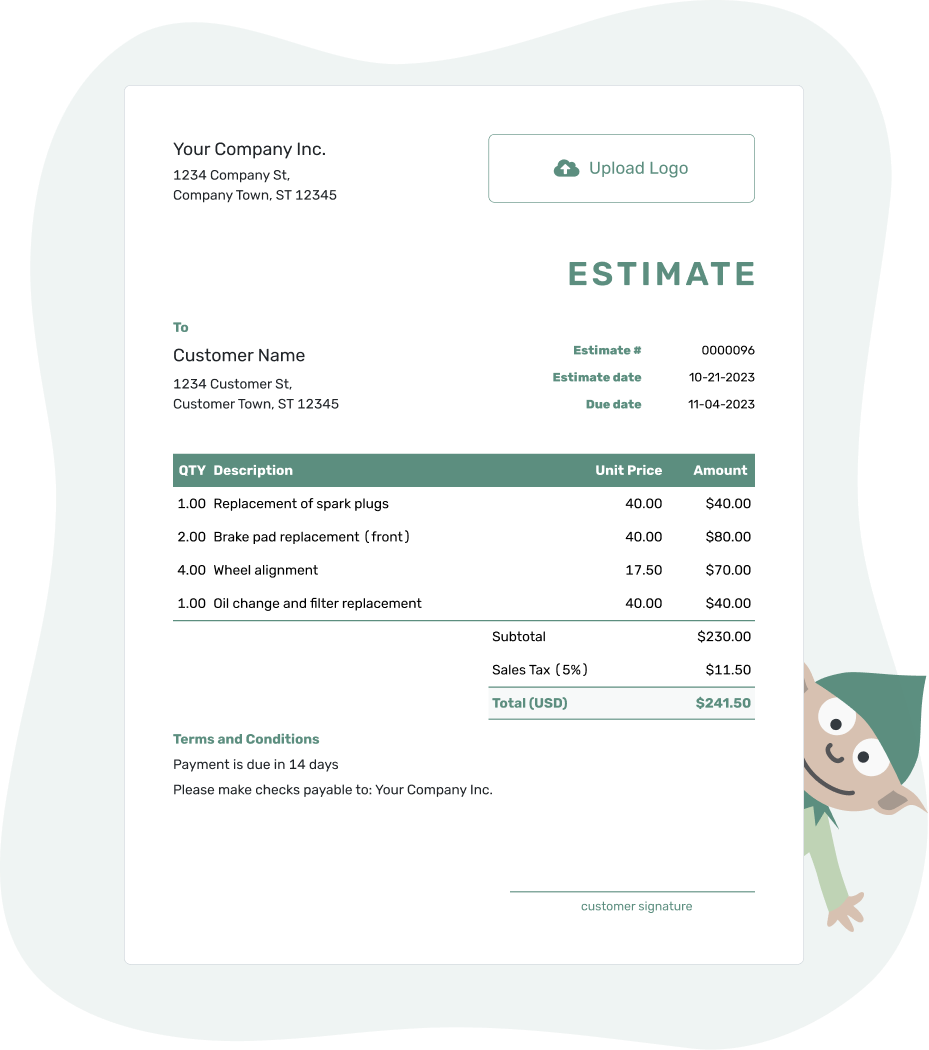
Price the job. Send the estimate. Get back to work.
Choose an Estimate Template for Your Industry
Choose a collection for the work you need to price. Look under Property & Service for cleaning, landscaping and maintenance, or Creative Service for design, photography, IT and website projects.
Event Estimate Templates
For food and staffing, start with the catering estimate. The wedding estimate covers planning, coordination, decor and other wedding services. Note any guest count or schedule details you still need to confirm.
No Exact Match? Start With the Job
One job may include several services. Landscaping can include waste removal; a website project can include design and development. Use one estimate when those services belong to the same job. Give each separately priced service its own row.
If you charge a package price, describe what it includes in that row rather than adding the included services again. When none of the industries fits, the general estimate template gives you a starting point for your own descriptions.
Price This Job in Docelf
Add your job details and expected prices. Docelf calculates the totals as you go. Review the estimate, then email it or download a PDF.
Match the Estimate to How the Work Is Priced
The most useful breakdown depends on how you charge. A cleaner may price each visit, while a designer may price a package of deliverables. Use these details to explain how you reached the estimated total.
| Type of work | Useful estimate details | Important pricing decision |
|---|---|---|
| Construction and trades | Labor, material quantities, equipment, subcontractors, phases, and site conditions | Separate allowances or unknown conditions from work that can be priced now |
| Property services | Area, rooms, visits, condition, supplies, disposal, and travel | Choose a unit that matches the service, such as hours, square feet, visits, or a job price |
| Automotive | Diagnostic findings, labor time, parts, shop charges, taxes, and optional repairs | Show which repairs are expected now and which need customer approval after inspection |
| Creative services | Deliverables, production time, revisions, travel, licensing, and add-ons | State what is included in the first price and how extra revisions or deliverables are priced |
| Medical and health | Expected services, charges, follow-up items, assumptions, and the period covered | Make clear which costs are expected and which details may change after further assessment |
| Events | Guest count, hours, menu or package, rentals, staff, travel, setup, and cleanup | Identify the quantities that can change the likely total before the event is confirmed |
What to Put in an Industry Estimate
Once you have chosen a starting point, replace the sample information with the details for this job. Your customer should be able to see who is doing the work, what is included and how you reached the price.
- Your business contact details and logo, if you use one
- The customer and job address or service location
- An estimate number, issue date and any response deadline
- A description of the expected work, products or services
- Quantities, units, rates and line amounts that match how you charge
- Any applicable tax or discount and the estimated total
Use Terms and Conditions to explain assumptions, exclusions, timing and payment terms that apply to this job. Make any condition that could change the likely price easy to find and understand.
What Happens After You Send the Estimate
Send the estimate from Docelf and check its history to see when it is delivered and opened. Your customer can accept or decline it online, and you receive an email when they respond.
If the expected work or price changes, revise the details and send the updated estimate. When the customer accepts and it is time to bill, create an invoice from the estimate instead of entering the customer and line items again.
Related Estimate Templates
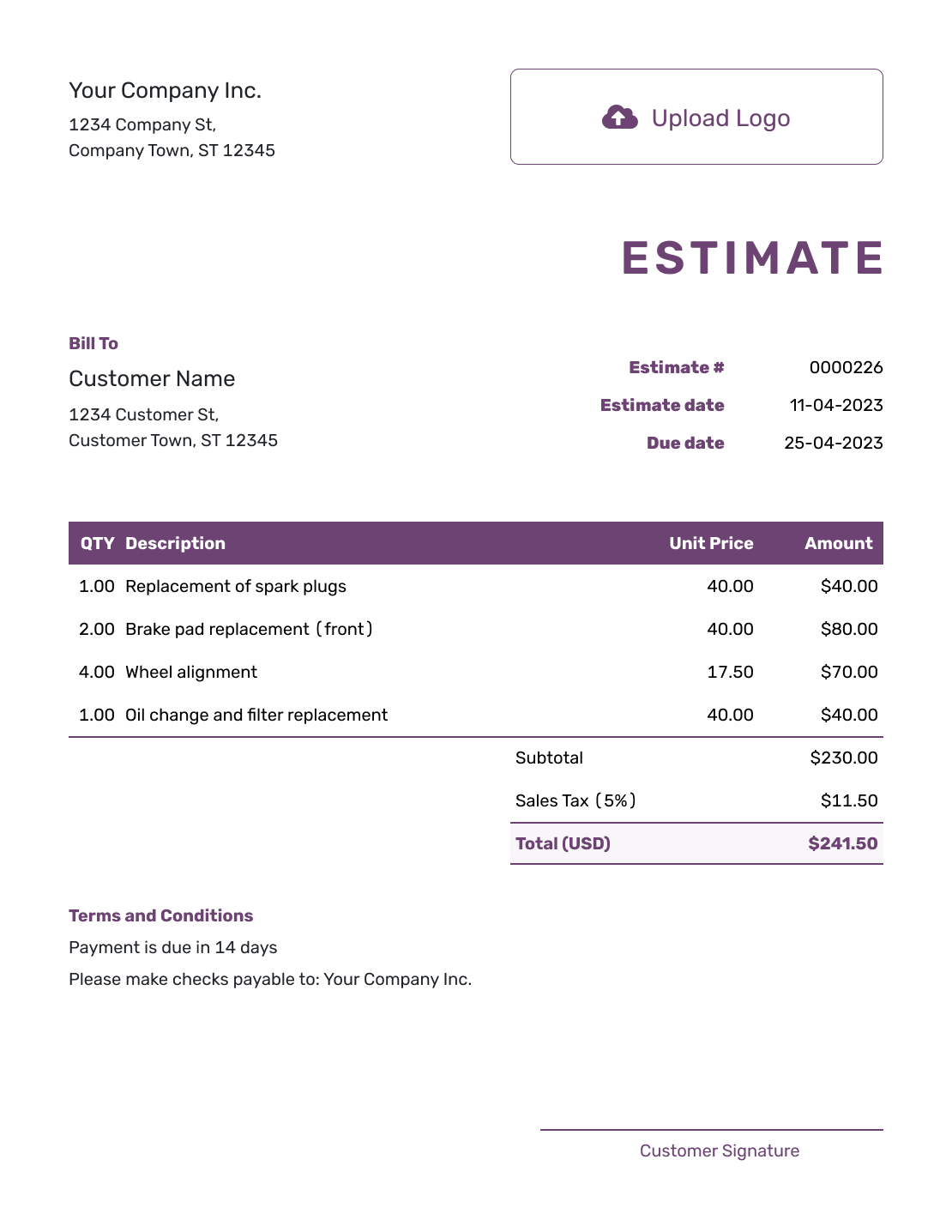
For a general starting point, use the main estimate or business collection. Browse formats if you prefer Word, Excel or Google templates. See a completed example for the layout, or use the quote-or-estimate guide to decide which document fits the job.
Estimate Templates by Industry FAQs
-
What is an industry estimate template?
It is a starting point for describing and pricing a particular kind of work. The industry examples help you choose useful item descriptions, pricing units and assumptions for your own estimate.
-
What if my industry is not listed?
Use the closest type of work or start with the general estimate template. You can enter your own descriptions, quantities and prices, and add an optional industry name before the estimate title.
-
Can one estimate cover several kinds of work?
Yes. Give separately priced services their own rows, using the unit that fits each service. For a single package price, describe the included work together so you do not charge for it twice.
-
How detailed should an industry estimate be?
Include enough detail for the customer to understand the expected work and likely price. Separate the costs that affect the decision, and explain the main assumptions. Leave out internal notes and details that do not help the customer review the estimate.
-
Is an estimate the final price?
An estimate usually shows a likely price based on what is known when you create it. The final price may change if the scope, quantities, materials, or job conditions change. State the assumptions that have the biggest effect on the price.
-
Does my customer need Docelf to accept the estimate?
No. Your customer can view, download, accept or decline the estimate without a Docelf account. If they respond by phone or email, you can mark the estimate as accepted or declined yourself.
Ready to Price the Job?
Give your customer a clear picture of the job before the work begins.
- Describe the work in your own words
- Check the automatically calculated total
- Email the estimate or download a PDF