Free Contractor Receipt Template
Create a professional receipt in minutes
Record whether the payment covers the whole job or only part of it. The customer gets proof of payment, and you keep a clear record of the payment for the project.
Email, print or download your receipt as a PDF.
14-day free trial. No credit card required.
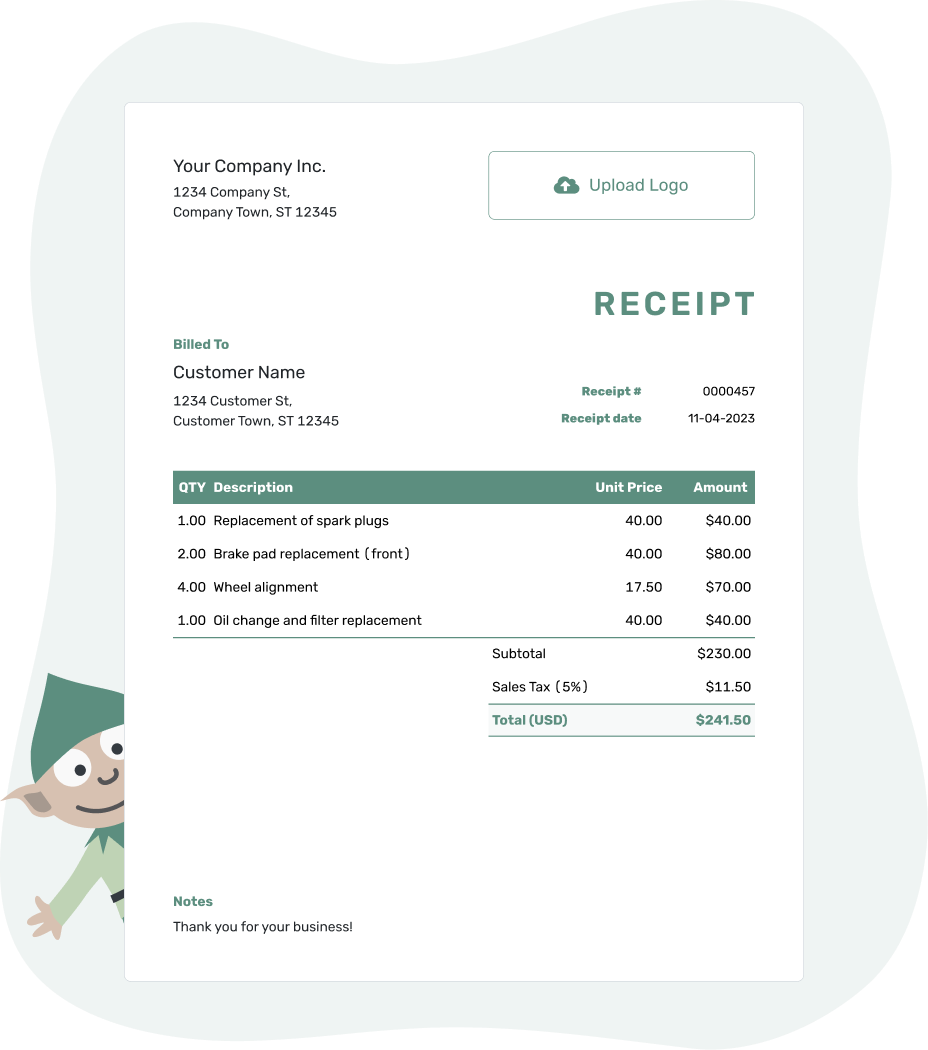
Record the payment. Send the receipt. Get back to work.
Contractor Receipt Examples for Project Payments
A project can involve more than one payment. These previews show how a receipt keeps each amount tied to the job, and all open the same editor.
-
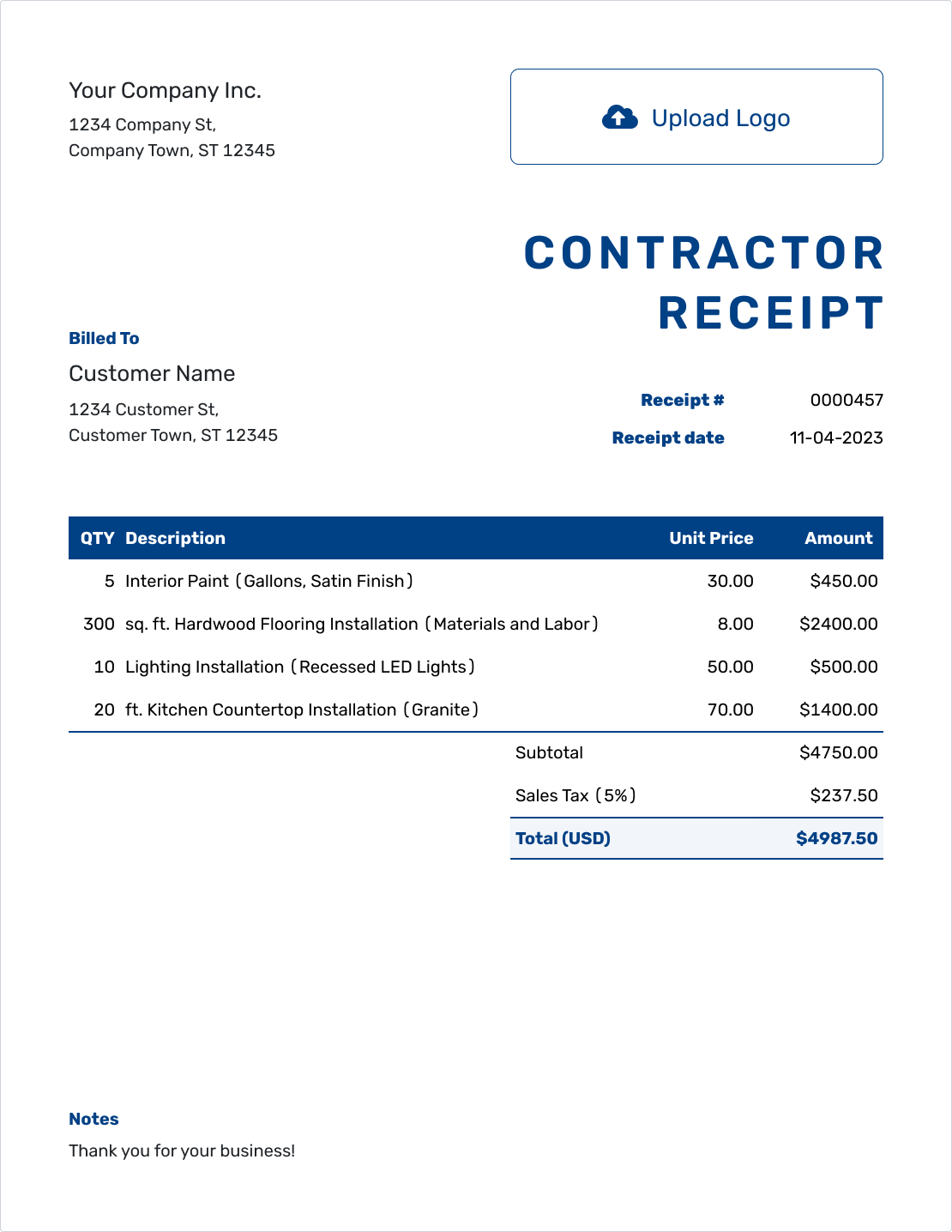
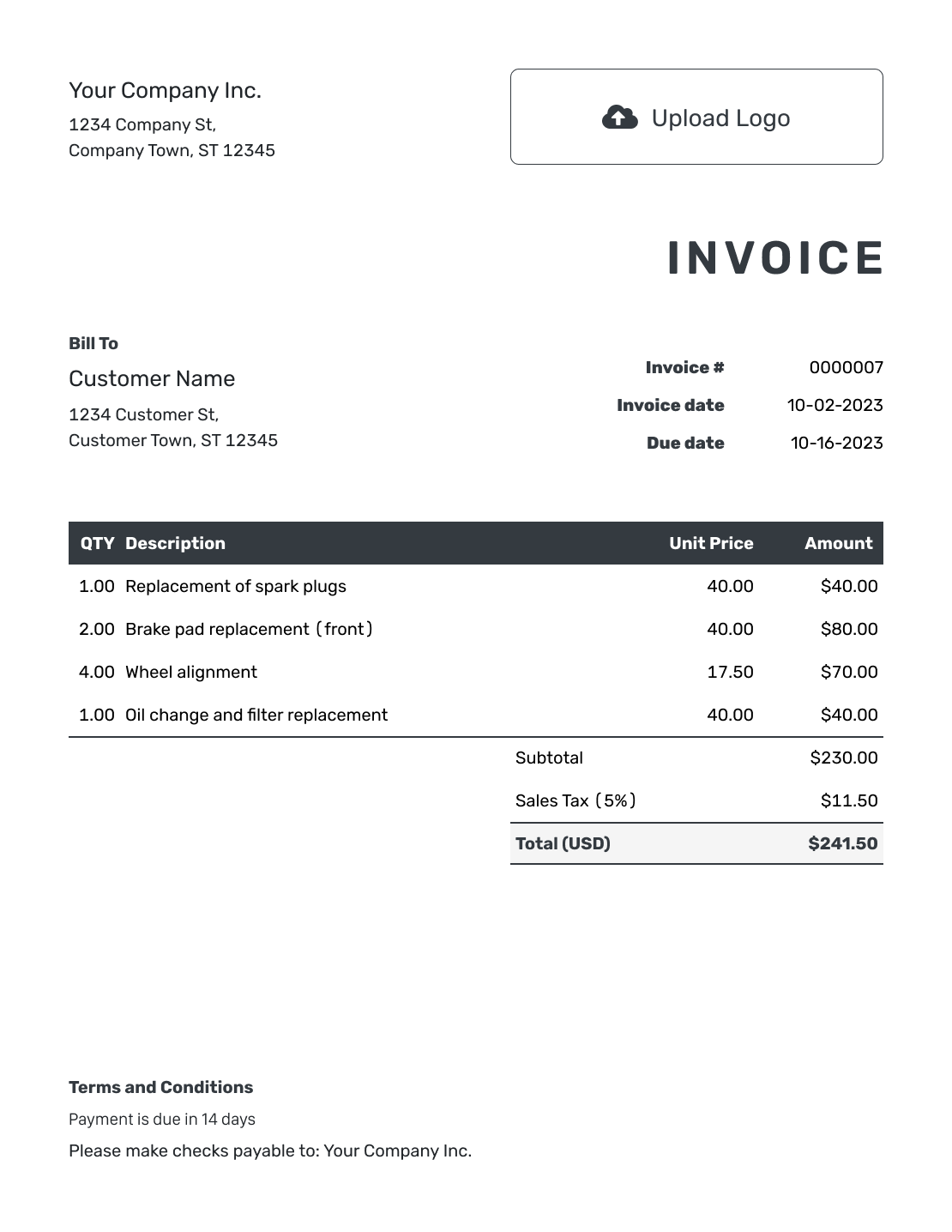
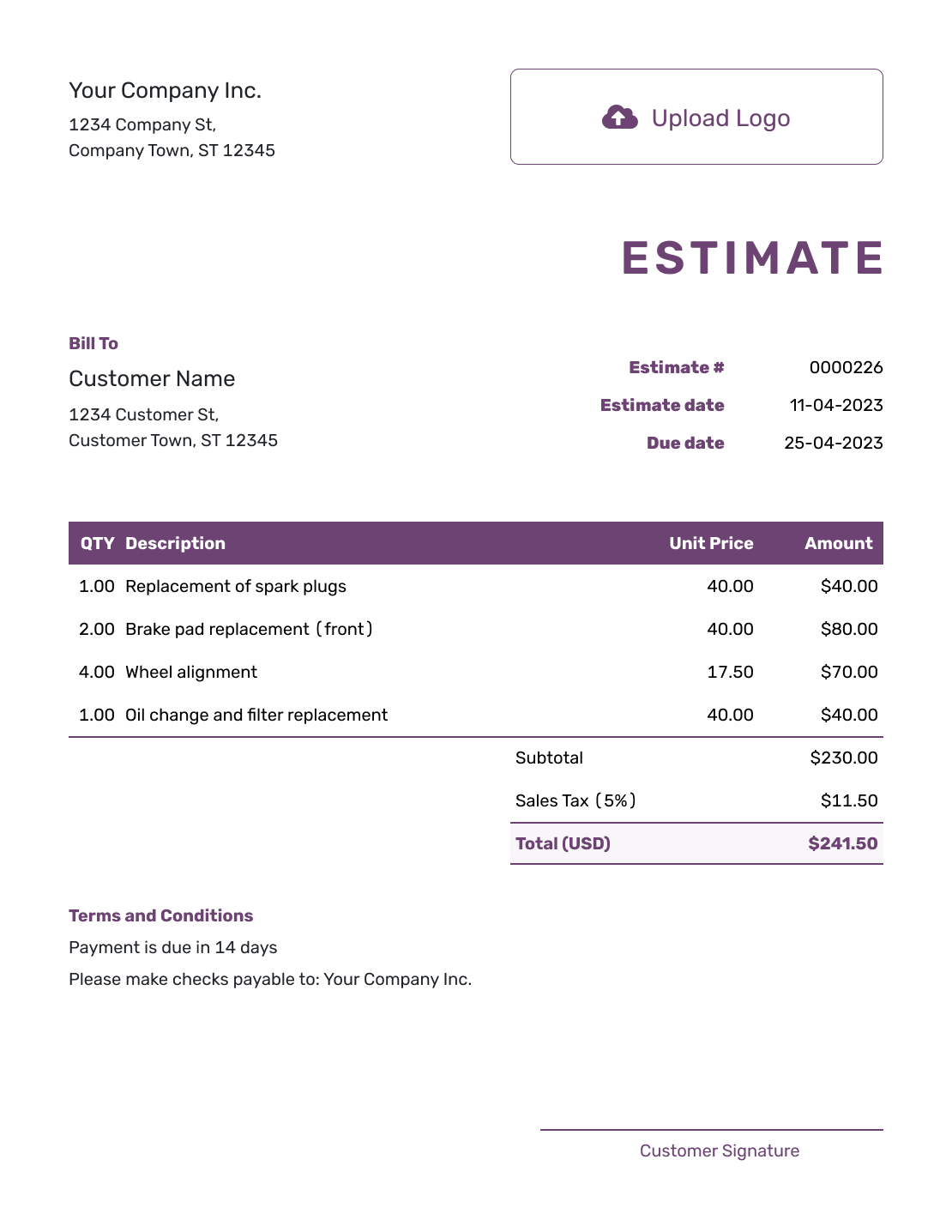
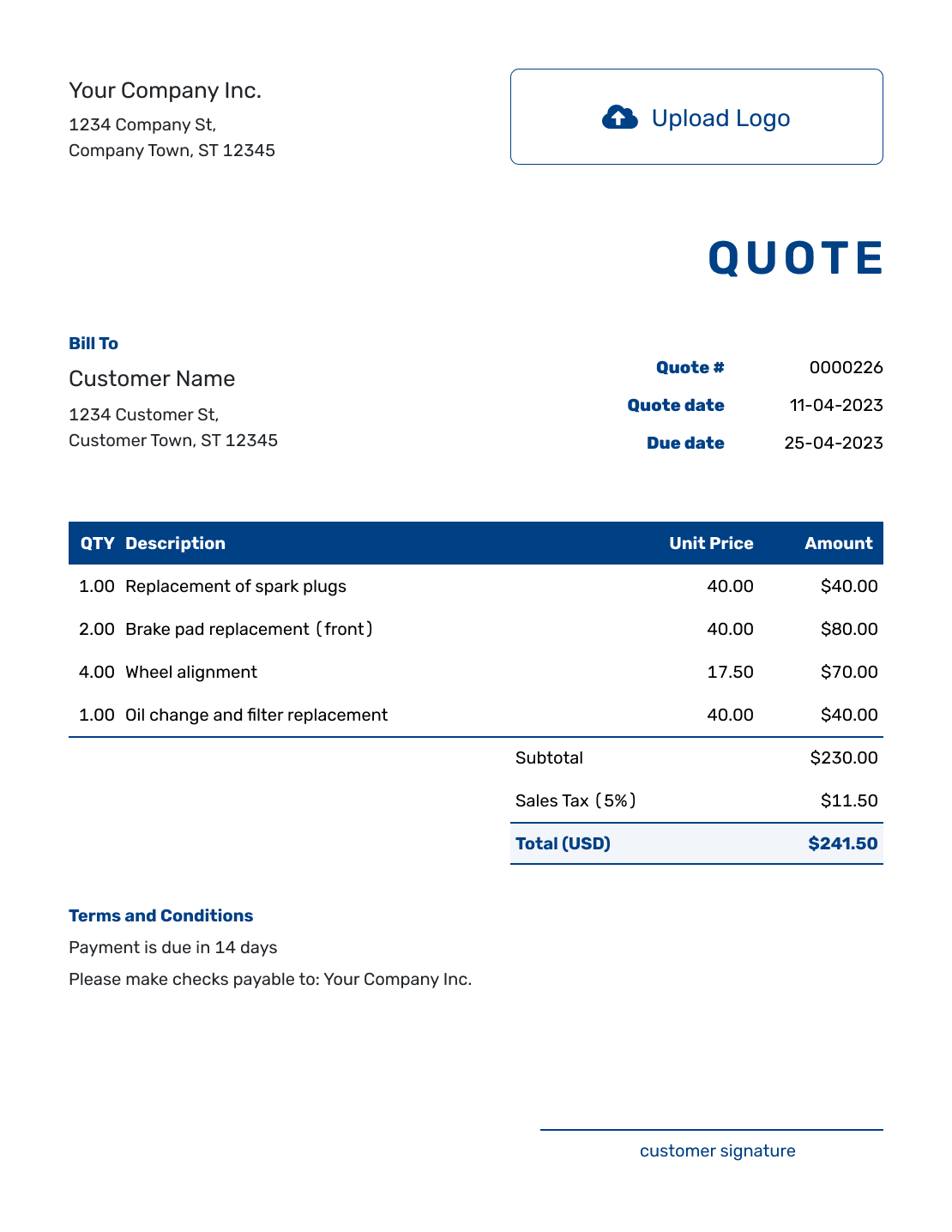
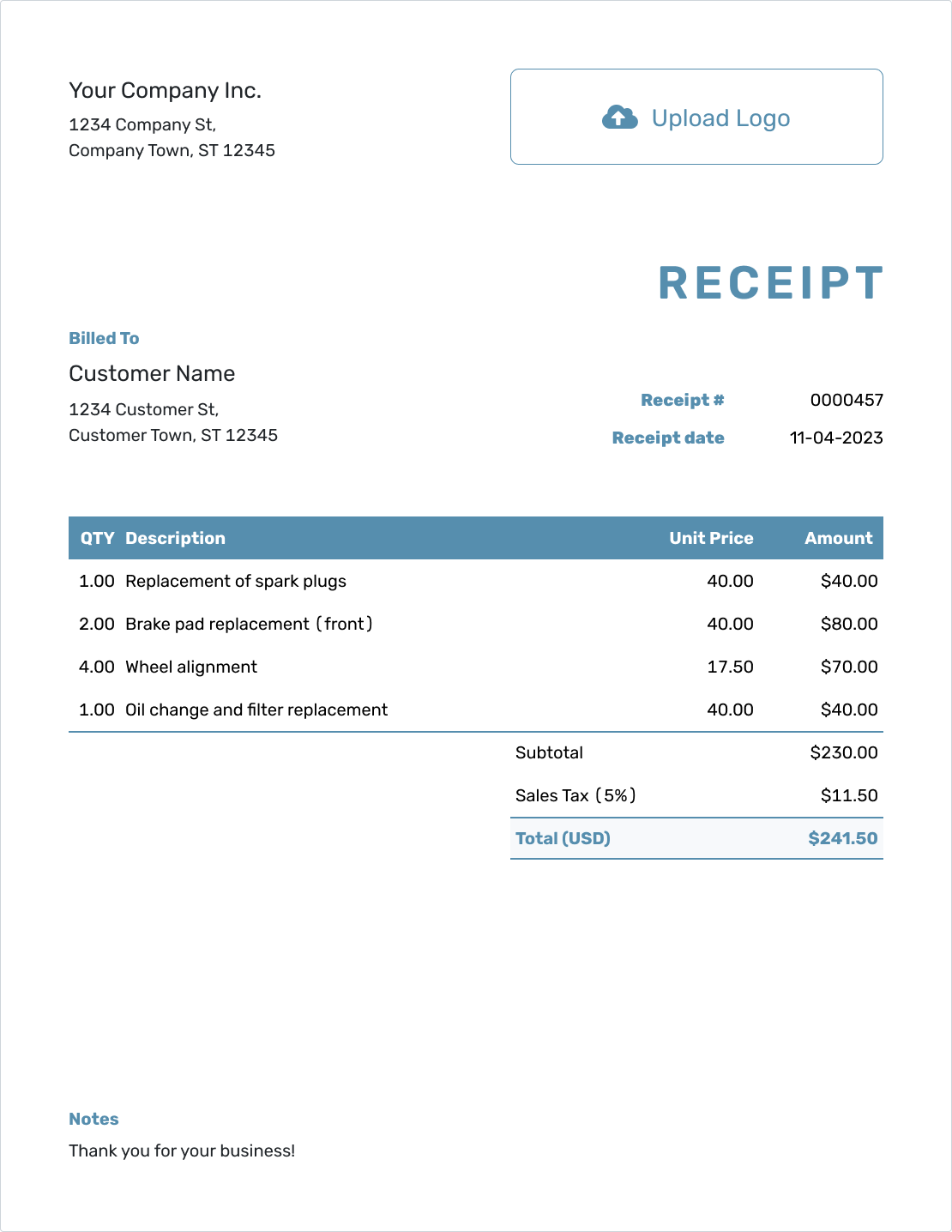
Sample Contractor Receipt Template
Create Free Receipt -
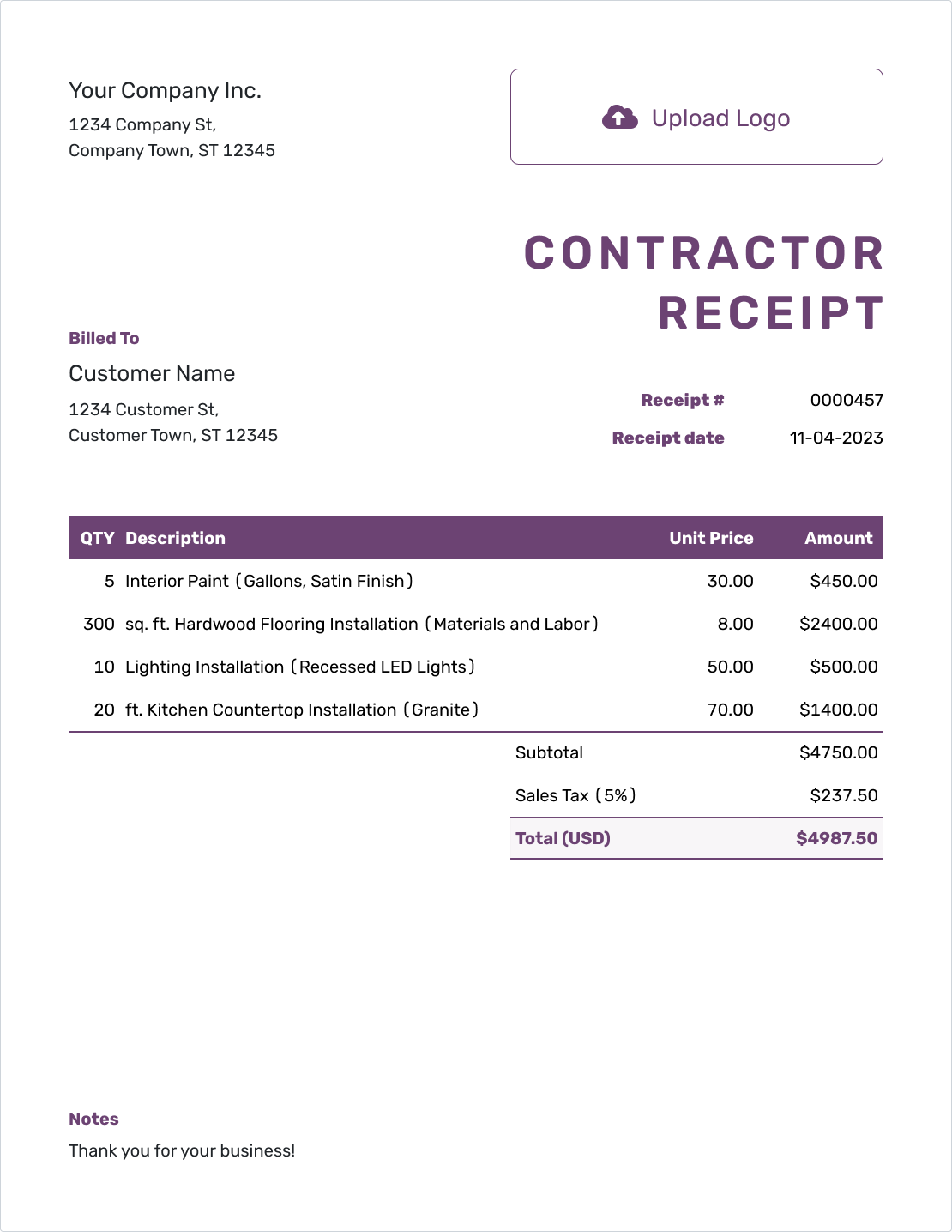
Free Contractor Receipt Template
Create Free Receipt -
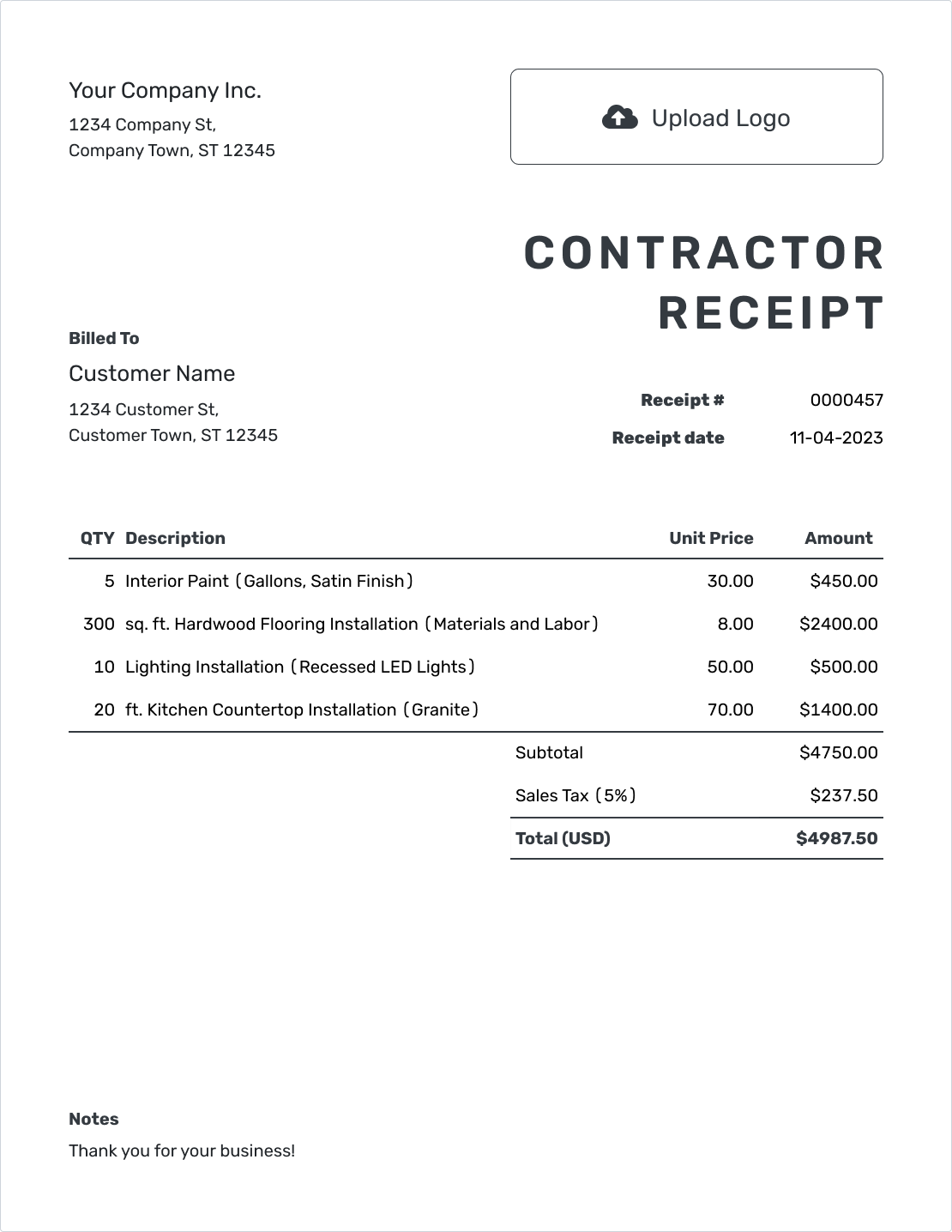
Printable Contractor Receipt Template
Create Free Receipt
There are six more contractor receipt previews below.
How to Create a Contractor Receipt
Already have the project invoice in Docelf? Record the payment on it, then create its receipt without retyping the job. For a standalone receipt, follow the steps below. You can choose a starting number for your first receipt; Docelf numbers the next ones for you.
- Your Business: Add your business name and contact details.
- Your Logo: Use your logo, or leave it out.
- The Customer: Choose the person or business that paid for the job.
- Number and Date: Check the number. Use the date you received payment.
- The Job: List the work and materials with quantities and prices.
- The Payment: Record the new amount received. Check tax, discounts and total against the bill.
- Job Notes: Add the address, reference and payment method. Review and send.
How to Fill In Contractor Receipt Line Items
The bill your customer paid is the best guide to the item rows. Hourly work shows hours and a rate; a fixed-price job can use one line describing what's included. Docelf calculates the amounts for you.
This fictional fence repair has separate materials and labor prices in US dollars. The customer paid in full by bank transfer. An illustrative 7.5% tax applies only to the $390.00 of materials.
| QTY | Description | Unit Price | Amount |
|---|---|---|---|
| 3 | Replacement fence panels — each | $95.00 | $285.00 |
| 3 | Replacement fence posts — each | $35.00 | $105.00 |
| 6 | Fence panel and post replacement — labor hours | $65.00 | $390.00 |
| Subtotal | $780.00 | |
| Sales Tax (7.5% on materials — illustrative) | $29.25 | |
| Total Paid | $809.25 |
The $809.25 payment settles this fence repair in full. Use the prices and tax rules that apply to your own job. For a fixed-price job, describe included materials and labor without charging for them again.
What to Include in Contractor Receipt Notes
A job address and invoice reference help the customer place the payment. Notes can also say whether it's a deposit, a payment for one stage or the final amount.
The job may finish on a different day from the payment. Use the payment date as the receipt date, and keep the completion date in Notes.
Example: Notes
- Bank-transfer payment of $809.25 received on [Payment Date].
- Covers the listed fence repair at [Job Address], completed on [Completion Date].
- Invoice: FENCE-3201. Payment reference: [Transfer Reference].
- Paid in full for this fence repair.
Give the Customer a Receipt for This Payment
Keep this payment with the job in Docelf. You can send the customer a receipt from the site or the office.
Where This Payment Fits in the Project
The work may be continuing, but the payment still has a clear place in the project. A few words about what it covers make the receipt easier for both of you to follow.
A Deposit Before Work Starts
A deposit receipt names the project and the purpose of the deposit; it doesn't say the job is finished. In a separate example, $300.00 paid toward the $809.25 bill would leave $509.25 still to pay.
A Payment for One Project Stage
A stage name from the agreement, such as “Fence installation” or “Kitchen fitting,” keeps the payment recognizable. Say whether the balance belongs to that stage's bill or the whole project. One paid stage doesn't settle the entire job.
The Final Payment
The final payment is the new amount received after earlier payments. Once those amounts settle the named bill or job, “Paid in full” tells the customer there's no balance left for it.
Make the Job Easy to Recognize
When a customer has several jobs with you, the invoice number or project reference does a lot of useful work. An extra-work description and its approval reference can sit alongside it.
Your logo and colors make the receipt recognizable. You can title it “Contractor Receipt,” keep your phone, email or website in the footer, and use the job's currency: USD, EUR, GBP, CAD or AUD.
A work breakdown or relevant agreement pages can explain a larger payment without filling the receipt with detail. You can attach those files as PDFs or images.
After You Send the Contractor Receipt
- Keep the receipt with the matching project and invoice records.
- Check Docelf’s history to see when the emailed receipt was delivered and opened.
- If you send a corrected copy, clearly identify it as a correction for the same payment.
More Contractor Receipt Previews
Here are some other looks for the same project record. Each preview opens the receipt editor, rather than downloading a file.
-
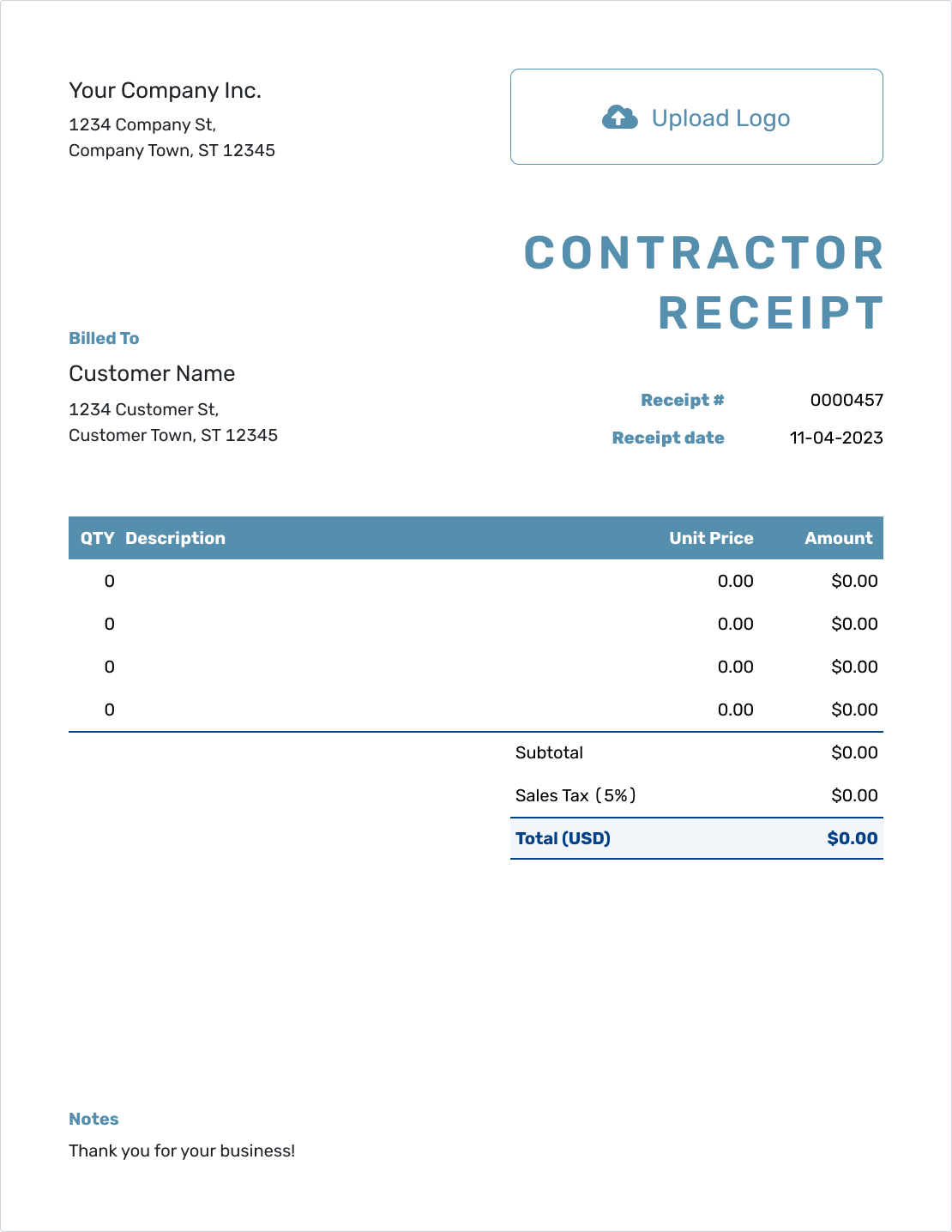
Blank Contractor Receipt Template
Create Free Receipt -
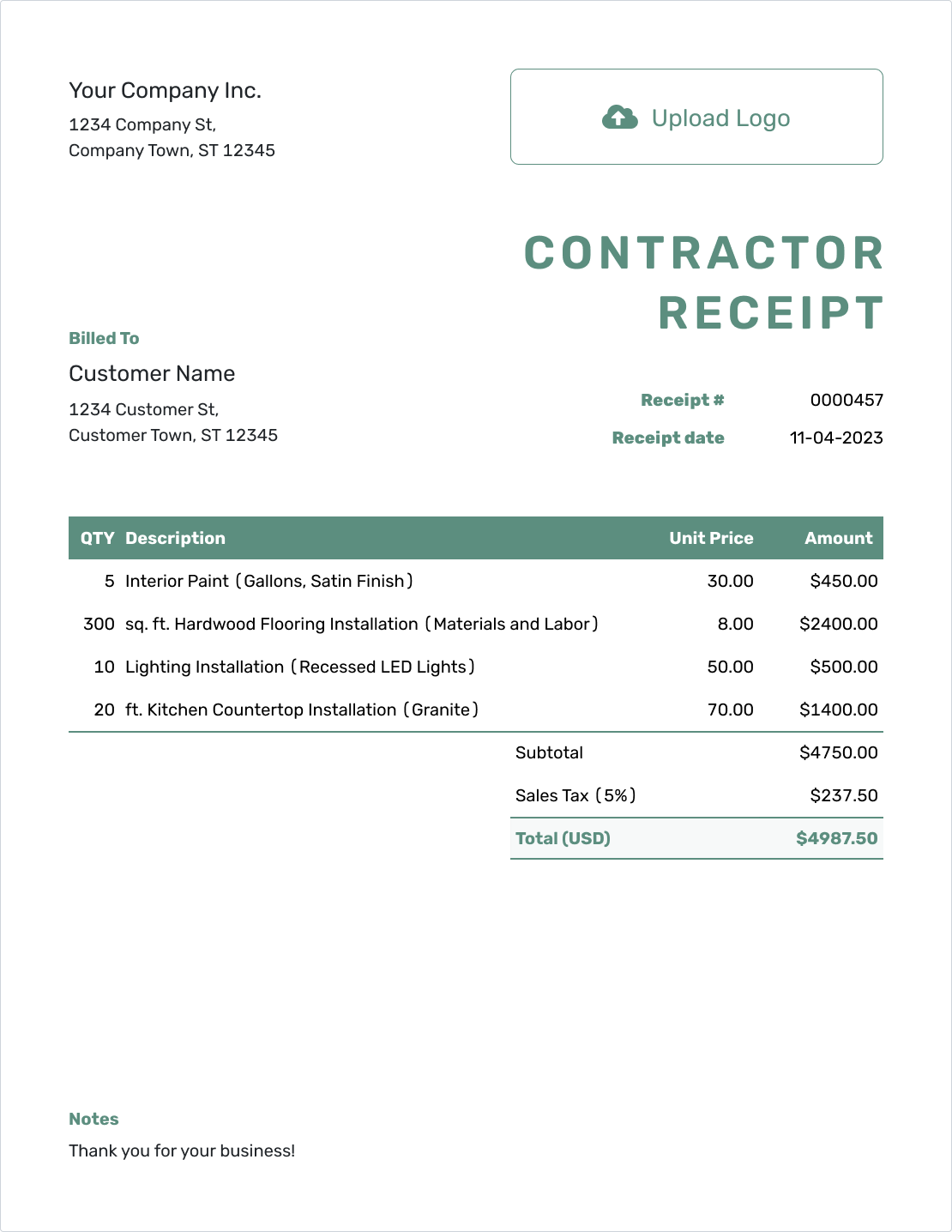
Simple Contractor Receipt Template
Create Free Receipt -
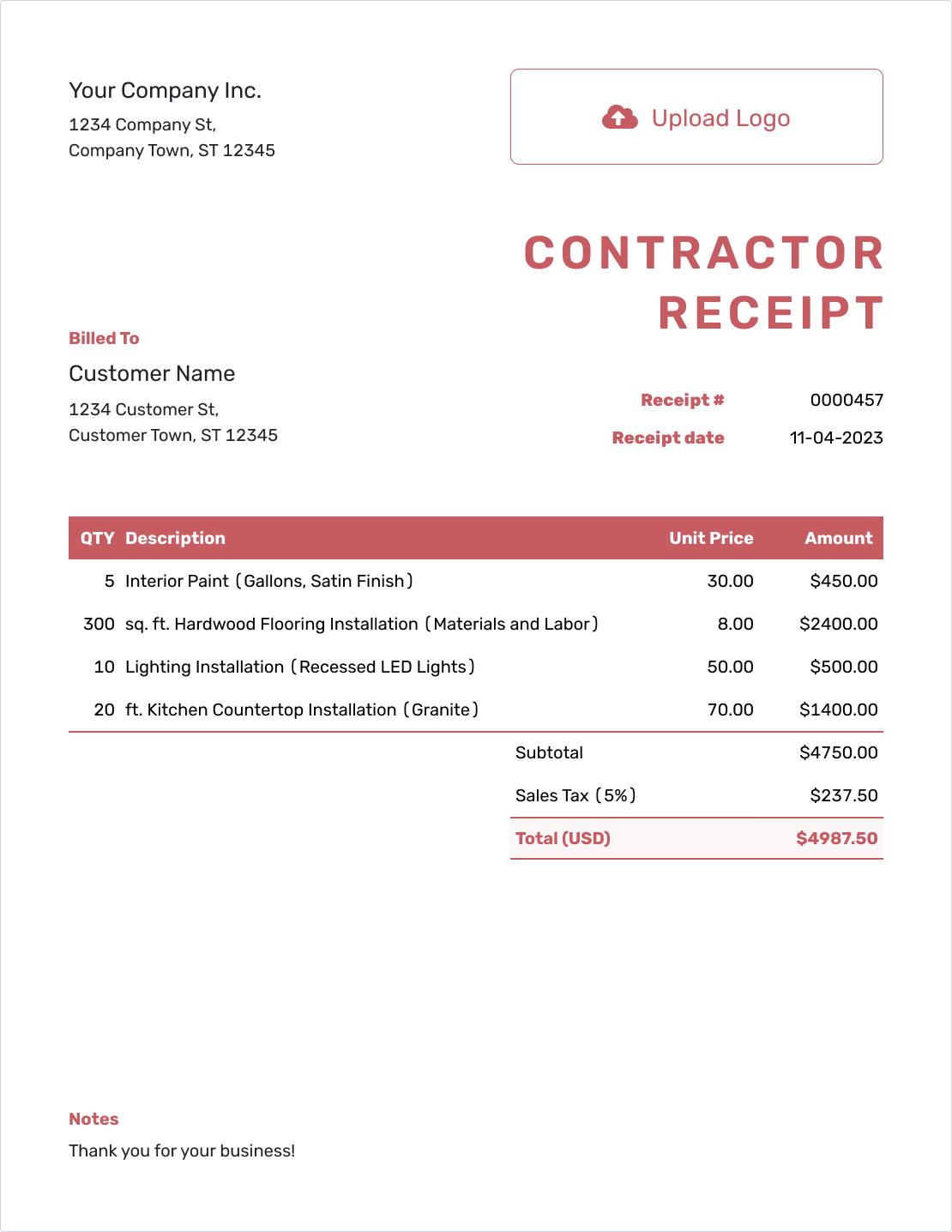
Downloadable Contractor Receipt Template
Create Free Receipt -
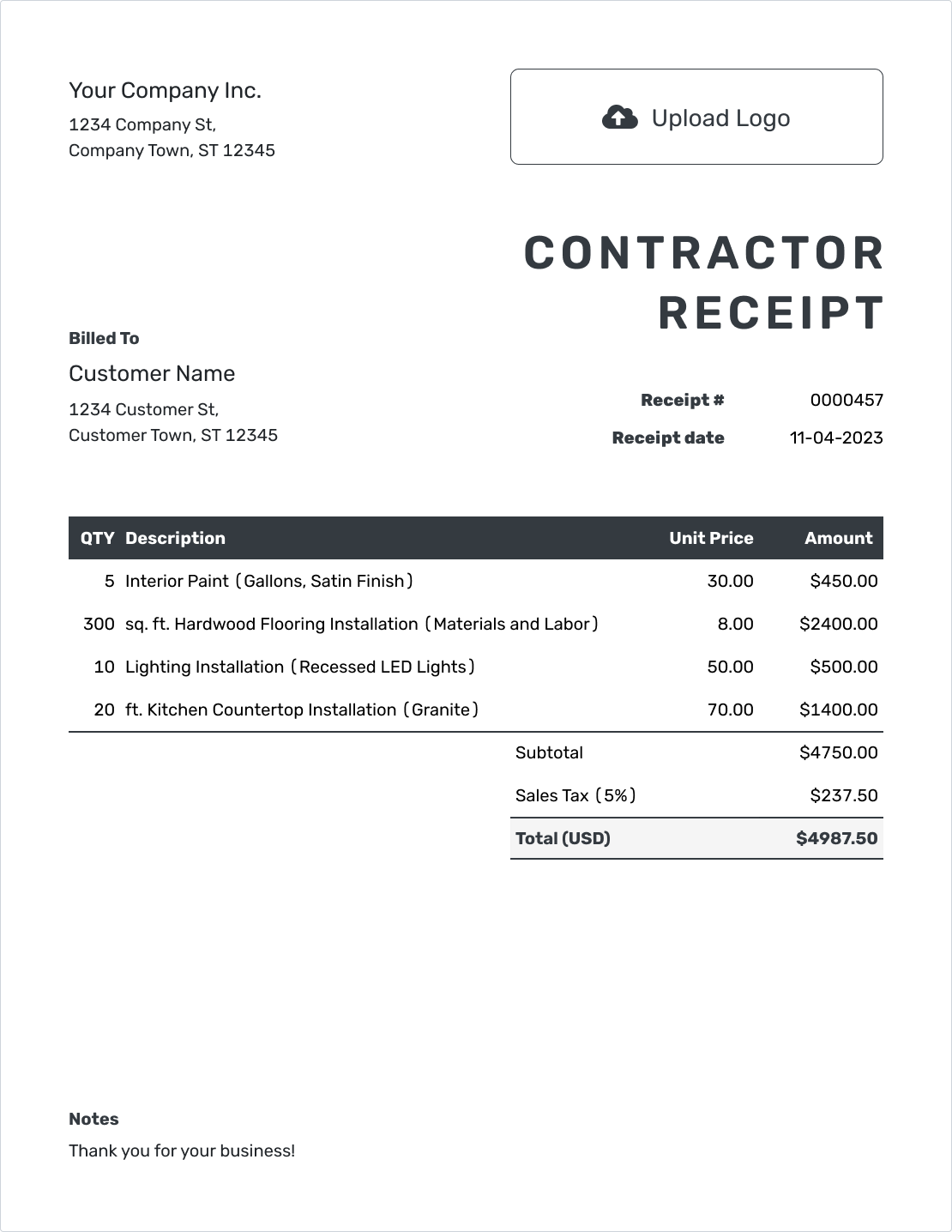
Editable Contractor Receipt Template
Create Free Receipt -
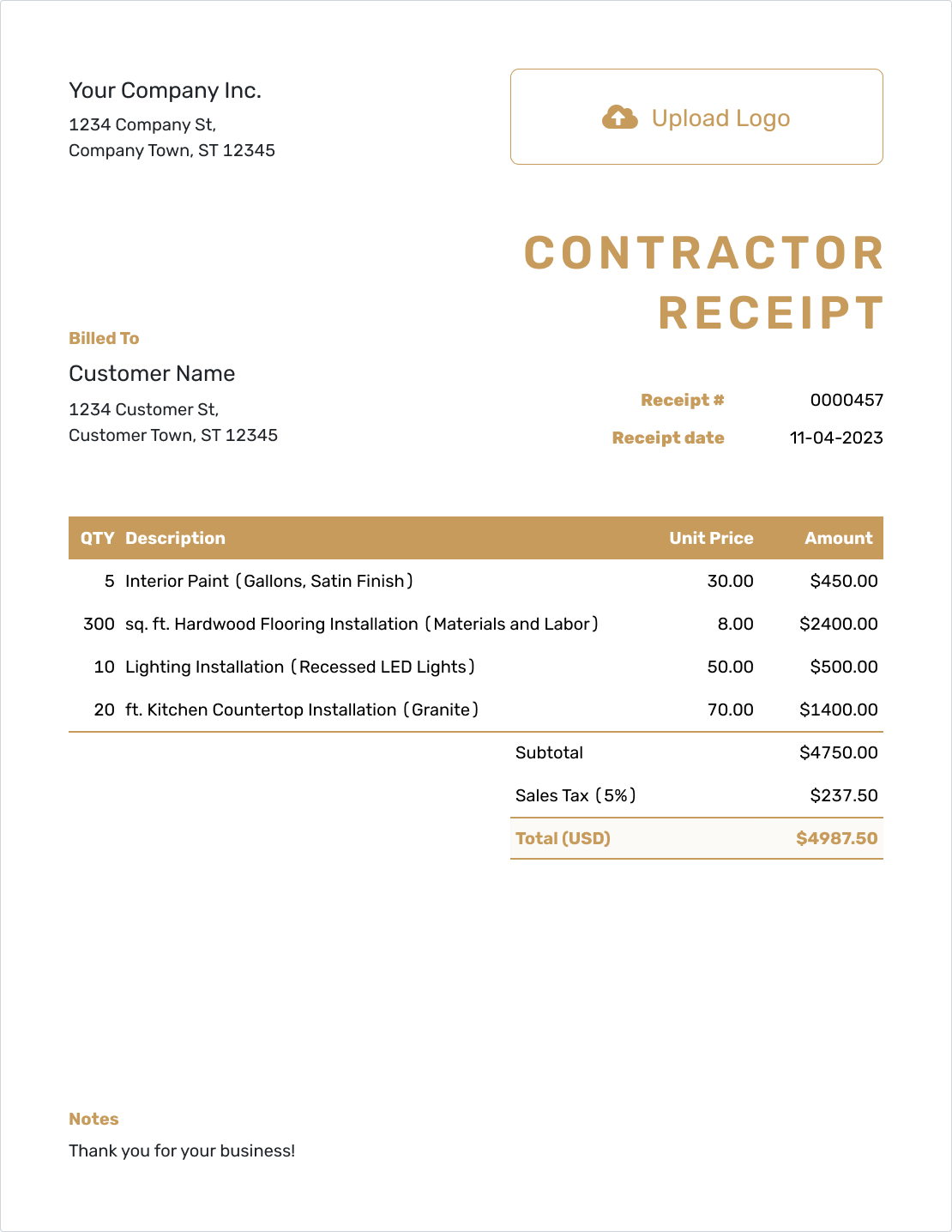
Fillable Contractor Receipt Template
Create Free Receipt -
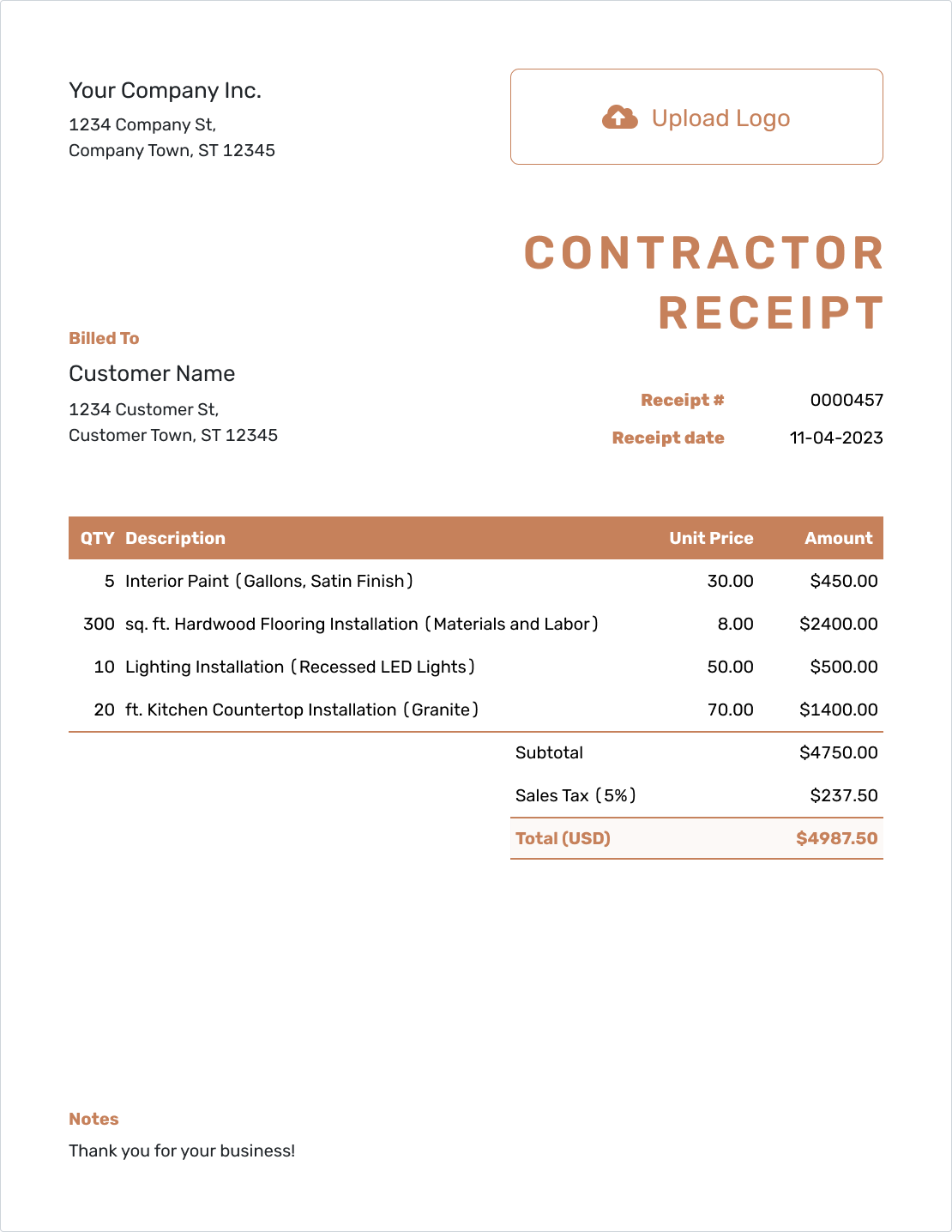
Professional Contractor Receipt Template
Create Free Receipt
Contractor Receipt Files You Can Edit
Comfortable in Word, Google Docs, Excel or Google Sheets? These separate receipt templates let you work there instead. Keep the same job reference whichever route you take; Docelf's own download is a PDF.
Receipts for Site Work and Smaller Jobs
The construction guide goes further into project stages. The handyman guide fits a smaller service visit.
Contractor Receipt FAQs
Answers for deposits, project references and payments along the way.
-
When should I send a contractor receipt instead of an invoice?
Send it after money arrives, including a deposit or part payment. A contractor invoice is the document to use when you're asking for payment. Recording payment on a Docelf invoice lets you create its receipt.
-
Who should the receipt be addressed to?
Use the person or business that paid. The job address can go in the description or Notes when it differs from the customer's address. Their invoice or order reference helps the office match the records.
-
Should I include an earlier deposit in the new amount paid?
Record only the new payment. With a $300.00 deposit already paid on an $809.25 bill, the final $509.25 leaves a $0.00 balance. Its receipt records $509.25, not $809.25. The earlier deposit remains a payment in its own right, not a discount.
-
Can one project have several receipts?
Yes. Each payment needs its own receipt number, payment date and amount. Repeat the project and invoice reference so the receipts form a clear payment history.
-
Can I record cash or check payments?
Yes. Record the amount and payment date, and state the method in Notes. A check number or other reference can help you match it to the job later.
-
Do I need to list every material on the receipt?
Enough to explain the bill that was paid. Separately priced materials belong on separate rows; a fixed-price job can describe what's included and use an attachment for a longer breakdown.
-
Can I create a contractor receipt at the job site?
Yes. Docelf works on phones, tablets and computers. You can check the job and payment details, then email, print or download a PDF from the device you use for work.
Ready to Confirm the Project Payment?
Keep a receipt your customer can match to this payment and this project.
- Name the job and matching bill
- Record this payment and any balance left
- Check the receipt and send a copy